2015-12-28

Playing For Change - "A change is gonna come" - Video - Music - Live

Afficher l'image d'origine
"A change is gonna come"

Astronomy picture of the day - 2015 December 28 - Falcon 9 First Stage Landing

Falcon 9 First Stage Landing 
Video Credit: SpaceX
Explanation: The booster has landed. Spaceflight took a step toward the less expensive last week when the first stage of a Falcon 9 rocket set down on a landing pad not far from its Florida launch. Previously, most rocket stages remained unrecovered -- with the significant exception of the Space Shuttles landing on a runway and their solid rocket boosters being fished back from the sea. The landing occurred while the Falcon 9 second stage continued up to launch several communications satellites into low Earth orbit. The controlled landing, produced by SpaceX, was the first of its kind, but followed a booster landing last month by Blue Origin that did not involve launching satellites. Boeingand SpaceX were selected last year by NASA to launch future astronauts to the International Space Station. The pictured rocket booster will be analyzed for wear and reusability, but then is scheduled to be retired.

2015-12-27

Fotos - "Oceano Atlântico" - 25-12-2015

"Oceano Atlântico"

25 de dezembro de 2015
JoanMira

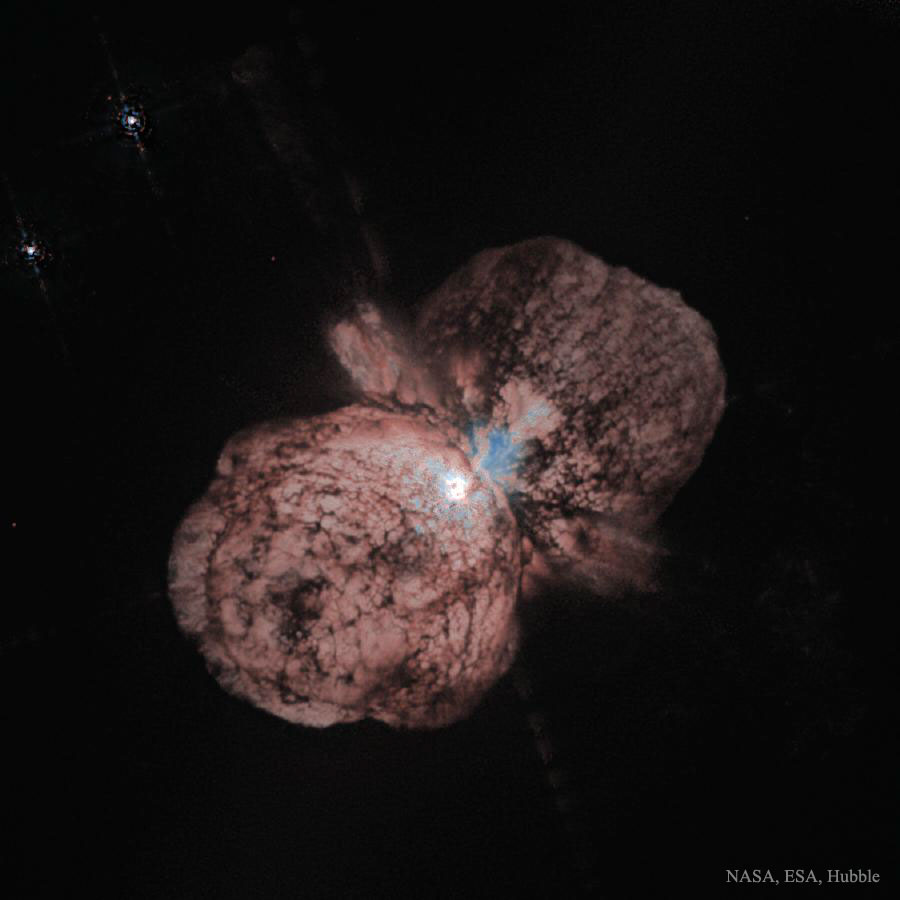
Astronomy picture of the day - 2015 December 27 - Doomed Star Eta Carinae

See Explanation.  Clicking on the picture will download
 the highest resolution version available.
Doomed Star Eta Carinae 
Image Credit: J. Morse (Arizona State U.), K. Davidson (U. Minnesota) et al., WFPC2HSTNASA
Explanation: Eta Carinae may be about to explode. But no one knows when - it may be next year, it may be one million years from now. Eta Carinae's mass - about 100 times greater than our Sun - makes it an excellent candidate for a full blown supernova. Historical records do show that about 150 years ago Eta Carinae underwent an unusual outburst that made it one of the brightest stars in the southern skyEta Carinae, in the Keyhole Nebula, is the only starcurrently thought to emit natural LASER light. This featured image, taken in 1996, brought out new details in the unusual nebula that surrounds this rogue star. Now clearly visible are two distinct lobes, a hot central region, and strange radial streaks. The lobes are filled with lanes of gas and dust which absorb the blue and ultraviolet light emitted near the center. The streaks remain unexplained.

2015-12-26

R.E.M. - "Everybody hurts" - Video - Music - Live

"Everybody hurts"

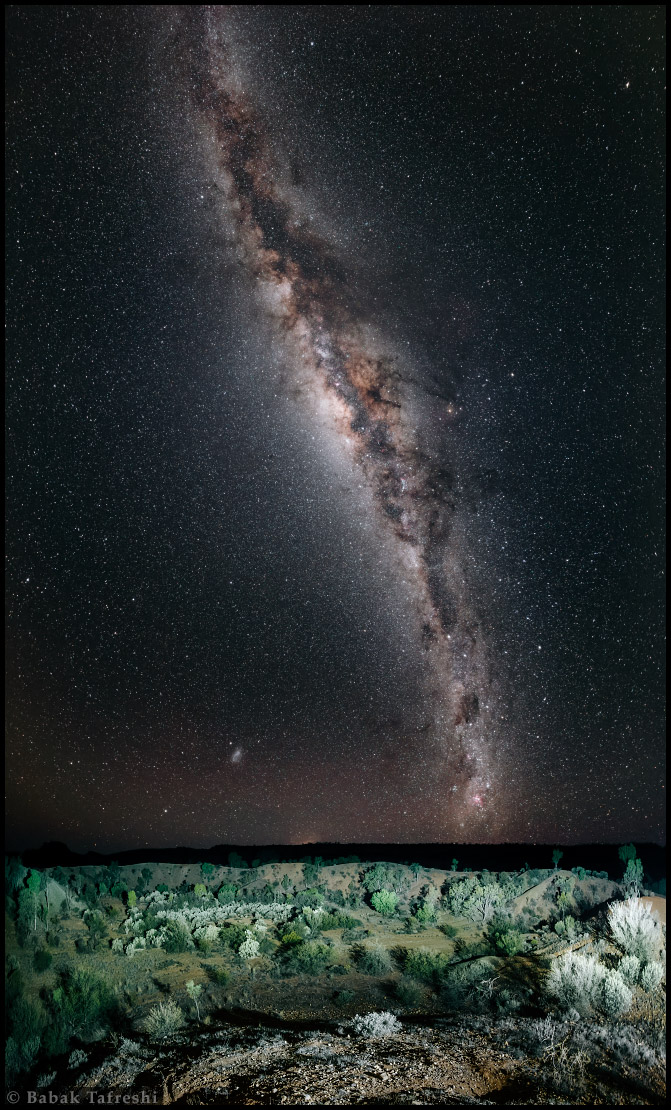
Astronomy picture of the day - 2015 December 26 - Southern Craters and Galaxies

See Explanation.  Clicking on the picture will download
 the highest resolution version available.
Southern Craters and Galaxies 
Image Credit & Copyright: Babak Tafreshi (TWAN)
Explanation: The Henbury craters in the Northern Territory, Australia, planet Earth, are the scars of an impact over 4,000 years old. When an ancient meteorite fragmented into dozens of pieces, the largest made the 180 meter diameter crater whose weathered walls and floor are lit in the foreground of this southern hemisphere nightscape. The vertical panoramic view follows our magnificent Milky Way galaxy stretching above horizon, its rich central starfields cut by obscuring dust clouds. A glance along the galactic plane also reveals Alpha and Beta Centauri and the stars of the Southern Cross. Captured in the region's spectacular, dark skies, the Small Magellanic Cloud, satellite of the Milky Way, is the bright galaxy to the left. Not the lights of a nearby town, the visible glow on the horizon below it is the Large Magellanic Cloud rising.

2015-12-25

Texto - Um Natal feliz e sereno


Não havia escuridão porque a serena lua nova tinha invadido os espaços contigüos ao que se chama solidão. Brilhava a lua e  não só; estavam radiantes Nana, Noa, Garriguette, Meyya, Imanol, Boubou e Petite Minie.

Tempo explêndido que convidou à festa.

A felicidade espelhava-se, também no rosto dos menos juvenis como o meu, mas também nos da Ninica, Daniel, Sofia e Mariana.

Todos tivemos presente os Amigos que já não estão. Rendemos-lhe homenagem pelo pensamento. E não esquecemos os familiares cuja alma estará sempre presente no nosso coração.

Claro que não esquecemos os seres amados que connosco continuam felizmente presentes.

Mas nesses, permitam que coloque no topo da lista a minha titia Manuela.

25-12-2015

JoanMira 

Astronpmy pictures of the day - 2015 December 25 - To Scale: The Solar System

Ver imagem original2015 December 25

To Scale: The Solar System 
Video Credit & Copyright: Wylie Overstreet and Alex Gorosh
Explanation: Want to build a scale model Solar System? A blue marble 1.4 centimeters (about half an inch) across would be a good choice for a scale model Earth. Since the Sun is 109 times the diameter of Earth, a 1.5 meter diameter balloon could represent the Sun. But the distance between the Earth and Sun, 150 million kilometers, would translate to just under 180 meters (590 feet) at the same scale. That would mean the completed project, including the orbits of the outer planets, is probably not going to fit in your backyard. Still, you might find enough room on a dry lakebed. Check out this video for an inspirational road trip through the Solar System to scale.

FELIZ NATAL AOS AMIGOS E ATE OUTROS!

2015-12-24

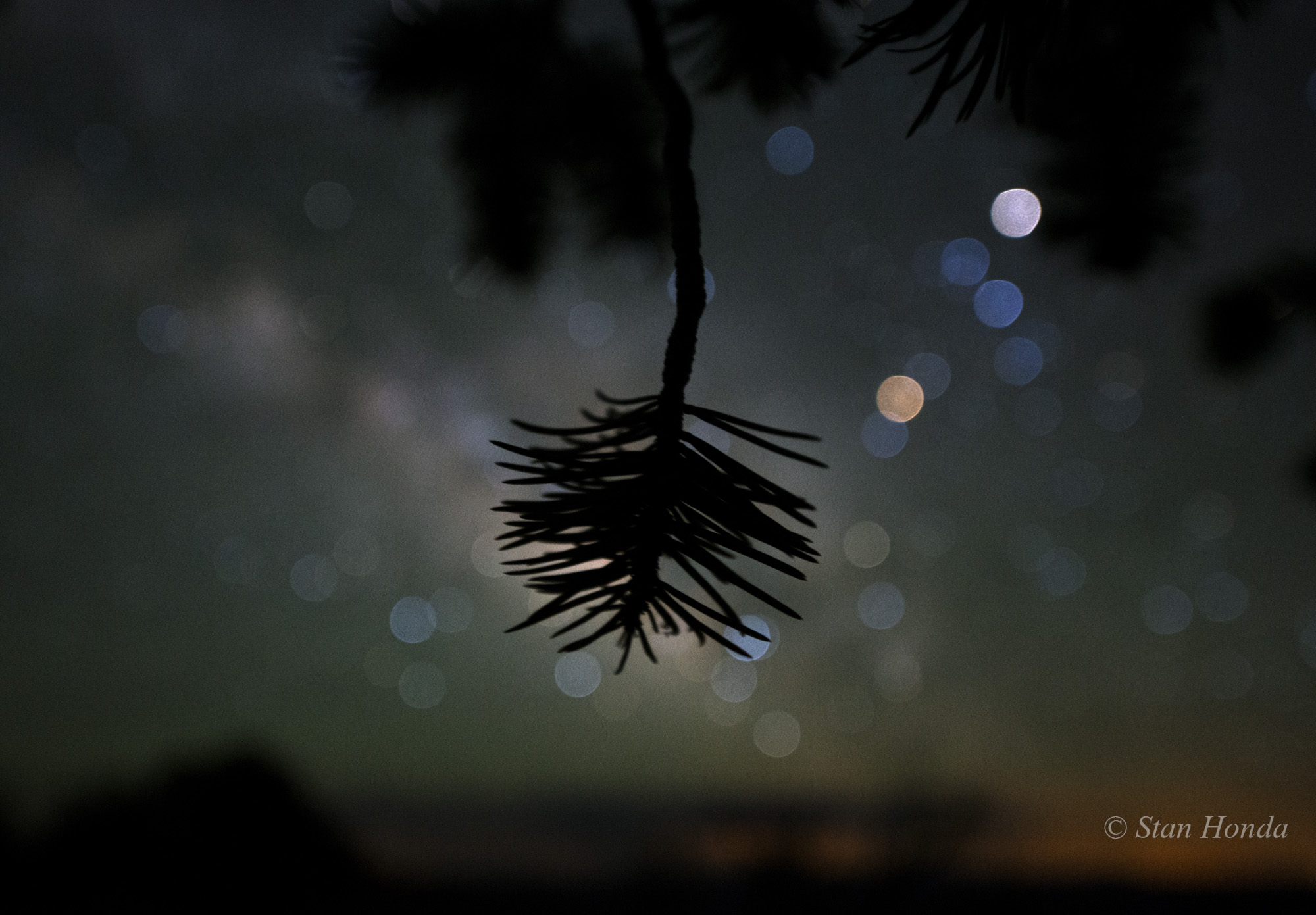
Astronomy picture of the day - 2015 December 24 - Star Colors and Pinyon Pine

See Explanation.  Clicking on the picture will download
 the highest resolution version available.
Star Colors and Pinyon Pine 
Image Credit & Copyright: Stan Honda
Explanation: Beautiful, luminous decorations on this pinyon pine tree are actually bright stars in the constellation Scorpius and the faint glow of the central Milky Way. Captured in June from the north rim of the Grand Canyon of planet Earth, the shallow, close focus image has rendered pine needles on the tree branch sharp, but blurred the distant stars, their light smeared into remarkably colorful disks. Of course, temperature determines the color of a star. Most of theout-of-focus bright stars of Scorpius show a predominately blue hue, their surface temperatures much hotter than the Sun's. Cooler and larger than the Sun, and noticably redder on the scene, is giant star Antares at the heart of the scorpion. In focused, telescopic views the whitish disk at the upper right would be immediately recognizable though, reflecting the Sun's light as ringed gas giant Saturn.

2015-12-23

Historia de Portugal - 1290 - Fundação da Universidade por D. Dinis

Em Portugal a criação dos Estudos Gerais, ou Universidade, deve-se a el-rel D. Dinis que, em 12 de Novembro de 1288, reuniu em Montemor-o-Novo vários prelados os quais, atentos ao estado das relações entre o monarca e a Santa Sé, solicitaram por si o indulto apostólico para se fundar a Universidade.
Este pedido visa evitar que muitos jovens portugueses tenham de sair do seu pais para frequentar estudos superiores nas Universidades da Itália, França e Espanha. Somente em 9 de Agosto de 1290 chegou a bula da confirmação, depois de normalizadas as relações entre Portugal e a Santa sé.
O rei D. Dinis tornou pública a sua intenção de estabelecer em Lisboa um Estudo Geral. 

O sítio escolhido foi, em Lisboa, a pedreira no bairro de Alfama, junto à porta da Cruz, ou da Moeda Velha. Ali se ensinavam Leis, Cânones, Gramática, Lógica e Medicina (música só mais tarde a partir de 1309).
Em 1308 transferiu-se a Universidade para a cidade de Coimbra por bula do papa Clemente V. Transferida por D. Afonso IV para Lisboa, em 1338, foi a Universidade mudada no mesmo reinado para Coimbra em 6 de Dezembro de 1354.
D. Fernando, em 3 de Junho de 1377, mudou-a para Lisboa, também para o sítio de Alfama, prometendo que ela havia de estar perpetuamente em Lisboa, sem que em nenhum tempo se mudasse para Coimbra, nem para outra parte do Reino. Em 1385, depois de aclamado rei corroborou tudo quanto prometera.
Depois de longos anos de paragens incertas, foi D. João III que, em 1537, chamando sábios estrangeiros, mudou definitivamente a Universidade para Coimbra, onde se tem conservado.
Retomando a sua fundação na Capital do Reino, D. Dinis tinha o plano feito da sua Universidade, e já interessara a Igreja do Reino por essa fundação, cujo proveito e cuja glória deviam reverter principalmente em favor dela, porque em primeiro lugar a Universidade, aqui co
mo em toda a parte, ficava sujeita a jurisdição eclesiástica; depois nessa época quem dizia estudioso, dizia clérigo, e a Universidade vinha a ser um viveiro de homens da igreja eruditos. Por isso não foi difícil a D. Dinis, convencer muitos abades e mosteiros e priores de igrejas a que concorressem com uma parte das suas rendas à sustentação da Universidade, e foram eles mesmo que dirigiram uma súplica ao Papa rogando-lhe que lhes permitisse alienar uma porção das rendas eclesiásticas para pagamento dos mestre da nova Universidade.
Foi aqui, neste conjunto de elementos a darem o seu contributo para o sustento da Universidade, que o reitor da Igreja de S. Leonardo de Atouguia tomou a responsabilidade perante o Rei de fazer tudo o que fosse possível e estivesse ao seu alcance a favor da manutenção da Universidade.
Logo que a Universidade foi transferida pela primeira vez para Coimbra, em 1308, foram anulados os subsídios dados pelos abades e reitores que se tinham proposto para isso; mas nesse ano o papa Clemente V concedeu a D. Dinis que anexasse à Universidade seis igrejas do padroado real, para que das suas rendas se provesse às despesas daquela instituição.
A Câmara Municipal de Atouguia, e mais tarde a de Peniche, ao abrigo da Lei, até possivelmente à criação do primeiro Ministério da Instrução Pública em 1870, deram o seu contributo, subsidiando aquela entidade. Passo a citar, em resumo, algumas notas das suas contribuições: ‘Ano de 1606 - 18 de Fevereiro - Para pagamento das despesas com trinta estudantes de medicina e cirurgia, mandados para Coimbra, por D. Sebastião e por Provisão desta data, coube à Vila de Atouguia, da Comarca de Leiria, contribuir com 20 mil réis”- (Vol. V - 1605/1615, Doc. 5).