2016-09-14

Imagens de Lisboa - Interiores secretos - Salão Pompeia

The Palace of Ega, built in the 1500s and home to the archives relating to Portugal’s former colonies since 1931, hides one of the most beautiful rooms in the city. Called “Pompeii Hall,” it dates from an 18th-century renovation of the building, and was used as a music room during large banquets. A statue of Apollo, the god of music, was placed under frescoes, by magnificent columns and eight Dutch tile panels from the 1700s illustrating the main European ports. 
The name of the palace derives from one of its owners, the Countess of Ega, who allowed General Junot (her lover), to stay in the palace during the French invasion of Portugal. The Countess later married Count Stroganov from St. Petersburg, a city where she later lived and died in. That was also where the Countess found a recipe from her husband’s chef which later became quite popular — stroganoff. 
Pompeii Hall used to open for guided tours once a month, but is now completely closed to visitors.
Salão Pompeia, Lisboa
O Palácio da Ega, construído no século XVI e usado como instalações do Arquivo Histórico Ultramarino desde 1931, esconde uma das mais belas salas da cidade. Chama-se Salão Pompeia e data de uma remodelação do edifício no século XVIII. Era um espaço usado como sala de música em grandes banquetes, e por isso foi colocada uma estátua de Apolo, o deus da música. Este encontra-se rodeado de frescos, de magníficas colunas e de oito painéis de azulejos holandeses do século XVIII, ilustrando os principais portos europeus. 
O nome do palácio deve-se a uma das suas proprietárias, a Condessa da Ega, que permitiu que o general Junot, seu amante, se instalasse no palácio durante as invasões francesas. A condessa mais tarde casou-se com o conde Stroganov de São Petesburgo, para onde foi viver, acabando por falecer nessa cidade. Foi também aí que a condessa encontrou uma receita do cozinheiro do marido, que mais tarde se tornou bem conhecida -- Estrogonofe. 
Houve tempo em que o Salão Pompeia abria ao público uma vez por mês, mas neste momento já não são permitidas visitas.

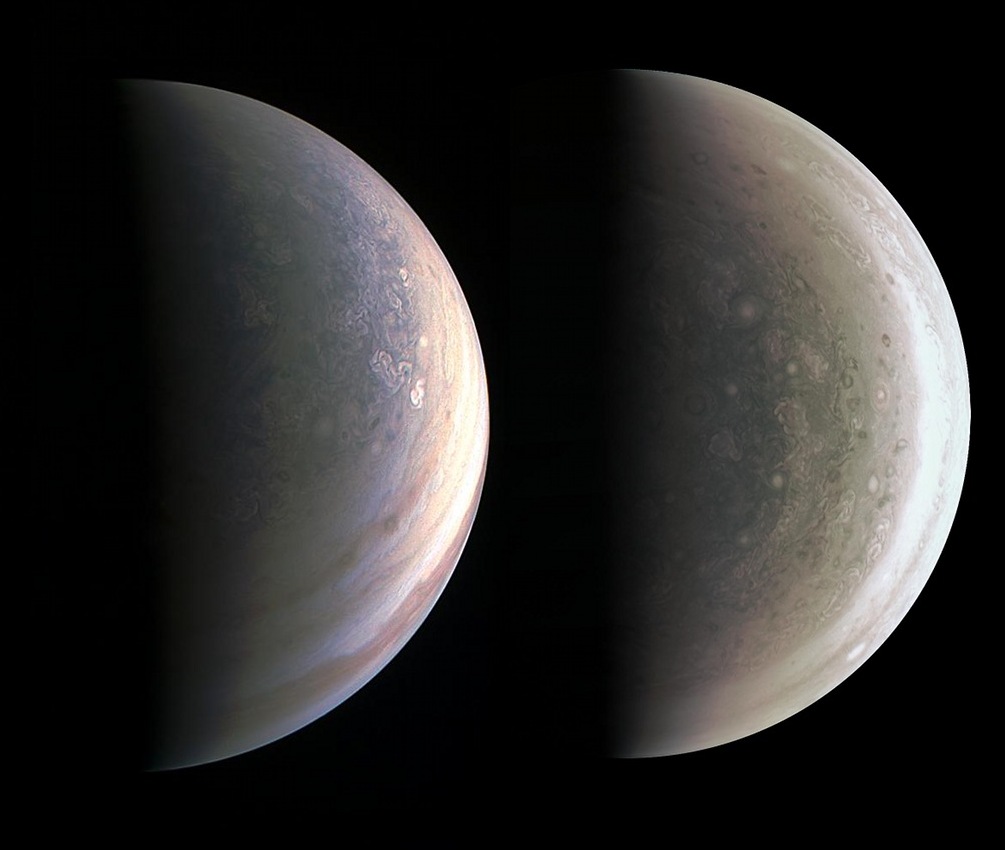
Astronomy picture of the day - 2016 September 14 - The North and South Jupiter

See Explanation.  Clicking on the picture will download
 the highest resolution version available.
The North and South Jupiter 
Image Credit: NASAJPLJuno Mission
Explanation: A wide, looping orbit brought Juno close to Jupiter on August 27. As the spacecraft swung around the giant planet's poles JunoCam acquired these premier direct polar views, a change from the usual nearly equatorial perspective of outbound spacecraft and the telescopes of planet Earth. The sunlit side of Jupiter's north polar region (left) was imaged about 125,000 kilometers from the cloud tops, two hours before Juno's closest approach. An hour after close approach the south polar region was captured from 94,500 kilometers away. Strikingly different from the alternating light-colored zones and darker belts girdling more familiar equatorial regions, the polar region clouds appear more convoluted and mottled by many clockwise and counterclockwise rotating storm systems. Another 35 close orbital flybys are planned during the Juno mission.

2016-09-13

Imagens de Lisboa - Palacios - Palacio Foz

Palácio Foz, Lisboa
Foz Palace is one of the most beautiful buildings in the center of Lisbon, both inside and out, but unfortunately is not always open to the public. You may only visit during the several cultural events that take place throughout the year. Its construction dates back to 1777, and it had several owners who mixed various styles, from the rococo to the neo-Manueline. Its magnificent rooms recently served as the backdrop for scenes of the film "Mysteries of Lisbon," and the old library is now the National Sports Museum.
Palácio Foz, Lisboa
O Palácio Foz é um dos mais belos edifícios do centro de Lisboa, por dentro e por fora, mas infelizmente não se encontra sempre aberto ao público. É apenas possível visitar durante os vários eventos culturais que acontecem várias vezes ao ano. A sua construção data de 1777, e teve vários proprietários que lhe misturaram vários estilos, do rococó ao neo-manuelino. As suas grandiosas salas serviram recentemente de pano de fundo para cenas do filme "Mistérios de Lisboa", e a antiga biblioteca é hoje o Museu Nacional do Desporto.
Palácio Foz, Lisbon

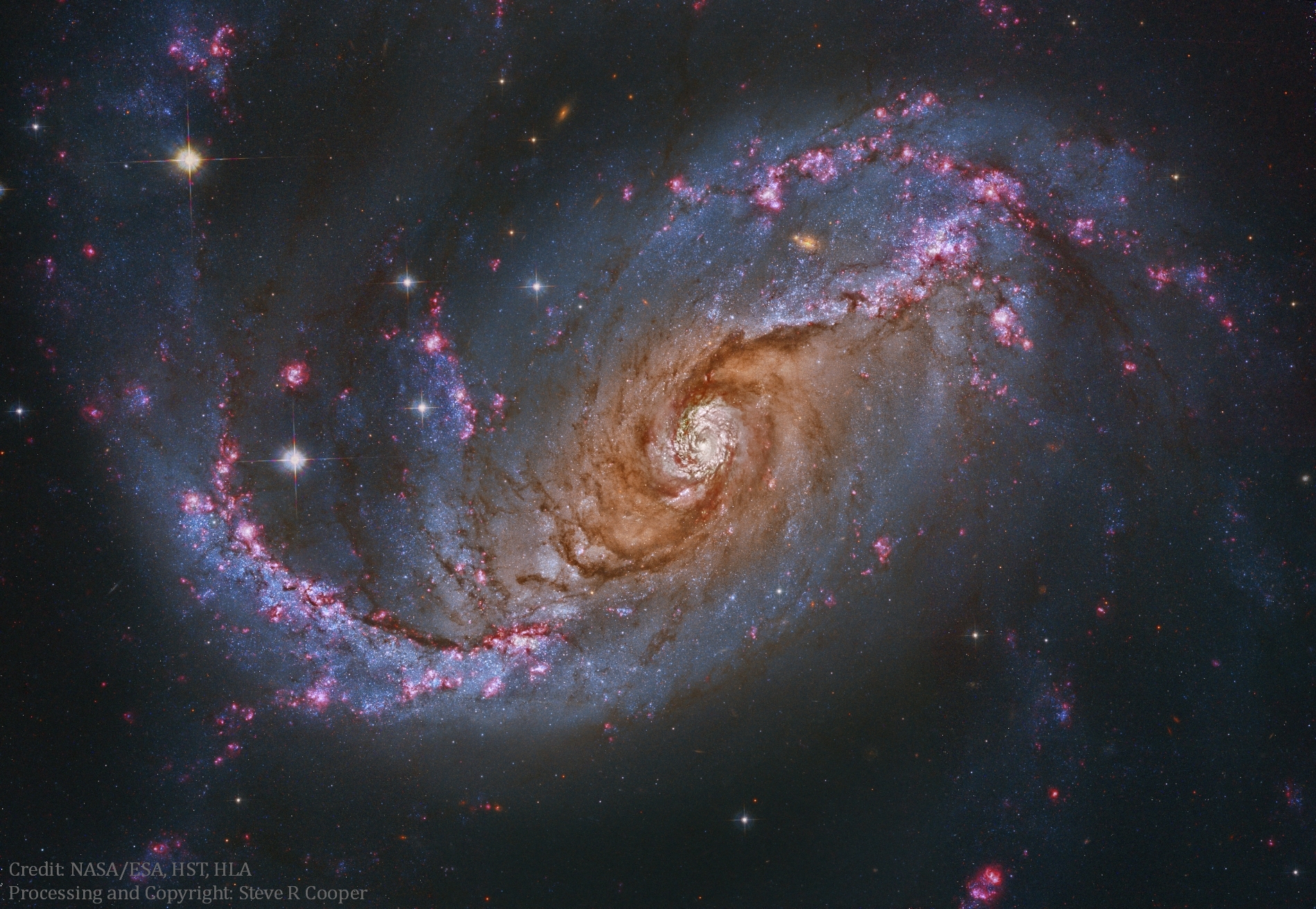
Astronomy picture of the day - 2016 September 13 - NGC 1672: Barred Spiral Galaxy from Hubble

See Explanation.  Clicking on the picture will download
 the highest resolution version available.
NGC 1672: Barred Spiral Galaxy from Hubble 
Image Credit: Hubble Legacy ArchiveNASAESAProcessing & Copyright: Steve Cooper
Explanation: Many spiral galaxies have bars across their centers. Even our own Milky Way Galaxy is thought to have a modest central bar. Prominently barred spiral galaxy NGC 1672, featured here, was captured in spectacular detail in an image taken by the orbiting Hubble Space Telescope. Visible are dark filamentary dust lanes, young clusters of bright blue stars, red emission nebulas of glowing hydrogen gas, a long bright bar of stars across the center, and a bright active nucleus that likely houses a supermassive black hole. Light takes about 60 million years to reach us from NGC 1672, which spans about 75,000 light years across. NGC 1672, which appears toward the constellation of the Dolphinfish (Dorado), is being studied to find out how a spiral bar contributes to star formation in a galaxy's central regions.

2016-09-12

Now, it's time to say goodbye. Ciao, ciao, ciao...

“Taking a Chance” by Gil Elvgren 1962:
CIAO, CIAO, CIAO...

Imagens de Lisboa - Palacios - Belém

Palácio de Belém, Lisboa
Now the official home of the Portuguese President, this “pink house” was originally built in the 16th century. Its current appearance is the result of a renovation in the 19th century, and now includes a museum dedicated to all of the Presidents of the Republic.
Palácio de Belém, Lisboa
Hoje residência oficial do Presidente da República, esta “casa cor-de-rosa” foi originalmente construída no século XVI. O seu aspeto atual é o resultado de obras no século XIX, e hoje inclui um museu dedicado a todos os presidentes do país.

Astronomy picture of the day - 2016 September 12 - Philae Lander Found on Comet 67P

See Explanation.  Clicking on the picture will download
 the highest resolution version available.
Philae Lander Found on Comet 67P 
Image Credit & Copyright: ESARosettaMPS, OSIRIS; UPD/LAM/IAA/SSO/INTA/UPM/DASP/IDA/Navcam
Explanation: A little spacecraft that was presumed lost has now been found. In 2014, the Philae lander slowly descended from its parent Rosette spacecraft to the nucleus of Comet C67/P Churyumov-Gerasimenko. At the surface, after a harpoon malfunction, the lander bounced softly twice and eventually sent back images from an unknown location. Earlier this month, though, Rosette swooped low enough to spot its cub. The meter-sized Philae is seen on the far right of the main image, with inset images showing both a zoom out and a zoom in. At the end of this month, Rosette itself will be directed to land on 67P, but Rosette's landing will be harder and, although taking unique images and data, will bring the mission to an end.

2016-09-11

Imagens de Lisboa - Palacios - Quinta da Regaleira

Quinta da Regaleira, Sintra
Often called “the Palace of the Millions,” this palace is part of the Regaleira estate, created by a millionaire who wanted an exquisite home that ended up transformed into quite a mystical place. It includes gargoyles on the main building’s façade, and a park with an enigmatic system of tunnels.
Quinta da Regaleira, Sintra
Este palácio também é conhecido por “Palácio dos Milhões”. É o palácio da Quinta da Regaleira, uma criação de um milionário que imaginou uma residência extraordinária, que acabou por se transformar num cenário místico. Inclui gárgulas na fachada do edifício principal e um parque com um enigmático sistema de túneis.

Roberto Carlos - "Eu estou apaixonado por você" - Audio - Musica

"Eu estou apaixonado por você"

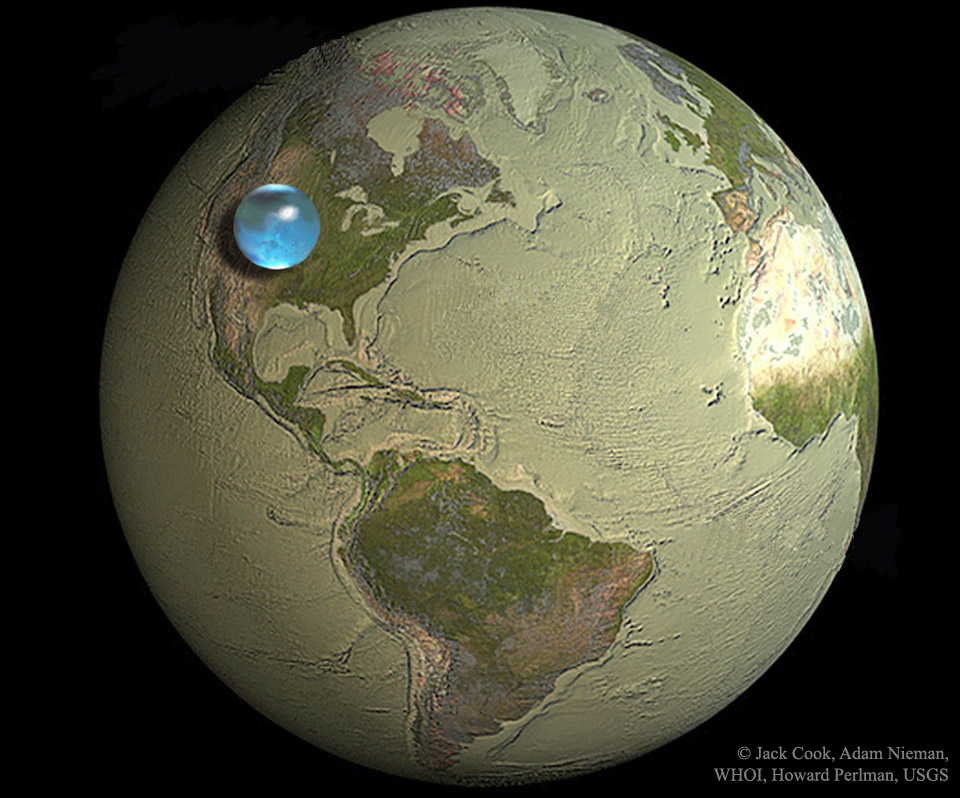
Astronomy picture of the day - 2016 September 11 - All the Water on Planet Earth

See Explanation.  Clicking on the picture will download
 the highest resolution version available.
All the Water on Planet Earth 
Illustration Credit & CopyrightJack Cook, Adam Nieman, Woods Hole Oceanographic Institution, Howard Perlman, USGS
Explanation: How much of planet Earth is made of water? Very little, actually. Although oceans of water cover about 70 percent of Earth's surface, these oceans are shallow compared to the Earth's radius. The featured illustrationshows what would happen if all of the water on or near the surface of the Earth were bunched up into a ball. The radius of this ball would be only about 700 kilometers, less than half the radius of the Earth's Moon, but slightly larger than Saturn's moon Rhea which, like many moons in our outer Solar System, is mostly water ice. How even this much water came to be on the Earth and whether any significant amount is trapped far beneath Earth's surface remain topics of research.