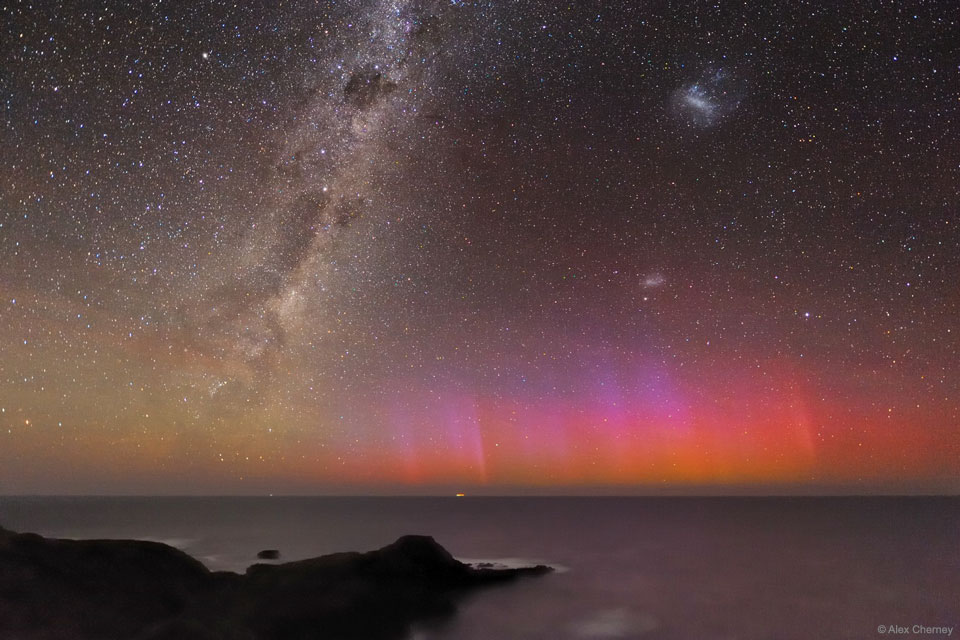
Red Aurora Over Australia Image Credit & Copyright: Alex Cherney (Terrastro, TWAN)
Explanation: Why would the sky glow red? Aurora. A solar storm in 2012, emanating mostly from active sunspot region 1402, showered particles on the Earth that excited oxygen atoms high in the Earth's atmosphere. As the excited element's electrons fell back to their ground state, they emitted a red glow. Were oxygen atoms lower in Earth's atmosphere excited, the glow would be predominantly green. Pictured here, this high red aurora is visible just above the horizon last week near Flinders, Victoria, Australia. The sky that night, however, also glowed with more familiar but more distant objects, including the central disk of our Milky Way Galaxy on the left, and the neighboring Large andSmall Magellanic Cloud galaxies on the right. A time-lapse video highlighting auroras visible that night puts the picturesque scene in context. Why the sky did not also glow green remains unknown.
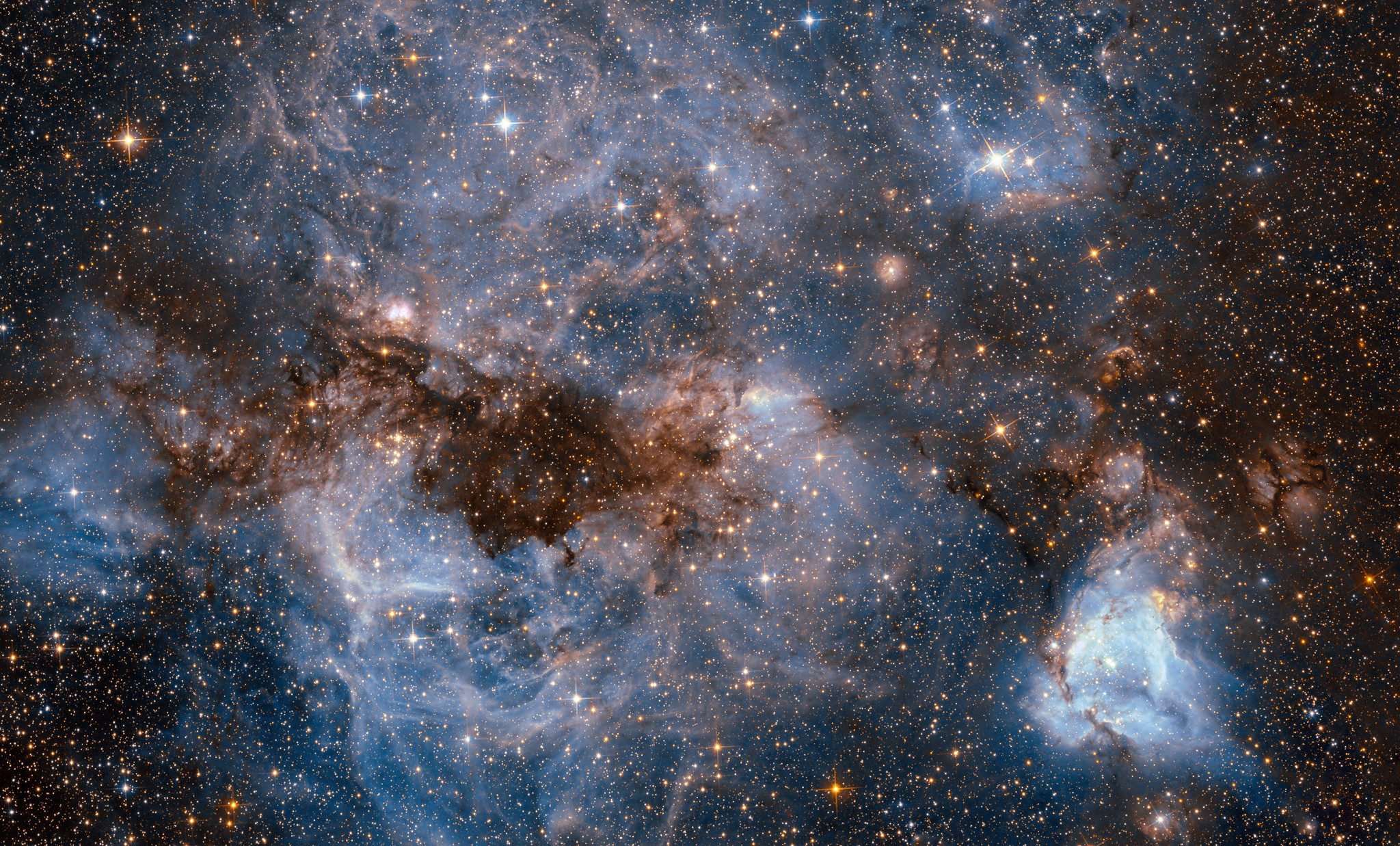
Explanation: Over 150 light-years across, this cosmic maelstrom of gas and dust is not too far away. It lies south of the Tarantula Nebula in our satellite galaxy the Large Magellanic Cloud a mere 180,000 light-years distant. Massive stars have formed within. Their energetic radiation and powerful stellar winds sculpt the gas and dust and power the glow of this HII region, entered into the Henize catalog of emission stars and nebulae in the Magellanic Clouds as N159. The bright, compact, butterfly-shaped nebula above and left of center likely contains massive stars in a very early stage of formation. Resolved for the first time in Hubble images, the compact blob of ionized gas has come to be known as the Papillon Nebula.
El volcán guatemalteco 'Fuego', uno de los más activos del país, inició la primera erupción del 2017 con explosiones "constantes, moderadas y fuertes", en Alotenango, Sacatepéquez (Guatemala).
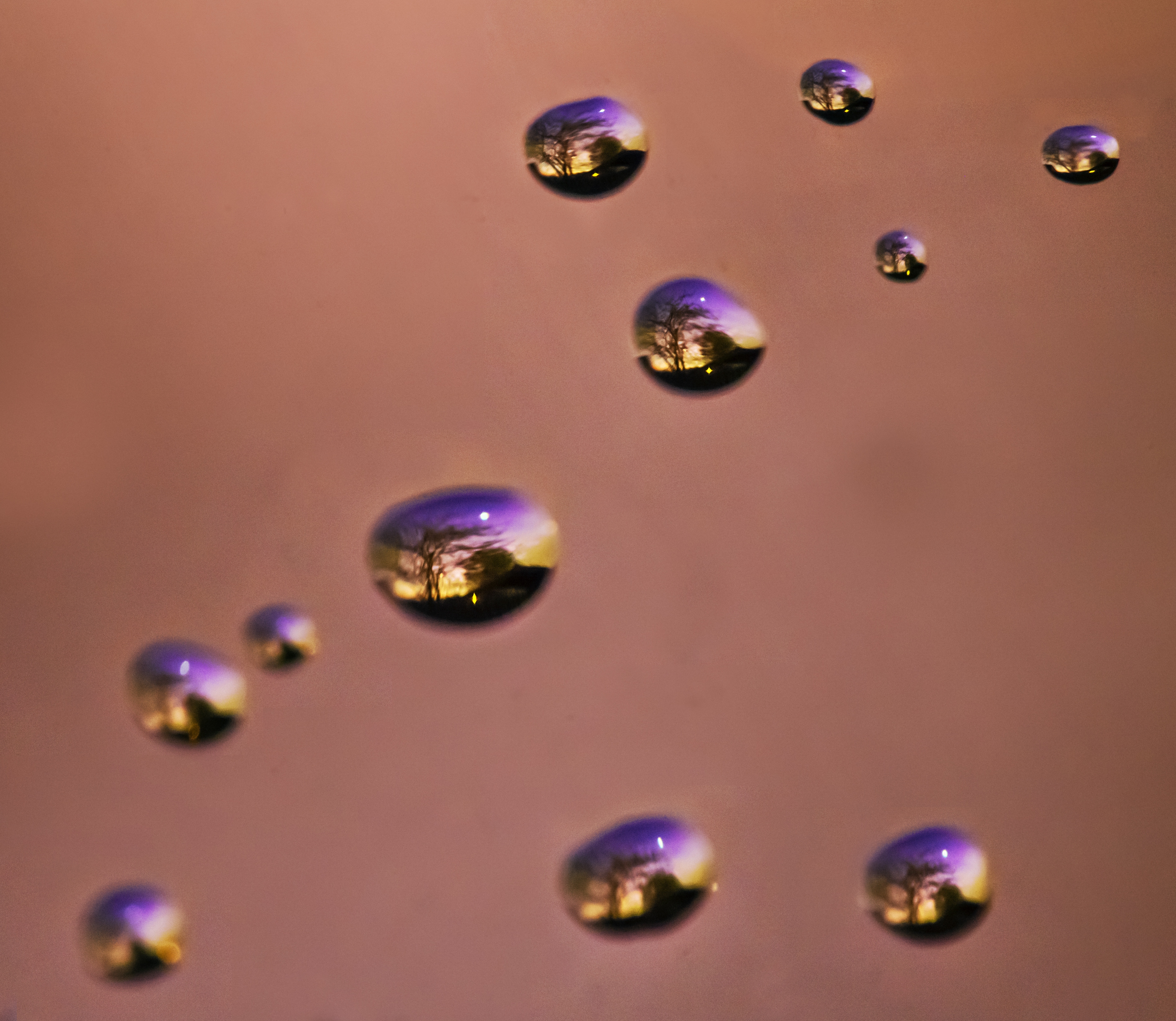
Explanation: Now the brilliant "star" in planet Earth's evening skies, Venus is captured in this creative astrophotograph. Taken with a close-focusing lens on January 18 from Milton Keynes, UK, it shows multiple images of the sky above the western horizon shortly after sunset. The images were created by water drops on a glass pane fixed to a tree. Surface tension has drawn the water drops into simple lens-like shapes. Refracting light, the drops create images that are upside-down, so the scene has been rotated to allow comfortable right-side up viewing of a macro-multiple-skyscape.

 Significado: