2017-02-10

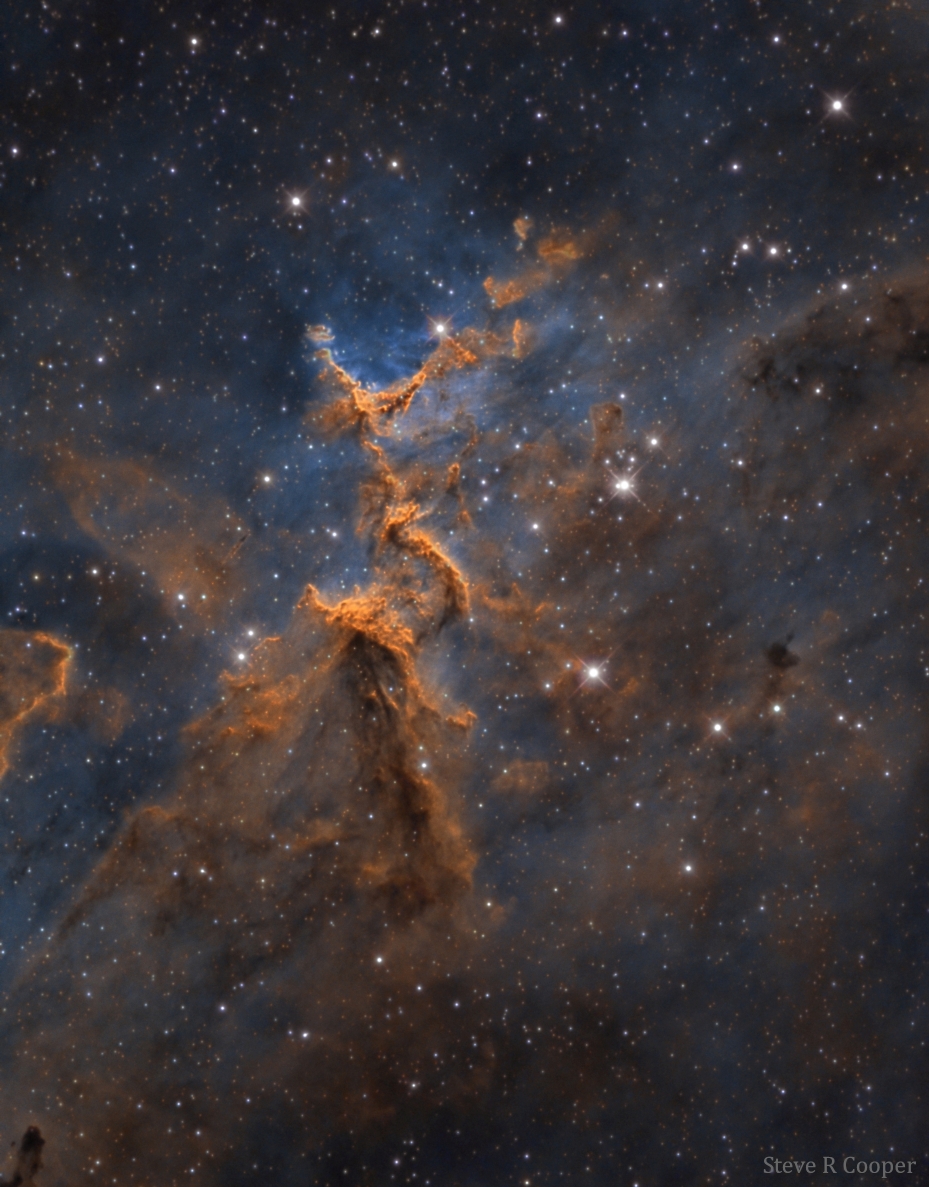
Astronomy picture of the day - 2017 February 10 - Melotte 15 in the Heart

See Explanation.  Clicking on the picture will download
 the highest resolution version available.
Melotte 15 in the Heart 
Image Credit & Copyright: Steve Cooper


Explanation: Cosmic clouds form fantastic shapes in the central regions of emission nebula IC 1805. The clouds are sculpted by stellar winds and radiation from massive hot stars in the nebula's newborn star cluster, Melotte 15. About 1.5 million years young, the cluster stars are scattered in this colorful skyscape, along with dark dust clouds in silhouette against glowing atomic gas. A composite of narrowband and broadband telescopic images, the view spans about 15 light-years and includes emission from ionized hydrogen, sulfur, and oxygen atoms mapped to green, red, and blue hues in the popular Hubble Palette. Wider field images reveal that IC 1805's simpler, overall outline suggests its popular name - The Heart Nebula. IC 1805 is located about 7,500 light years away toward the boastful constellation Cassiopeia.

2017-02-09

Foto - Aufrery-Toulouse - "Outono" - 30-11-2014

"Outono"

30-11-2014
JoanMira

Astronomy picture of the day - 2017 February 9 - Crescent Enceladus

See Explanation.  Clicking on the picture will download
 the highest resolution version available.
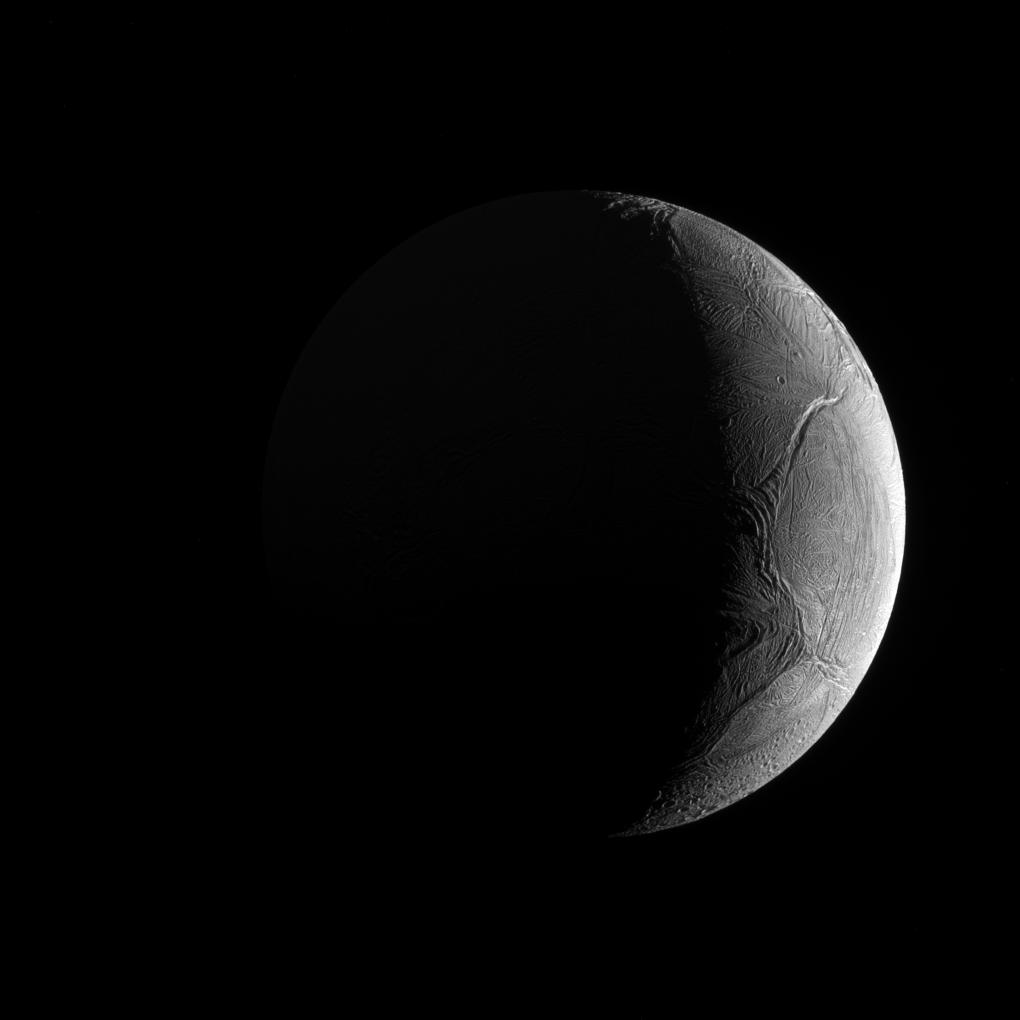
Crescent Enceladus 
Image Credit: Cassini Imaging TeamSSIJPLESANASA


Explanation: Peering from the shadows, the Saturn-facing hemisphere of tantalizing inner moon Enceladus poses in this Cassini spacecraft image. North is up in the dramatic scene captured last November as Cassini's camera was pointed in a nearly sunward direction about 130,000 kilometers from the moon's bright crescent. In fact, the distant world reflects over 90 percent of the sunlight it receives, giving its surface about the same reflectivity as fresh snow. A mere 500 kilometers in diameter, Enceladus is a surprisingly active moon. Data collected during Cassini's flybys and years of images have revealed the presence of remarkable south polar geysers and a possible global ocean of liquid water beneath an icy crust.

2017-02-08

Grupo Cantares D'Outrora - "O cantar é de quem canta" - Video - Musica

Résultat de recherche d'images pour "image Grupo Cantares D'Outrora"
"O cantar é de quem canta"

Rod Stewart - "Have you ever seen the rain" - Video - Music - Live

"Have you ever seen the rain"

Astronomy picture of the day - 2017 February 8 - The Butterfly Nebula from Hubble

See Explanation.  Clicking on the picture will download
 the highest resolution version available.
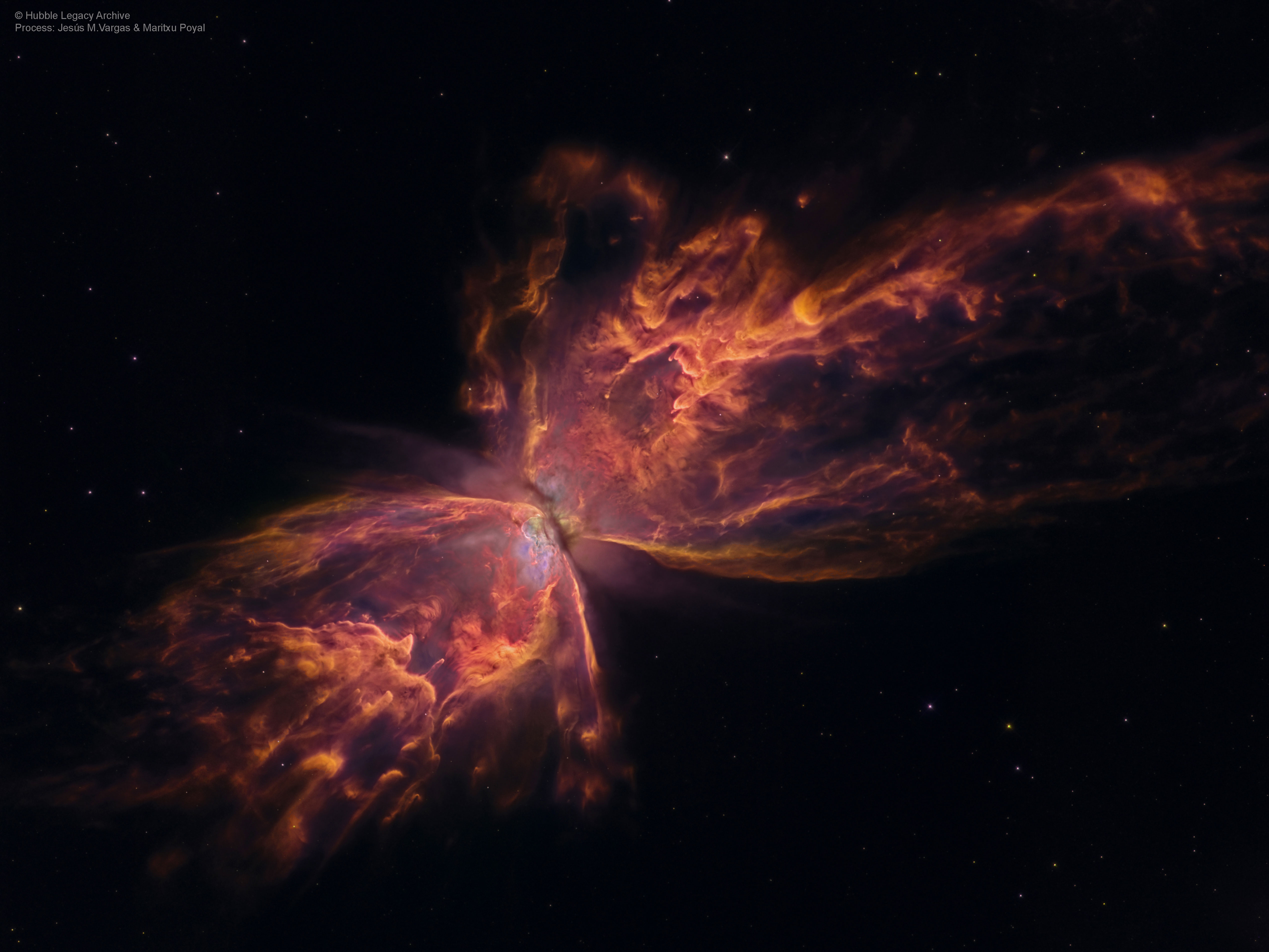
The Butterfly Nebula from Hubble 
Image Credit: NASAESAHubbleHLAReprocessing & Copyright: Jesús M.Vargas & Maritxu Poyal
Explanation: The bright clusters and nebulae of planet Earth's night sky are often named for flowers or insects. Though its wingspan covers over 3 light-years, NGC 6302 is no exception. With an estimated surface temperature of about 250,000 degrees C, the dying central star of this particular planetary nebula has become exceptionally hot, shining brightly in ultraviolet light but hidden from direct view by a dense torus of dust. This sharp close-up of the dying star's nebula was recorded by the Hubble Space Telescope and is presented here in reprocessed colors. Cutting across a bright cavity of ionized gas, the dust torus surrounding the central star is near the center of this view, almost edge-on to the line-of-sight. Molecular hydrogen has been detected in the hot star's dusty cosmic shroud. NGC 6302 lies about 4,000 light-years away in the arachnologically correct constellation of the Scorpion (Scorpius).

2017-02-07

Astronomy picture of the day - 2017 February 7 - NGC 6357: The Lobster Nebula

See Explanation.  Clicking on the picture will download
 the highest resolution version available.
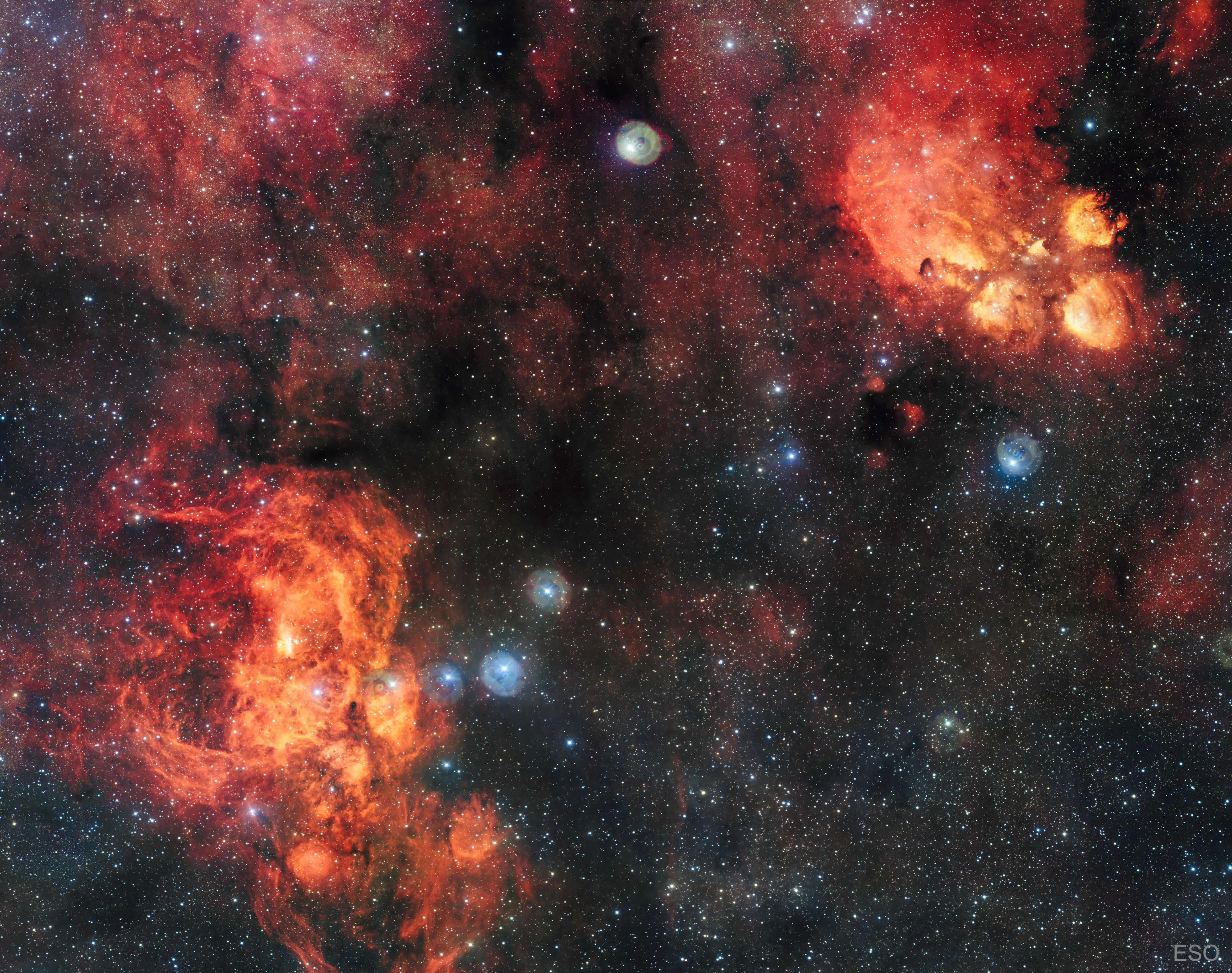
NGC 6357: The Lobster Nebula 
Image Credit: ESOVLT Survey Telescope
Explanation: Why is the Lobster Nebula forming some of the most massive stars known? No one is yet sure. Near the more obvious Cat's Paw nebula on the upper right, the Lobster Nebula, on the lower left and cataloged as NGC 6357, houses the open star cluster Pismis 24, home to these tremendously bright and blue stars. The overall red glow near the inner star forming region results from the emission of ionized hydrogen gas. The surrounding nebula, featured here, holds a complex tapestry of gas, dark dust, stars still forming, and newly born stars. The intricate patterns are caused by complex interactions between interstellar windsradiation pressuresmagnetic fields, and gravity. The fullzoomable version of this image contains about two billion pixels, making it one of the largest space images ever released. NGC 6357 spans about 400 light years and lies about 8,000 light years away toward the constellation of theScorpion.

2017-02-06

Astronomy picture of the day - 2017 February 6 - The Porpoise Galaxy from Hubble

See Explanation.  Clicking on the picture will download
 the highest resolution version available.
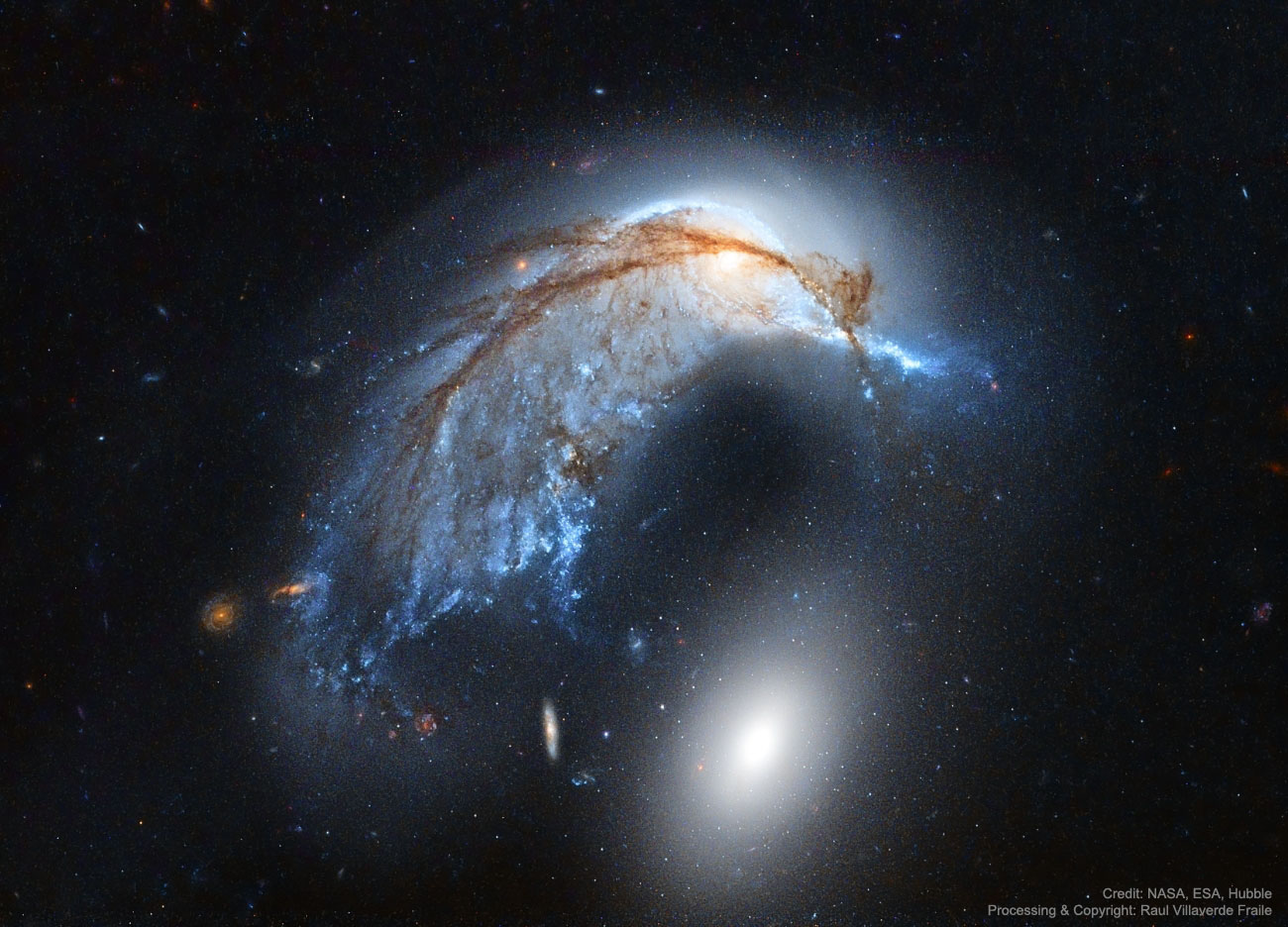
The Porpoise Galaxy from Hubble 
Image Credit: NASAESAHubbleHLAReprocessing & Copyright: Raul Villaverde
Explanation: What's happening to this spiral galaxy? Just a few hundred million years ago, NGC 2936, the upper of the two large galaxies shown, was likely a normal spiral galaxy -- spinning, creating stars -- and minding its own business. But then it got too close to the massive elliptical galaxy NGC 2937 below and took a dive. Dubbed the Porpoise Galaxy for its iconic shape, NGC 2936 is not only being deflected but also being distorted by the close gravitational interaction. A burst of young blue stars forms the nose of the porpoise toward the right of the upper galaxy, while the center of the spiral appears as an eye. Alternatively, the galaxy pair, together known as Arp 142, look to some like a penguin protecting an egg. Either way, intricate dark dust lanes and bright blue star streams trail the troubled galaxy to the lower right. The featured re-processed image showing Arp 142 in unprecedented detail was taken by the Hubble Space Telescope last year. Arp 142 lies about 300 million light years away toward the constellation, coincidently, of the Water Snake (Hydra). In a billion years or so the two galaxies will likely merge into one larger galaxy.

2017-02-05

Astronomy picture of the day - 2017 February 5 - Odysseus Crater on Tethys

See Explanation.  Clicking on the picture will download
 the highest resolution version available.
Odysseus Crater on Tethys 
Image Credit: Cassini Imaging TeamSSIJPLESANASA
Explanation: Some moons wouldn't survive the collision. Tethys, one of Saturn's larger moons at about 1000 kilometers in diameter, survived the collision, but today exhibits the resulting expansive impact crater Odysseus. Sometimes called the Great BasinOdysseus occurs on the leading hemisphere of Tethys and shows its great age by the relative amount of smaller craters that occur inside its towering walls. The density of Tethys is similar to water-ice. Thefeatured image was captured in November by the robotic Cassini spacecraft in orbit around Saturn as it swooped past the giant ice ball. Cassini has now started on its Grand Finale Tour which will take it inside Saturn's rings andculminate in September with a dive into Saturn's thick atmosphere.