2017-06-25

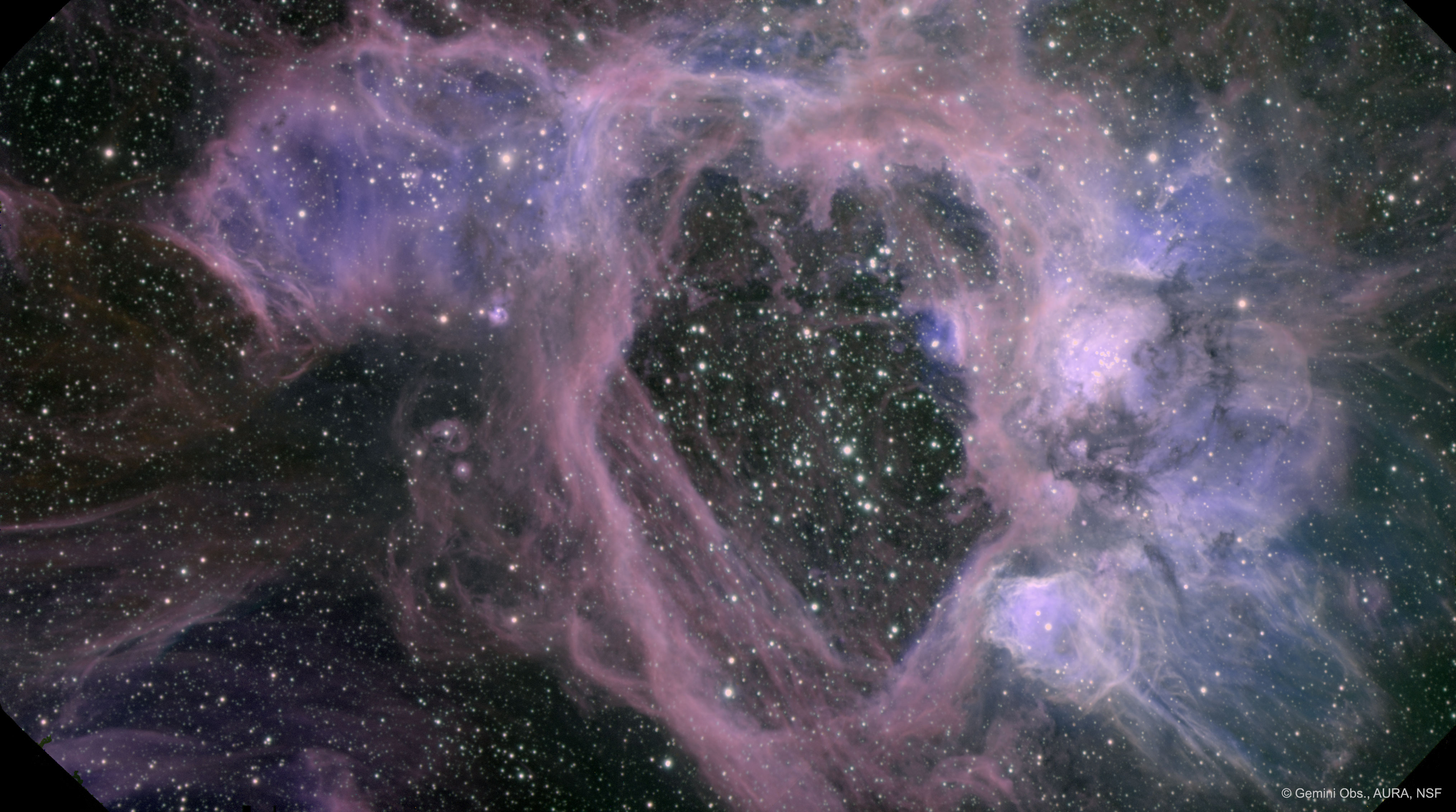
Astronomy picture of the day - 2017 June 25 - The N44 Superbubble

See Explanation.  Clicking on the picture will download
 the highest resolution version available.
The N44 Superbubble 
Image Credit & CopyrightGemini Obs.AURANSF
Explanation: What created this gigantic hole? The vast emission nebula N44 in our neighboring galaxy the Large Magellanic Cloud has a large, 250 light-year hole and astronomers are trying to figure out why. One possibility is particle winds expelled by massive stars in the bubble's interior that are pushing out the glowing gas. This answer was found to be inconsistent with measured wind velocities, however. Another possibility is that the expanding shells of oldsupernovas have sculpted the unusual space cavern. An unexpected clue of hot X-ray emitting gas was recently been detected escaping the N44 superbubble. The featured image was taken in three very specific colors by the huge 8-meter Gemini South Telescope on Cerro Pachon in Chile.

2017-06-24

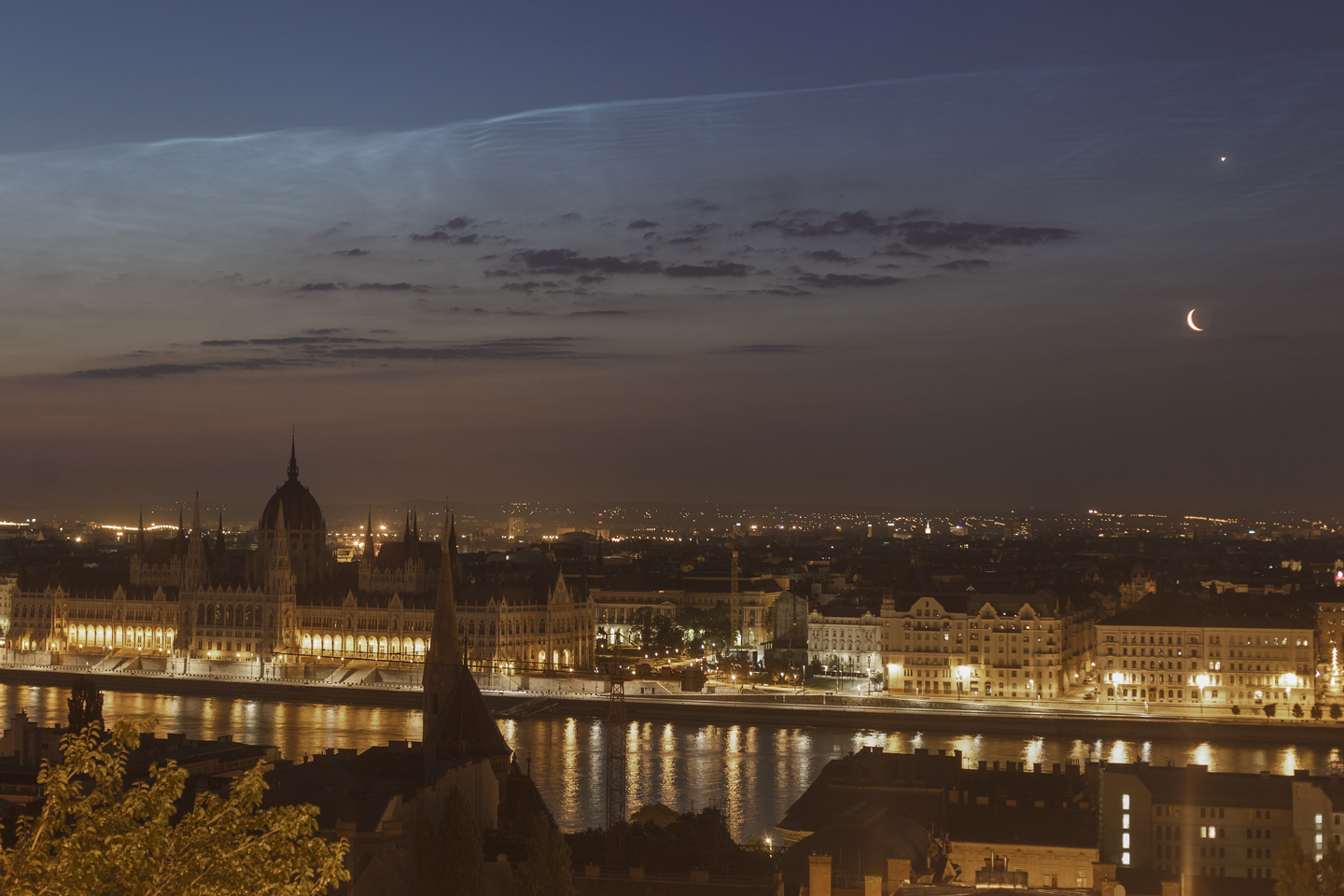
Astronomy picture of the day - 2017 June 24 - Solstice Conjunction over Budapest

See Explanation.  Clicking on the picture will download
 the highest resolution version available.
Solstice Conjunction over Budapest 
Image Credit & CopyrightGyörgy Soponyai
Explanation: Before a solstice Sun rose on June 21, brilliant Venus and an old crescent Moon posed together over Budapest, Hungary for this predawn skyscape. In the foreground the view looks across the Danube river from Buda to Pest toward the dome and peaks of the Hungarian Parliament building. Low clouds are in silhouette against a twilight sky. But far enough above the eastern horizon to catch the sunlight shines another seasonal apparition on that solstice morning, noctilucent clouds. Seen near sunrise and sunset in summer months at high latitudes, the night-shining clouds are formed as water vapor in the cold upper atmosphere condenses on meteoric dust or volcanic ash near the edge of space.

2017-06-22

Astronomy picture of the day - 2017 June 22 -

See Explanation.  Clicking on the picture will download
 the highest resolution version available.
Northern Summer on Titan 
Image Credit: Cassini Imaging TeamSSIJPLESANASA
Explanation: While yesterday's solstice brought summer to planet Earth's northern hemisphere, a northern summer solstice arrived for ringed planet Saturn nearly a month ago on May 24. Following the Saturnian seasons, its large moon Titan was captured in this Cassini spacecraft image from June 9. The near-infrared view finds bright methane clouds drifting through Titan's northern summer skies as seen from a distance of about 507,000 kilometers. Below Titan's clouds, dark hydrocarbon lakes sprawl near the large moon's now illuminated north pole.

2017-06-21

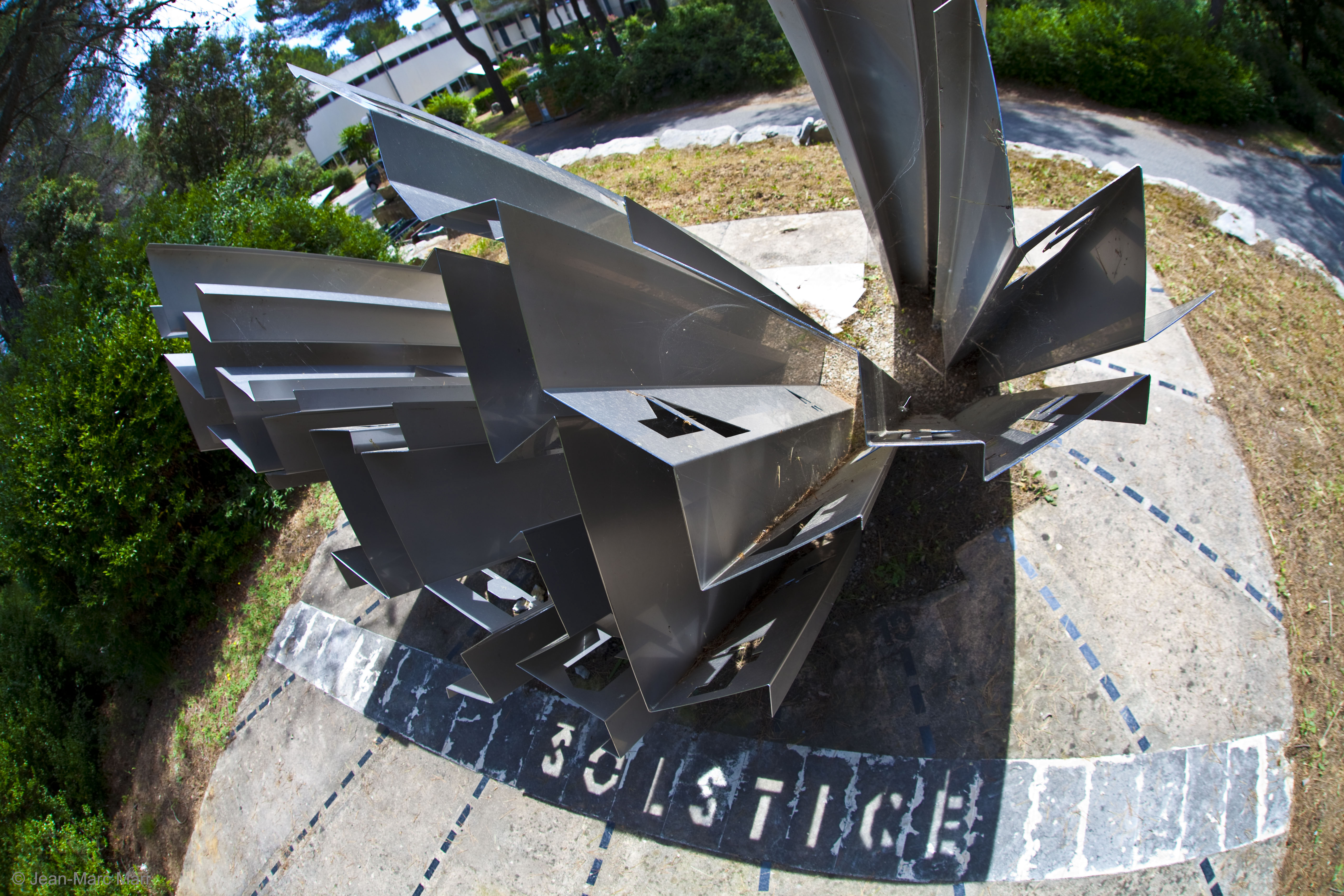
Astronomy picture of the day - 2017 June 21 - A Sundial that Shows Solstice

See Explanation.  Clicking on the picture will download
 the highest resolution version available.
A Sundial that Shows Solstice 
Image Credit & Copyright: Jean-Marc Mari
Explanation: What day is it? If the day -- and time -- are right, this sundial will tell you: SOLSTICE. Only then will our Sun be located just right for sunlight to stream through openings and spell out the term for the longest and shortestdays of the year. But this will happen today (and again in December). The sundial was constructed by Jean Salins in 1980 and is situated at the Ecole Supérieure des Mines de Paris in Valbonne Sophia Antipolis of south-eastern France. On two other days of the year, watchers of this sundial might get to see it produce another word: EQUINOXE.

2017-06-20

Playing For Change - "Stuck on you" - Video - Music - Live

Résultat de recherche d'images pour "imagens de Playing For Change"
"Stuck on you"

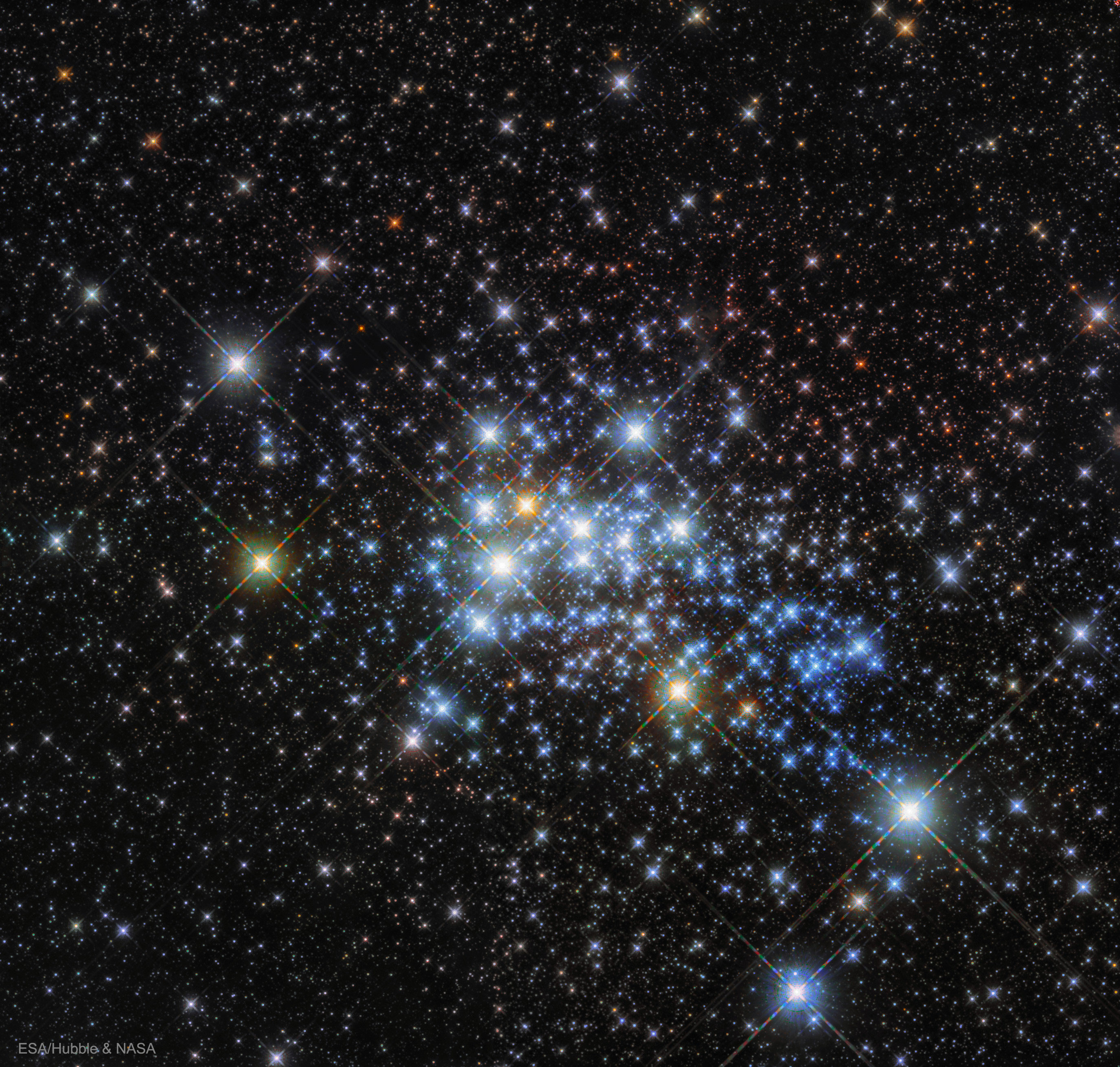
Astronomy picture of the day - 2017 June 20 - The Massive Stars in Westerlund 1

See Explanation.  Clicking on the picture will download
 the highest resolution version available.
The Massive Stars in Westerlund 1 
Image Credit: ESA/Hubble & NASA
Explanation: Star cluster Westerlund 1 is home to some of the largest and most massive stars known. It is headlined by the star Westerlund 1-26, a red supergiant star so big that if placed in the center of our Solar System, it would extend out past the orbit of Jupiter. Additionally, the young star cluster is home to 3 other red supergiants, 6 yellow hypergiant stars, 24 Wolf-Rayet stars, and several even-more unusual stars that continue to be studied. Westerlund 1 is relatively close-by for a star cluster at a distance of 15,000 light years, giving astronomers a good laboratory to study the development of massive stars. The featured image of Westerlund 1 was taken by the Hubble Space Telescopetoward the southern constellation of the Altar (Ara). Although presently classified as a "super" open clusterWesterlund 1 may evolve into a low mass globular cluster over the next billion years.

2017-06-18

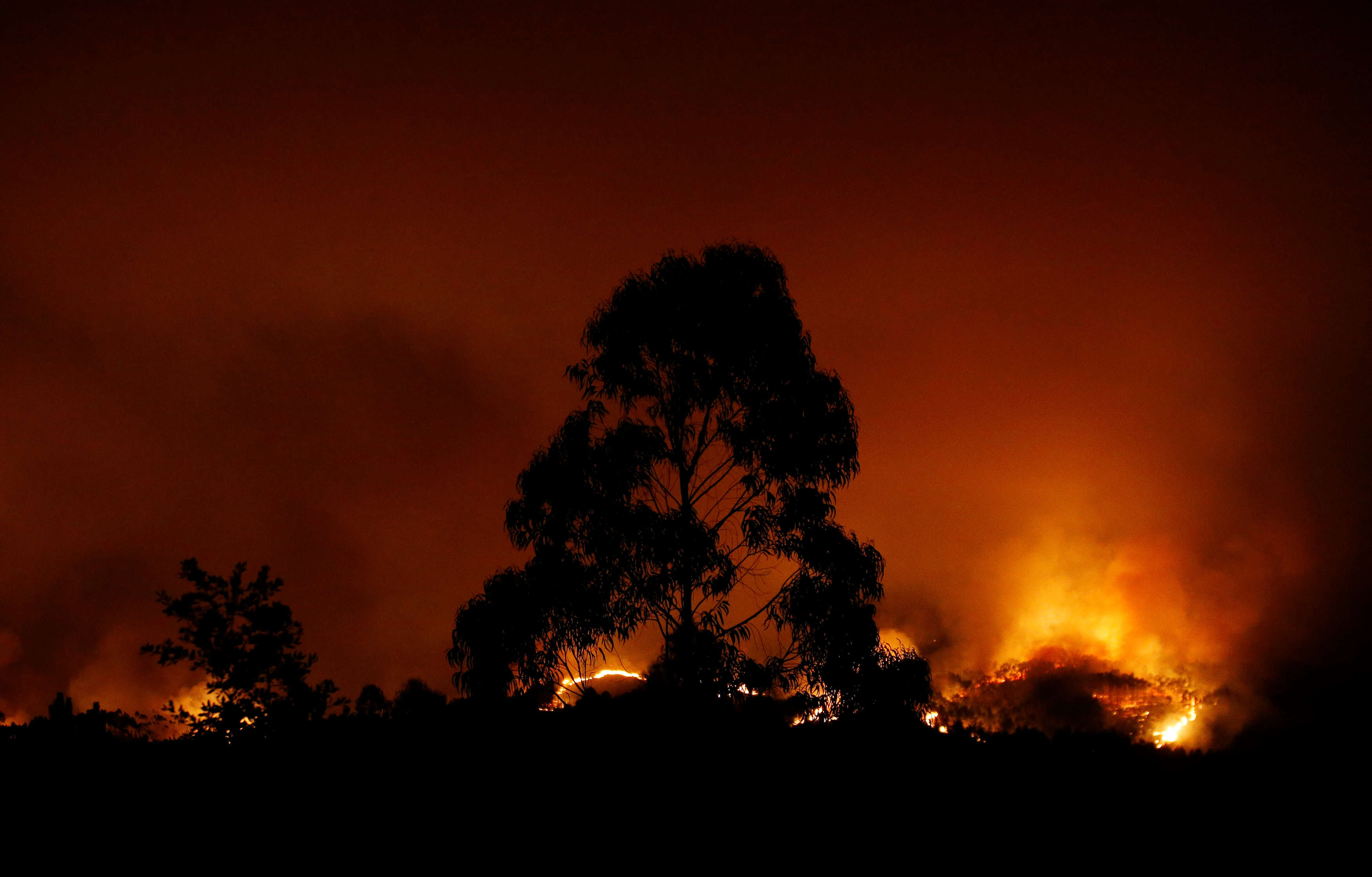
Artigo - Portugal em luto e luto por Portugal

Résultat de recherche d'images pour "Portugal em luto"

Artigo - TRAGEDIA em Portugal

Le feu s’est déclaré samedi 17 juin peu avant 15 h, heure locale, dans la commune de Pedrogao Grande, située dans le district de Leiria.
Fogo em Góis continua ativo e com muita intensidade

O incêndio que deflagrou no sábado, no concelho de Góis, distrito de Coimbra, “permance ativo” e a área “continua a arder com muita intensidade”, disse à agência Lusa a Autoridade Nacional de Proteção Civil.

Paulo Santos, oficial de Operações e Emergência, da Autoridade Nacional de Proteção Civil, acrescentou que o incêndio está em curso “há 23 horas e 20 minutos” e mobiliza “387 operacionais, 112 veículos e seis meios aéreos”.

Depois do fogo florestal que deflagrou em Pedrógão Grande, no distrito de Leiria – e que provocou pelo menos 62 mortes, segundo as últimas atualizações -, “este é o incêndio que mais meios mobiliza”, referiu.

“O incêndio continua a arder com muita intensidade”, numa “área florestal com proximidade com habitações”, referiu ainda.

Observador - Portugal

2017-06-17

Astronomy picture of the day - 2017 June 17 - Saturn near Opposition

See Explanation.  Clicking on the picture will download
 the highest resolution version available.
Saturn near Opposition 
Image Credit & Copyright: D. Peach, E. Kraaikamp, F. Colas, M. Delcroix, R. Hueso, G. Therin, C. Sprianu, S2P, IMCCE, OMP
Explanation: Saturn reached its 2017 opposition on June 16. Of course, opposition means opposite the Sun in Earth's sky and near opposition Saturn is up all night, at its closest and brightest for the year. This remarkably sharp imageof the ringed planet was taken only days before, on June 11, with a 1-meter telescope from the mountain top Pic du Midi observatory. North is at the top with the giant planet's north polar storm and curious hexagon clearly seen bathed in sunlight. But Saturn's spectacular ring system is also shown in stunning detail. The narrow Encke division is visible around the entire outer A ring, small ringlets can be traced within the fainter inner C ring, and Saturn's southern hemisphere can be glimpsed through the wider Cassini division. Near opposition Saturn's rings also appear exceptionally bright, known as the opposition surge or Seeliger Effect. Directly illuminated from Earth's perspective, the ring's icy particles cast no shadows and strongly backscatter sunlight creating the dramatic increase in brightness. Still, the best views of the ringed planet are currently from the Saturn-orbiting Cassini spacecraft. Diving close, Cassini's Grand Finale orbit number 9 is in progress.