2017-10-11

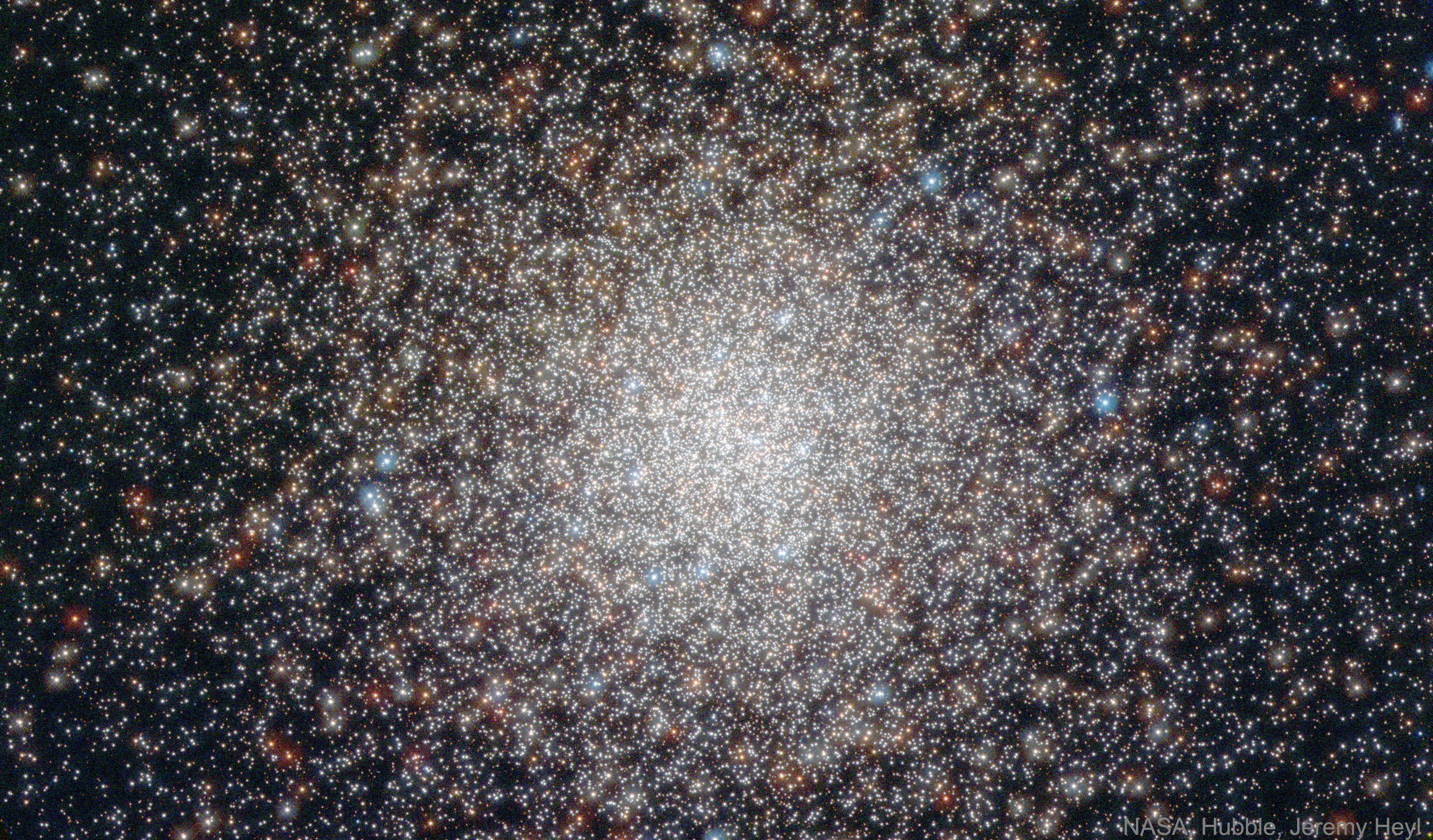
Astronomy picture of the day - 2017 October 11 - Star Cluster NGC 362 from Hubble

See Explanation.  Clicking on the picture will download
 the highest resolution version available.
Star Cluster NGC 362 from Hubble 
Image Credit: Hubble WFC3NASAESAJ. HeylI. Caiazzo, & Javiera Parada (UBC)
Explanation: If our Sun were near the center of NGC 362, the night sky would glow like a jewel box of bright stars. Hundreds of stars would glow brighter than Sirius, and in many different colors. Although these stars could become part of breathtaking constellations and intricate folklore, it would be difficult for planetary inhabitants there to see -- and hence understand -- the greater universe beyond. NGC 362 is one of only about 170 globular clusters of stars that exist in our Milky Way Galaxy. This star cluster is one of the younger globulars, forming likely well after our Galaxy. NGC 362 can be found with the unaided eye nearly in front of the Small Magellanic Cloud, and angularly close to the second brightest globular cluster known, 47 Tucanae. The featured image was taken with the Hubble Space Telescope to help better understand how massive stars end up near the center of some globular clusters.

Futebol - Portugal 2, Suiça, 0


Apesar de nunca por lá ter passado durante a fase de apuramento, Portugal terminou no primeiro lugar do Grupo B e garantiu a qualificação directa para o Mundial 2018. Um triunfo por 2-0 sobre a Suíça permitiu à selecção portuguesa corrigir o passo em falso dado na jornada inicial, em Basileia. As duas equipas terminam empatadas com 27 pontos, mas a vantagem é portuguesa graças à superior diferença entre golos marcados e sofridos. Um autogolo de Djourou deu início às celebrações no Estádio da Luz, que subiram de tom quando André Silva ampliou o marcador. A noite acabou com jogadores e equipa técnica abraçados no relvado, unidos por uma bandeira nacional gigante, e o hino cantado “a cappella” pelas bancadas.

A missão estava cumprida com sucesso e a viagem marcada para a Rússia, anfitriã do Campeonato do Mundo. Será a décima fase final consecutiva para a selecção portuguesa, numa série que começou com o Euro 2000. Mas a caminhada para o Mundial 2018 começou com um tropeção, três meses depois de a equipa nacional ter-se sagrado campeã da Europa. A derrota na Suíça prometeu complicar a tarefa neste apuramento, até porque seria o início de uma série de nove triunfos consecutivos para os suíços, e a selecção foi obrigada a descer à terra. Portugal manteve a perseguição e na última jornada pulou para o primeiro lugar.

Publico - Portugal

2017-10-10

Playing For Change - "With my own two hands" - Video - Music

"With my own two hands"


Fotos - "Jovem Oliveira"

"Jovem Oliveira"

09-10-2017
JoanMira

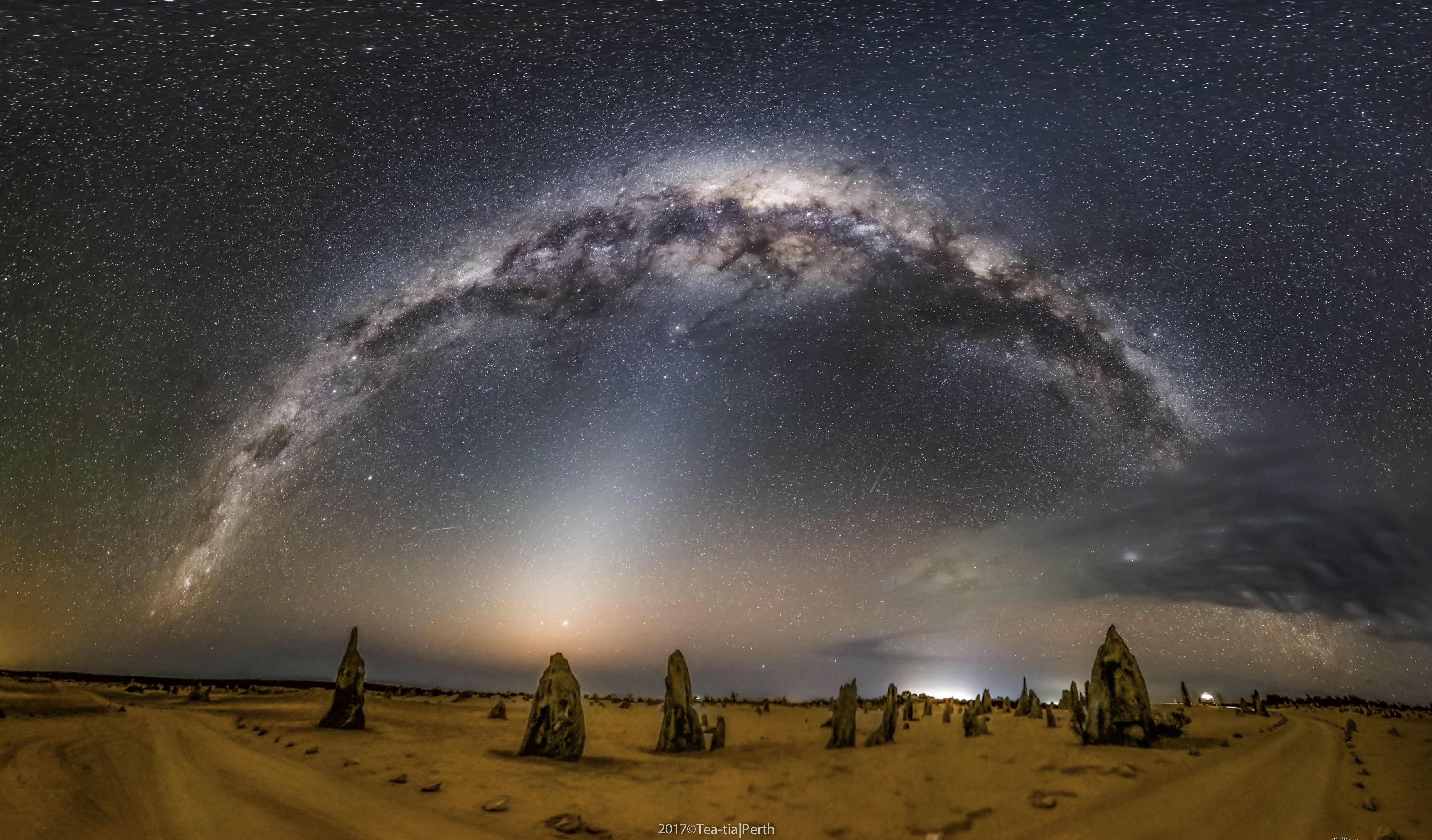
Astronomy picture of the day - 2017 October 10 - Milky Way and Zodiacal Light over Australian Pinnacles

See Explanation.
Moving the cursor over the image will bring up an annotated version.
Clicking on the image will bring up the highest resolution version
available.
Milky Way and Zodiacal Light over Australian Pinnacles 
Image Credit & Copyright: Jingyi Zhang
Explanation: What strange world is this? Earth. In the foreground of the featured image are the Pinnacles, unusual rock spires in Nambung National Park in Western Australia. Made of ancient sea shells (limestone), how these human-sized picturesque spires formed remains a topic of research. The panorama was taken last month. A ray of zodiacal light, sunlight reflected by dust grains orbiting between the planets in the Solar System, rises from the horizon near the image center. Arching across the top is the central band of our Milky Way Galaxy. The planets Jupiter and Saturn, as well as several famous stars are also visible in the background night sky.

2017-10-09

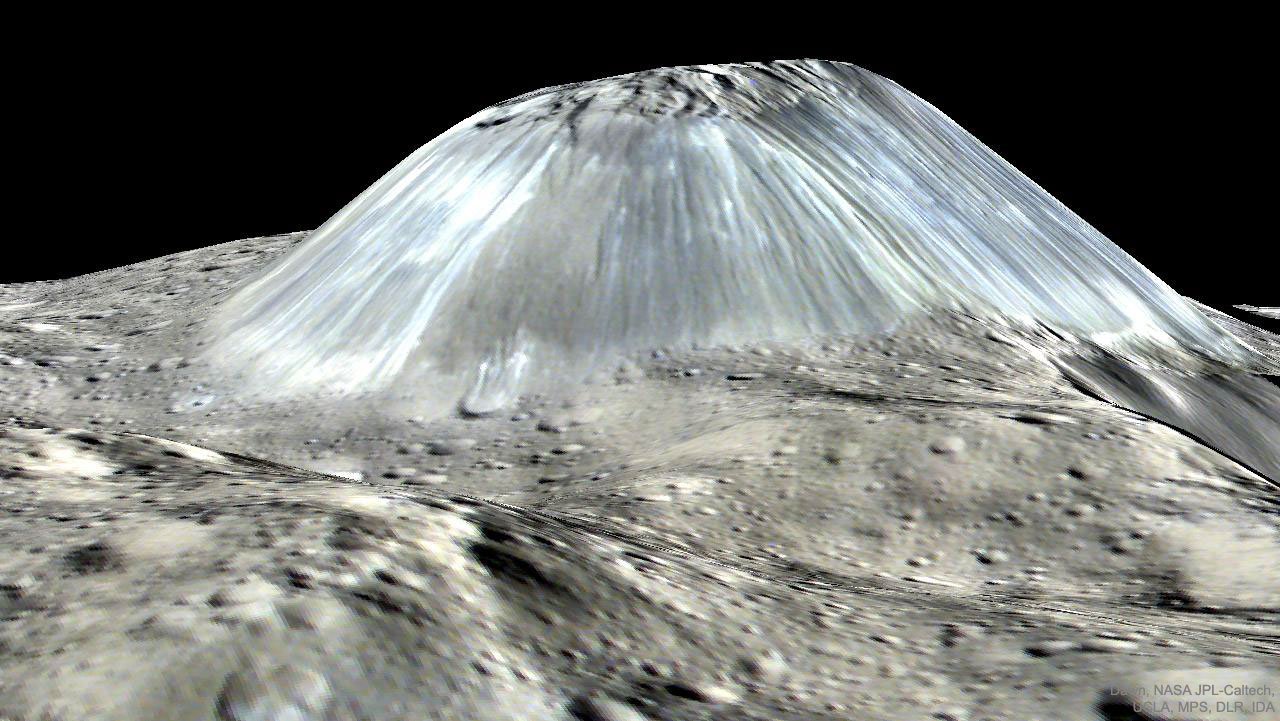
Astronomy picture of the day - 2017 October 9 - Unusual Mountain Ahuna Mons on Asteroid Ceres

See Explanation.  Clicking on the picture will download
 the highest resolution version available.
Unusual Mountain Ahuna Mons on Asteroid Ceres 
Image Credit: Dawn MissionNASAJPL-CaltechUCLA, MPS/DLR/IDA
Explanation: What created this unusual mountain? Ahuna Mons is the largest mountain on the largest known asteroid in our Solar SystemCeres, which orbits our Sun in the main asteroid belt between Mars and JupiterAhuna Mons, though, is like nothing that humanity has ever seen before. For one thing, its slopes are garnished not with old craters but young vertical streaks. One hypothesis holds that Ahuna Mons is an ice volcano that formed shortly after a large impact on the opposite side of the dwarf planet loosened up the terrain through focused seismic waves. The bright steaks may be high in reflective salt, and therefore similar to other recently surfaced material such as visible in Ceres' famous bright spots. The featured double-height digital image was constructed from surface maps taken of Ceres last year by the robotic Dawn mission.

2017-10-08

Chris Isaak - "Blue hotel" - Video - Music

"Blue hotel"

Tom Petty - "You don't know how it feels" - Video - Music

"You don't know how it feels"


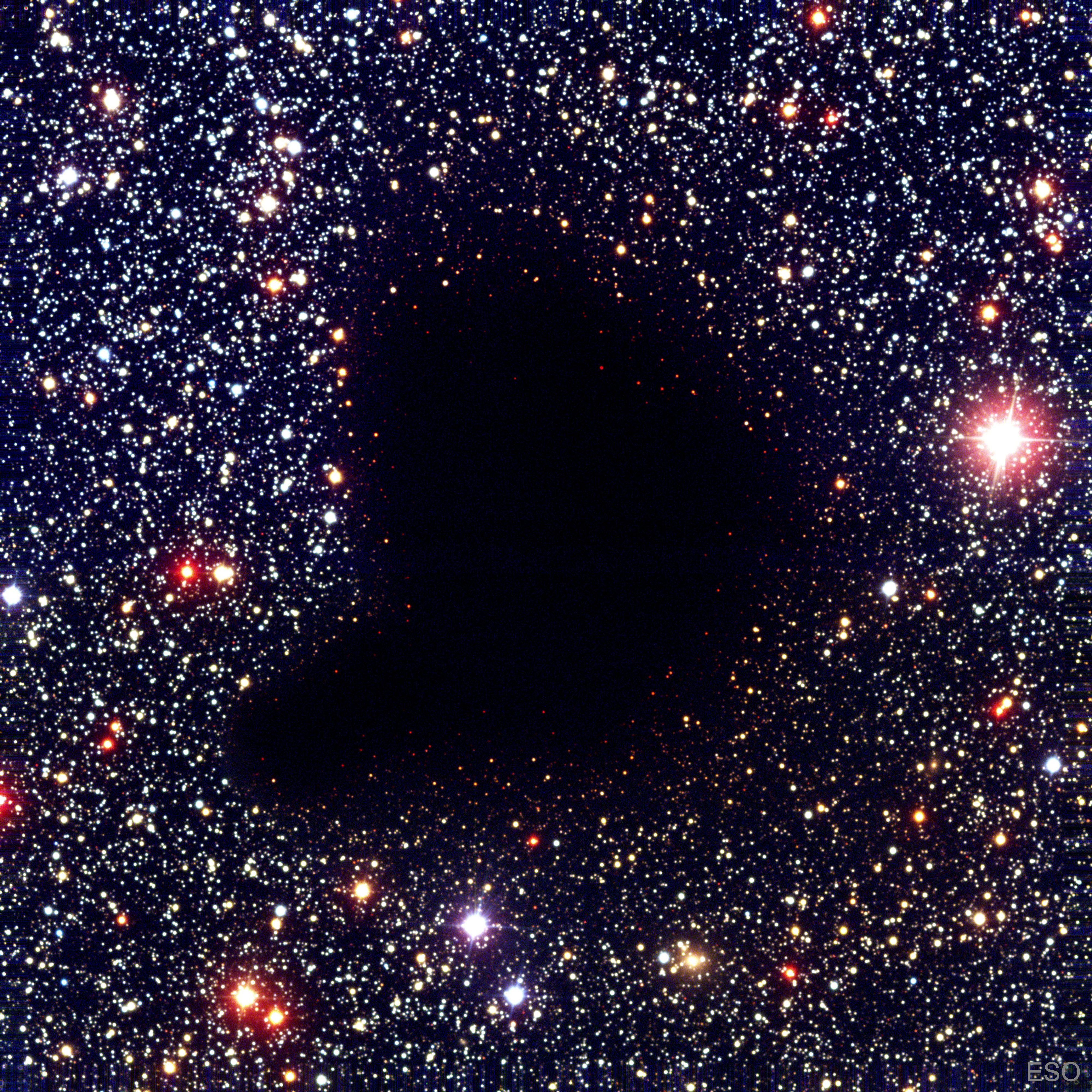
Astronomy picture of the day - 2017 October 8 - Dark Molecular Cloud Barnard 68

See Explanation.  Clicking on the picture will download
 the highest resolution version available.
Dark Molecular Cloud Barnard 68 
Image Credit: FORS Team8.2-meter VLT AntuESO
Explanation: Where did all the stars go? What used to be considered a hole in the sky is now known to astronomers as a dark molecular cloud. Here, a high concentration of dust and molecular gas absorb practically all the visible light emitted from background stars. The eerily dark surroundings help make the interiors of molecular clouds some of the coldest and most isolated places in the universe. One of the most notable of these dark absorption nebulae is a cloud toward the constellation Ophiuchus known as Barnard 68pictured here. That no stars are visible in the center indicates that Barnard 68 is relatively nearby, with measurements placing it about 500 light-years away and half a light-yearacross. It is not known exactly how molecular clouds like Barnard 68 form, but it is known that these clouds are themselves likely places for new stars to form. In fact, Barnard 68 itself has been found likely to collapse and form a new star system. It is possible to look right through the cloud in infrared light.

2017-10-07

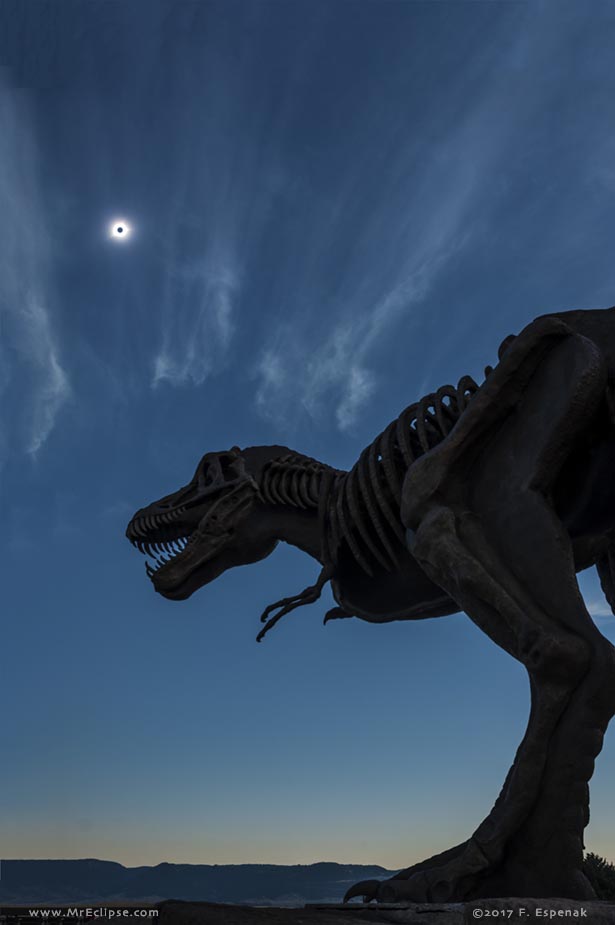
Astronomy picture of the day - 2017 October 7 - Eclipsosaurus Rex

See Explanation.  Clicking on the picture will download
 the highest resolution version available.
Eclipsosaurus Rex 
Image Credit & CopyrightFred Espenak (MrEclipse.com)
Explanation: We live in an era where total solar eclipses are possible because at times the apparent size of the Moon can just cover the disk of the Sun. But the Moon is slowly moving away from planet Earth. Its distance is measuredto increase about 1.5 inches (3.8 centimeters) per year due to tidal friction. So there will come a time, about 600 million years from now, when the Moon is far enough away that the lunar disk will be too small to ever completely cover the Sun. Then, at best only annular eclipses, a ring of fire surrounding the silhouetted disk of the too small Moon, will be seen from the surface of our fair planet. Of course the Moon was slightly closer and loomed a little larger 100 million years ago. So during the age of the dinosaurs there were more frequent total eclipses of the Sun. In front of the Tate Geological Museum at Casper College in Wyoming, this dinosaur statue posed with a modern total eclipse, though. An automated camera was placed under him to shoot his portrait during the Great American Eclipse of August 21.