2017-12-06

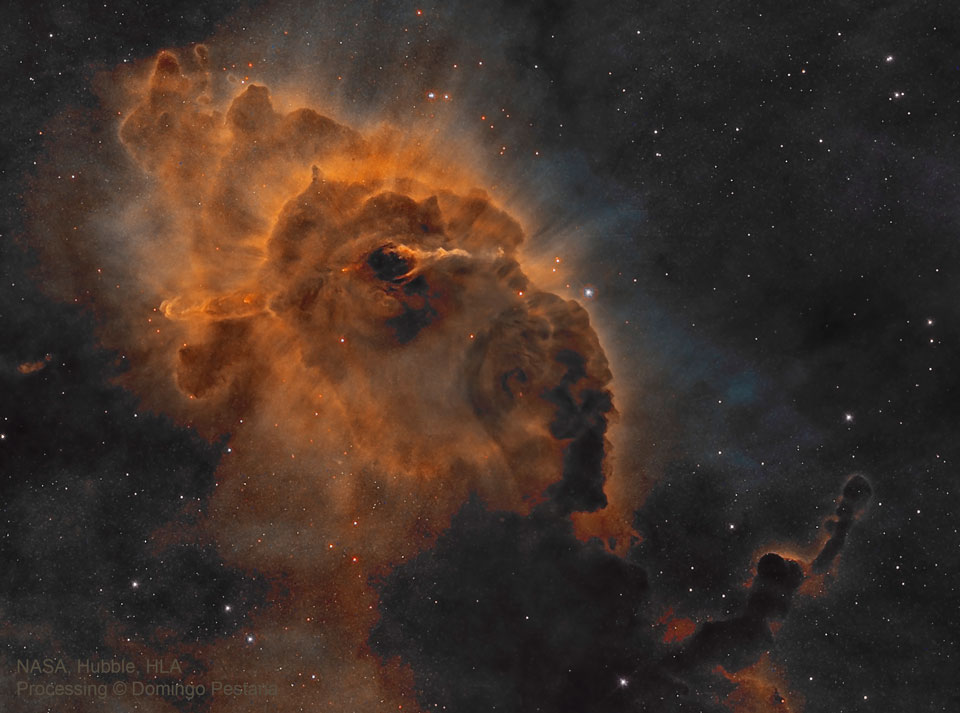
Astronomy picture of the day - 2017 December 6 - HH 666: Carina Dust Pillar with Jet

See Explanation.  Clicking on the picture will download
 the highest resolution version available.
HH 666: Carina Dust Pillar with Jet 
Image Credit: NASAESAHubbleHLAProcessing & Copyright: Domingo Pestana
Explanation: To some, it may look like a beehive harboring an evil bee. In reality, the featured Hubble image captures a cosmic pillar of dust, two-light years long, inside of which is Herbig-Haro 666 -- a young star emitting powerful jets. The structure lies within one of our galaxy's largest star forming regions, the Carina Nebula, shining in southern skies at a distance of about 7,500 light-years. The pillar's layered outline are shaped by the winds and radiation of Carina's young, hot, massive stars, some of which are still forming inside the nebula. A dust-penetrating view in infrared light better shows the two, narrow, energetic jets blasting outward from a still hidden infant star.

2017-12-05

Fotos - "Arrabida", Portugal

"Arrabida"

07-09-2014
JoanMira

Astronomy picture of the day - 2017 December 3 - Full Moon Silhouettes

Full Moon Silhouettes 
Video Credit & Copyright: Mark GeeMusic: Tenderness (Dan Phillipson)
Explanation: Have you ever watched the Moon rise? The slow rise of a nearly full moon over a clear horizon can be an impressive sight. One impressive moonrise was imaged in early 2013 over Mount Victoria Lookout in Wellington,New Zealand. With detailed planning, an industrious astrophotographer placed a camera about two kilometers away and pointed it across the lookout to where the Moon would surely soon be making its nightly debut. The featured single shot sequence is unedited and shown in real time -- it is not a time lapse. People on Mount Victoria Lookout can be seen in silhouette themselves admiring the dawn of Earth's largest satellite. Seeing a moonrise yourself is not difficult: it happens every day, although only half the time at night. Each day the Moon rises about fifty minutes later than the previous day, with a full moon always rising at sunset. A good time to see a full moonrise will occur tonight at sunset as the Moon's relative closeness to Earth during a full phase -- called a supermoon -- will cause it to appear slightly larger and brighter than usual.

2017-12-02

Astronomy picture of the day - 2017 December 2 - Messier Craters in Stereo

See Explanation.  Clicking on the picture will download
 the highest resolution version available.
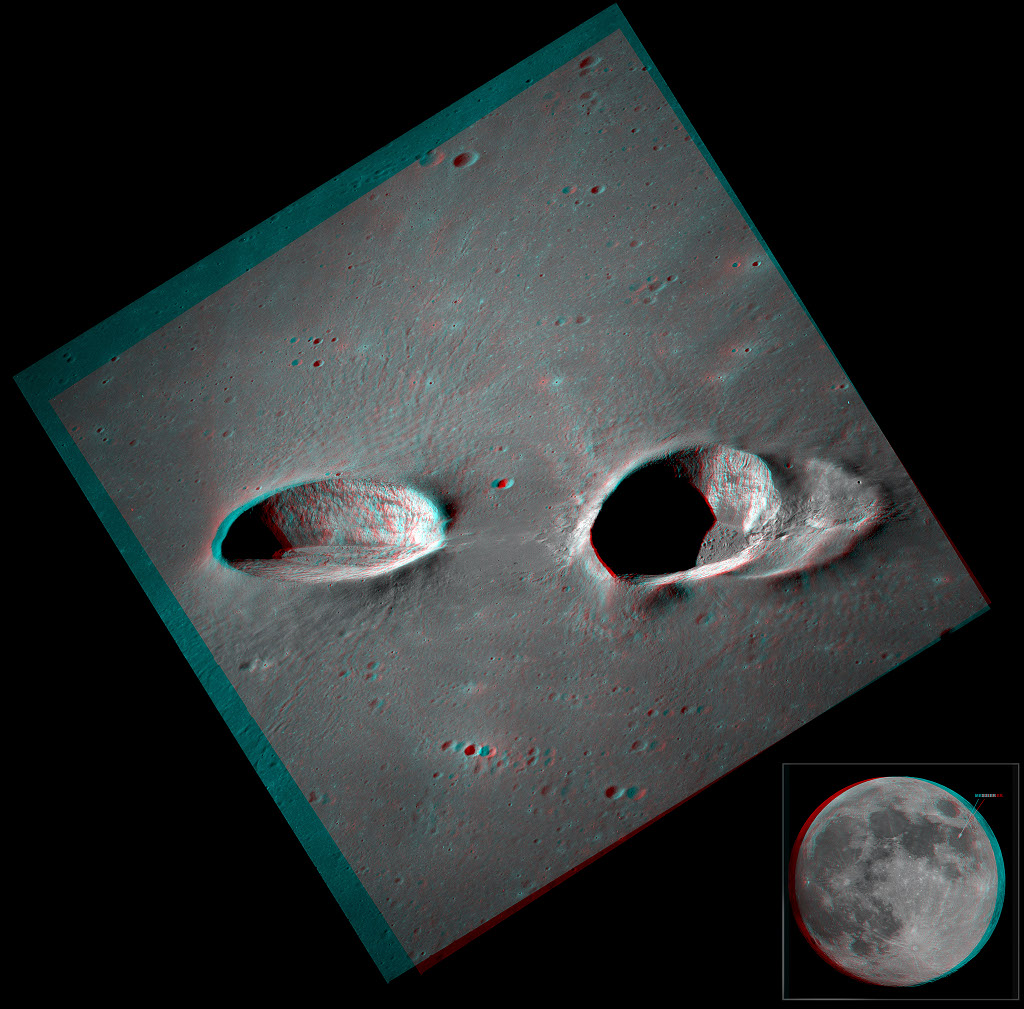
Messier Craters in Stereo 
Image Credit: Apollo 11NASA; Stereo Image Copyright Patrick Vantuyne
Explanation: Many bright nebulae and star clusters in planet Earth's sky are associated with the name of astronomer Charles Messier, from his famous 18th century catalog. His name is also given to these two large and remarkable craters on the Moon. Standouts in the dark, smooth lunar Sea of Fertility or Mare Fecunditatis, Messier (left) and Messier A have dimensions of 15 by 8 and 16 by 11 kilometers respectively. Their elongated shapes are explained by a left-to-right moving, extremely shallow-angle trajectory followed by an impactor that gouged out the craters. The shallow impact also resulted in two bright rays of material extending along the surface to the right, beyond the picture. Intended to be viewed with red/blue glasses (red for the left eye), this striking stereo picture of the crater pair was recently created from high resolution scans of two images (AS11-42-6304AS11-42-6305) taken during the Apollo 11 mission to the moon.

2017-11-30

Fotos - Sesimbra, Portugal

"Sesimbra"

30-03-2017
JoanMira

Astronomy picture of the day - 2017 November 30 - M33: Triangulum Galaxy

See Explanation.  Clicking on the picture will download
 the highest resolution version available.
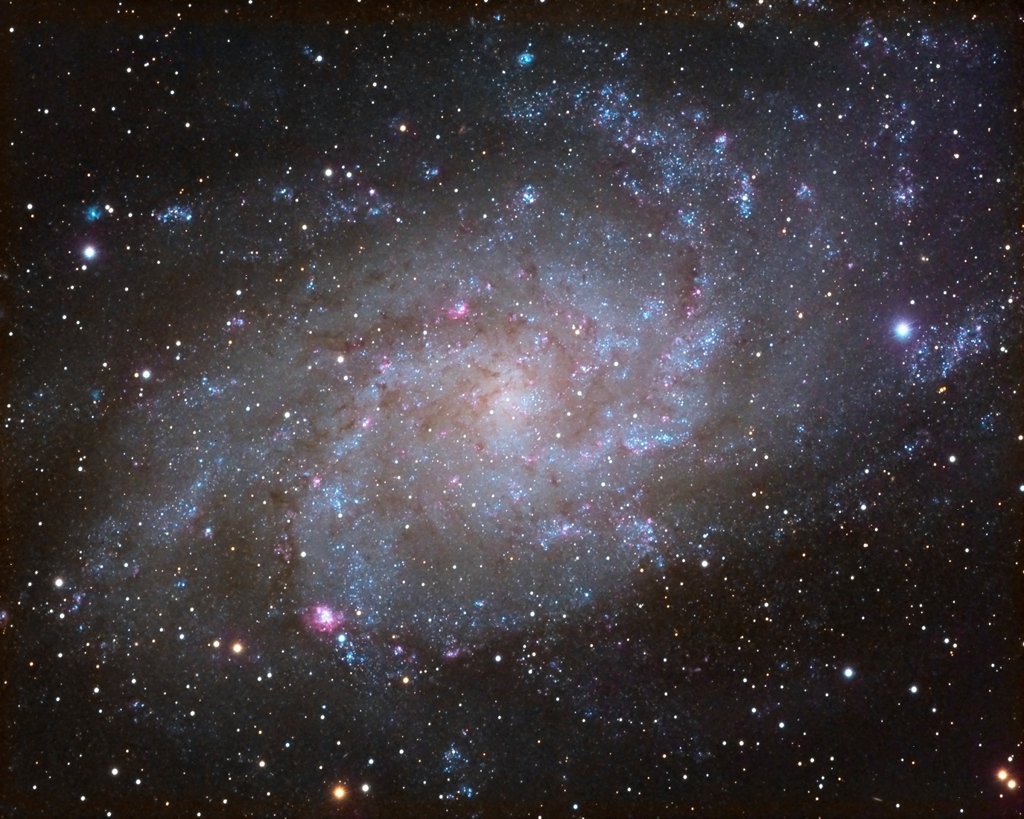
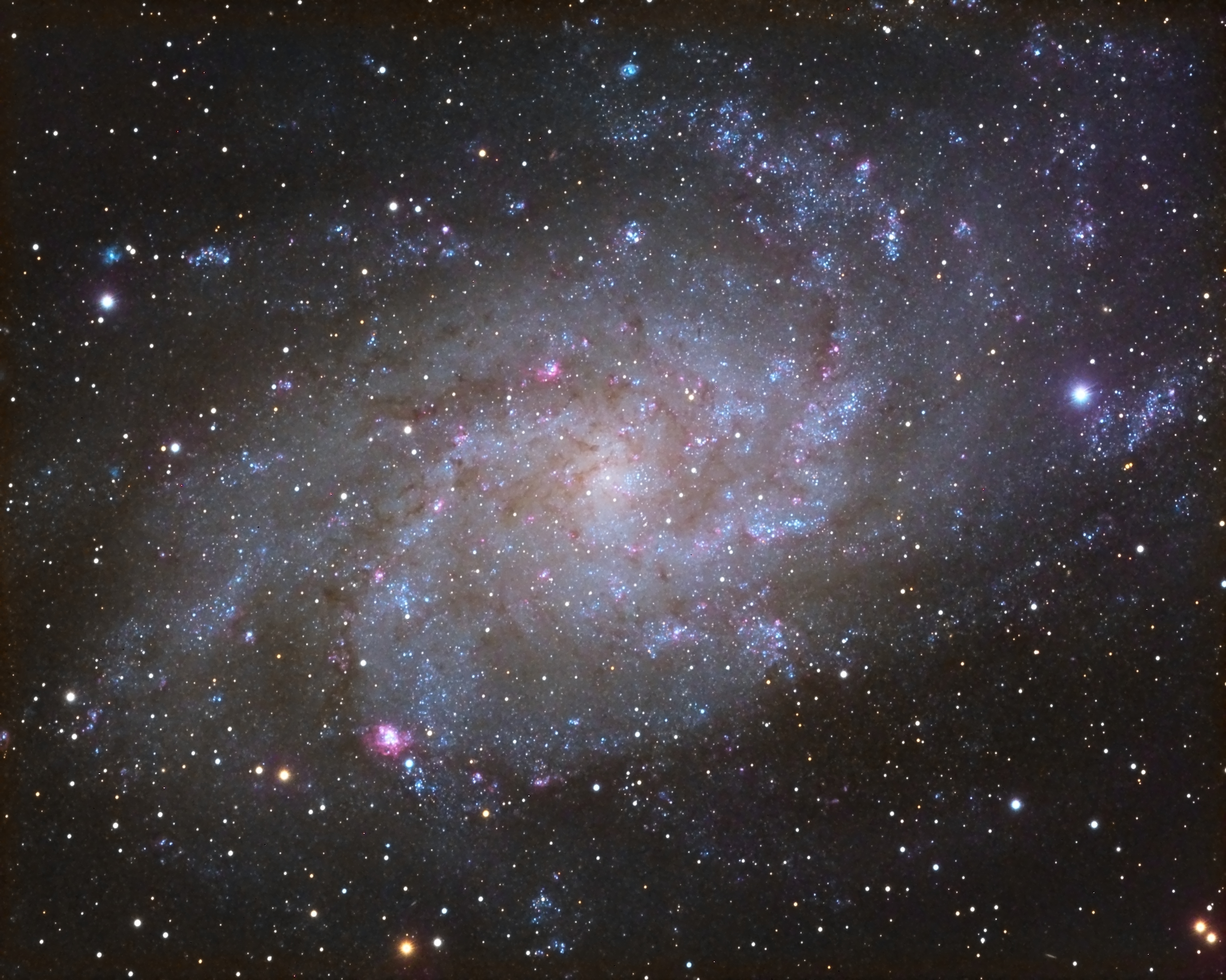
M33: Triangulum Galaxy
Image Credit & Copyright: Peter Nagy
Explanation: The small, northern constellation Triangulum harbors this magnificent face-on spiral galaxy, M33. Its popular names include the Pinwheel Galaxy or just the Triangulum Galaxy. M33 is over 50,000 light-years in diameter, third largest in the Local Group of galaxies after the Andromeda Galaxy (M31), and our own Milky Way. About 3 million light-years from the Milky Way, M33 is itself thought to be a satellite of the Andromeda Galaxy andastronomers in these two galaxies would likely have spectacular views of each other's grand spiral star systems. As for the view from planet Earth, this sharp composite image nicely shows off M33's blue star clusters and pinkish star forming regions along the galaxy's loosely wound spiral arms. In fact, the cavernous NGC 604 is the brightest star forming region, seen here at about the 7 o'clock position from the galaxy center. Like M31, M33's population of well-measured variable stars have helped make this nearby spiral a cosmic yardstick for establishing the distance scale of the Universe.

2017-11-29

Astronomy picture of the day - 2017 November 29 - M42: The Great Orion Nebula

See Explanation.  Clicking on the picture will download
 the highest resolution version available.
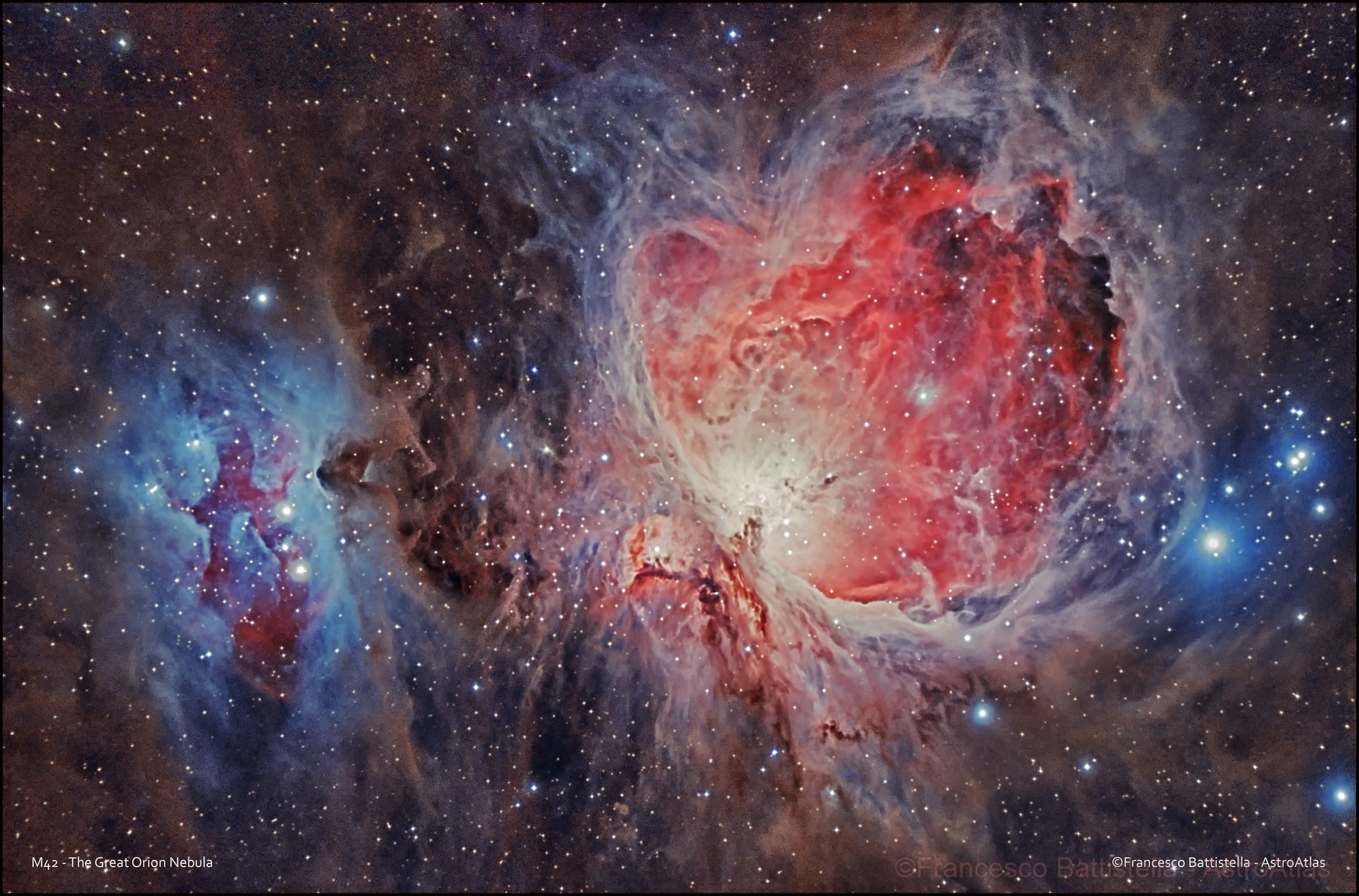
M42: The Great Orion Nebula 
Image Credit & Copyright: Francesco Battistella
Explanation: Few astronomical sights excite the imagination like the nearby stellar nursery known as the Orion Nebula. The Nebula's glowing gas surrounds hot young stars at the edge of an immense interstellar molecular cloud. Many of the filamentary structures visible in the featured image are actually shock waves - fronts where fast moving material encounters slow moving gas. The Orion Nebula spans about 40 light years and is located about 1500 light years away in the same spiral arm of our Galaxy as the Sun. The Great Nebula in Orion can be found with the unaided eye just below and to the left of the easily identifiable belt of three stars in the popular constellation Orion. The featured image, taken last month, shows a two-hour exposure of the nebula in three colors. The whole Orion Nebula cloud complex, which includes the Horsehead Nebula, will slowly disperse over the next 100,000 years.

2017-11-28

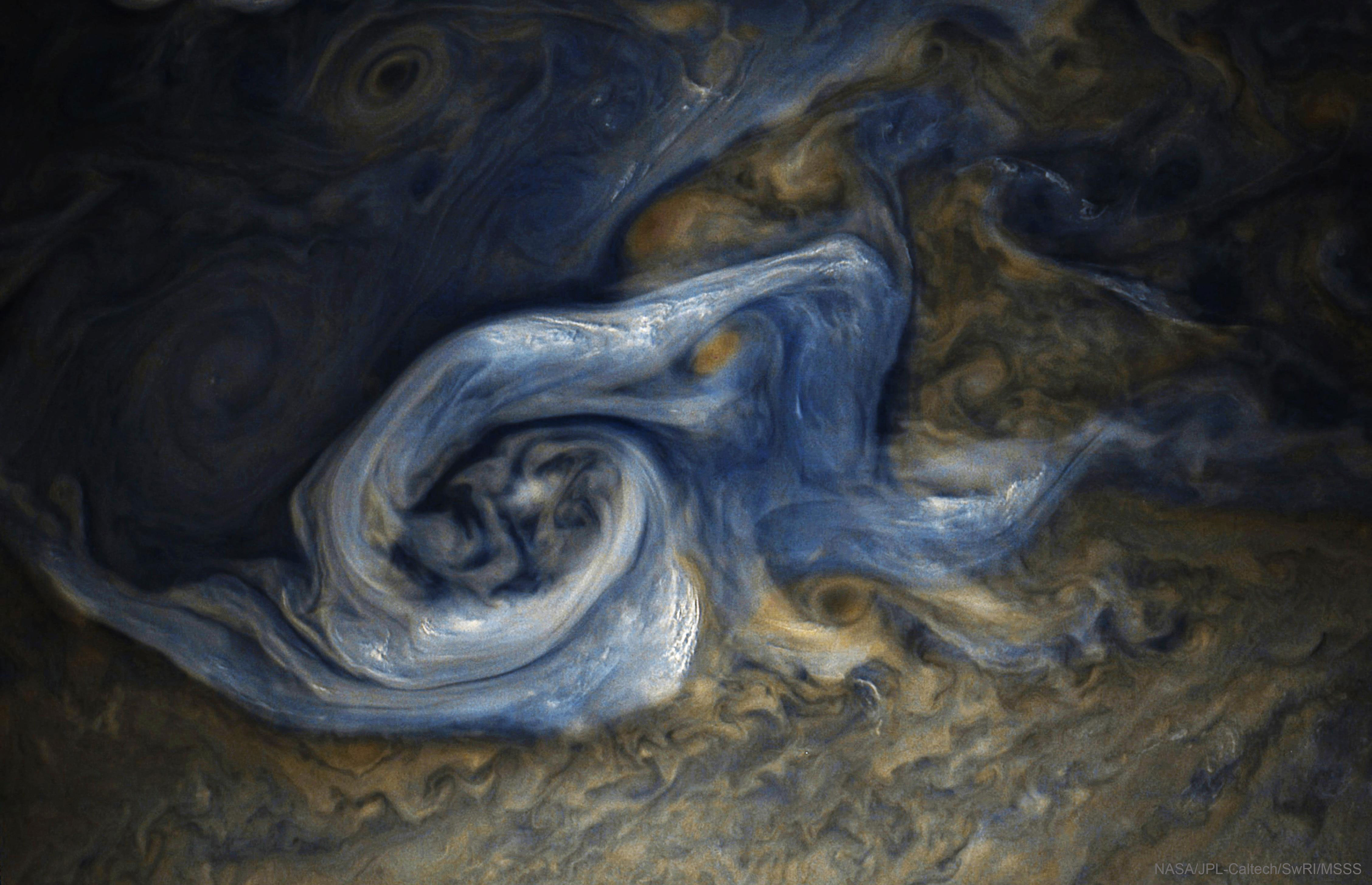
Astronomy picture of the day - 2017 November 28 - Juno Spots a Complex Storm on Jupiter

See Explanation.  Clicking on the picture will download
 the highest resolution version available.
Juno Spots a Complex Storm on Jupiter 
Image Credit: NASAJPL-CaltechSwRIMSSSProcessing: Gerald Eichstädt & Seán Doran
Explanation: Some storms on Jupiter are quite complex. The swirling storm was captured late last month by the NASA's robotic Juno spacecraft currently orbiting the Solar System's largest planet. The featured image spans about 30,000 kilometers, making this storm system just about as wide as planet Earth. The disturbance rotates counter-clockwise and shows a cloud pattern that includes light-colored updrafts thought to be composed predominantly ofammonia ice. These light clouds are the highest up and even cast discernable shadows toward the right. Juno will continue to orbit and probe Jupiter over the next few years as it tries to return data that help us to better understand Jupiter's atmospheric water abundance and if the planet has a solid surface underneath these fascinating clouds.

2017-11-27

Astronomy picture of the day - 2017 November 27 - Hurricane Season Animated

Hurricane Season Animated 
Video Credit: M. R. Radcliff (USRAet al.NASA's GSFCSVSMusic: Elapsing Time by C. Telford & R. A. Navarro (ASCAP)
Explanation: Where do hurricanes go? To better understand dangerous storms, NASA compiled data from several satellites into a supercomputer simulation of this past year's hurricane season. Specifically, the featured video shows how smoke (white), sea salt (blue), and dust (brown) tracked from 2017 August through October across the northern half of Earth's Western Hemisphere. These aerosols usefully trace sometimes invisible winds. In the midst of the many mesmerizing flows, hurricanes can be seen swirling across the Atlantic Ocean on the right. Some of these hurricanes lashed islands and coastal regions in North America before dissipating in the northern Atlantic. Studying this year's weather patterns may bolster more accurate storm forecasts as soon as next year.

2017-11-26

Astronomy picture of the day - 2017 November 26 - Our Story in One Minute

Our Story in One Minute 
Video Credit & Copyright: MelodySheepSymphony of Science, John Boswell; Music Credit: Our Story
Explanation: Do you have a minute -- to see the entire backstory of human existence? This thrilling video culls together multiple teasing video snippets in an attempt to succinctly summarize our history. And sets it to music. Briefly depicted, from start to finish, is an artistic animation of the Big Bang, a trip across the early universe, the formation of the Earth and Moon, the emergence of multi-celled life and plants, the rise of reptiles and dinosaurs, a devastatingmeteor strike, the rise of mammals and humans, and finally the rise of modern civilization. The minute movie ends with a flyover of the modern skyscraper and a human standing atop a snow covered mountain.