"Bohemian Rhapsody"
2017-02-21
Astronomy picture of the day - 2017 February 21 - An Active Night over the Magellan Telescopes
Image Credit & Copyright: Yuri Beletsky (Carnegie Las Campanas Observatory, TWAN);
Music Credit & License: Airglow by Club 220
Explanation: The night sky is always changing. Featured here are changes that occurred over a six hour period in late 2014 June behind the dual 6.5-meter Magellan Telescopes at Las Campanas Observatory in Chile. The initial red glow on the horizon is airglow, a slight cooling of high air by the emission of specific colors of light. Bands of airglow are also visible throughout the time-lapse video. Early in the night, car headlights flash on the far left. Satellitesquickly shoot past as they circle the Earth and reflect sunlight. A long and thin cloud passes slowly overhead. The Large Magellanic Cloud rises on the left, while the expansive central band of our Milky Way Galaxy arches and pivots as the Earth rotates. As the night progresses, the Magellan telescopes swivel and stare as they explore pre-determined patches of the night sky. Every night, every sky changes differently, even though the phenomena at play are usually the same.
2017-02-20
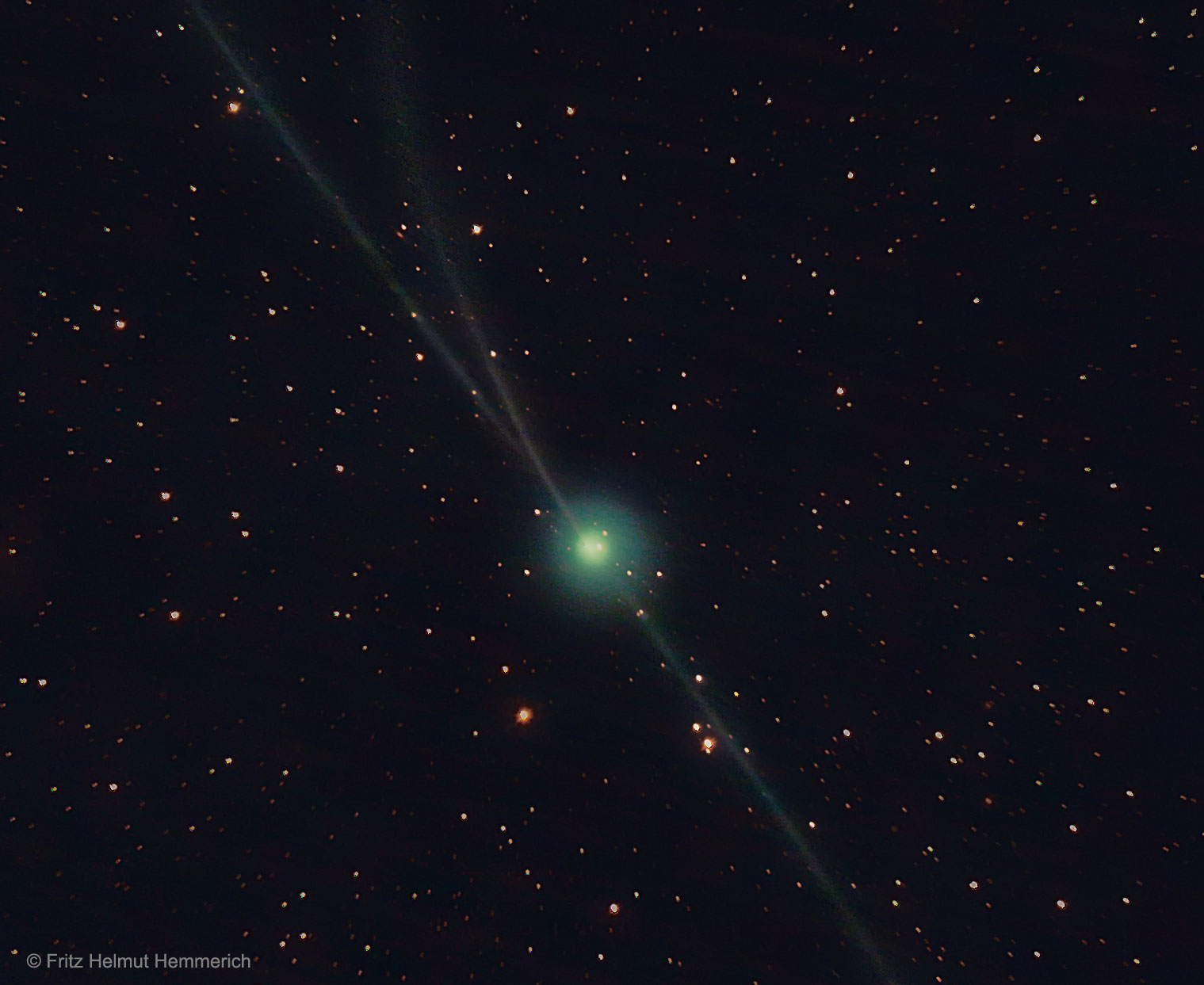
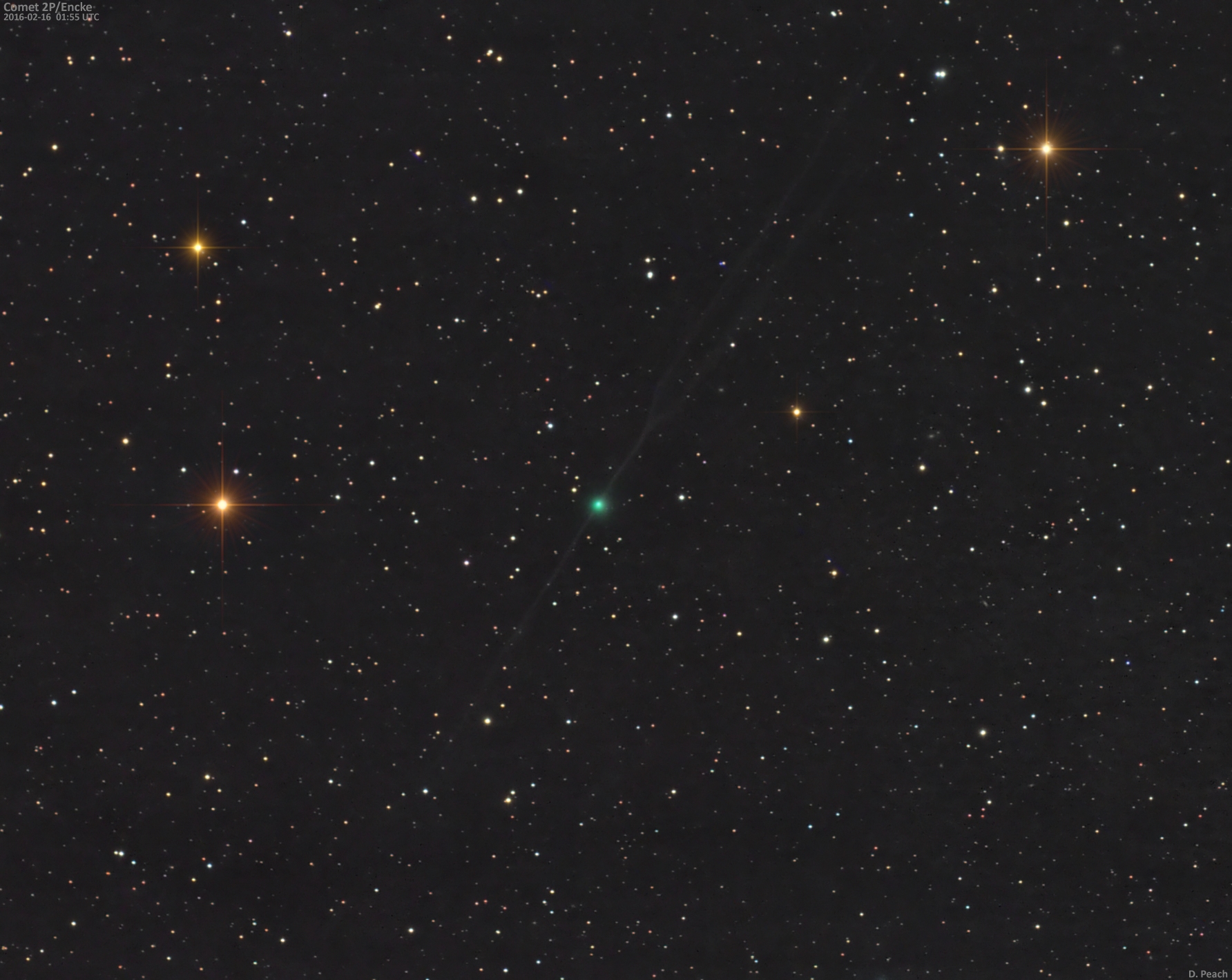
Astronomy picture of the day - 2017 February 20 - Almost Three Tails for Comet Encke

Image Credit & Copyright: Fritz Helmut Hemmerich
Explanation: How can a comet have three tails? Normally, a comet has two tails: an ion tail of charged particles emitted by the comet and pushed out by the wind from the Sun, and a dust tail of small debris that orbits behind the comet but is also pushed out, to some degree, by the solar wind. Frequently a comet will appear to have only one tail because the other tail is not easily visible from the Earth. In the featured unusual image, Comet 2P/Encke appears to have three tails because the ion tail split just near to the time when the image was taken. The complex solar wind is occasionally turbulent and sometimes creates unusual structure in an ion tail. On rare occasions even ion-tail disconnection events have been recorded. An image of the Comet Encke taken two days later gives a perhaps less perplexing perspective.
2017-02-19
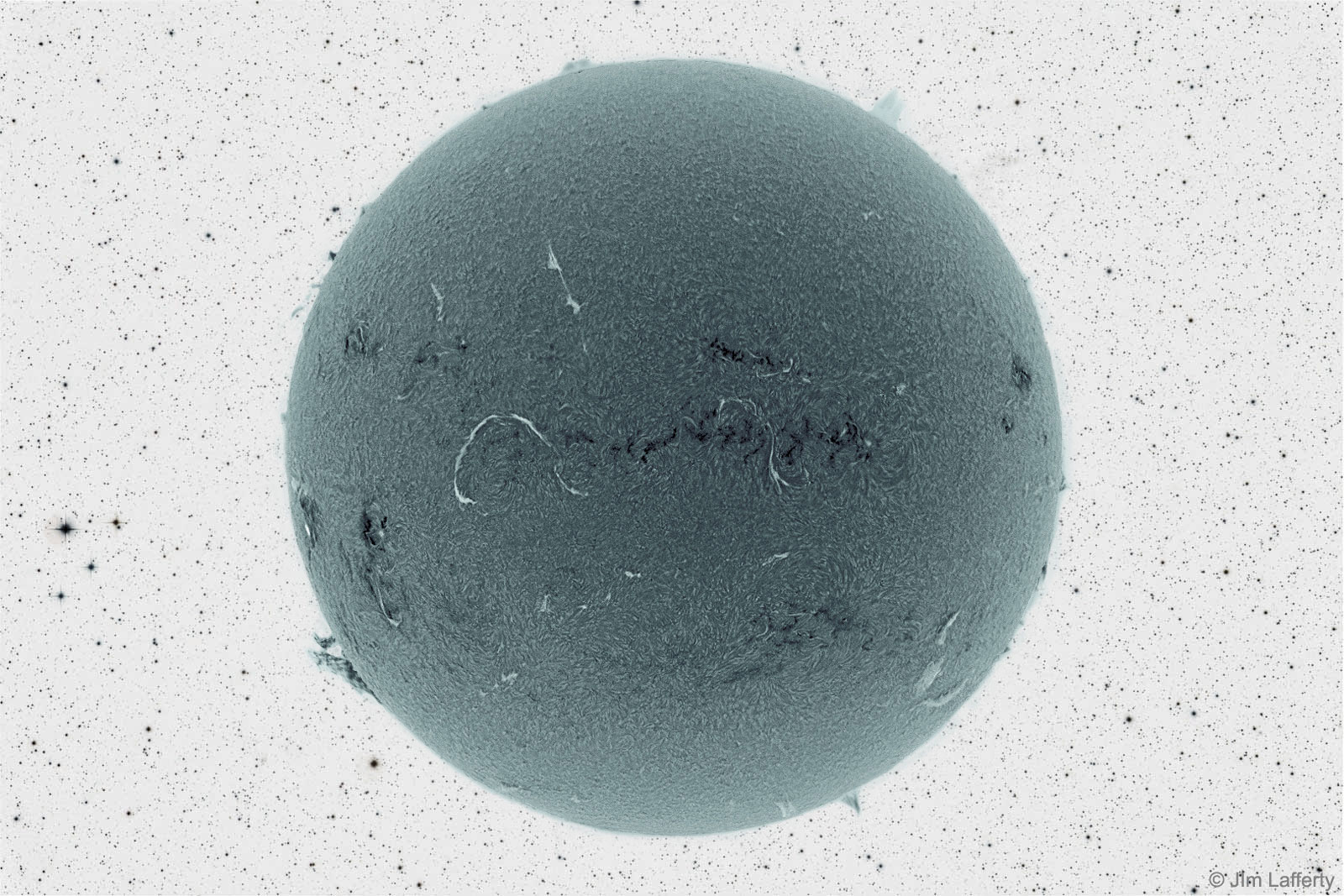
Astronomy picture of the day - 2017 February 19 - Black Sun and Inverted Starfield

Image Credit & Copyright: Jim Lafferty
Explanation: Does this strange dark ball look somehow familiar? If so, that might be because it is our Sun. In the featured image from 2012, a detailed solar view was captured originally in a very specific color of red light, then rendered in black and white, and then color inverted. Once complete, the resulting image was added to a starfield, then also color inverted. Visible in the image of the Sun are long light filaments, dark active regions, prominences peeking around the edge, and a moving carpet of hot gas. The surface of our Sun can be a busy place, in particular during Solar Maximum, the time when its surface magnetic field is wound up the most. Besides an active Sun being so picturesque, the plasma expelled can also become picturesque when it impacts the Earth's magnetosphere and creates auroras.
2017-02-18
Artigo - Helicóptero aterrissa em estrada e piloto desce para pedir informação a caminhoneiro
A cena surreal aconteceu no Cazaquistão, ex-república soviética no centro da Ásia. O piloto de um helicóptero aterrissou em uma estrada e desceu da aeronave para pedir informação a um caminhoneiro que passava pelo local.
Ele queria orientação para chegar à cidade de Aktobe, no noroeste do país.
De acordo com a BBC, o Ministro da Defesa cazaque afirmou que o piloto estava participando de um exercício de orientação, mas, por causa da nevasca, acabou perdendo suas referências em terra.
O Globo - Brasil
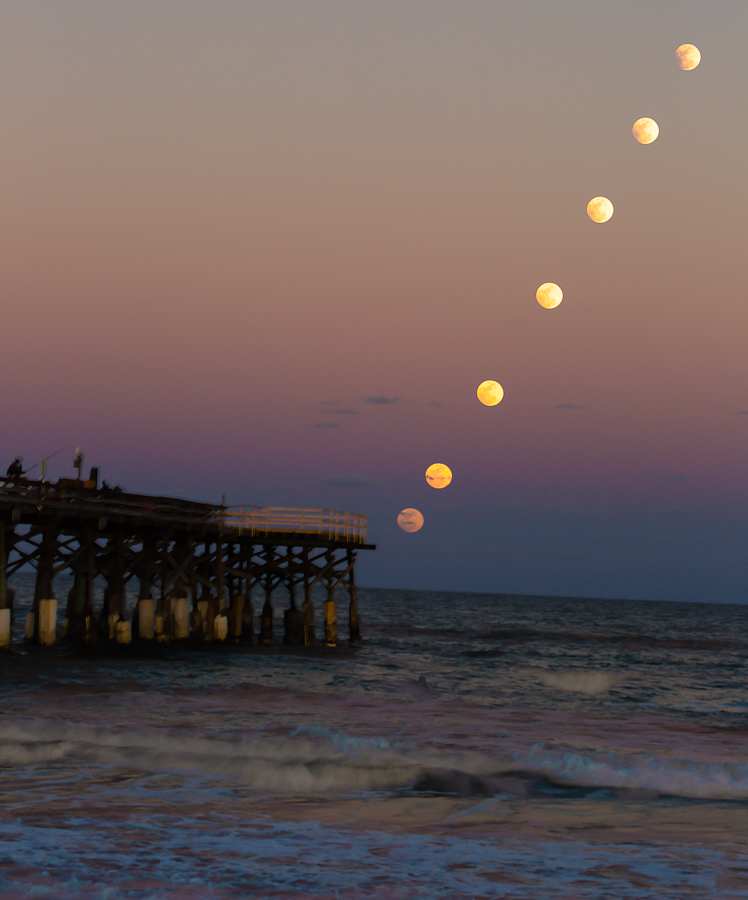
Astronomy picture of the day - 2017 February 18 - Penumbral Eclipse Rising

Image Credit & Copyright: Bill Jelen
Explanation: As seen from Cocoa Beach Pier, Florida, planet Earth, the Moon rose at sunset on February 10 while gliding through Earth's faint outer shadow. In progress was the first eclipse of 2017, a penumbral lunar eclipse followed in this digital stack of seaside exposures. Of course, the penumbral shadow is lighter than the planet's umbral shadow. That central, dark, shadow is easily seen on the lunar disk during a total or partial lunar eclipse. Still, in this penumbral eclipse the limb of the Moon grows just perceptibly darker as it rises above the western horizon. The second eclipse of 2017 could be more dramatic though. With viewing from a path across planet Earth's southern hemisphere, on February 26 there will be an annular eclipse of the Sun.
Texto - Universo, Estrelas, Felicidade...
Até gostava que o sol girasse em torno do meu mundo para contrariar
definitivamente, se necessário, alguns crentes do passado.
E, já agora, gostaria, a fim de satisfazer a minha curiosidade
intelectual, que a Terra pudesse observar o lado escondido da Lua.
Gostaria, também, que seres inteligentes doutra galáxia pusessem ordem
no nosso Universo; ele que parece ondular ao sabor de ideias de alguns (poucos)
indígenas privilegiados que teimam em considerar eternos todos seus valores
materiais...
Penso, ainda, que a felicidade poderia estar num cantinho de prazeres
fisiológicos; talvez; mas, quanto a mim, ela resume-se essencialmente, à contemplação
das estrelas no céu infinito…
(A felicidade, é também, quanto a
mim, ajudar todos os que sofrem e necessitam de ajuda. Tema para desenvolver
noutra publicação.)
Mas hoje tenho o privilégio de, à janela da minha casa, observar estrelas,
no céu infinito, associando cada uma delas a seres amados e desaparecidos.
18-02-2017
JoanMira
JoanMira
2017-02-17
Expressões populares portuguesas - À grande e à francesa
Significado:
Viver com luxo e ostentação. Origem: Relativa aos modos luxuosos do general Jean Andoche Junot, auxiliar de Napoleão que chegou a Portugal na primeira invasão francesa, e dos seus acompanhantes, que se passeavam vestidos de gala pela capital.
Fotografia - Lisboa noturna - Praça do Rossio
Estúdio Horácio Novais, Praça do Rossio, Lisboa, sem data Colecções daFundação Calouste Gulbenkian, Lisboa, Portugal (Flickr Commons)
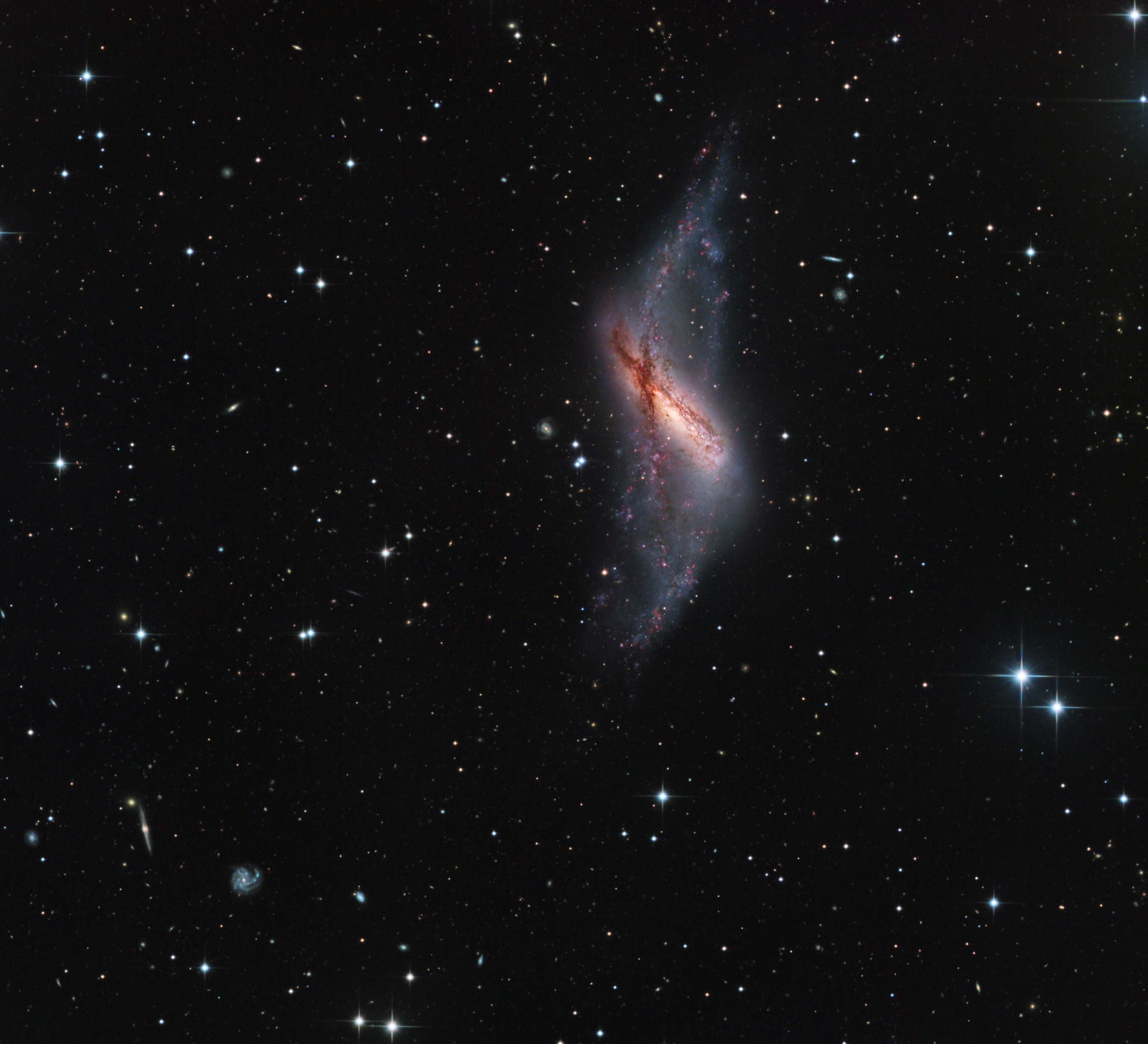
Astronomy picture of the day - 2017 February 17 - Polar Ring Galaxy NGC 660

Image Credit & Copyright: CHART32 Team, Processing - Johannes Schedler
Explanation: NGC 660 is featured in this cosmic snapshot. Over 40 million light-years away and swimming within the boundaries of the constellation Pisces, NGC 660's peculiar appearance marks it as a polar ring galaxy. A rare galaxy type, polar ring galaxies have a substantial population of stars, gas, and dust orbiting in rings strongly tilted from the plane of the galactic disk. The bizarre-looking configuration could have been caused by the chance capture of material from a passing galaxy by a disk galaxy, with the captured debris eventually strung out in a rotating ring. The violent gravitational interaction would account for the myriad pinkish star forming regions scattered along NGC 660's ring. The polar ring component can also be used to explore the shape of the galaxy's otherwise unseen dark matter halo by calculating the dark matter's gravitational influence on the rotation of the ring and disk. Broader than the disk, NGC 660's ring spans over 50,000 light-years.
Inscription à :
Commentaires (Atom)