Our Galaxy's Magnetic Field from Planck Image Credit & Copyright: ESA/Planck; Acknowledgement: M.-A. Miville-Deschênes, CNRS – IAS, U. Paris-XI
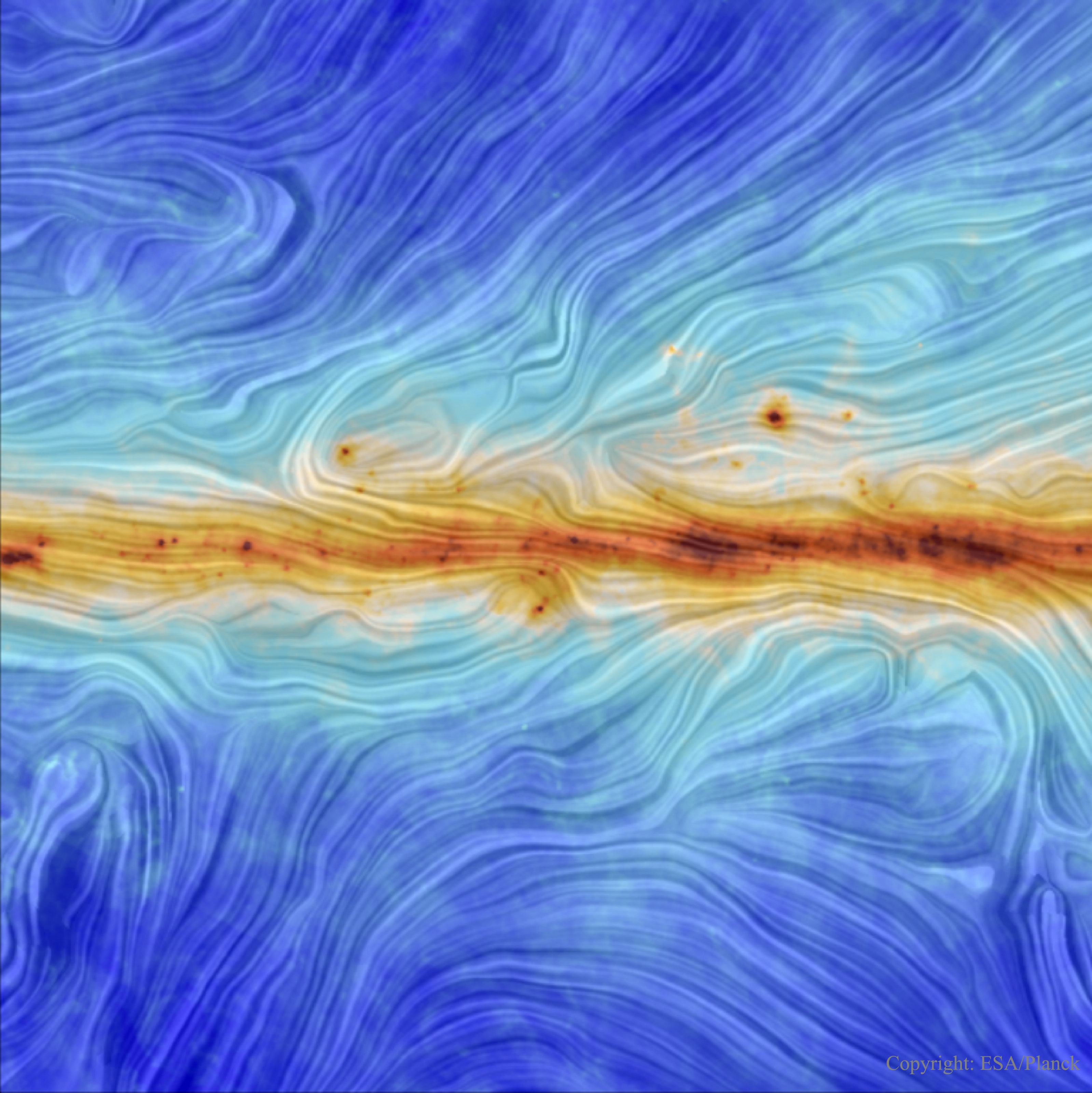
Explanation: What does the magnetic field of our Galaxy look like? It has long been known that a modest magnetic field pervades our Milky Way Galaxy because it is seen to align small dust grains that scatter background light. Only recently, however, has the Earth-orbiting Planck satellite made a high-resolution map of this field. Color coded, the 30-degree wide map confirms, among other things, that the Galaxy's interstellar magnetism is strongest in the central disk. The rotation of charged gas around the Galactic center creates this magnetism, and it is hypothesized that viewed from the top, the Milky Way's magnetic field would appear as a spiral swirling out from the center. What caused many of the details in this and similar Planck maps -- and how magnetism in general affected our Galaxy's evolution -- will likely remain topics of research for years to come.
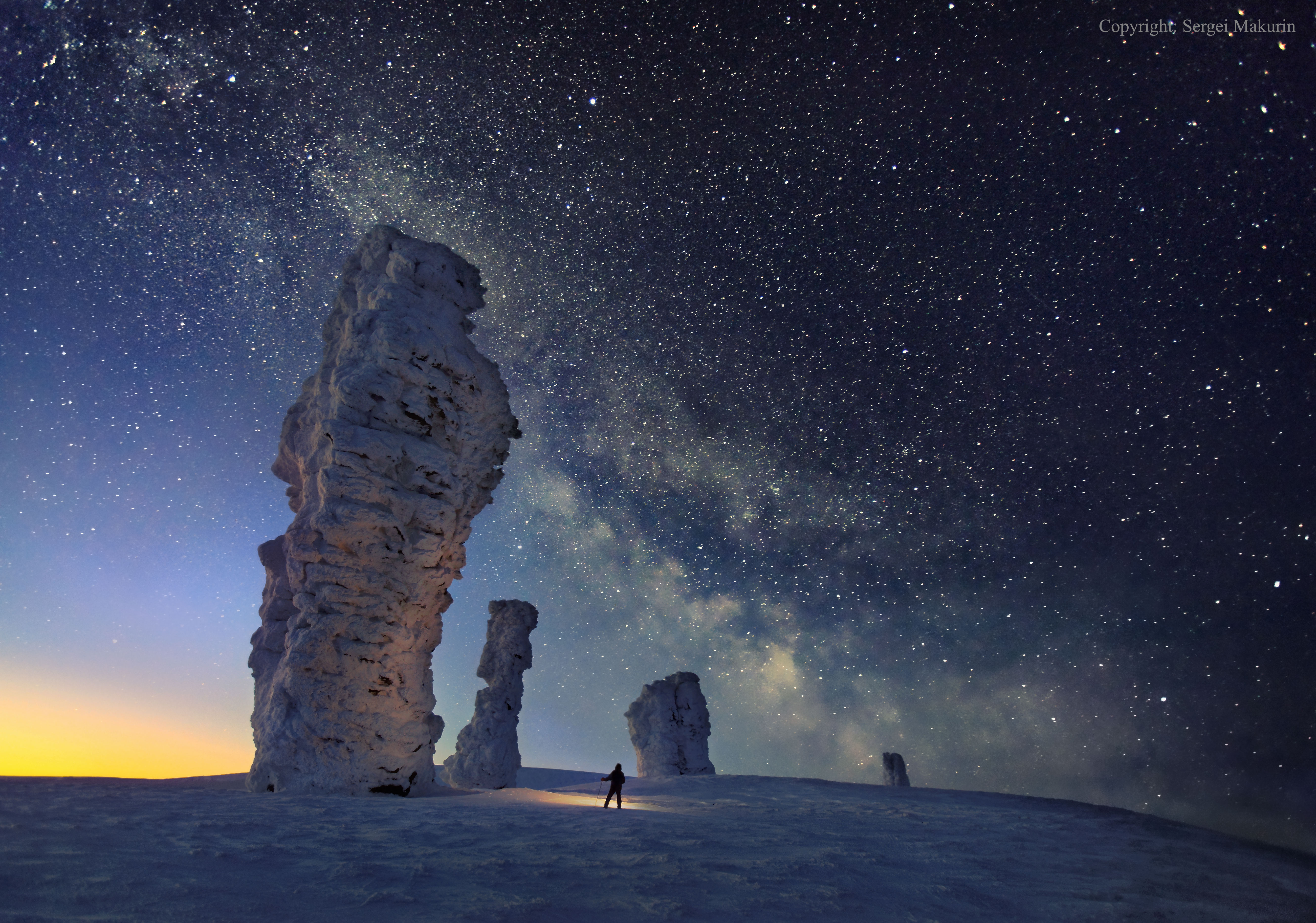
The Milky Way over the Seven Strong Men Rock Formations Image Credit & Copyright: Sergei Makurin
Explanation: You may have heard of the Seven Sisters in the sky, but have you heard about the Seven Strong Men on the ground? Located just west of the Ural Mountains, the unusual Manpupuner rock formations are one of theSeven Wonders of Russia. How these ancient 40-meter high pillars formed is yet unknown. The persistent photographer of this featured image battled rough terrain and uncooperative weather to capture these rugged stone towers in winter at night, being finally successful in February of last year. Utilizing the camera's time delay feature, the photographer holds a flashlight in the foreground near one of the snow-covered pillars. High above, millions of stars shine down, while the band of our Milky Way Galaxy crosses diagonally down from the upper left.
La victoire de Syriza en Grèce est assurée, seule la question de la majorité absolue au Parlement est encore en jeu. Après décompte d'environ 92 % des suffrages, le parti de gauche radicale obtient 36,3 % des voix à l'issue des élections législatives du dimanche 25 janvier.
Les projections en siège donnent au parti d’Alexis Tsipras, qui deviendra le plus jeune premier ministre grec en plus d'un siècle, 149 sièges au Parlement, à deux sièges de la majorité absolue. « Il y a un énorme suspense sur la majorité absolue », a dit Michalis Kariotoglou, un responsable de Singular Logic, qui traite les résultats pour le compte du ministère de l'intérieur. « Il se peut qu'il failleattendre le décompte de la totalité des voix. »
Explanation: Ten Earths could easily fit in the "claw" of this seemingly solar monster. The monster, actually a huge eruptive prominence, is seen moving out from our Sun in this condensed half-hour time-lapse sequence. This large prominence, though, is significant not only for its size, but its shape. The twisted figure eight shape indicates that a complex magnetic field threads through the emerging solar particles. Differential rotation of gas just inside the surface of the Sun might help account for the surface explosion. The five frame sequence was taken in early 2000 by the Sun-orbiting SOHO satellite. Although large prominences and energetic Coronal Mass Ejections (CMEs) are relatively rare, they are again occurring more frequently now that we are near the Solar Maximum, a time of peak sunspot and solar activity in the eleven-year solar cycle.
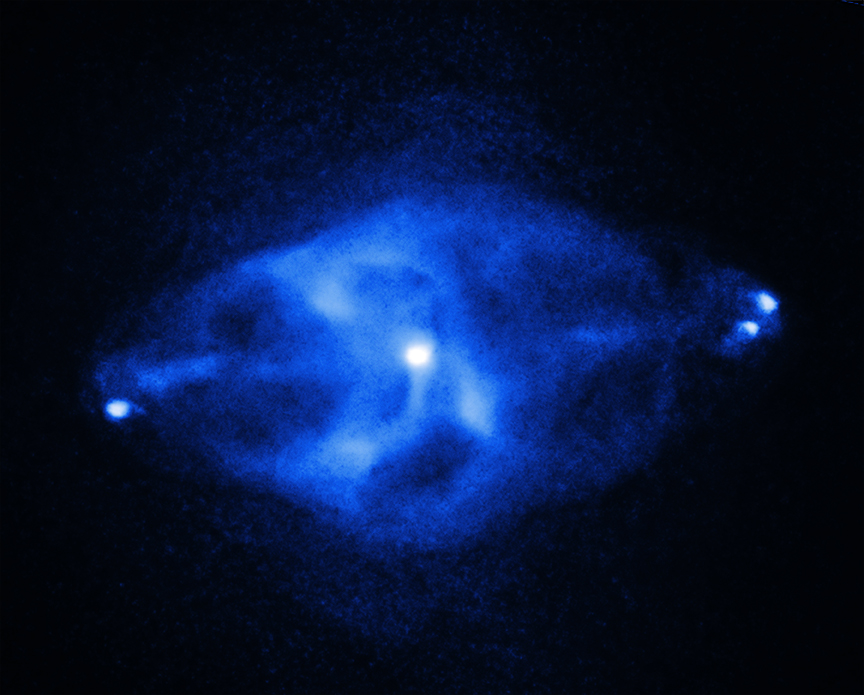
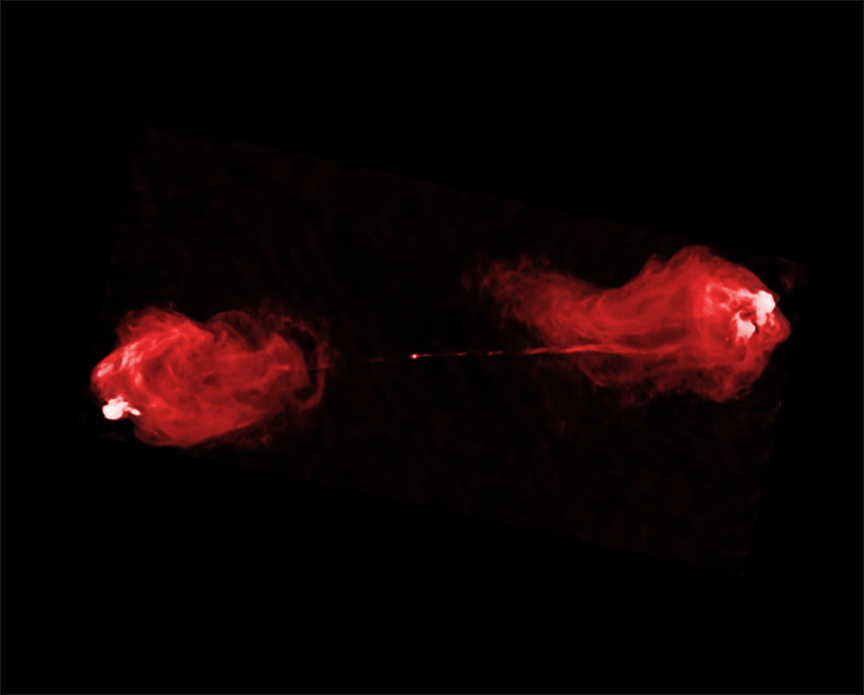
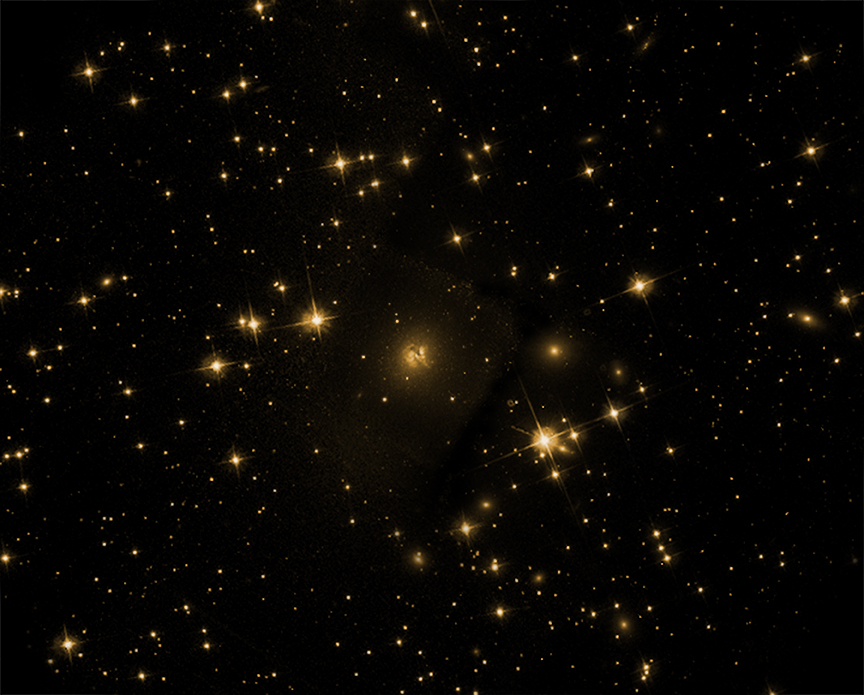
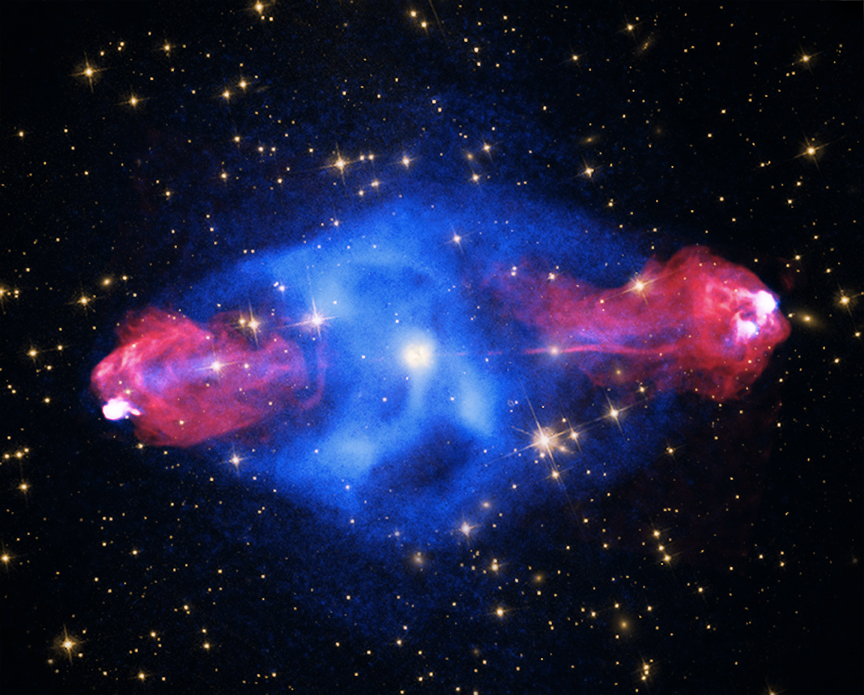
Explanation: Celebrating astronomy in this International Year of Light, the detailed image reveals spectacular active galaxy Cygnus A in light across the electromagnetic spectrum. Incorporating X-ray data ( blue) from the orbiting Chandra Observatory, Cygnus A is seen to be a prodigious source of high energy x-rays. But it is actually more famous at the low energy end of the electromagnetic spectrum. One of the brightest celestial sources visible to radio telescopes, at 600 million light-years distant Cygnus A is the closest powerful radio galaxy. Radio emission ( red) extends to either side along the same axis for nearly 300,000 light-years powered by jets of relativistic particles emanating from the galaxy's central supermassive black hole. Hot spots likely mark the ends of the jets impacting surrounding cool, dense material. Confined to yellow hues, optical wavelength data of the galaxy from Hubble and the surrounding field in the Digital Sky Survey complete a remarkable multiwavelength view.
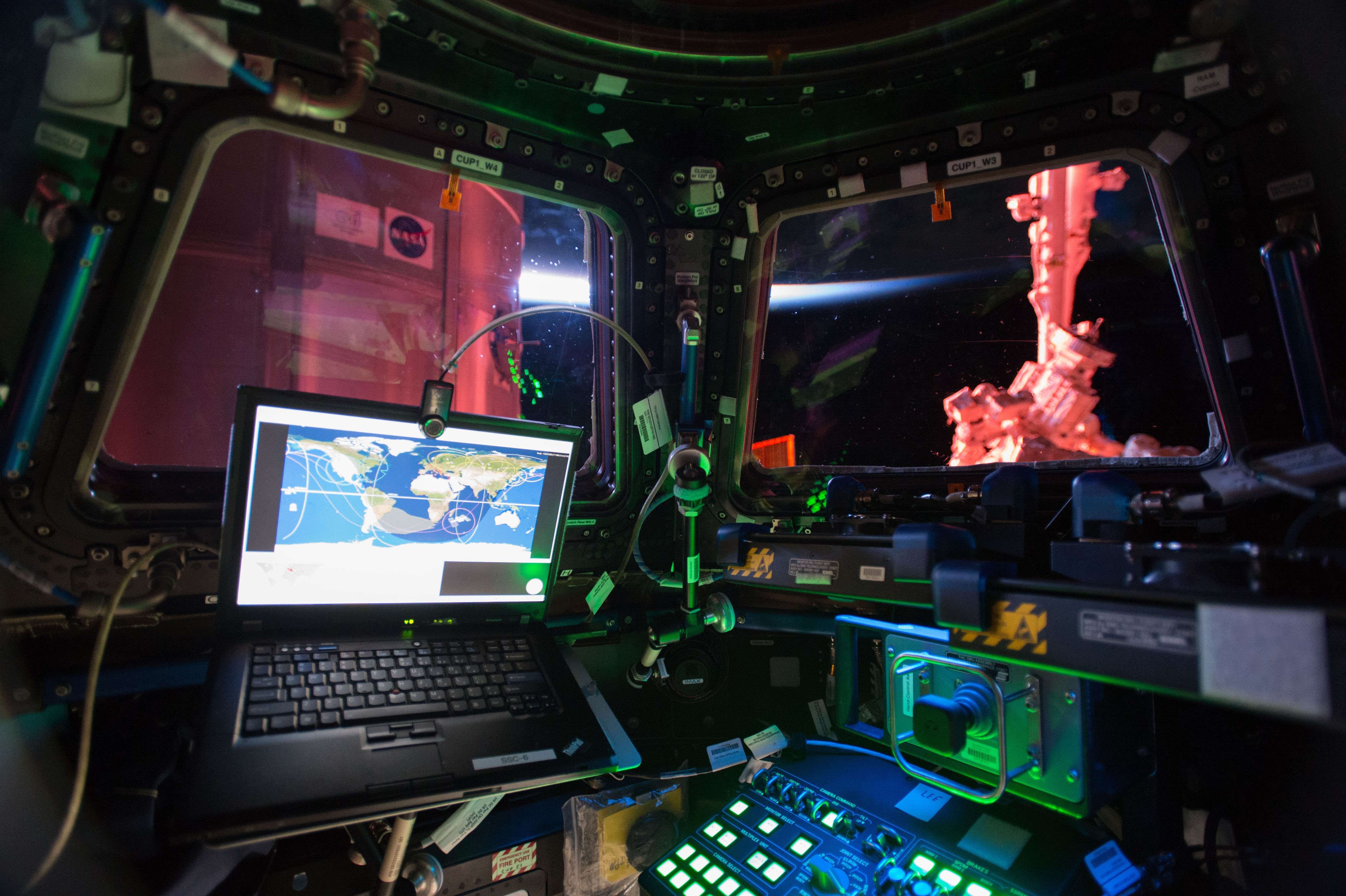
Explanation: Some prefer windows, and these are the best available on board the International Space Station. Taken on January 4, this snapshot from inside the station's large, seven-window Cupola module also shows off a workstation for controlling Canadarm2. Used to grapple visiting cargo vehicles and assist astronauts during spacewalks, the robotic arm is just outside the window at the right. The Cupola itself is attached to the Earth-facing or nadir port of the station's Tranquility module, offering dynamic panoramas of our fair planet. Seen from the station's 90 minute long, 400 kilometer high orbit, Earth's bright limb is in view above center.





.jpg)