2015-02-13

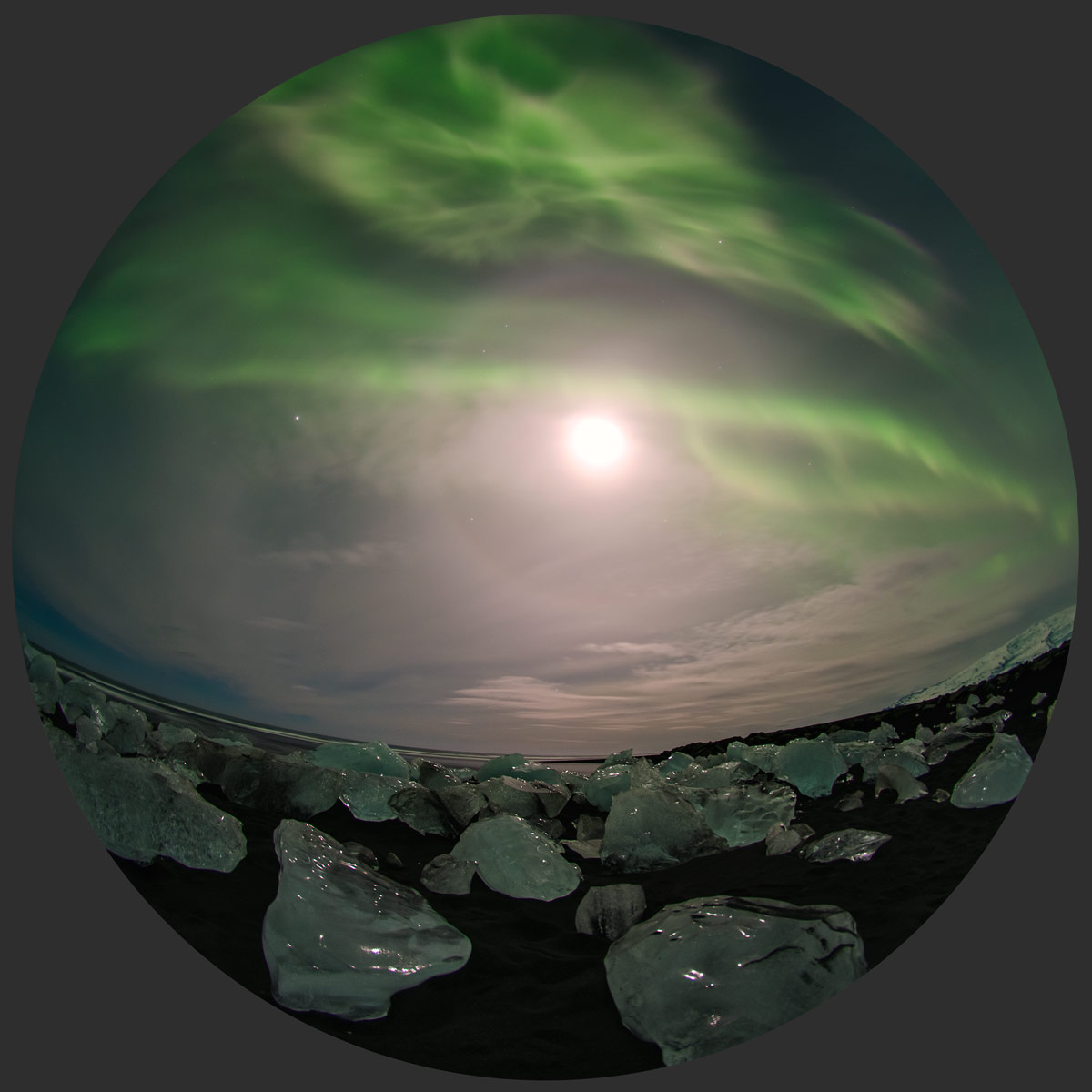
Astronomy picture of the day - 13-02-2015 - Aurora on Ice

See Explanation.  Clicking on the picture will download
 the highest resolution version available.
Aurora on Ice 
Image Credit & CopyrightStéphane Vetter (Nuits sacrées)
Explanation: Not from a snowglobe, this expansive fisheye view of ice and sky was captured on February 1, from Jökulsárlón Beach, southeast Iceland, planet Earth. Chunks of glacial ice on the black sand beach glisten in the light of a nearly full moon surrounded by a shining halo. The 22 degree lunar halo itself is created by ice crystals in high, thin clouds refracting the moonlight. Despite the bright moonlight, curtains of aurora still dance through the surreal scene. In early February, their activity was triggered by Earth's restless magnetosphere and the energetic wind from a coronal hole near the Sun's south pole. Bright Jupiter, also near opposition, is visible at the left, beyond the icy lunar halo.

2015-02-12

Foto - "Aufrery - Parque encantado" - Toulouse - France

"Aufrery - Parque encantado"

12-02-2015
JoanMira

Pintura digital - "Torrente espiritual" - 18-12-2014

"Torrente espiritual"

18-12-2014
JoanMira

Peter Steps Rabbit: "Gregos que se f ¤d@m!"


Um grupo de personalidades composto por cientistas, economistas, embaixadores e políticos enviou uma carta a Passos Coelho, em que sustenta que o Governo português ao insistir, a propósito da Grécia, que a política de austeridade prosseguida se deve manter inalterada, escolhe um caminho "contraproducente". Para os subscritores, esta é uma "oportunidade que não pode ser desperdiçada para um debate europeu sobre a recuperação das economias e das políticas sociais", noticia hoje o "Público".
No momento em que o primeiro-ministro se prepara para enfrentar um dos mais decisivos Conselhos Europeus do seu mandato, esta quinta-feira, em Bruxelas, a carta surge com a intenção de ser um apelo, um pedido e um alerta à opinião pública. Subscrevem esta carta vários dos dinamizadores do anterior "Manifesto dos 74", sobre a renegociação da dívida portuguesa, como António Bagão Félix, Francisco Louçã, João Cravinho e Carvalho da Silva.
Na esfera política há personalidades de vários quadrantes: Octávio Teixeira (PCP), Mariana Mortágua (BE), José Reis (Tempo de Avançar), Carlos César (presidente do PS), Pacheco Pereira (PSD), Ricardo Bayão Horta (CDS). A principal novidade é a inclusão de cientistas que habitualmente não integram este tipo de manifestos, como Maria Mota (Prémio Pessoa 2013) e Mónica Bettencourt Dias, por exemplo.
Expresso - Portugal

Foto - Rue Mirepoix - Toulouse - France

Rue Mirepoix - Toulouse

02-02-2015
JoanMira

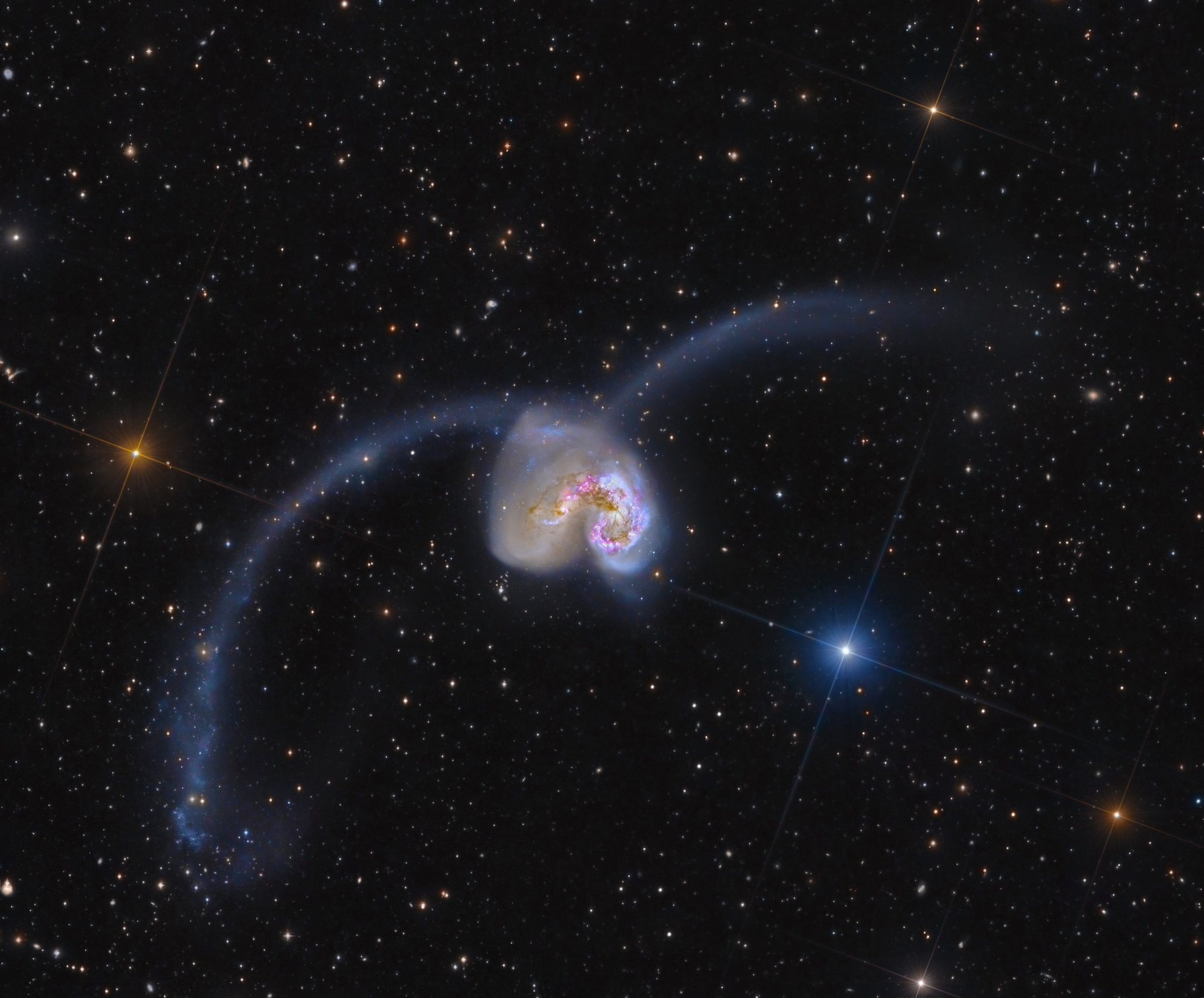
Astronomy picture of the day - 12-02-2015 - Exploring the Antennae

See Explanation.  Clicking on the picture will download
 the highest resolution version available.
Exploring the Antennae 
Image Data: Subaru, NAOJNASA/ESA/Hubble, R.W. Olsen - Processing: Federico Pelliccia and Rolf Wahl Olsen
Explanation: Some 60 million light-years away in the southerly constellation Corvus, two large galaxies are colliding. The stars in the two galaxies, cataloged as NGC 4038 and NGC 4039, very rarely collide in the course of theponderous cataclysm, lasting hundreds of millions of years. But their large clouds of molecular gas and dust often do, triggering furious episodes of star formation near the center of the cosmic wreckage. Spanning about 500 thousand light-years, this stunning composited view also reveals new star clusters and matter flung far from the scene of the accident by gravitational tidal forces. The remarkable collaborative image is a mosaic constructed using data from small and large ground-based telescopes to bring out large-scale and faint tidal streams, composited with the bright cores imaged in extreme detail by the Hubble Space Telescope. Of course, the suggestive visual appearance of the extended arcing structures gives the galaxy pair its popular name - The Antennae.

2015-02-11

Foto - Arrabida - Portugal - 07-09-2014

Arrabida

07-09-2014
JoanMira

Foto - Praia de Copacabana - Rio de Janeiro - 18-03-2012

Praia de Copacabana

18-03-2012
JoanMira

Les jours augmentent de plus en plus vite. Pourquoi ?


Chaque année, début février, on remarque plus aisément que le Soleil se lève de plus en plus tôt.  © STEPHAN AGOSTINI / AFP

La morsure de l'hiver ne saurait durer, puisque les jours rallongent. Et un peu plus chaque jour, l'avez-vous remarqué ? Cela n'a pas échappé à Alexandre Moatti, auteur d'ouvrages de vulgarisation, comme "Les Indispensables mathématiques" et "Physiques pour tous" (Odile Jacob poche 2011) ou "Récréations mathéphysiques" (Le Pommier 2011), et blogueur sur le site de Sciences et Avenir. Dans la nouvelle note de son blog "Ramène ta science", l'auteur de "Alterscience" s'intéresse à la variabilité de cette variation, car "chaque année, début février, on remarque plus aisément que le Soleil se lève de plus en plus tôt et se couche de plus en plus tard, beaucoup plus qu'en janvier où on le remarquait guère". Pourquoi ces différences de variations ? Quelles formules mathématiques y a-t-il derrière ? Les réponses dans "Ramène ta science".
Sciences et Avenir - France

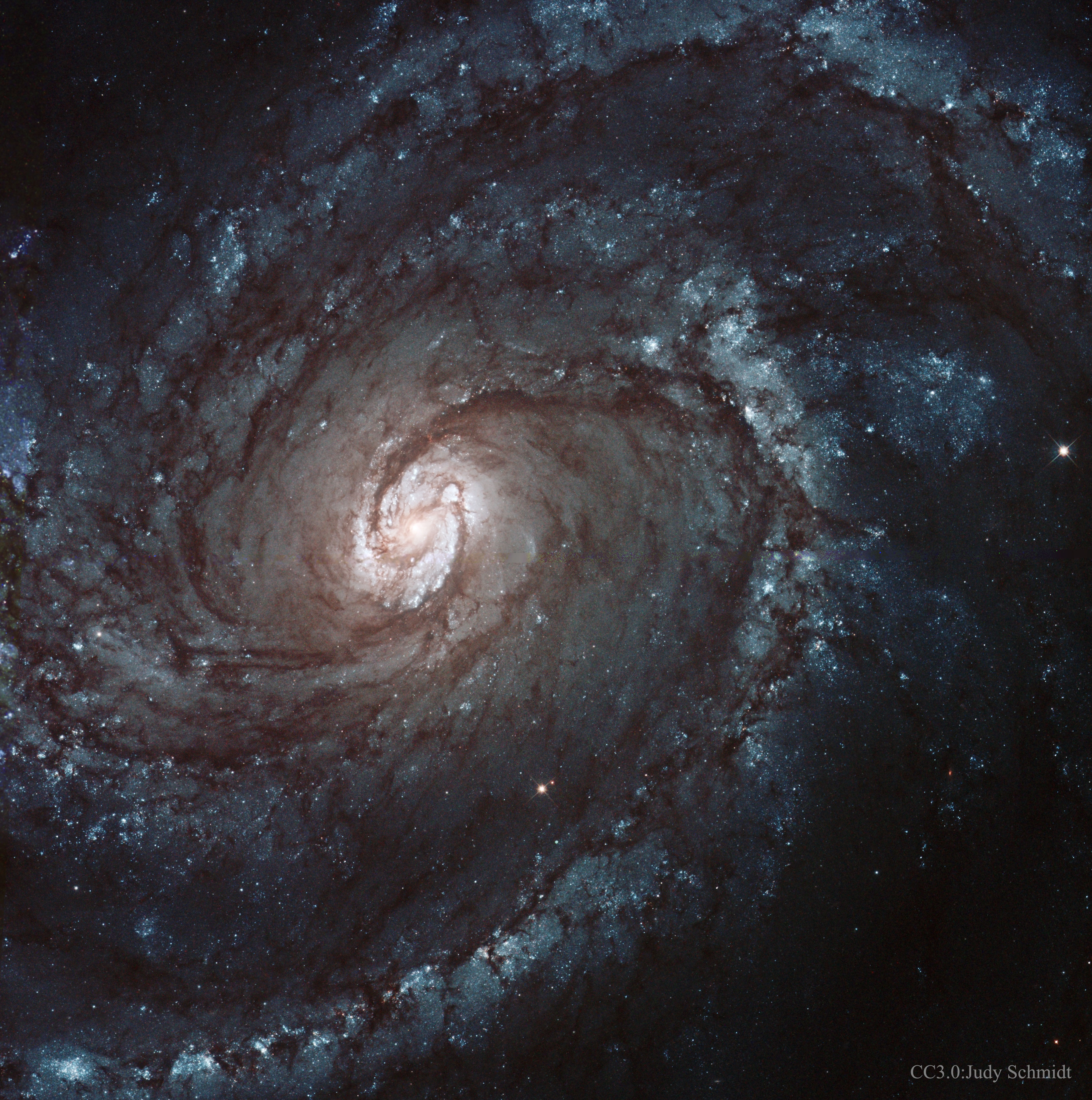
Astronomy picture of the day - 11-02-2015 - M100: A Grand Design Spiral Galaxy

See Explanation.  Clicking on the picture will download
 the highest resolution version available.
M100: A Grand Design Spiral Galaxy 
Image Credit: Hubble Legacy ArchiveNASAESA - Processing & LicenceJudy Schmidt
Explanation: Majestic on a truly cosmic scale, M100 is appropriately known as a grand design spiral galaxy. It is a large galaxy of over 100 billion stars with well-defined spiral arms that is similar to our own Milky Way Galaxy. One of the brightest members of the Virgo Cluster of galaxies, M100 (alias NGC 4321) is 56 million light-years distant toward the constellation of Berenice's Hair (Coma Berenices). This Hubble Space Telescope image of M100 was made in 2006 and reveals bright blue star clusters and intricate winding dust lanes which are hallmarks of this class of galaxies. Studies of variable stars in M100 have played an important role in determining the size and age of the Universe. If you know exactly where to look, you can find a small spot that is a light echo from a bright supernova that was recorded a few months before the image was taken.