![Carnaval em Veneza [Foto: Reuters]](https://lh3.googleusercontent.com/blogger_img_proxy/AEn0k_sweVQds9wPr5mCTB-5Dude-KmS8BdqnoIZUb6RZY49RH669qBOM-rCZyWcQCZ1OOTHuTtHx68vskhyT4L2HvaXflnaI8ayKigdEpqG10aswV8NC69XuPSVr7_3-vjp0KN3TJhcCkO3t22QE-6VXBXrUl0iYSr9VmOQ-QqdxtI5tHHh=s0-d)
2015-02-16

Astronomy picture of the day - 16-02-2015 - M106: A Spiral Galaxy with a Strange Center
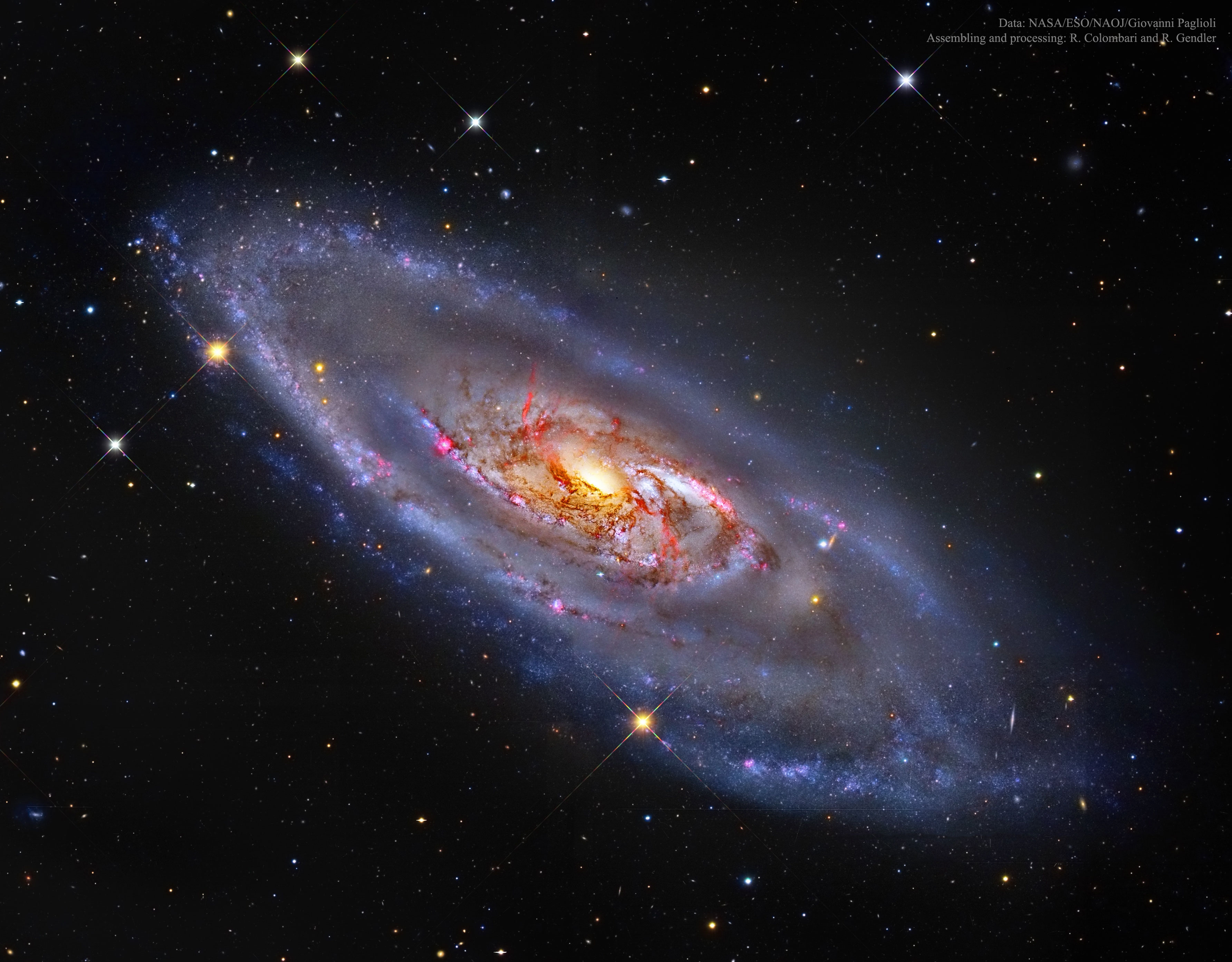
Image Credit: NASA, ESO , NAOJ, Giovanni Paglioli; Assembling and processing: R. Colombari and R. Gendler
2015-02-15
Manuel Cargaleiro - "Painel de azulejos no metro de Paris Champs Elysées" - (Grandes Pintores Portugueses)
Manuel Cargaleiro Ceramista e pintor português, Manuel Cargaleiro nasceu em 1927 e viveu ao sul do Tejo. Foi professor de cerâmica na Escola de Artes Decorativas António Arroio, em Lisboa. O artista criou a Fundação Manuel Cargaleiro e doou algumas das suas obras. A sua obra dispersa-se pela cerâmica, pintura, gravura, guache, tapeçaria e desenho, tendo executado painéis cerâmicos para o Jardim Municipal de Almada, fachada da Igreja de Moscavide (1956), fachada do Instituto Franco-Português de Lisboa (1983), estação do Metro de Champs Elysées-Clémenceau, de Paris (1995), painel para a escola com o seu nome no Seixal (1998), estação de serviço de Óbidos na auto-estrada do Atlântico (2000), fonte do Jardim Público de Castelo Branco (2004) e estação de metro de Lisboa Colégio Militar/Luz (Metro de Lisboa).

Painel de azulejos no metro de Paris Champs Elysées, Manuel Cargaleiro

Imagens do Mundo - El río de los cinco colores (Caño Cristales, Colombia)

Rojo, amarillo, verde, azul, negro... Las algas de agua dulce que crecen en el fondo del lecho de Caño Cristales tiñen este río colombiano de colores que parece irreales. Las plantas pertenecen a la especie 'macarenia clavígera' y han convertido este rincón selvático de la sierra de la Macarena en una atracción turística a unos nueve kilómetros del municipio del mismo nombre.
Astronomy picture of the day - 15-02-2015 - Two Hours Before Neptune
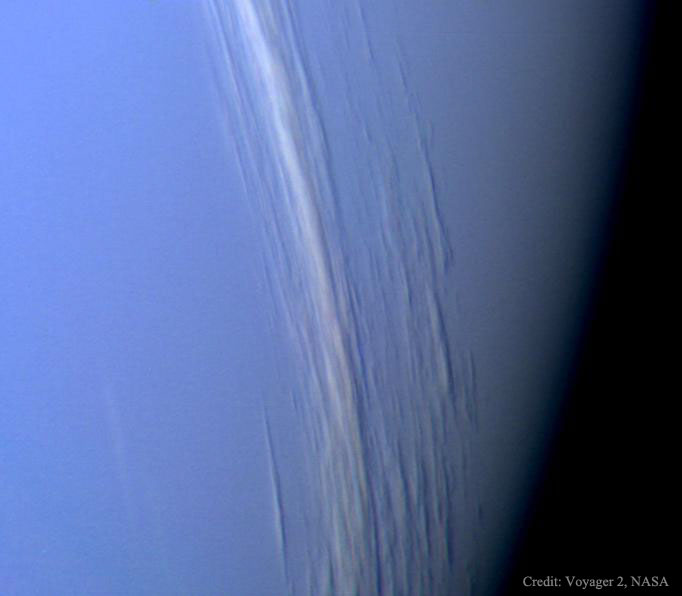
Image Credit: Voyager 2, NASA
Explanation: Two hours before closest approach to Neptune in 1989, the Voyager 2 robot spacecraft snapped this picture. Clearly visible for the first time were long light-colored cirrus-type clouds floating high in Neptune's atmosphere. Shadows of these clouds can even be seen on lower cloud decks. Most of Neptune's atmosphere is made of hydrogen and helium, which is invisible. Neptune's blue color therefore comes from smaller amounts of atmospheric methane, which preferentially absorbs red light. Neptune has the fastest winds in the Solar System, with gusts reaching 2000 kilometers per hour. Speculation holds that diamonds may be created in the dense hot conditions that exist under the cloud tops of Uranus and Neptune. Twenty-six years later, NASA's New Horizons is poised to be the first spacecraft to zoom past Pluto this July.
2015-02-14

Julio Resende - "Painel de azulejos" - (Grandes Pintores Portugueses)
Júlio Resende Nascido em 1917, desde menino dedica-se às ilustrações e histórias em quadrinhos para jornais e publicações infantis. Formou-se em Pintura pela Escola Superior de Belas-Artes de Lisboa. Com uma carreira intensa, Júlio Resende iniciou sua carreira no Expressionismo, seguindo para o modernismo e, mais tarde, para o Geometrismo e Abstracção. Também possui trabalhos como decorador em vários museus e edifícios públicos de Portugal, como por exemplo painéis cerâmicos para a estação do Metropolitano de Lisboa, "Sete Rios" e vários painéis de azulejo para a estação de fronteira de Vilar Formoso.

Painel de azulejos, Porto, Julio Resende

Astronomy picture of the day - 14-02-2015 - An Extremely Long Filament on the Sun
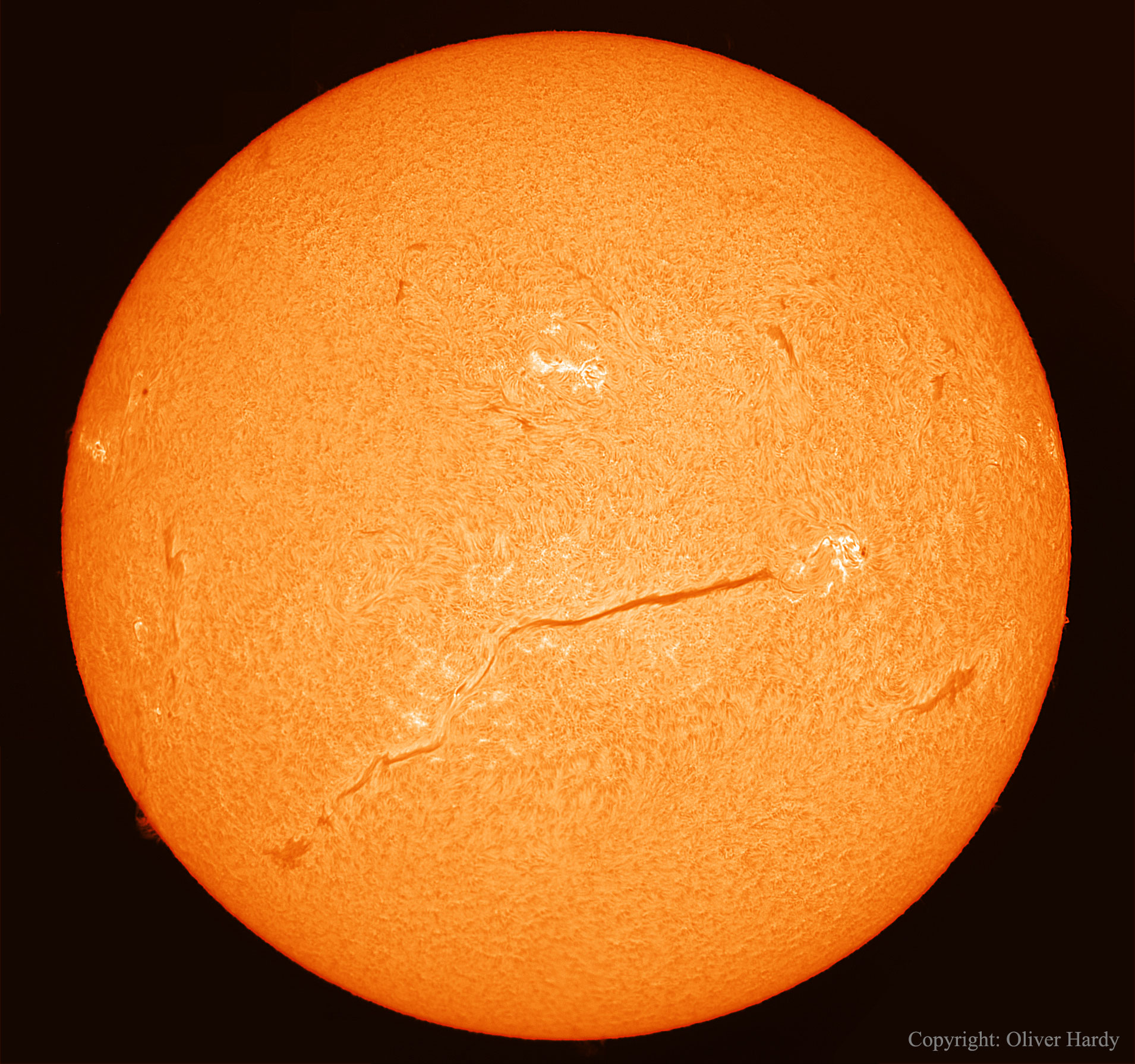
Image Credit & Copyright: Oliver Hardy
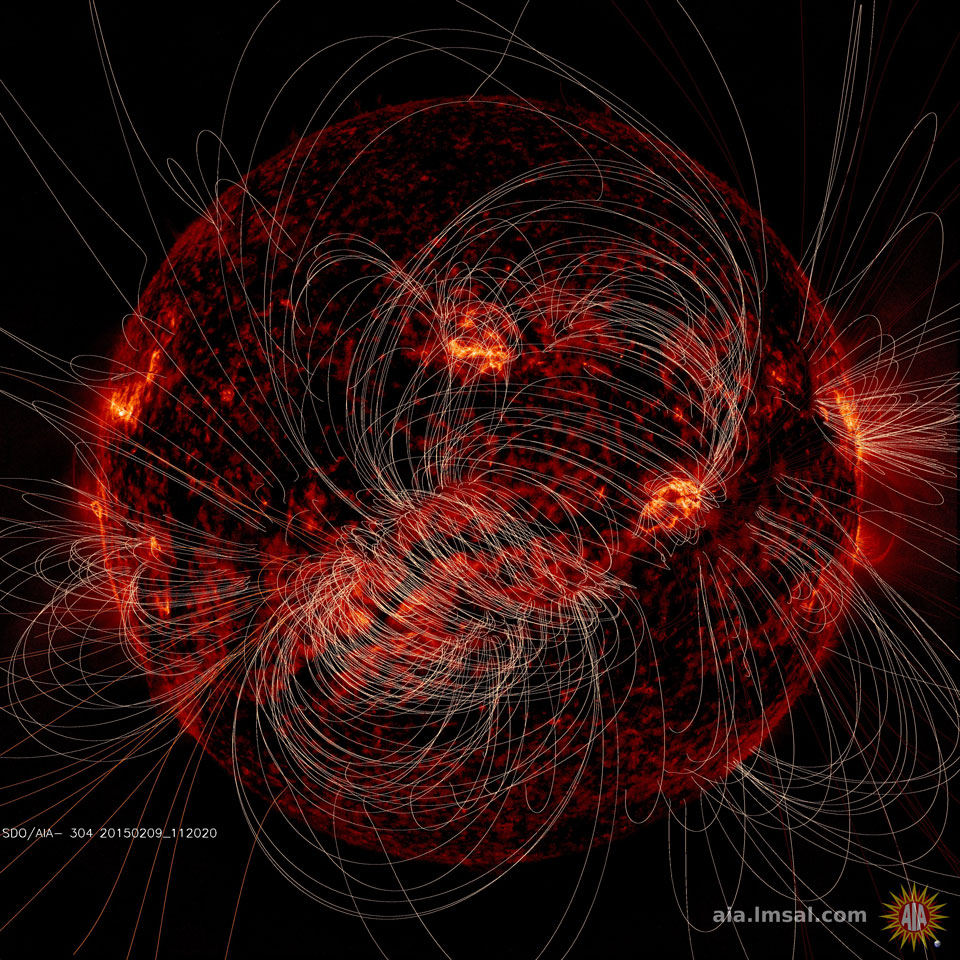
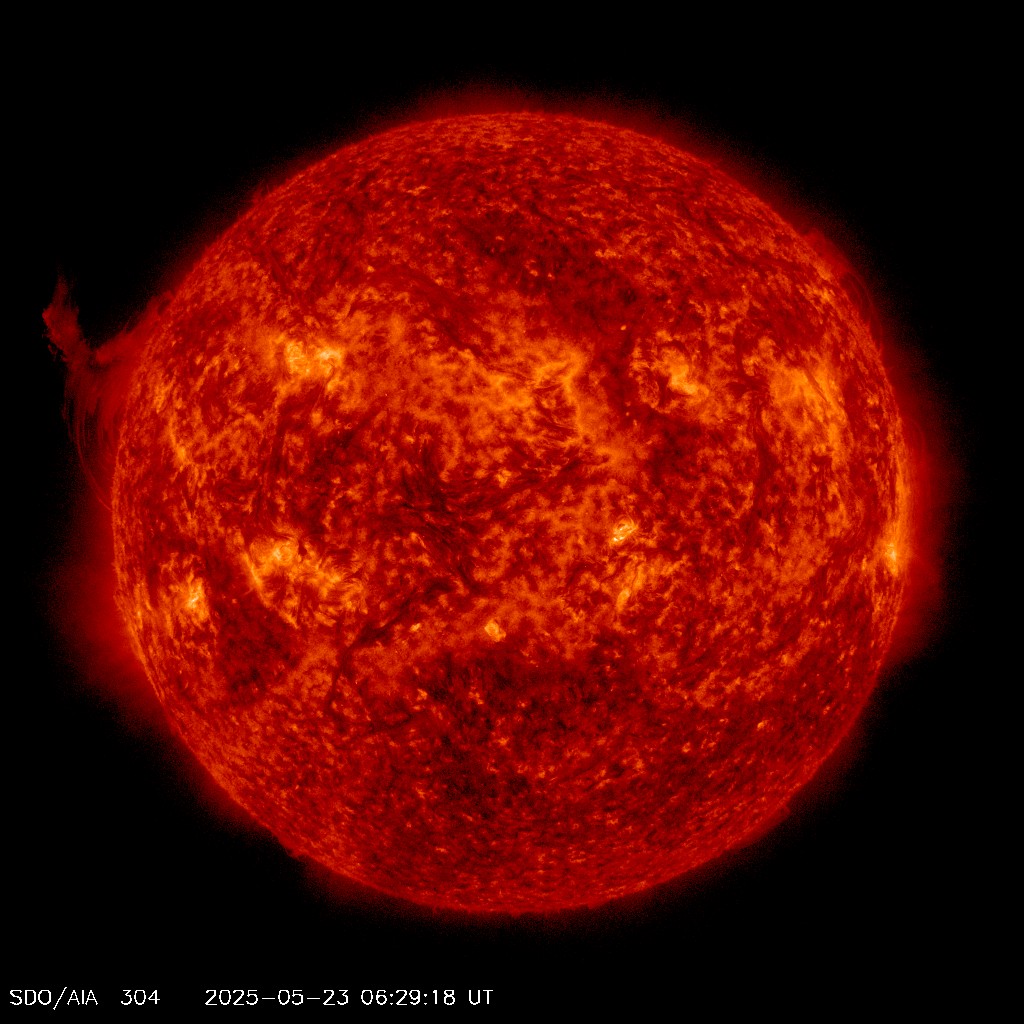
Explanation: Yesterday, the Sun exhibited one of the longest filaments ever recorded. It may still be there today. Visible as the dark streak just below the center in the featured image, the enormous filament extended across the face of the Sun a distance even longer than the Sun's radius -- over 700,000 kilometers. A filament is actually hot gas held aloft by the Sun's magnetic field, so that viewed from the side it would appear as a raised prominence. The featured image shows the filament in light emitted by hydrogen and therefore highlights the Sun's chromosphere. Sun-following telescopes including NASA's Solar Dynamics Observatory (SDO) are tracking this unusual feature, with SDO yesterday recording a spiraling magnetic field engulfing it. Since filaments typically last only from hours to days, parts of this one may collapse or erupt at any time, either returning hot plasma back to the Sun or expelling it into the Solar System. Is the filament still there? You can check by clicking on SDO's current solar image.

Inscription à :
Articles (Atom)