Un hombre con su bebé entre los materiales recuperados después de un incendio en el barrio de Malabon, en Manila, Filipinas.
2015-03-19
Imagens do Mundo - Peixe no esfalto - Kaili - China
Varias personas utilizan cubos para recoger peces en una carretera de la localidad de Kaili, en la provincia china de Guizhou. La apertura accidental de la puerta de un camión de transporte hizo que 6.800 kilos de pescado acabaran sobre el asfalto.
(AP)
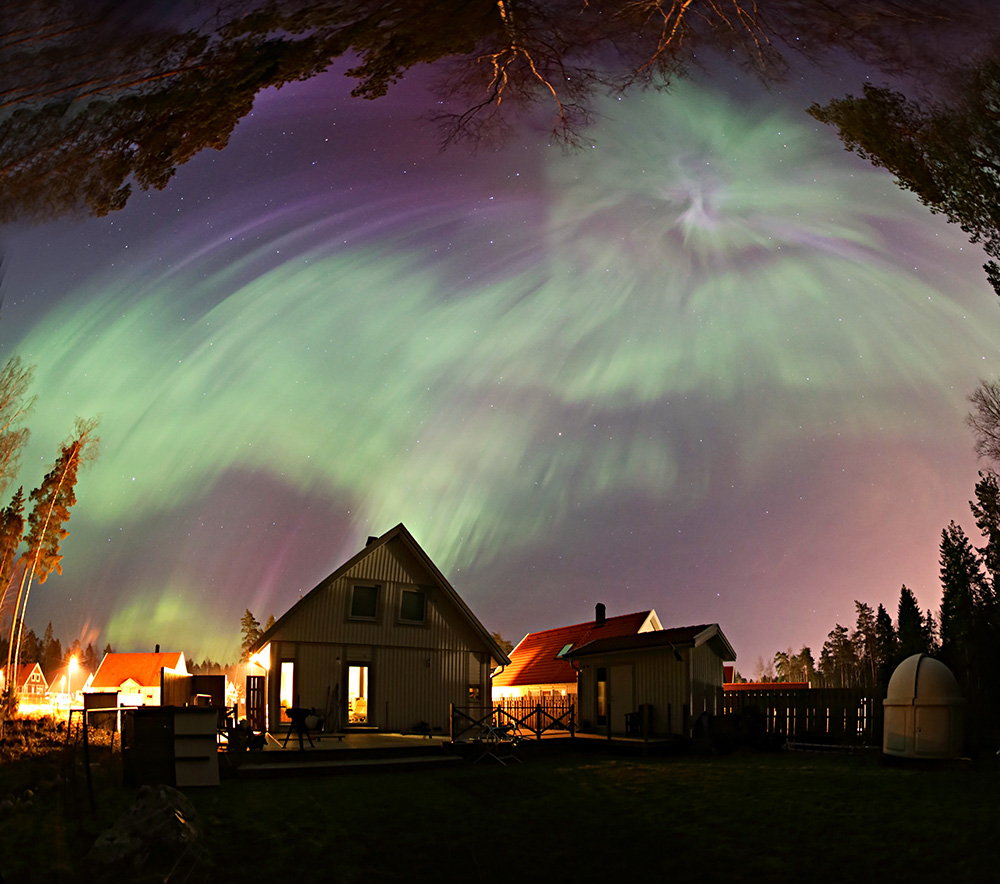
Astronomy picture of the day - 19-03-2015 - Aurora in the Backyard
Image Credit & Copyright: P-M Hedén (Clear Skies, TWAN)
Explanation: On the night of March 17/18 this umbrella of northern lights unfolded over backyards in Vallentuna, Sweden about 30 kilometers north of Stockholm. A result of the strongest geomagnetic storm of this solar cycle, auroral displays were captured on that night from back and front yards at even lower latitudes, including sightings in the midwestern United States. A boon for aurora hunting skywatchers, the space storm began building when a coronal mass ejection, launched by solar activity some two days earlier, struck planet Earth's magnetosphere. So what's the name of the backyard observatory on the right of the wide field view? That's Carpe Noctem Observatory, of course.
2015-03-18
Astronomy picture of the day - 18-03-2015 - Earth During a Total Eclipse of the Sun
Image Credit: Expedition 12 Crew, NASA
Explanation: What does the Earth look like during a total solar eclipse? It appears dark in the region where people see the eclipse, because that's where the shadow of the Moon falls. The shadow spot actually shoots across the Earth at nearly 2,000 kilometers per hour, darkening locations in its path for only a few minutes before moving on. The featured image shows the Earth during the total solar eclipse of 2006 March, as seen from the International Space Station. On Friday the Moon will move in front of the Sun once again, casting another distorted circular shadow that, this time, will zip over part of the north Atlantic Ocean.
2015-03-17
Aconteceu a 17 de março de...1939 - O Pacto Ibérico
A 17 de Março de 1939, é assinado, em Lisboa, o Pacto Ibérico, um tratado de amizade e não-agressão entre Portugal e Espanha. Foram subscritores deste tratado, por parte de Portugal, António de Oliveira Salazar, que acumulava as funções de chefe do Governo e de Ministro dos Negócios estrangeiros e, por parte de Espanha, o embaixador Don Nicolás Franco, irmão de Francisco Franco.
Don Nicolás Franco foi um dos principais instigadores do golpe de estado de 17 e 18 de Julho de 1936, que haveria de dar início à chamada Guerra Civil Espanhola. Como embaixador em Lisboa, Nicolás obteve, da parte de Salazar, ajuda material para o Movimento Nacional liderado por Francisco Franco assim como a sua colaboração para a detenção de republicanos que atravessassem a fronteira entre os dois países ibéricos. Na altura da assinatura deste tratado, o conflito estava prestes a terminar: a 1 de Abril de 1939, com a vitória dos auto-denominados nacionalistas ou Movimiento Nacional, Franco passou a desempenhar as funções de Regente do Reino, proclamando-se Caudilho de Espanha pela graça de Deus.
José Malhoa - "Jovens Músicos", 1891. - (Grandes Pintores Portugueses)
José Malhoa Nascido em 1855, foi um grande pintor, desenhista e professor da Língua Portuguesa. Estudou na escola de Belas Artes de Lisboa. Seu primeiro trabalho como pintor foi pintar o teto da sala de concerto no Conservatório Real de Lisboa. Mais tarde, também pintouo teto da sala do Supremo Tribunal de Justiça de Lisboa, o teto da sala de jantar do palácio do Sr. Conde de Burnay e o dos aposentos do senhor infante D. Afonso. É o artista português que mais se aproximou do Impressionismo, embora tenha sido o grande pioneiro do naturalismo. Realizou exposições em diversos pontos da Europa como Madrid, Paris, e também no Brasil. Malhoa alcança um novo recorde a 26 de Julho de 2007, na Christie’s de Londres, com o quadro naturalista Jóvens Músicos adjudicada por 445,560 euros.
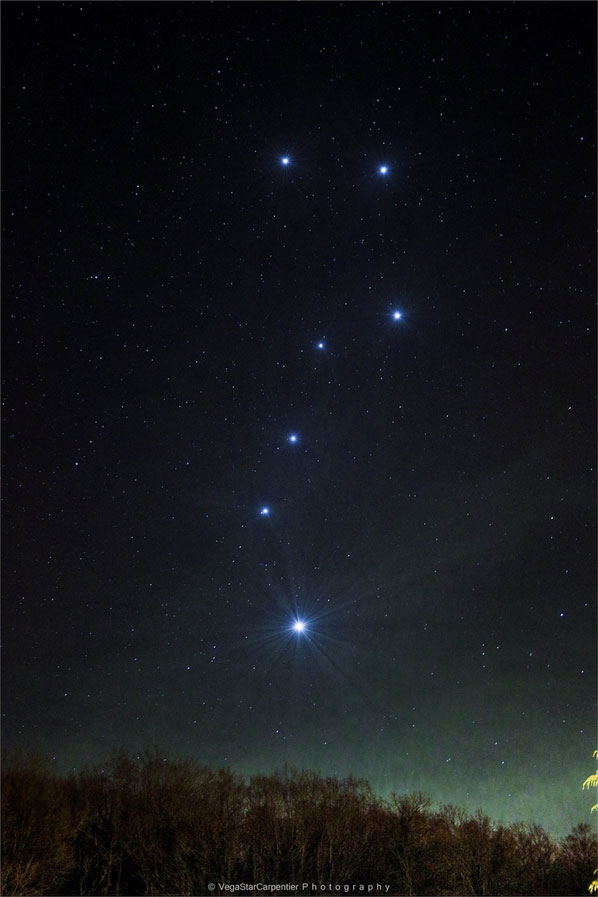
Astronomy picture of the day - 17-03-2015 - The Big Dipper Enhanced
Image Credit & Copyright: VegaStar Carpentier
Explanation: Do you see it? This common question frequently precedes the rediscovery of one of the most commonly recognized configurations of stars on the northern sky: the Big Dipper. This grouping of stars is one of the few things that has likely been seen, and will be seen, by every human generation. In this featured image, however, the stars of the Big Dipper have been digitally enhanced -- they do not really appear this much brighter than nearby stars. The image was taken earlier this month from France. The Big Dipper is not by itself a constellation. Although part of the constellation of the Great Bear (Ursa Major), the Big Dipper is an asterism that has been known by different names to different societies. Five of the Big Dipper stars are actually near each other in space and were likely formed at nearly the same time. Relative stellar motions will cause the Big Dipper to slowly change its apparent configurationover the next 100,000 years.
Inscription à :
Commentaires (Atom)


.jpg)