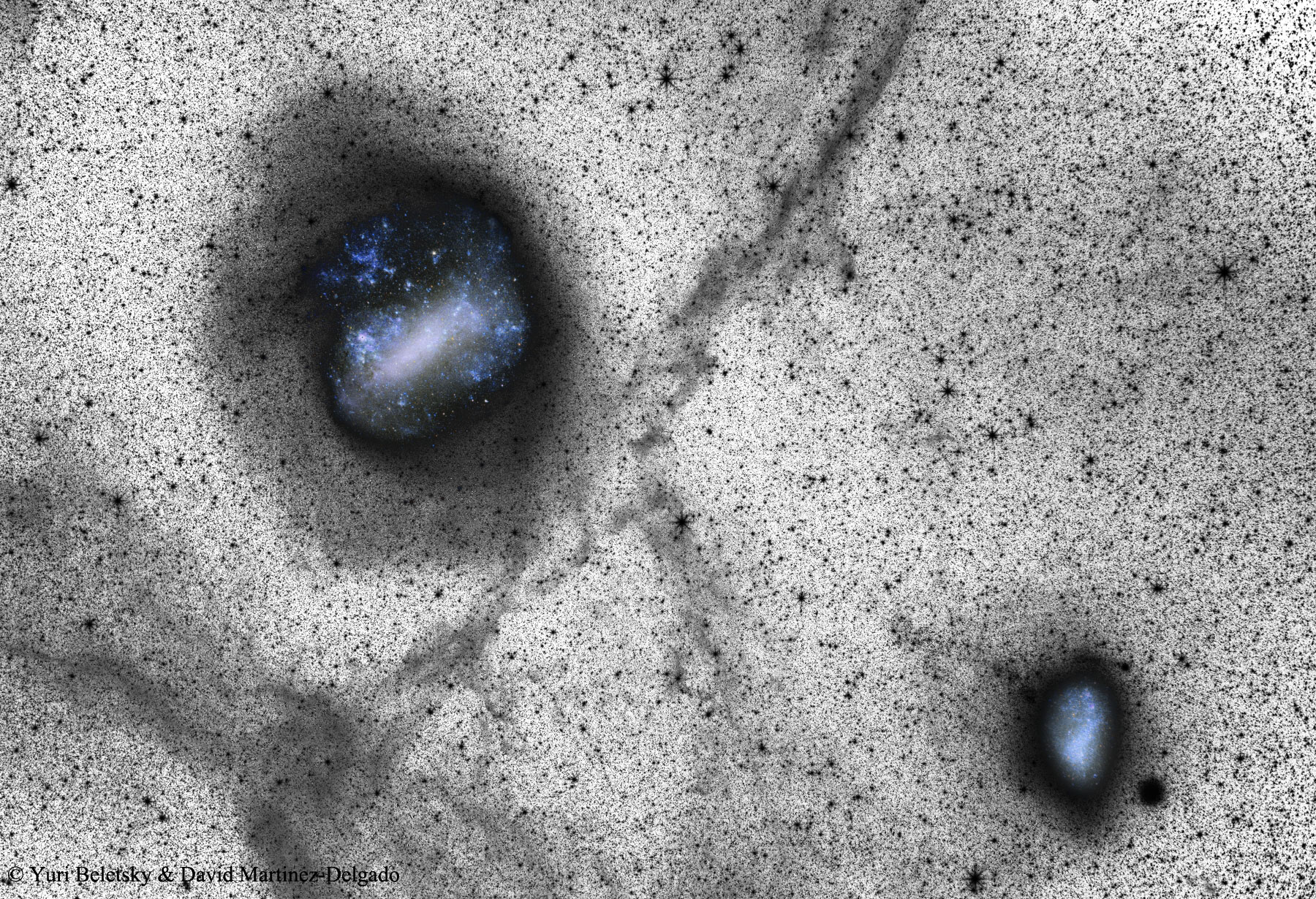
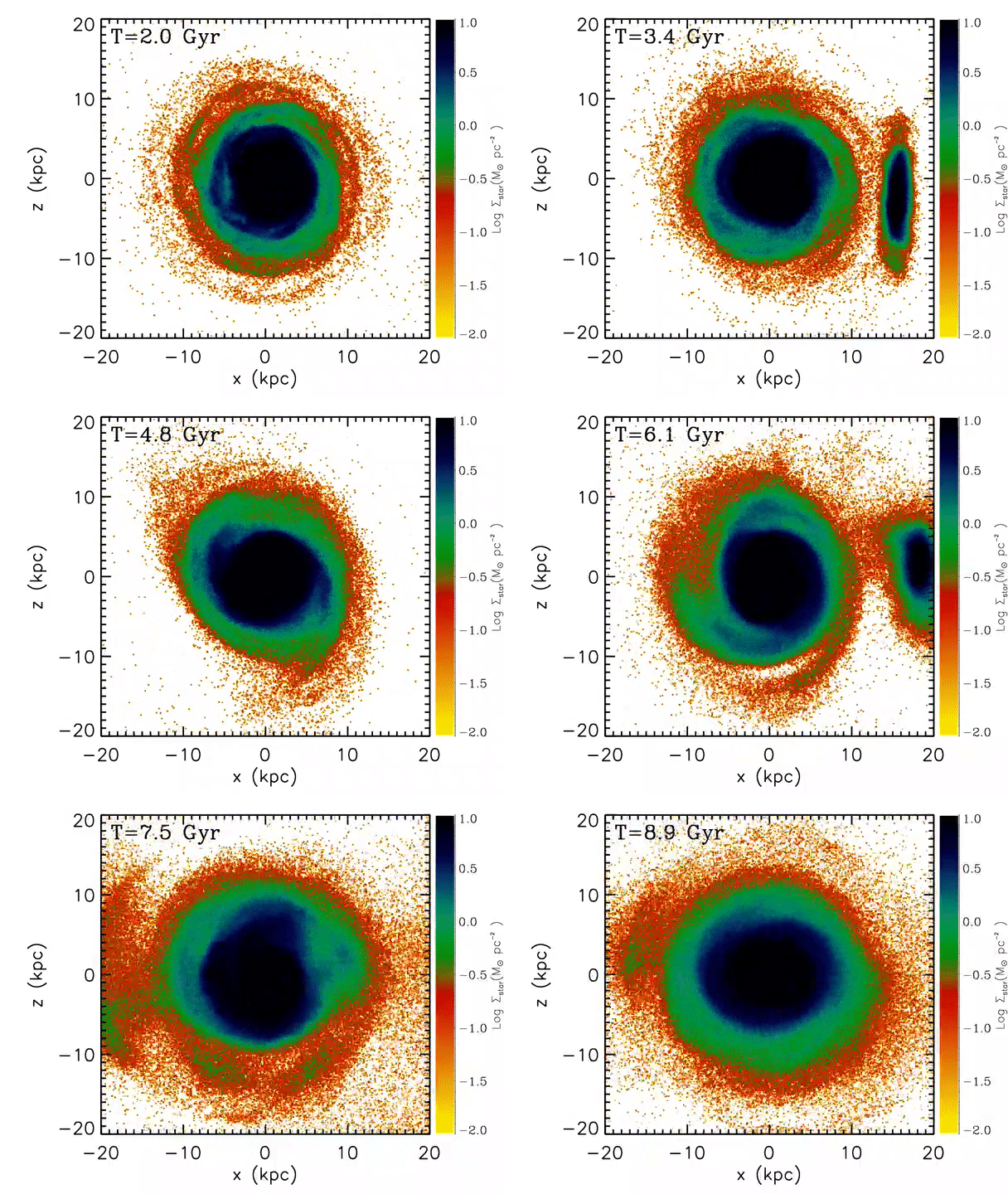
Explanation: Did the two most famous satellite galaxies of our Milky Way Galaxy once collide? No one knows for sure, but a detailed inspection of deep images like that featured here give an indication that they have. Pictured, theLarge Magellanic Cloud (LMC) is on the top left and the Small Magellanic Cloud (SMC) is on the bottom right. The surrounding field is monochrome color-inverted to highlight faint star streams, shown in gray. Perhaps surprisingly, thefeatured research-grade image was compiled with small telescopes to cover the large angular field -- nearly 40 degrees across. Much of the faint nebulosity is Galactic Cirrus clouds of thin dust in our own Galaxy, but a faint stream of stars does appear to be extending from the SMC toward the LMC. Also, stars surrounding the LMC appear asymmetrically distributed, indicating in simulations that they could well have been pulled off gravitationally in one or more collisions. Both the LMC and the SMC are visible to the unaided eye in southern skies. Future telescopic observations and computer simulations are sure to continue in a continuing effort to better understand the history of our Milky Way and its surroundings.
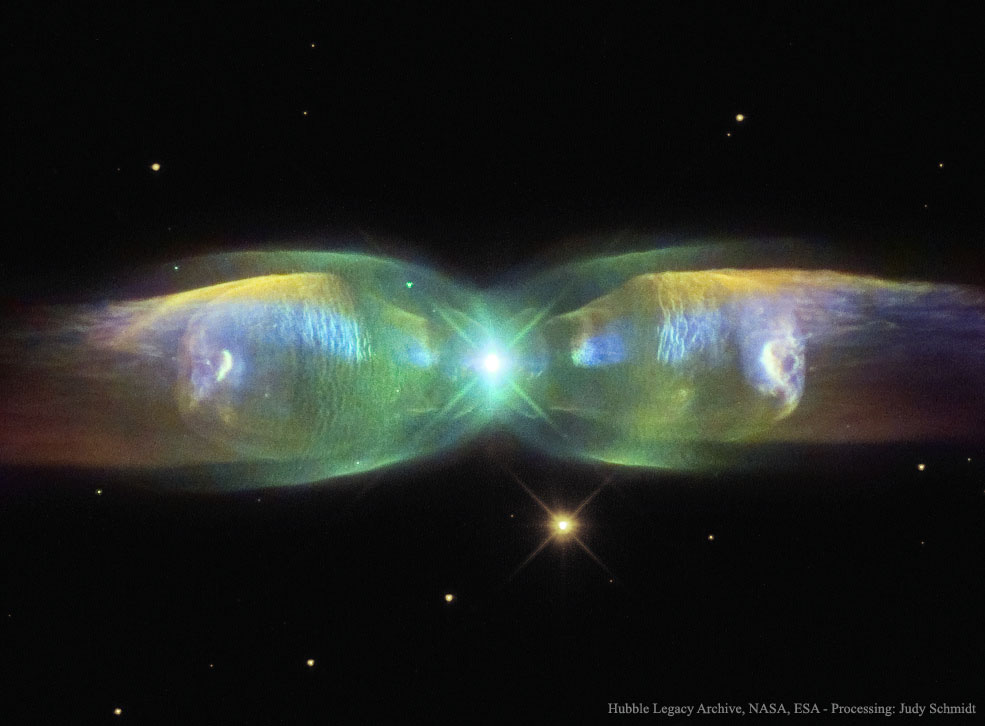
Explanation: Are stars better appreciated for their art after they die? Actually, stars usually create their most artistic displays as they die. In the case of low-mass stars like our Sun and M2-9 pictured above, the stars transform themselves from normal stars to white dwarfs by casting off their outer gaseous envelopes. The expended gas frequently forms an impressive display called a planetary nebula that fades gradually over thousands of years. M2-9, a butterfly planetary nebula 2100 light-years away shown in representative colors, has wings that tell a strange but incomplete tale. In the center, two stars orbit inside a gaseous disk 10 times the orbit of Pluto. The expelled envelope of the dying star breaks out from the disk creating the bipolar appearance. Much remains unknown about the physical processes that cause planetary nebulae.
El piloto Yazeed Mohamed al-Rahji y su copiloto Timo Gottschalk del equipo Mini compitiendo en el desierto de Gobi en Mongolia durante el Rally de la Ruta de la Seda.
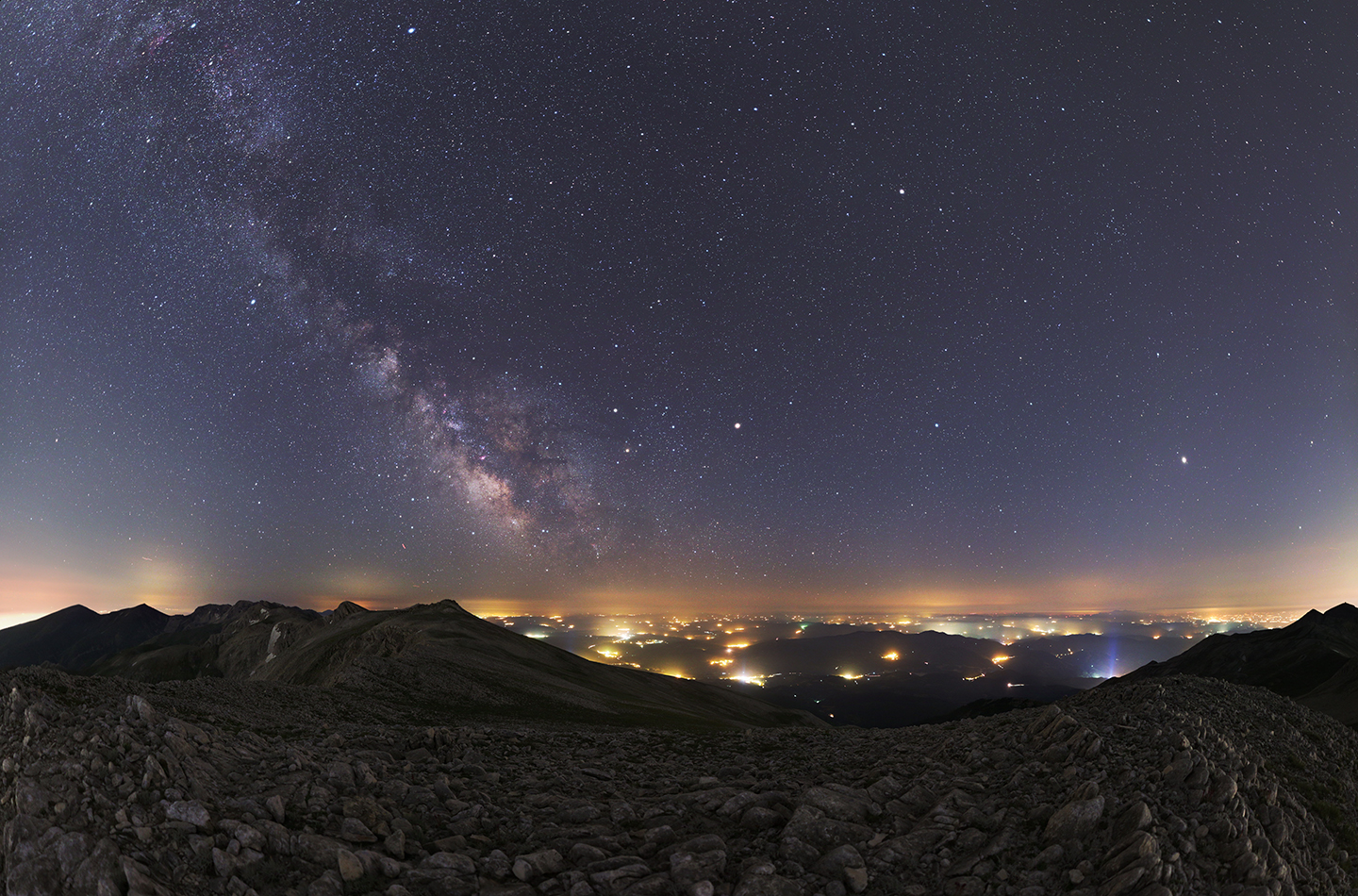
Explanation: Lights sprawl toward the horizon in this night skyscape from Uludag National Park, Bursa Province, Turkey, planet Earth. The stars and nebulae of the Milky Way are still visible though, stretching above the lights on the northern summer night while three other planets shine brightly. Jupiter is at the far right, Mars near the center of the frame, and Saturn is just right of the bulging center of our galaxy. Because the panoramic scene was captured on July 6, all three planets pictured were hosting orbiting, operational, robotic spacecraft from Earth. Popular Mars has five (from three different space agencies): MAVEN (NASA), Mars Orbiter Mission (India), Mars Express (ESA), Mars Odyssey (NASA), Mars Reconnaissance Orbiter (NASA). Ringed Saturn hosts the daring Cassini spacecraft. Just arrived, Juno now orbits ruling gas giant Jupiter.