2016-09-20

Imagens do Mundo - Laytown (Irlanda)

Vista general de la carrera anual de Laytown (Irlanda).
Vista geral da corrida anual de Laytown (Irlanda).
JUSTIN SETTERFIELD GETTY IMAGES

Imagens do Mundo - Xianrendao (China)

Vista aérea de barcos de pesca en Xianrendao (China).
Vista aérea de barcos de pesca em Xianrendao (China).
JOHANNES EISELE AFP

Astronomy picture of the day - 2016 September 20 - The Helix Nebula in Infrared

See Explanation.  Clicking on the picture will download
 the highest resolution version available.
The Helix Nebula in Infrared 
Image Credit: NASAJPL-CaltechSpitzer Space TelescopeProcessing: Judy Schmidt
Explanation: What makes this cosmic eye look so red? Dust. The featured image from the robotic Spitzer Space Telescope shows infrared light from the well-studied Helix Nebula (NGC 7293) a mere 700 light-years away in the constellation of the Water Carrier Aquarius. The two light-year diameter shroud of dust and gas around a central white dwarf has long been considered an excellent example of a planetary nebula, representing the final stages in the evolution of a Sun-like star. But the Spitzer data show the nebula's central star itself is immersed in a surprisingly bright infrared glow. Models suggest the glow is produced by a dust debris disk. Even though the nebular material was ejected from the star many thousands of years ago, the close-in dust could have been generated by collisions in a reservoir of objects analogous to our own solar system's Kuiper Belt or cometary Oort cloud. Had the comet-like bodies formed in the distant planetary system, they would have survived even the dramatic late stages of the star's evolution.

Andarilhos - "Chula do Douro" - Video - Musica

Afficher l'image d'origine
"Chula do Douro"

2016-09-19

A aguia voa mais alto! - Benfica 3 - Braga 1


Afficher l'image d'origine

O Benfica derrotou nesta segunda-feira o Sp. Braga, por 3-1, e assumiu a liderança isolada da I Liga. Os golos dos benfiquistas foram apontados pelo grego Mitroglou (27’ e 78’) e pelo internacional português Pizzi (74’). Os bracarenses reduziram no último minuto, por Rosic.

Num jogo de boa qualidade com oportunidades para ambos os lados, o Benfica revelou-se mais eficaz e acabou por justificar o triunfo. O primeiro golo da partida foi apontado pelo avançado grego Mitroglou, que regressou após lesão, aos 27': na zona da marca de grande penalidade, onde o “11” do Benfica rematou com o seu pé esquerdo à meia-volta, abrindo o marcador.

Na segunda parte, o desfecho da partida manteve-se em aberto até à entrada do quarto de hora final, quando o Benfica fez o 2-0 por Pizzi, num golo onde um ressalto num bracarense isolou o médio benfiquista que, com alguma sorte à mistura, bateu Marafona.

Menos de cinco minutos depois, os “encarnados” voltaram a festejar: Pizzi encostado à linha cruzou e Mitroglou encostou de cabeça para o fundo da baliza. O resultado final foi fixado no minuto 90, com um golo do defesa central bracarense Rosic, na sequência de um canto.

Com esta vitória, o Benfica ultrapassa o Sporting, e assume a liderança isolada do campeonato ao fim de cinco jornadas, com 13 pontos, mais um do que os “leões”.

Publico - Portugal

Fotografia - Saul Leiter - La magie du flottement -

Leiter
- La magie du flottement - 

Imagens de Lisboa - Interiores secretos - Igreja do Convento da Encarnação

Despite being one of the country’s richest works of gilded art, the church of this convent remains a well-hidden treasure. It’s kept secret, allowing entry only once a month for early-morning Mass on the first Friday. Once inside, you may admire the monumental main altar created in 1719, survivor of the 1755 earthquake.
Igreja do Convento da Encarnação, Lisboa
Apesar de ser uma das mais ricas obras em talha dourada do país, a igreja deste convento permanece um tesouro bem escondido. É mantido em segredo, permitindo entradas apenas uma vez por mês, para missa nas manhãs das primeiras sextas-feiras. Só assim é possível admirar o monumental altar-mor de 1719, que sobreviveu ao terramoto de 1755.

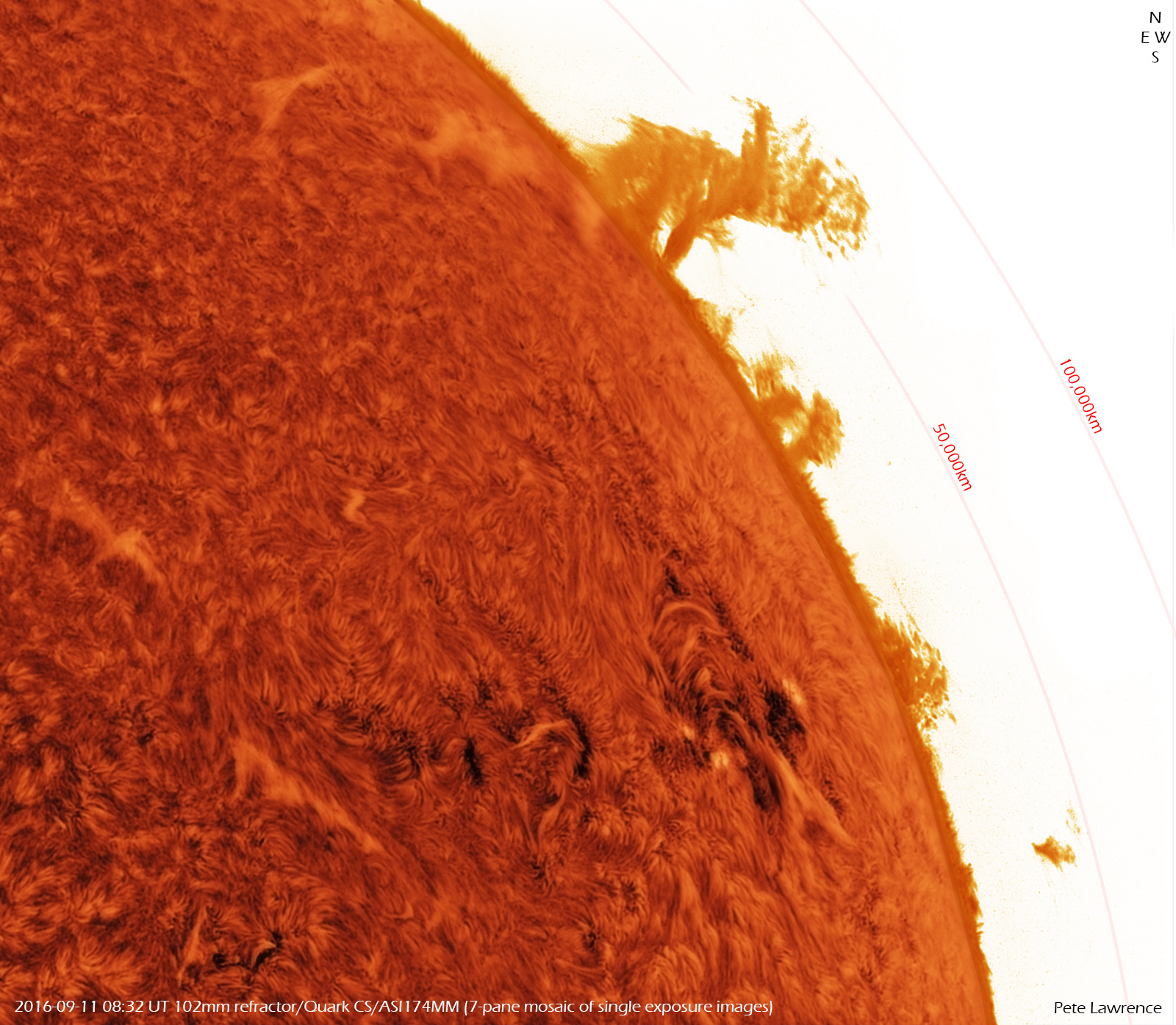
Astronomy picture of the day - 2016 September 19 - 50,000 Kilometers over the Sun

See Explanation.  Clicking on the picture will download
 the highest resolution version available.
50,000 Kilometers over the Sun 
Image Credit & Copyright: Pete Lawrence
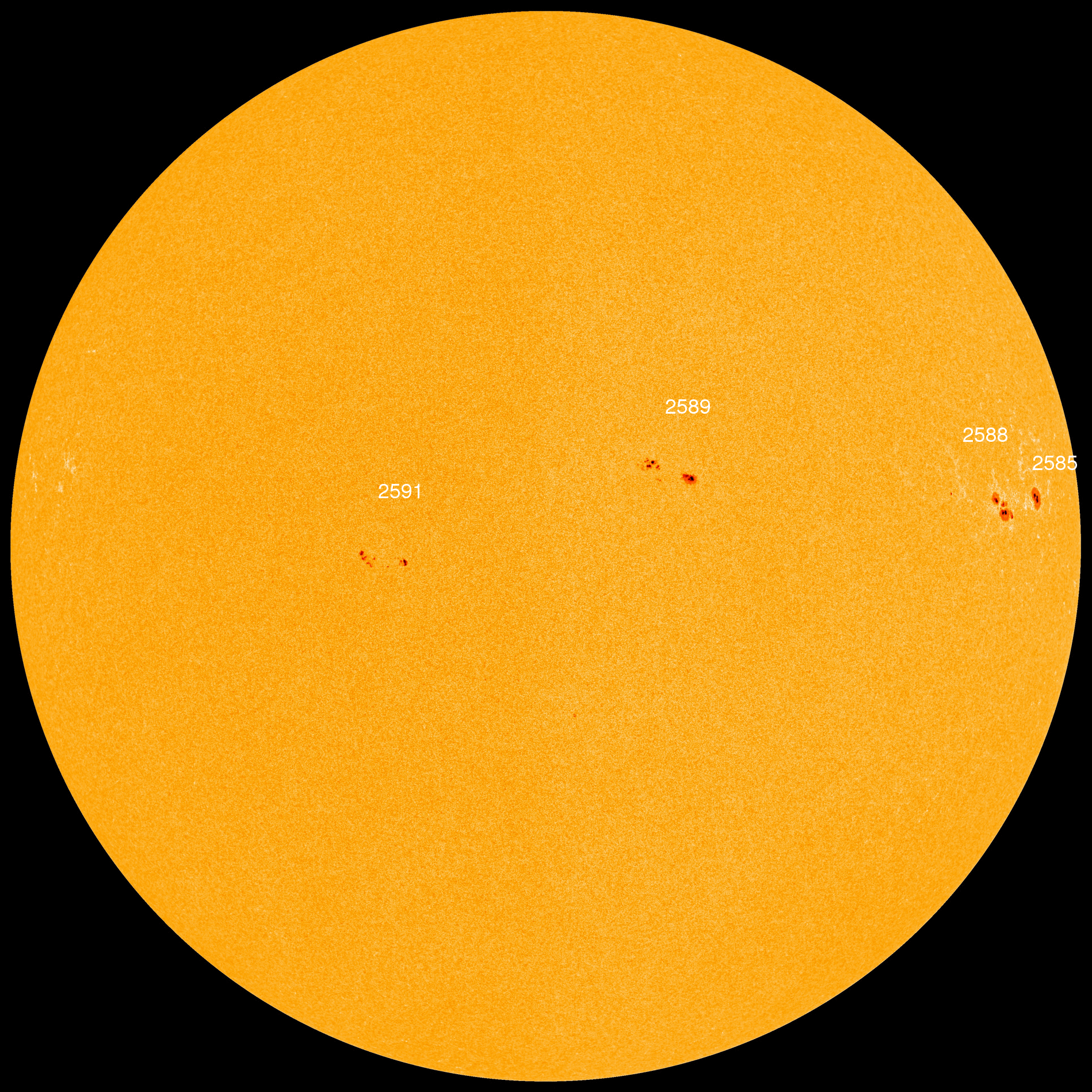
Explanation: What's happening at the edge of the Sun? Although it may look like a monster is rampaging, what is pictured is actually only a monster prominence -- a sheath of thin gas held above the surface by the Sun's magnetic field. The solar event was captured just this past weekend with a small telescope, with the resulting image then inverted and false-colored. As indicated with illustrative lines, the prominence rises over 50,000 kilometers above the Sun's surface, making even our 12,700-diameter Earth seem small by comparison. Below the monster prominence is active region 12585, while light colored filaments can be seen hovering over a flowing solar carpet of fibrils. Filaments are actually prominences seen against the disk of the Sun, while similarly, fibrils are actually spicules seen against the disk. Energetic events like this are becoming less common as the Sun evolves toward a minimum in its 11-year activity cycle.

Playing For Change - "Crazy" - Video - Music

Afficher l'image d'origine
"Crazy"