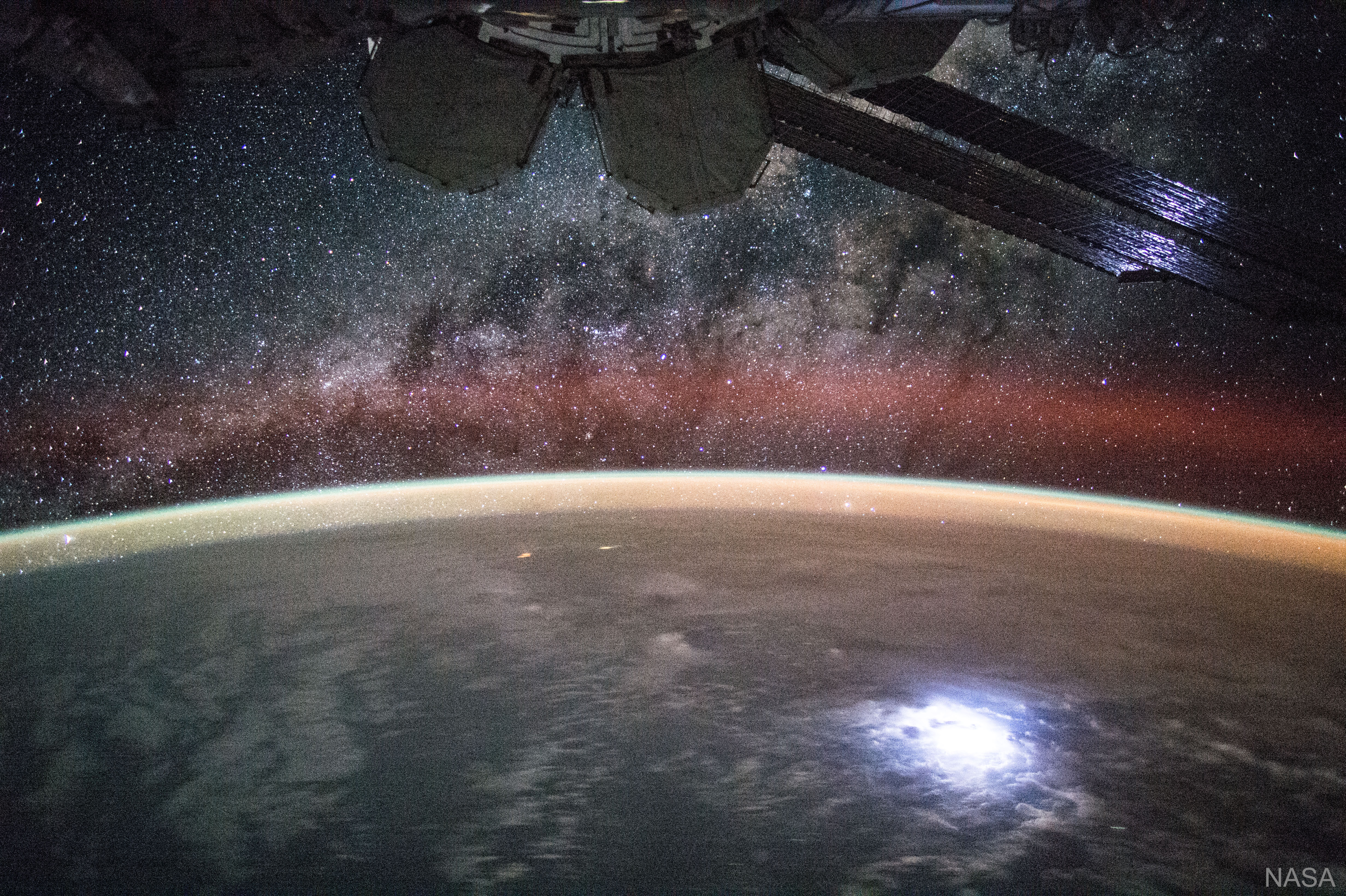
Space Station Vista: Planet and Galaxy Image Credit: NASA, JSC, ESRS
Explanation: If you could circle the Earth aboard the International Space Station, what might you see? Some amazing vistas, one of which was captured in this breathtaking picture in mid-2015. First, visible at the top, are parts of thespace station itself including solar panels. Just below the station is the band of our Milky Way Galaxy, glowing with the combined light of billions of stars, but dimmed in patches by filaments of dark dust. The band of red light just below the Milky Way is airglow -- Earth's atmosphere excited by the Sun and glowing in specific colors of light. Green airglow is visible below the red. Of course that's our Earth below its air, with the terminator between day and night visible near the horizon. As clouds speckle the planet, illumination from a bright lightning bolt is seen toward the lower right. Between work assignments, astronauts from all over the Earth have been enjoying vistas like this from the space station since the year 2000.
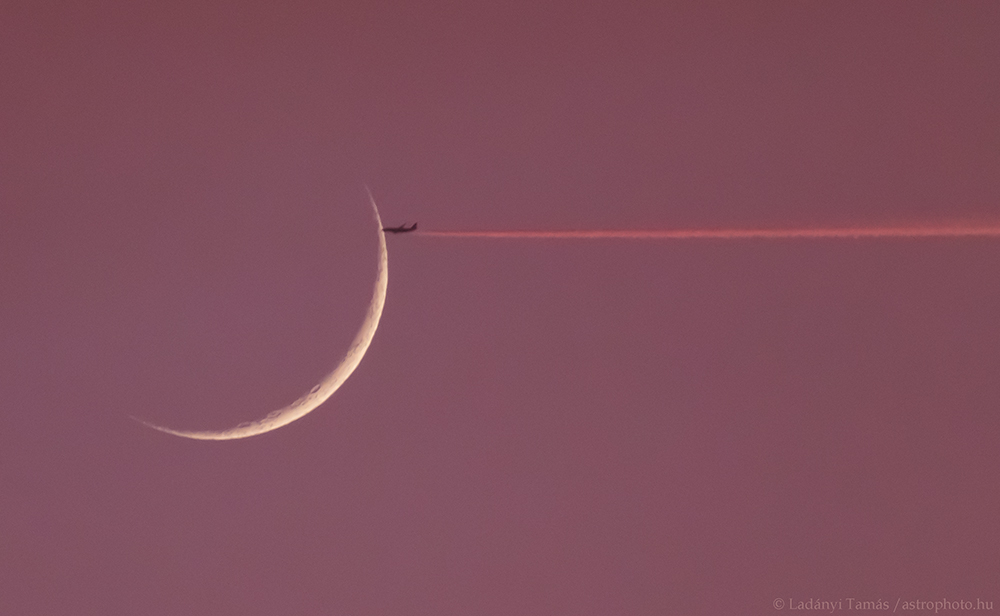
Explanation: No, this is not a good way to get to the Moon. What is pictured is a chance superposition of an airplane and the Moon. The contrail would normally appear white, but the large volume of air toward the setting Sun preferentially knocks away blue light, giving the reflected trail a bright red hue. Far in the distance, to the right of the plane, is the young Moon. This vast world shows only a sliver of itself because the Sun is nearly lined up behind it. Captured two weeks ago, the featured image was framed by an eerie maroon sky, too far from day to be blue, too far from night to be black. Within minutes the impromptu sky show ended. The plane crossed the Moon. The contrail dispersed. The Sun set. The Moon set. The sky faded to black, only to reveal thousands of stars that had been too faint to see through the rustic red din.
Andar sem destino, despreocupado, passando o tempo.
Origem:
Toa é a corda com que uma embarcação reboca a outra. Um navio que está "à toa" é o que não tem
leme nem rumo, indo para onde o navio que o reboca determinar.
Geostationary Highway through Orion Image Credit & Copyright: James A. DeYoung
Explanation: Put a satellite in a circular orbit about 42,000 kilometers from the center of the Earth and it will orbit once in 24 hours. Because that matches Earth's rotation period, it is known as a geosynchronous orbit. If that orbit is also in the plane of the equator, the satellite will hang in the sky over a fixed location in a geostationary orbit. As predicted in the 1940s by futurist Arthur C. Clarke, geostationary orbits are in common use for communication and weather satellites, a scenario now well-known to astroimagers. Deep images of the night sky made with telescopes that follow the stars can also pick up geostationary satellites glinting in sunlight still shining far above the Earth's surface. Because they all move with the Earth's rotation against the background of stars, the satellites leave trails that seem to follow a highway across the celestial landscape. The phenomenon was captured last month in this video showingseveral satellites in geostationary orbit crossing the famous Orion Nebula.
Origem: Na Marinha, em dias de gala ou simplesmente festivos, os navios embandeiram em arco, isto é, içam pelas adriças ou cabos (vergueiros) de embandeiramento galhardetes, bandeiras e cometas quase até ao topo dos mastros, indo um dos seus extremos para a proa e outro para a popa. Assim são assinalados esses dias de regozijo ou se saúdam outros barcos que se manifestam da mesma forma.
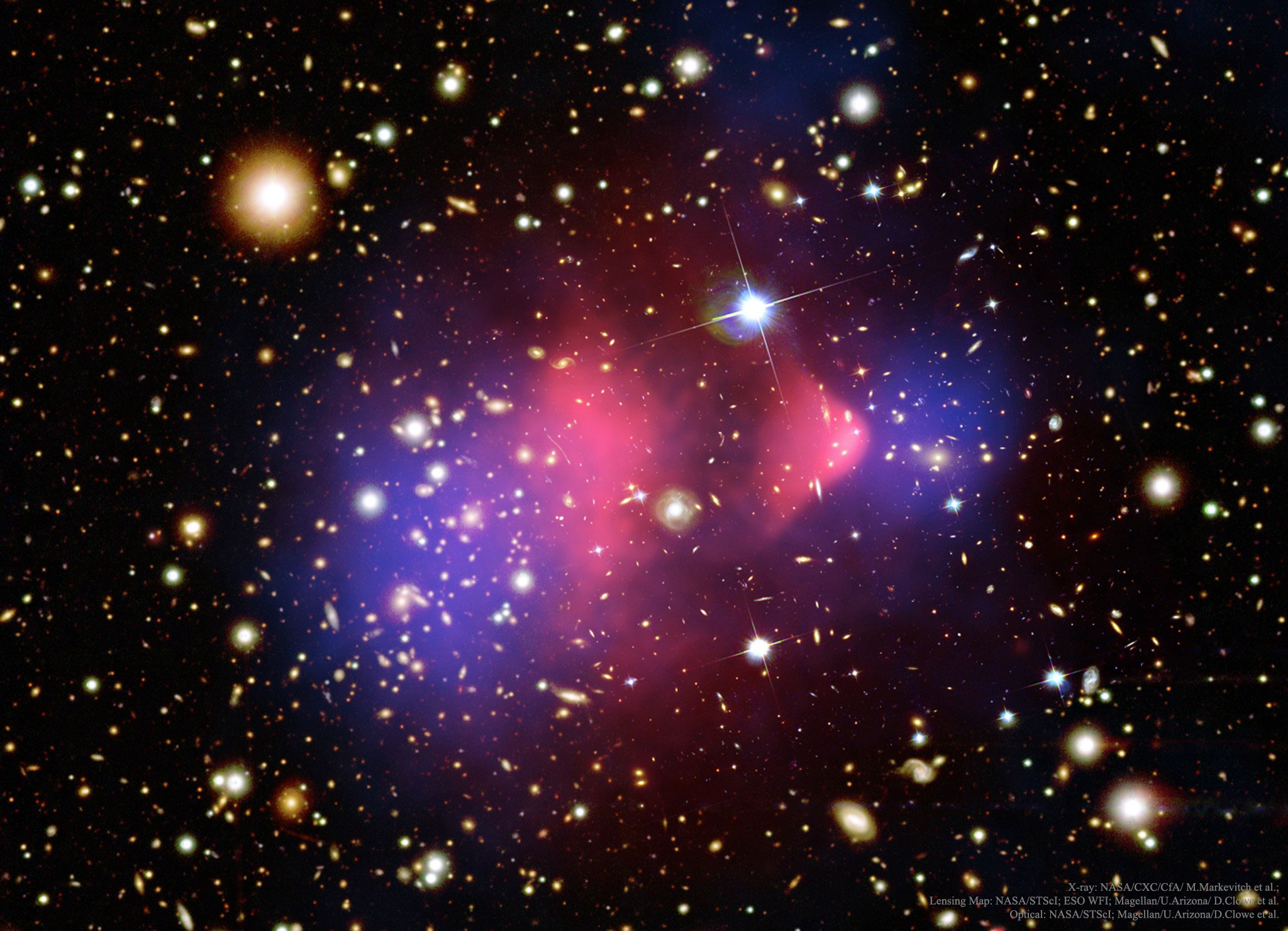
The Matter of the Bullet Cluster Image Credit: X-ray: NASA/CXC/CfA/ M. Markevitch et al.; Lensing Map: NASA/STScI; ESO WFI; Magellan/U.Arizona/ D.Clowe et al. Optical: NASA/STScI; Magellan/U.Arizona/D.Clowe et al.
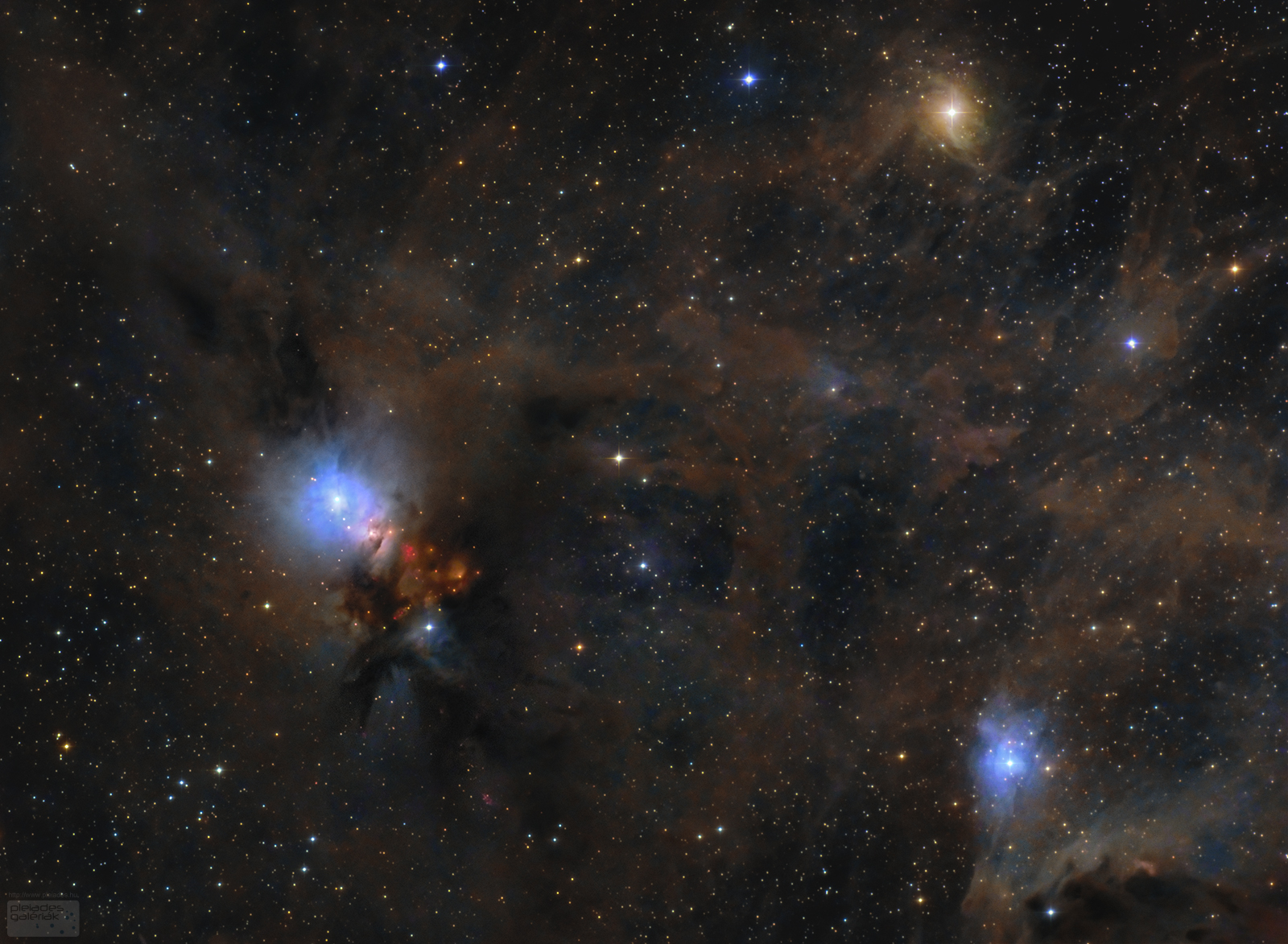
Explanation: Clouds of stardust drift through this deep skyscape. The cosmic scene spans nearly 2 degrees across the Perseus molecular cloud some 850 light-years away. A triangle of dusty nebulae reflecting light from embedded stars is captured in the telescopic field of view. With a characteristic bluish color reflection nebula NGC 1333 is at left, vdB13 at bottom right, and rare yellowish reflection nebula vdB12 lies at the top. Stars are forming in the Perseus molecular cloud, though most are obscured at visible wavelengths by the pervasive dust. Still, hints of contrasting red emission from Herbig-Haro objects, the jets and shocked glowing gas emanating from recently formed stars, are evident in NGC 1333. At the estimated distance of the molecular cloud, legs of the triangle formed by the reflection nebulae would be about 20 light-years long.