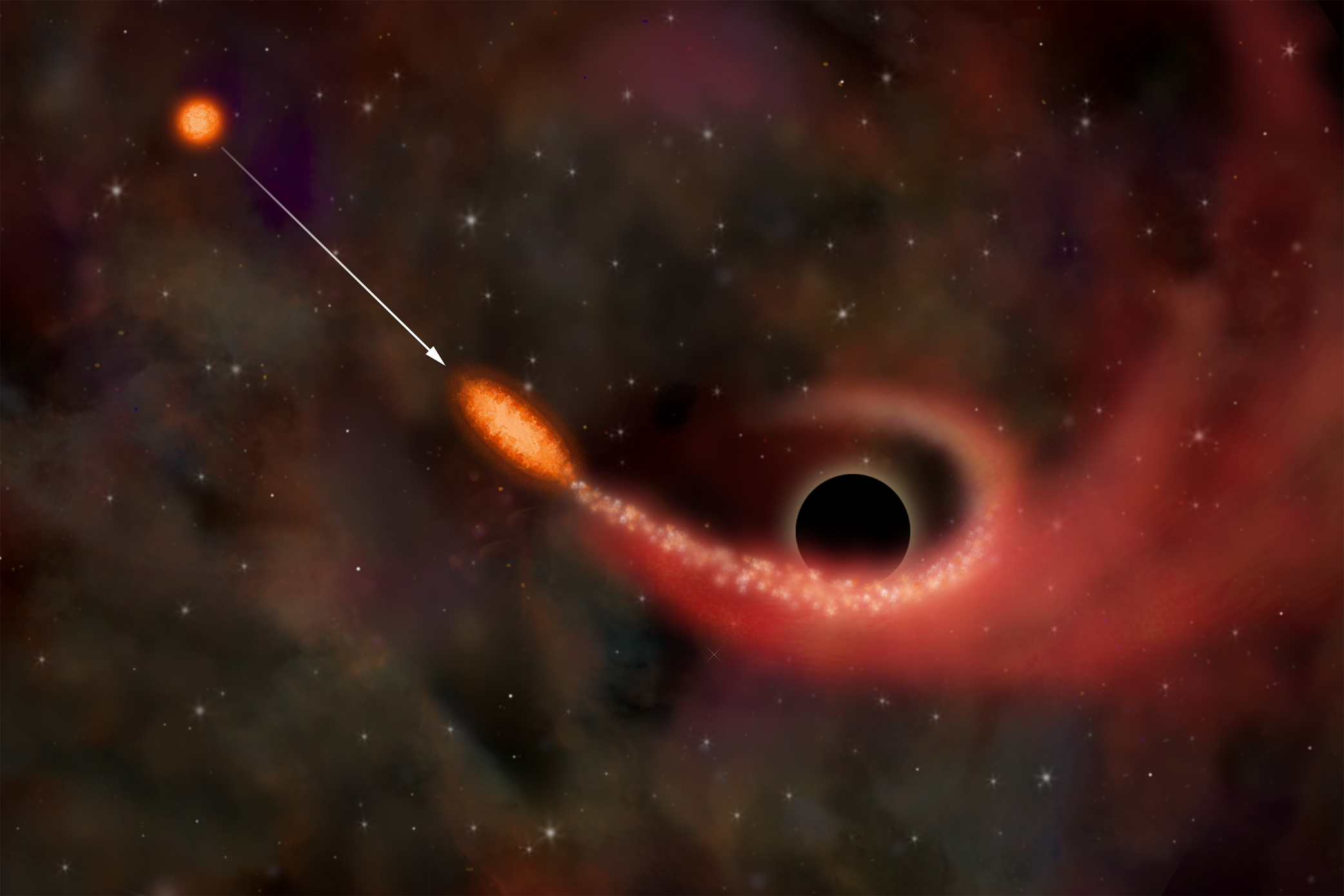
X-Rays Indicate Star Ripped Up by Black Hole Illustration Credit: M. Weiss, CXC, NASA
Explanation: What could rip a star apart? A black hole. Giant black holes in just the right mass range would pull on the front of a closely passing star much more strongly than on the back. Such a strong tidal force would stretch out a star and likely cause some of the star's gasses to fall into the black hole. The infalling gas has been predicted to emit just the same blast of X-rays that have recently been seen in the center of galaxy RX J1242-11. Above, an artist's illustration depicts the sequence of destruction (assuming that image-distorting gravitational-lens effects of the black hole are somehow turned off). Most of the stellar remains would be flung out into the galaxy. Such events are rare, occurring perhaps only one in 10,000 years for typical black holes at the center of typical galaxies.
Explanation: Why does a hurricane have an eye at its center? No one is yet sure. What happens in and around a hurricane's eye is well documented, though. Warm air rises around the eye's edges, cools, swirls, and spreads out over the large storm, sinking primarily at the far edges. Inside the low-pressure eye, air also sinks and warms -- which causes evaporation, calm, and clearing -- sunlight might even stream through. Just at the eye's edge is a towering eyewall, the area of the highest winds. It is particularly dangerous to go outside when the tranquil eye passes over because you are soon to experience, again, the storm's violent eyewall. Featured is one of the most dramatic videos yet taken of an eye and rotating eyewall. The time-lapse video was taken from space by NASA's GOES-16 satellite last week over one of the most powerful tropical cyclones in recorded history: Hurricane Irma. Hurricanes can beextremely dangerous and their perils are notconfined to the storm's center.
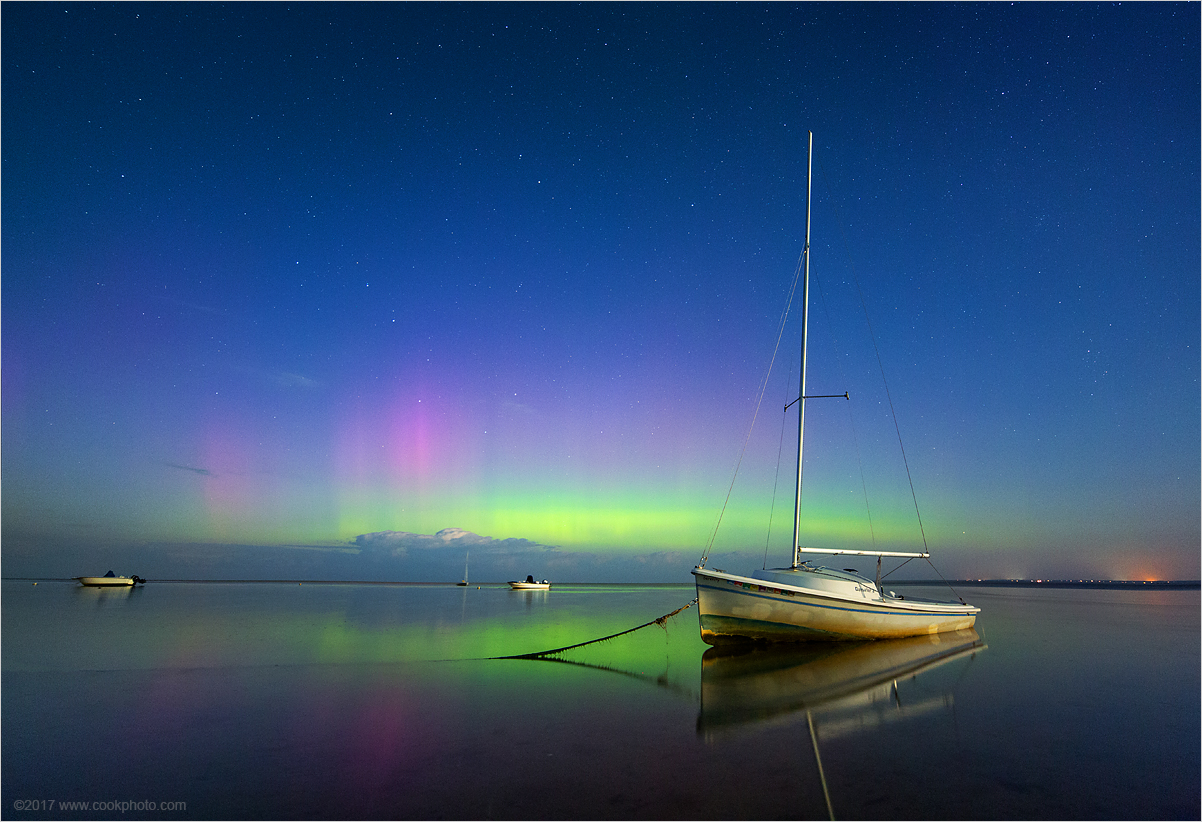
Explanation: Very recognizable stars of the northern sky are a backdrop for calm waters in this moonlit sea and skyscape off Cape Cod, Massachusetts. Taken on September 7, the photo also records a colorful display of northern lights or aurora borealis triggered by a severe geomagnetic storm. Visible crossing the Sun, the giant solar active region responsible, AR 2673, is much larger than planet Earth. It has produced the strongest flare of the current solar cycle and and the Earth-directed coronal mass ejection in the last few days.
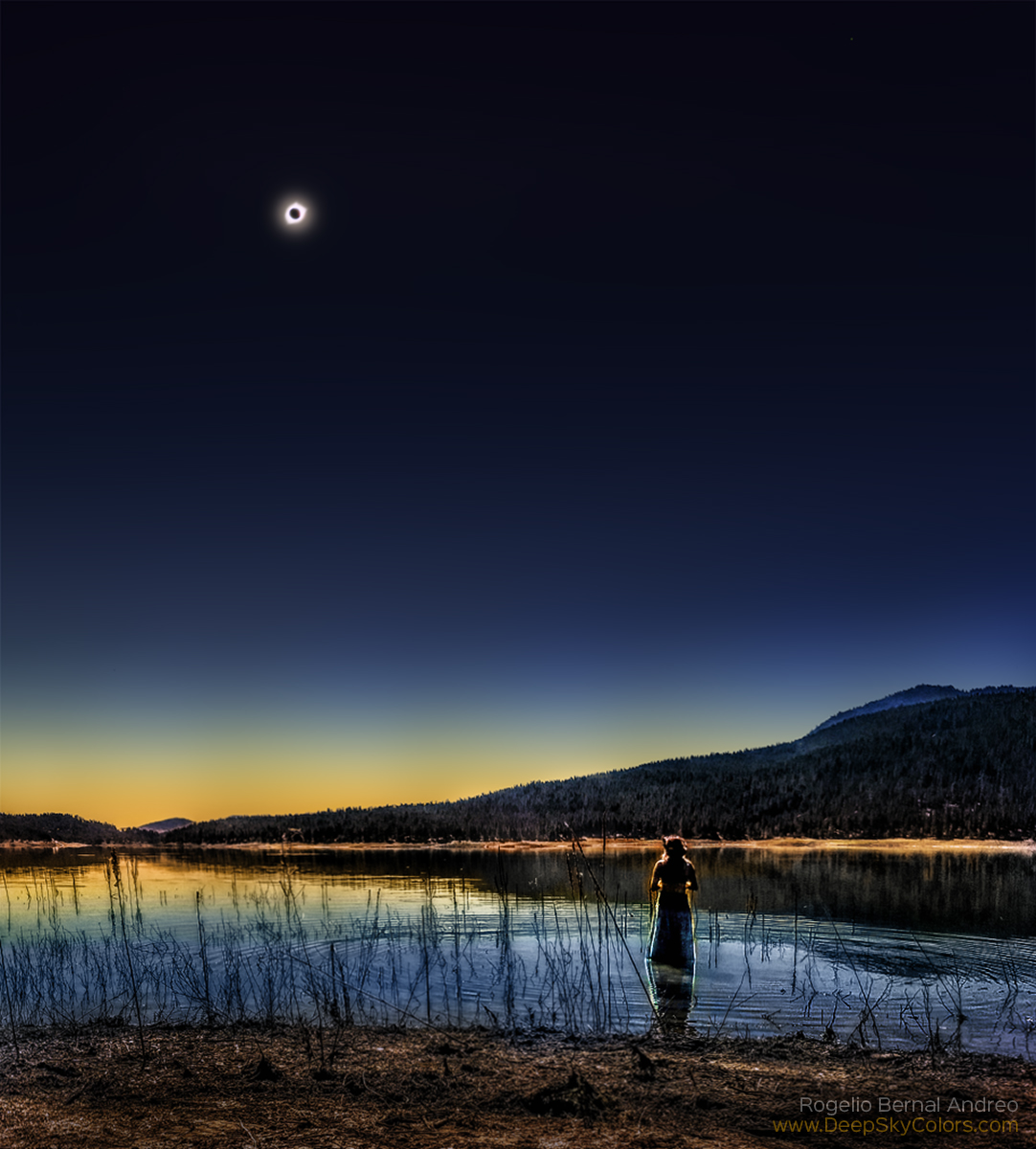
Explanation: There were no crowds on the beach at Phillips Lake, Oregon on August 21. But a few had come there to stand, for a moment, in the dark shadow of the Moon. From the beach, this unscripted mosaic photo records their much anticipated solar eclipse. In two vertical panels it catches the last few seconds of totality and the first instant of 3rd contact, just as the eclipse ends and sunlight faintly returns. Across the US those gathered along the path of totality also took pictures and shared their moment. And like those at Phillips Lake they may treasure the experience more than any planned or unplanned photograph of the total eclipse of the Sun.
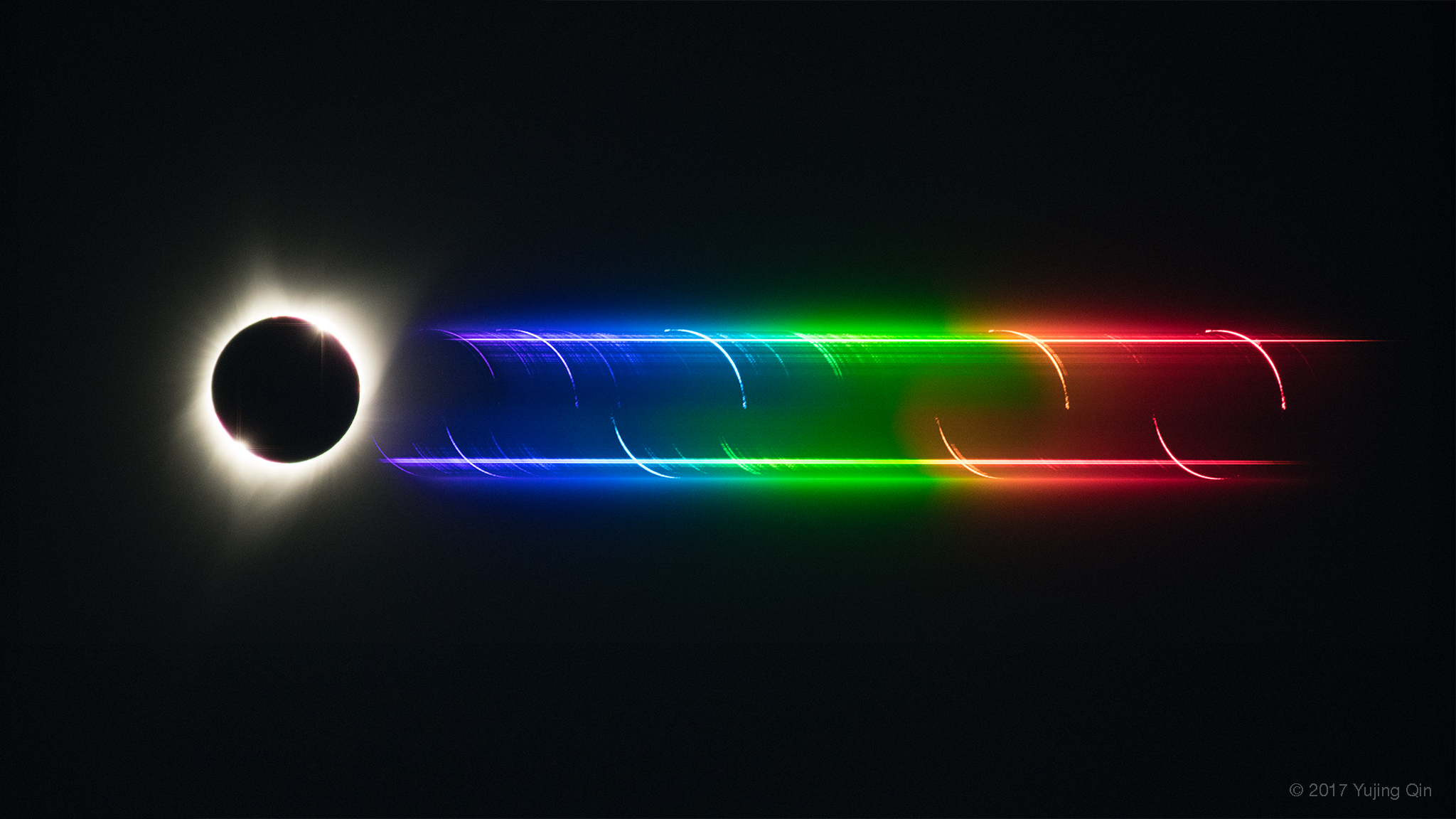
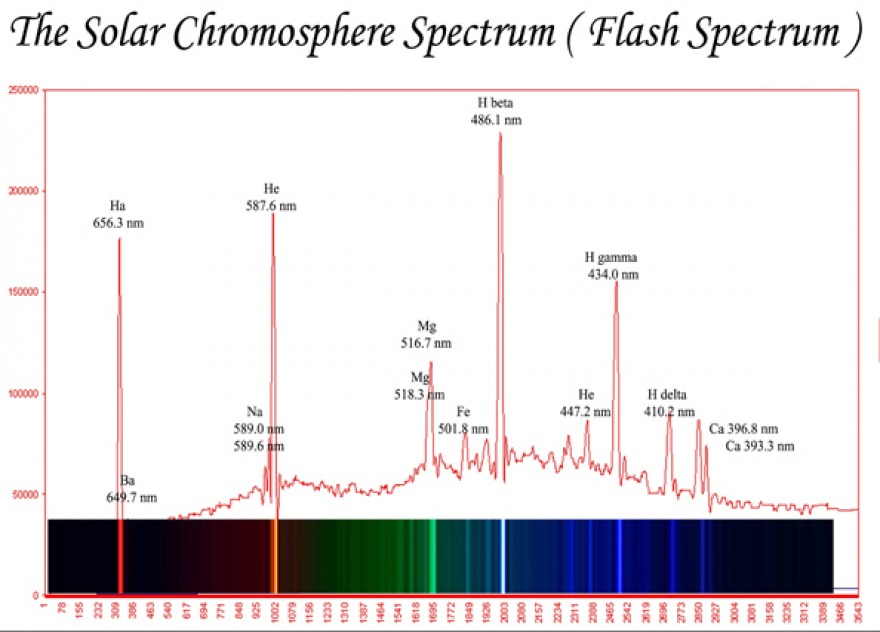
Explanation: In clear Madras, Oregon skies, this colorful eclipse composite captured the elusive chromospheric or flash spectrum of the Sun. Only three exposures, made on August 21 with telephoto lens and diffraction grating, are aligned in the frame. Directly imaged at the far left, the Sun's diamond ring-like appearance at the beginning and end of totality brackets a silhouette of the lunar disk at maximum eclipse. Spread by the diffraction grating into the spectrum of colors toward the right, the Sun's photospheric spectrum traces the two continuous streaks. They correspond to the diamond ring glimpses of the Sun's normally overwhelming disk. But individual eclipse images also appear at each wavelength of light emitted by atoms along the thin, fleeting arcs of the solar chromosphere. The brightest images, or strongest chromospheric emission, are due to Hydrogen atoms. Red hydrogen alpha emission is at the far right with blue and purple hydrogen series emission to the left. In between, the brightest yellow emission is caused by atoms of Helium, an element only first discovered in the flash spectrum of the Sun.
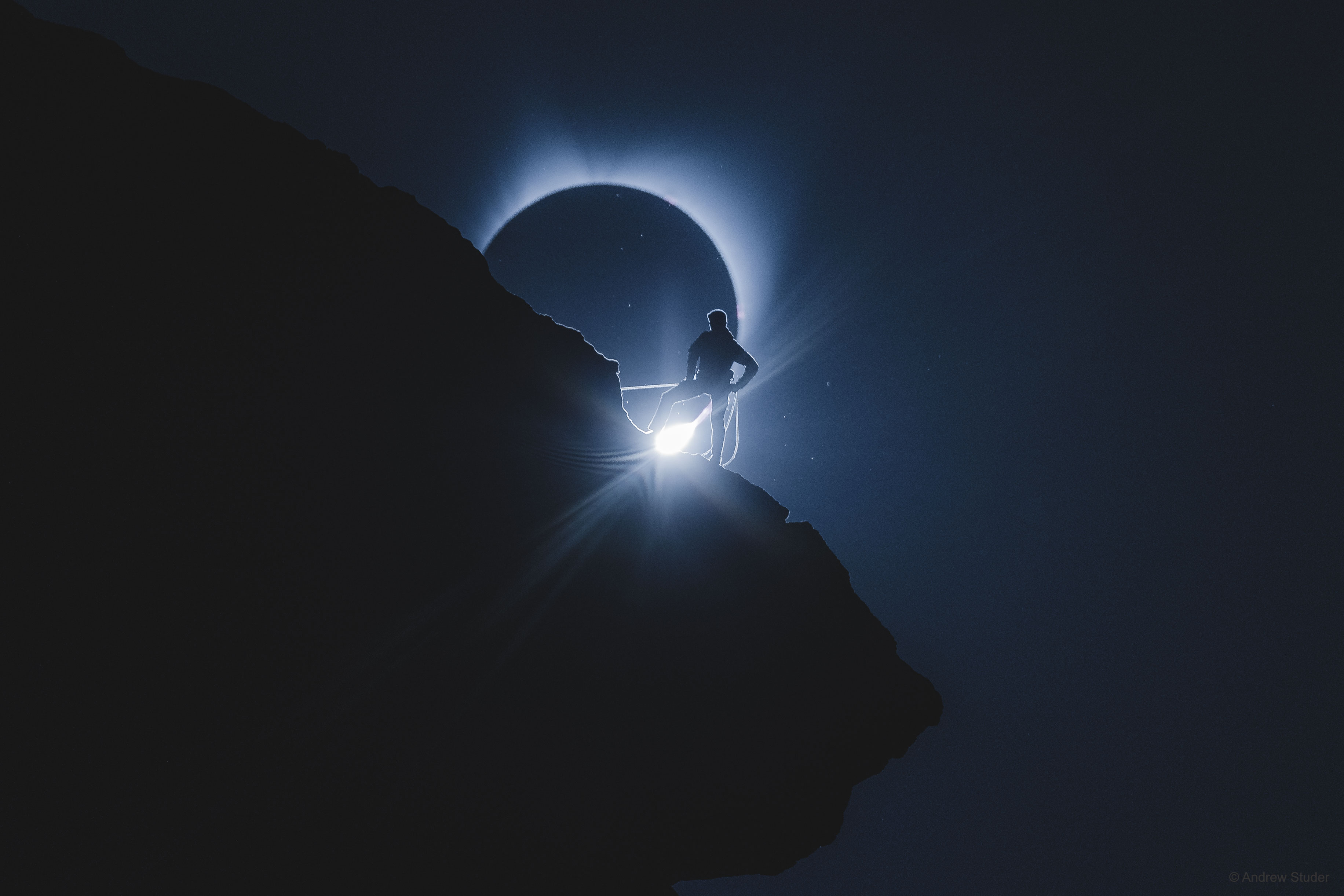
The Climber and the Eclipse Image Credit & Copyright: AndrewStruder
Explanation: What should you do if your rock climbing picture is photobombed by a total eclipse of the Sun? Rejoice -- because your planning paid off. After months of considering different venues, and a week of scouting different locations in Oregon's Smith Rock State Park, a group of photographers and rock climbers led by TedHesser, Martina Tibell, and Michael Shainblum settled on picturesque 100-meter tall Monkey Face tower as the dramatic foreground for their images of the pending total solar eclipse. Tension mounted as the eclipse time approached, planned juxtapositions were scrutinized, and the placement of rock climber Tommy Smith was adjusted. Right on schedule, though, the Moon moved in front of the Sun, and Smith moved in front of the Moon, just as planned. The solar eclipse image displayed here actually shows a diamond ring, an eclipse phase when a bit of the distant Sun is still visible beyond the Moon's surface.
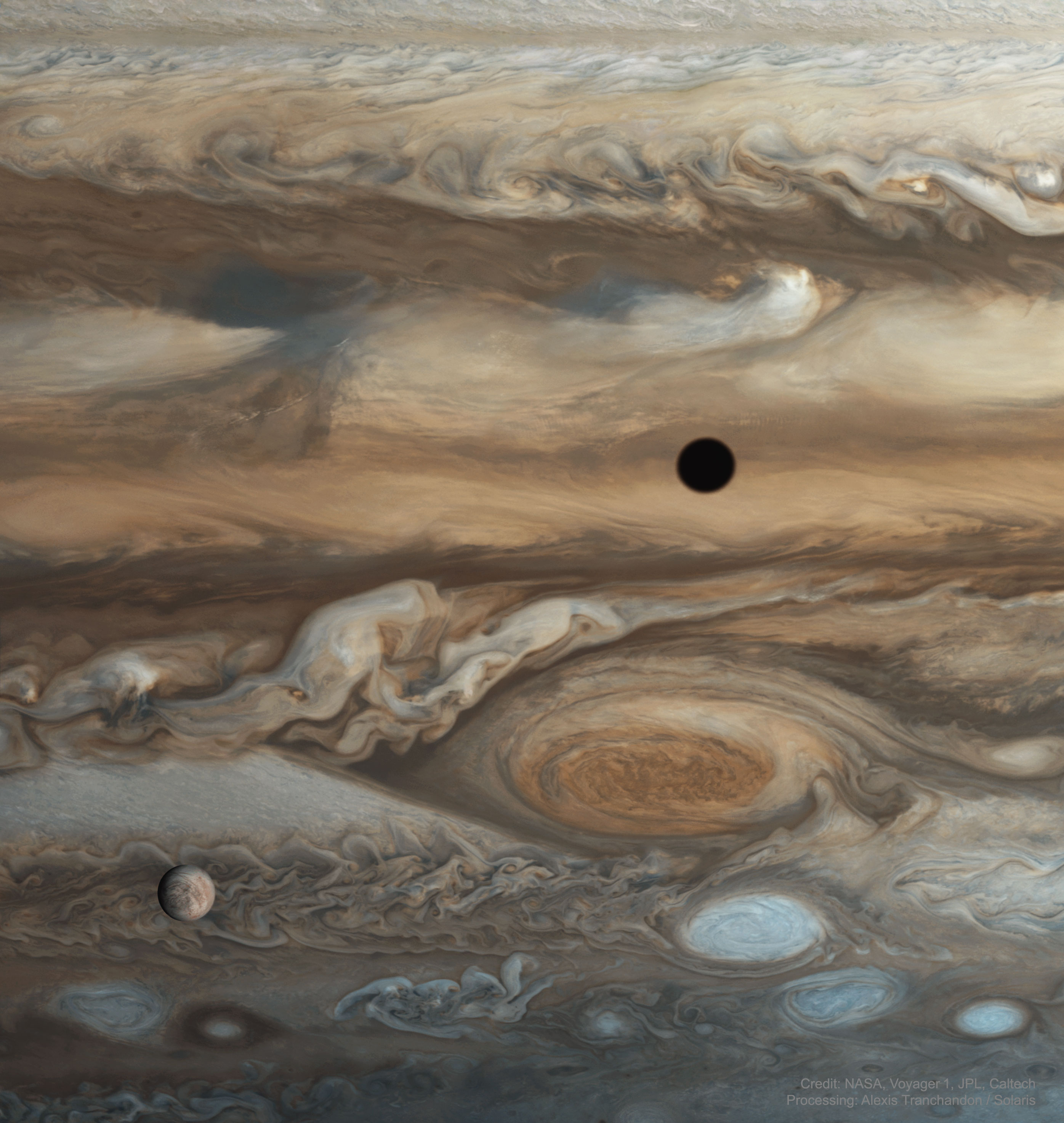
Explanation: What are those spots on Jupiter? Largest and furthest, just right of center, is the Great Red Spot -- a huge storm system that has been raging on Jupiter possibly since Giovanni Cassini's likely notation of it 352 years ago. It is not yet known why this Great Spot is red. The spot toward the lower left is one of Jupiter's largest moons: Europa. Images from Voyager in 1979 bolster the modern hypothesis that Europa has an underground ocean and is therefore a good place to look for extraterrestrial life. But what about the dark spot on the upper right? That is a shadow of another of Jupiter's large moons: Io. Voyager 1 discovered Io to be so volcanic that no impact craters could be found. Sixteen frames from Voyager 1's flyby of Jupiter in 1979 were recently reprocessed and merged to create the featured image. Forty years ago today, Voyager 1 launched from Earth and started one of the greatest explorations of the Solar System ever.