2018-03-06

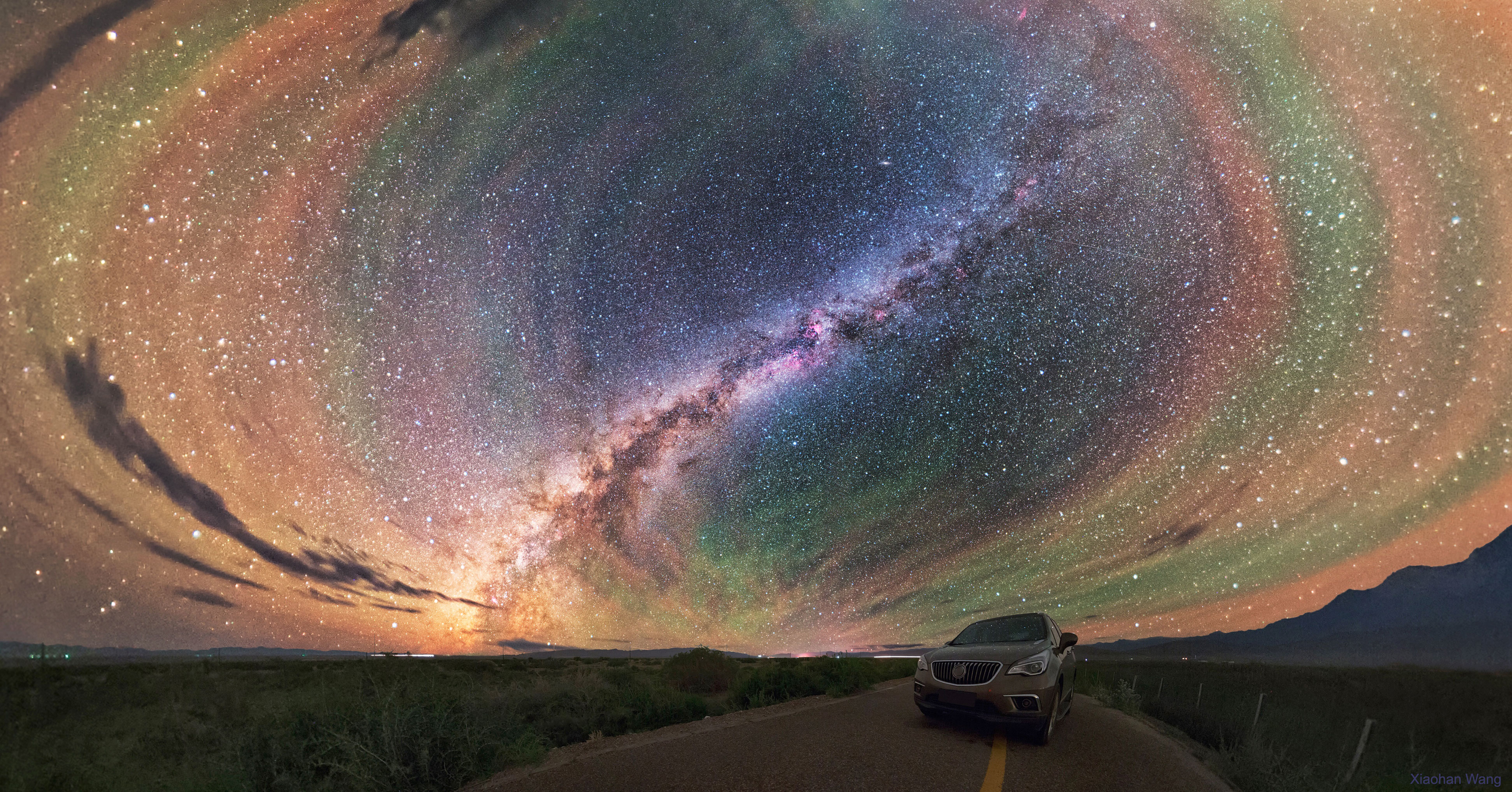
Astronomy picture of the day - 2018 March 6 - Colorful Airglow Bands Surround Milky Way

See Explanation.  Clicking on the picture will download
 the highest resolution version available.
Colorful Airglow Bands Surround Milky Way 
Image Credit & Copyright: Xiaohan Wang
Explanation: Why would the sky glow like a giant repeating rainbow? Airglow. Now air glows all of the time, but it is usually hard to see. A disturbance however -- like an approaching storm -- may cause noticeable rippling in theEarth's atmosphere. These gravity waves are oscillations in air analogous to those created when a rock is thrown in calm water. Red airglow likely originates from OH molecules about 87-kilometers high, excited by ultraviolet light from the Sun, while orange and green airglow is likely caused by sodium and oxygen atoms slightly higher up. While driving near Keluke Lake in Qinghai Provence in China, the photographer originally noticed mainly the impressive central band of the Milky Way Galaxy. Stopping to photograph it, surprisingly, the resulting sensitive camera image showed airglow bands to be quite prominent and span the entire sky. The featured image has been digitally enhanced to make the colors more vibrant.

2018-03-04

Mery Paulino - Arte-bordados - "Mira"

"Mira"
Oferta de Mery ; directo da Venuzela para França

Janeiro de 2018
MeryPaulino


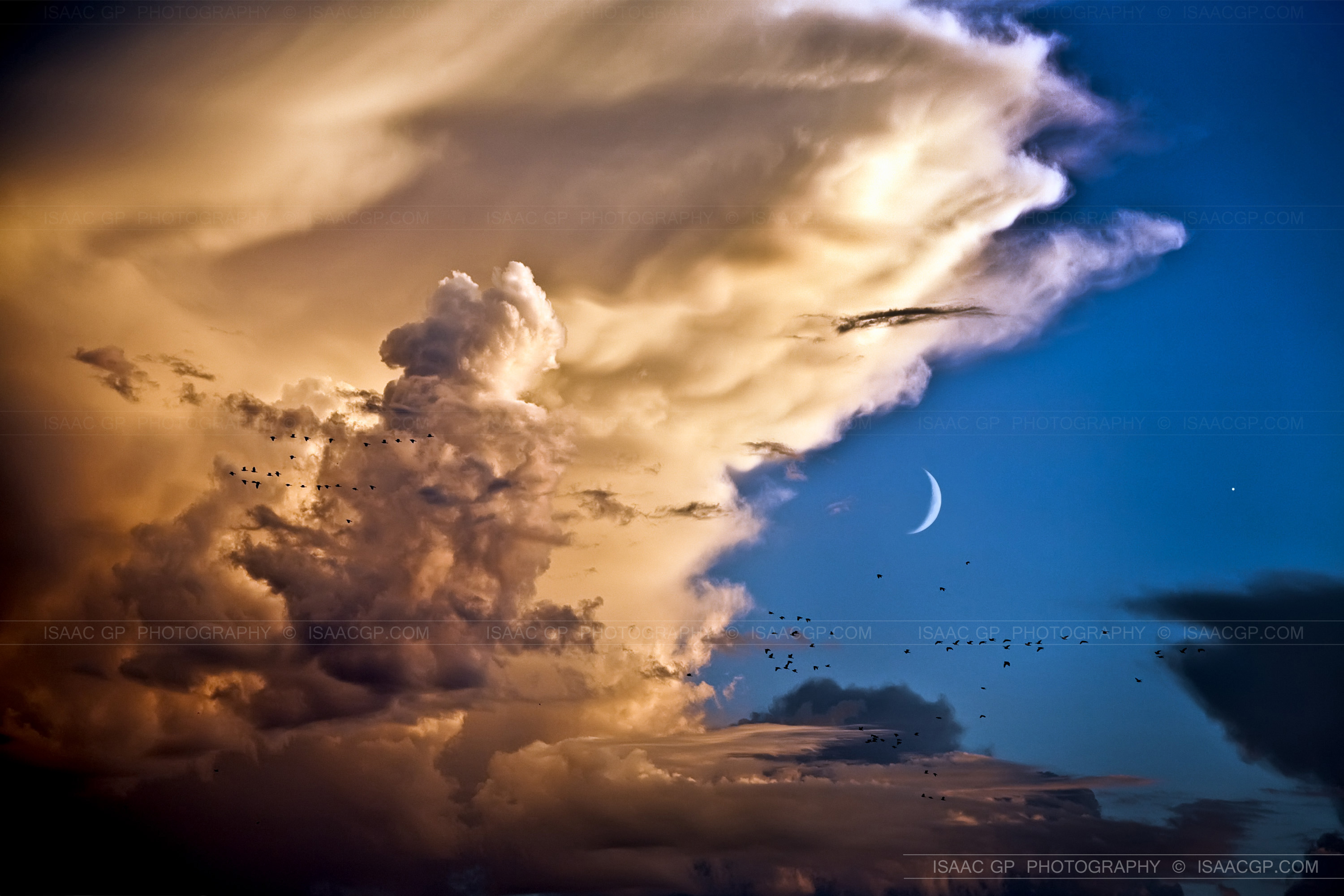
Astronomy picture of the day - 2018 March 4 - Clouds, Birds, Moon, Venus

See Explanation.  Clicking on the picture will download
 the highest resolution version available.
Clouds, Birds, Moon, Venus 
Image Credit & Copyright: Isaac Gutiérrez Pascual
Explanation: Sometimes the sky above can become quite a show. In early September of 2010, for example, the Moon and Venus converged, creating quite a sight by itself for sky enthusiasts around the globe. From some locations, though, the sky was even more picturesque. In the featured image taken in Spain, a crescent Moon and the planet Venus, on the far right, were captured during sunset posing against a deep blue sky. In the foreground, dark storm clouds loom across the image bottom, while a white anvil cloud shape appears above. Black specks dot the frame, caused by a flock of birds taking flight. Very soon after this picture was taken, however, the birds passed by, the storm ended, and Venus and the Moon set. Bright Venus is again visible just after sunset this month (2018 March) and will appear quite near Mercury tonight and the rest of this week.

JoanMira - "Limoeiro cansado descansa, ao fim do dia, no ombro da amiga Nespereira" - Fotos

"Limoeiro cansado descansa, ao fim do dia, no ombro da amiga Nespereira"

2018-03-03

JoanMira - "Oliveira na estranja" - Fotos

"Oliveira na estranja"

Joan Mira - "Limoeiro e Amigos" - Fotos

"Limoeiro e Amigos"

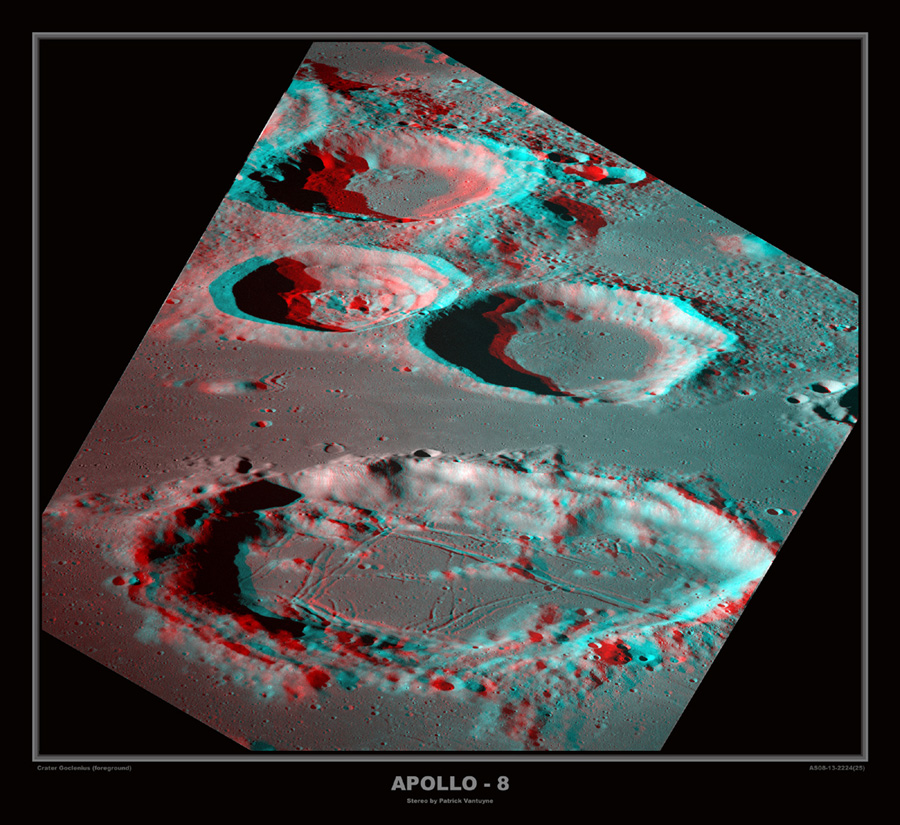
Astronomy picture of the day - 2018 March 3 - Southwest Mare Fecunditatis

See Explanation.  Clicking on the picture will download
 the highest resolution version available.
Southwest Mare Fecunditatis 
Image Credit: Apollo 8NASA - Stereo Image Copyright: Patrick Vantuyne
Explanation: Frank Borman, James Lovell, and William Anders journeyed from Earth to the Moon and back again in December of 1968. From lunar orbit, their view of craters in southwest Mare Fecunditatis is featured in this stereo anaglyph, best experienced from armchairs on planet Earth with red/blue glasses. Goclenius is the large impact crater in the foreground. About 70 kilometers (45 miles) in diameter its lava-flooded floor is scarred by rilles or grooves, long, narrow depressions in the surface. Crossing the crater walls and central peaks the rilles were likely formed after the crater itself. In the background, the two large craters with smooth floors are Colombo A (top) and Magelhaens. Magelhaens A, the background crater with the irregular floor, is about 35 kilometers (20 miles) in diameter.