2015-01-20

Astronomy picture of the day - 20-01-2015 - Approaching Asteroid Ceres

See Explanation.  Clicking on the picture will download
 the highest resolution version available.
Approaching Asteroid Ceres 
Image Credit: NASAJPL-CaltechUCLA, MPS/DLR/IDA/PS


Explanation: It is the largest asteroid in the asteroid belt -- what secrets does it hold? To find out, NASA has sent the robotic Dawn spacecraft to explore and map this cryptic 1,000-kilometer wide world: Ceres. Orbiting betweenMars and Jupiter, Ceres is officially categorized as a dwarf planet but has never been imaged in detail. Featured here is a 20-frame video taken a week ago of Dawn's approach that now rivals even the best images of Ceres ever taken by the Hubble Space Telescope. The video shows enough surface definition to discern its 9-hour rotation period. On target to reach Ceres in early March, Dawn will match speeds and attempt to orbit this previously unexplored body, taking images and data that may help humanity better understand not only the nature and history of Ceres but also the early history of our entire Solar System.

2015-01-19

Imagens do Mundo - Avila (España) -19-01-2015

La noche del 16 de enero se celebran Las Luminarias en honor de San Antón en San Bartolomé de Pinares (Ávila). Los jinetes participan en una procesión con sus caballos y burros, cruzando las múltiples hogueras encendidas en las calles del pueblo.

Astronomy picture of the day - 19-01-2015 - Infrared Orion from WISE

See Explanation.  Clicking on the picture will download
 the highest resolution version available.
Infrared Orion from WISE 
Image Credit: WISEIRSANASAProcessing & Copyright Francesco Antonucci
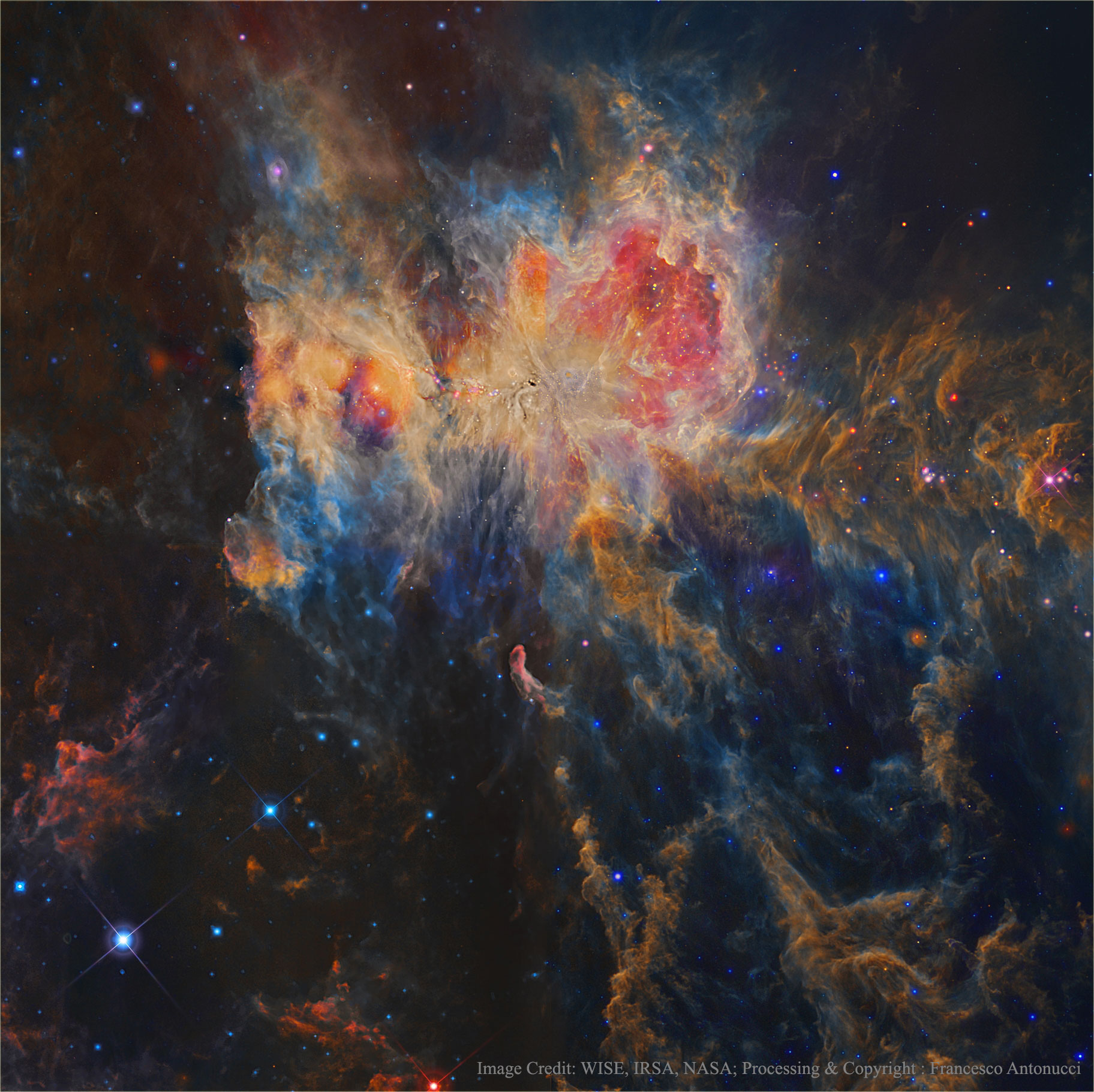
Explanation: The Great Nebula in Orion is an intriguing place. Visible to the unaided eye, it appears as a small fuzzy patch in the constellation of Orion. But this image, an illusory-color four-panel mosaic taken in different bands ofinfrared light with the Earth orbiting WISE observatory, shows the Orion Nebula to be a bustling neighborhood or recently formed stars, hot gas, and dark dust. The power behind much of the Orion Nebula (M42) is the stars of theTrapezium star cluster, seen near the center of the above wide field image. The orange glow surrounding the bright stars pictured here is their own starlight reflected by intricate dust filaments that cover much of the region. The currentOrion Nebula cloud complex, which includes the Horsehead Nebula, will slowly disperse over the next 100,000 years.

2015-01-17

Foto - La Garonne - Toulouse - France - 17-01-2015

La Garonne - Toulouse

17-01-2015
JoanMira

Astronomy picture of the day - 17-01-2015 - Comet Lovejoy's Tail

See Explanation.  Clicking on the picture will download
 the highest resolution version available.
Comet Lovejoy's Tail 
Image Credit & Copyright: Rogelio Bernal Andreo (Deep Sky Colors)
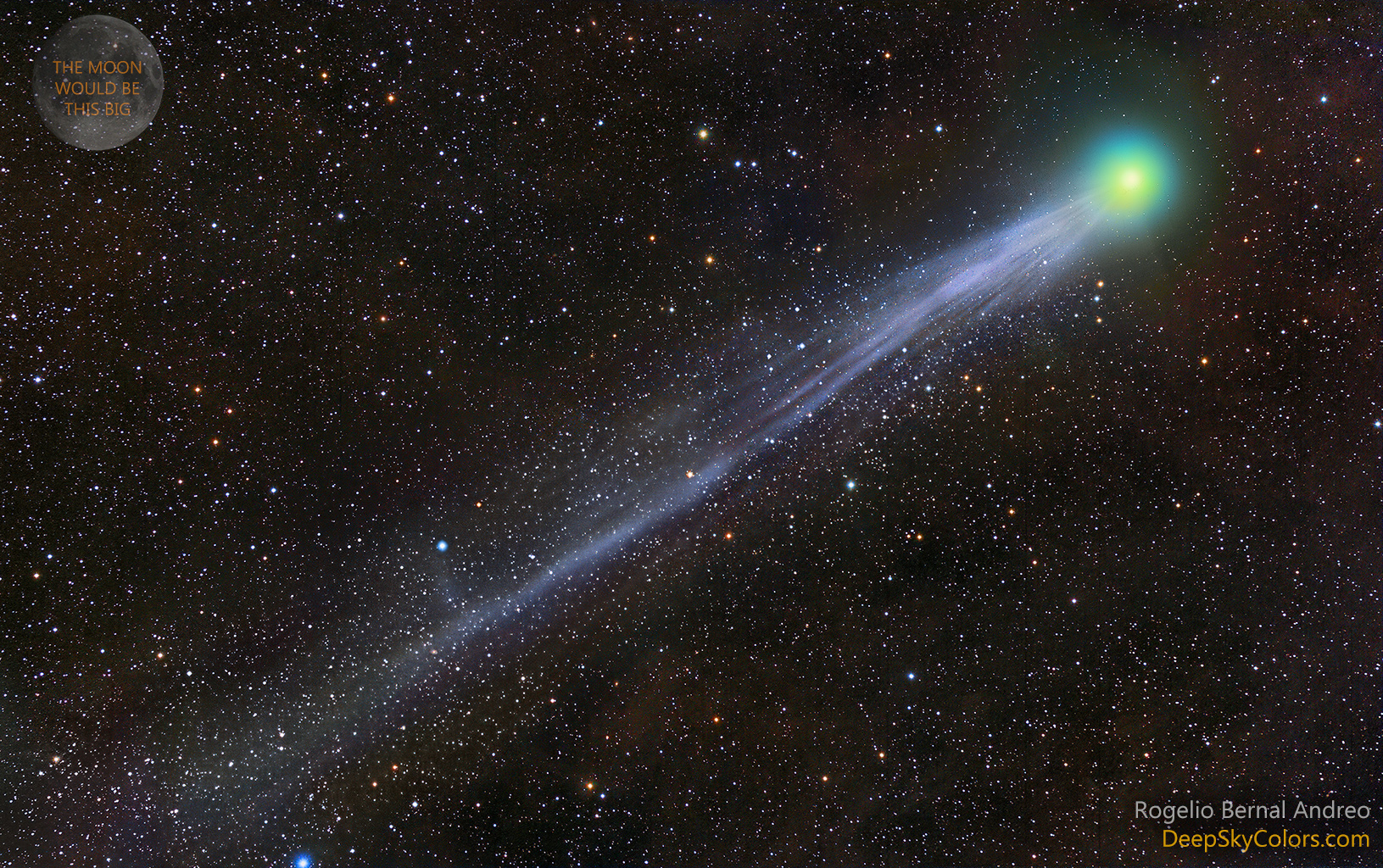
Explanation: Sweeping north in planet Earth's sky, Comet Lovejoy's greenish coma and blue tinted ion tail stretched across this field of stars in the constellation Taurus on January 13. The inset at the upper left shows the 1/2 degree angular size of the full moon for scale. So Lovejoy's coma appears only a little smaller (but much fainter) than a full moon on the sky, and its tail is visible for over 4 degrees across the frame. That corresponds to over 5 million kilometers at the comet's estimated distance of 75 million kilometers from Earth. Blown by the solar wind, the comet's tenuous, structured ion tail streams away from the Sun, growing as this Comet Lovejoy heads toward perihelion, its closest approach to the Sun, on January 30. While diatomic carbon (C2) gas fluorescing in sunlight produces the coma's green color, the fainter bluish tail is tinted by emission from ionized carbon monoxide (CO+).

2015-01-16

Astronomy picture of the day - Huygens Lands on Titan - 16-01-2015

See Explanation.  Clicking on the picture will download
 the highest resolution version available.
Huygens Lands on Titan 
Image Credit: ESA / NASA / JPL / University of Arizona
Explanation: Delivered by Saturn-bound Cassini, ESA's Huygens probe touched down on the ringed planet's largest moon Titan, ten years ago on January 14, 2005. These panels show fisheye images made during its slow descent by parachute through Titan's dense atmosphere. Taken by the probe's descent imager/spectral radiometer instrument they range in altitude from 6 kilometers (upper left) to 0.2 kilometers (lower right) above the moon's surprisingly Earth-like surface of dark channels, floodplains, and bright ridges. But at temperatures near -290 degrees C, the liquids flowing across Titan's surface are methane and ethane, hydrocarbons rather than water. After making the most distant landing for a spacecraft from Earth, Huygens transmitted data for more than an hour. The Huygens data and a decade of exploration by Cassini have shown Titan to be a tantalizing world hosting a complex chemistry of organic compounds, dynamic landforms, lakes, seas, and a possible subsurface ocean of liquid water.