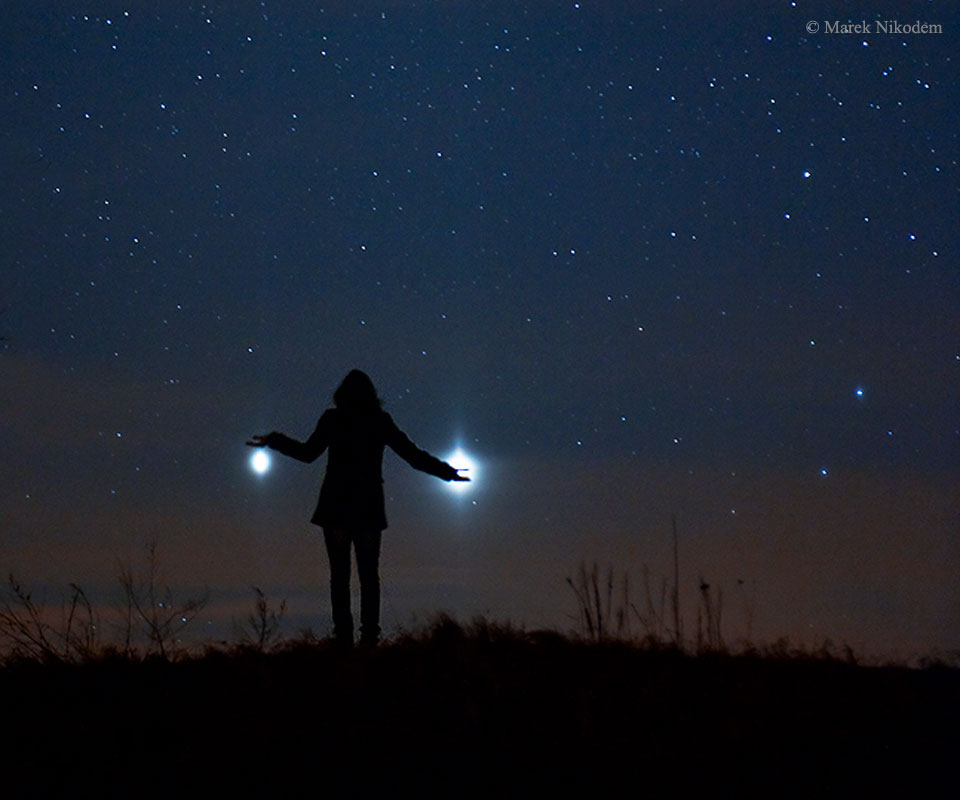
Jupiter and Venus from Earth Image Copyright: Marek Nikodem (PPSAE)
Explanation: It was visible around the world. The sunset conjunction of Jupiter and Venus in 2012 was visible almost no matter where you lived on Earth. Anyone on the planet with a clear western horizon at sunset could see them.Pictured above in 2012, a creative photographer traveled away from the town lights of Szubin, Poland to image a near closest approach of the two planets. The bright planets were separated only by three degrees and his daughter striking a humorous pose. A faint red sunset still glowed in the background. Jupiter and Venus will be at it again this week before sunrise, passing under two degree from each other -- and even with bonus planet Mars nearby.
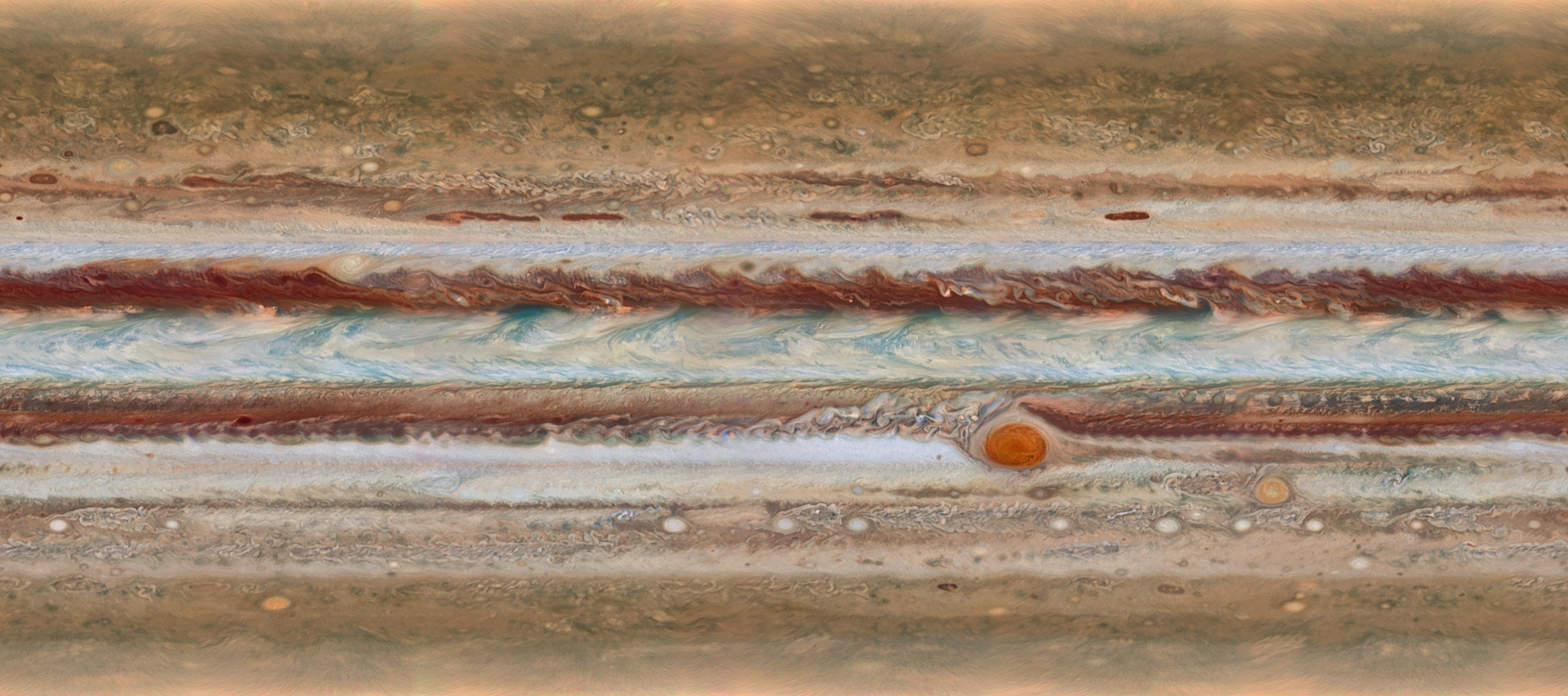
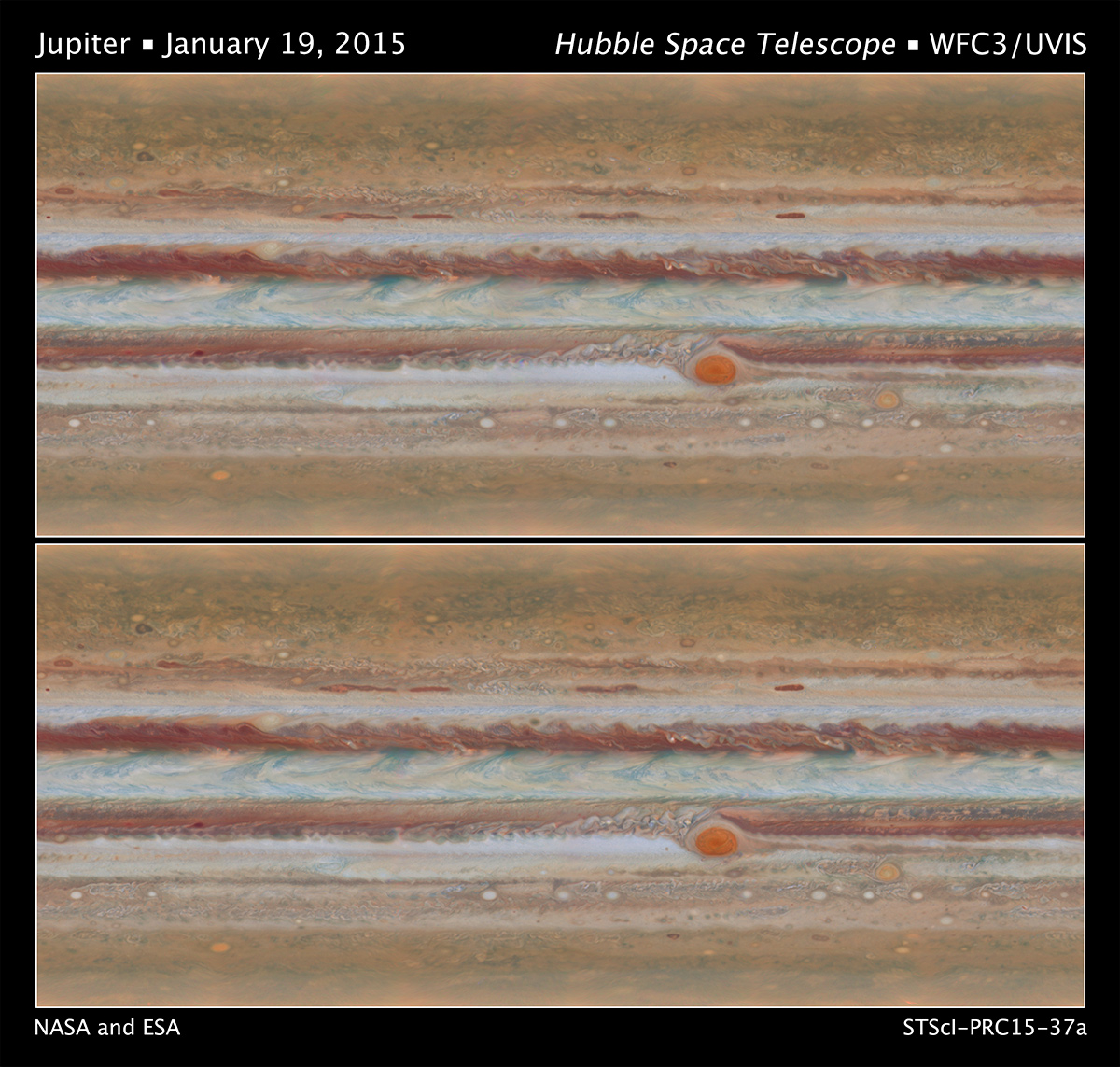
Explanation: Two remarkable global maps of Jupiter's banded cloud tops can be compared by just sliding your cursor over this sharp projection (or follow this link) of image data from the Hubble Space Telescope. Both captured on January 19, during back-to-back 10 hour rotations of the ruling gas giant, the all-planet projections represent the first in a series of planned annual portraits by the Outer Planet Atmospheres Legacy program. Comparing the two highlights cloud movements and measures wind speeds in the planet's dynamic atmosphere. In fact, the Great Red Spot, the famous long-lived swirling storm boasting 300 mile per hour winds, is seen sporting a rotating, twisting filament. The images confirm that Great Red Spot is still shrinking, though still larger than planet Earth. Posing next to it (lower right) is Oval BA, also known as Red Spot Junior.