2016-02-14

Texto - "Eu"

Porque não sou sectário, porque não fui (ainda?) atingido de proselitismo, porque detesto claques e facciosismos, porque entendo ser Livre, porque os Amigos não precisam de ostentar o que detesto, porque a corrupção não tem ideologias oportunas... 

Porque os amigos pertencendo a todo e qualquer quadrante político-confessional que lhes aprouver,  e tutti quanti… Porque entendo que a sinceridade é  essencial…

Porque… Porquê? O tempo não passa, nos é que passamos por ele; e todas as mentiras acabam por ser reveladas na sua  prova oculta.

Quanto mais me afasto da mentira, melhor me dou comigo, eliminando simultânea e progressivamente as gentes da “treta”.

Quando chegar a minha hora, irei em paz com a minha consciência…

14-02-2016

JoanMira 

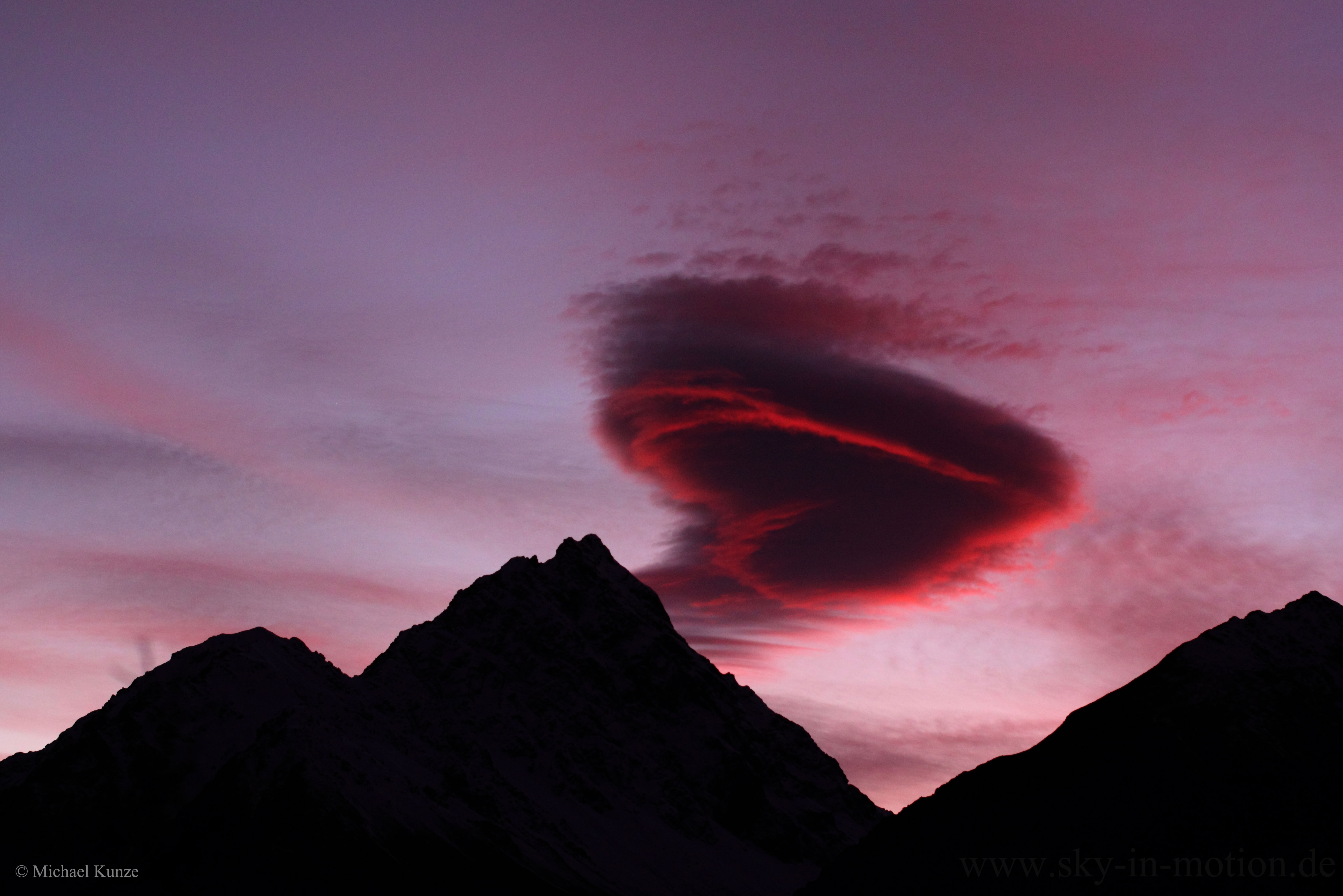
Astronomy picture of the day - 2016 February 14 - A Heart Shaped Lenticular Cloud

See Explanation.  Clicking on the picture will download
 the highest resolution version available.
A Heart Shaped Lenticular Cloud 
Image Credit & Copyright: Michael Kunze
Explanation: Can a cloud love a mountain? Perhaps not, but on a Valentine's Day like today, one might be prone to seeing heart-shaped symbols where they don't actually exist. A fleeting pareidolia, the featured heart was really alenticular cloud that appeared one morning last July above Mount Cook National Park in New Zealand. A companion video shows the lenticular cloud was mostly stationary in the sky but shifted and vibrated with surrounding winds. The cloud's red color was caused by the Sun rising off the frame to the right. Lenticular clouds are somewhat rare but can form in air that passes over a mountain. Then, vertical eddies may form where rising air cools past the dew pointcausing water carried by the air to condense into droplets. Unfortunately, this amazing sight made the fascinated videographer late for breakfast.

2016-02-13

Lou Reed - "Venus in furs" - Video - Music - Live

Lou Reed lors de sa conférence de presse... (Photo: AFP)
"Venus in furs"

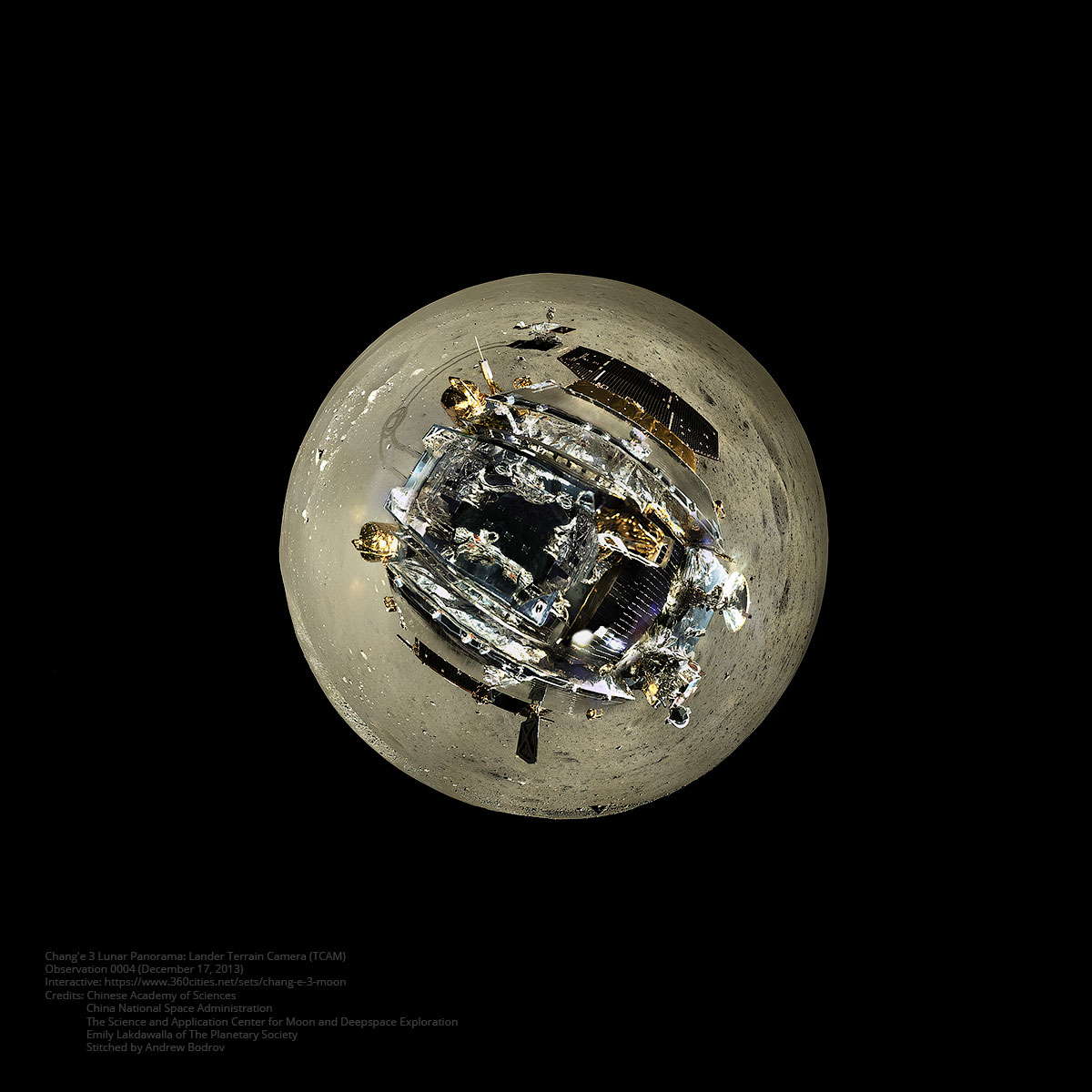
Astronomy picture of the day - 2016 February 13 - Yutu on a Little Planet

See Explanation.  Clicking on the picture will download
 the highest resolution version available.
Yutu on a Little Planet 
Image Credit: Chinese Academy of Sciences, Chinese National Space Administration,
Emily Lakdawalla (Planetary Society) - Stitched by: Andrew Bodrov
Explanation: Tracks lead to a small robot perched near the top of this bright little planet. Of course, the planet is really the Moon. The robot is the desk-sized Yutu rover, leaving its looming Chang'e 3 lander after a after a mid-December 2013 touch down in the northern Mare Imbrium. The little planet projection is a digitally warped and stitched mosaic of images from the lander's terrain camera covering 360 by 180 degrees. Ultimately traveling over 100 meters, Yutu came to a halt in January 2014. The lander's instruments are still working though, after more than two years on the lunar surface. Meanwhile, an interactive panoramic version of this little planet is available here.

Pictures from my mind - "Sweet Street Child" - 13-03-2014

"Sweet Street Child"

Bordeaux, 13-03-2014
JoanMira

Roberto Carlos - "Amanheceu" - Video - Music - Slides

Afficher l'image d'origine
"Amanheceu"

Pictures from my mind - "Point -of you-" - 07-03-2015

"Point -of you-"

Toulouse, 07-03-2015
JoanMira

Roberto Carlos - "A distância" - Video - Musica - Ao vivo

Afficher l'image d'origine
"A distância"

2016-02-12

Lou Reed - "Pale blue eyes" - Video - Music - Live

Afficher l'image d'origine
"Pale blue eyes"

Astronomy picture of the day - 2016 February 12 - Two Black Holes Merge

Ver imagem original

Two Black Holes Merge 
Simulation Credit: Simulating eXtreme Spacetimes Project
Explanation: Just press play to watch two black holes merge. Inspired by the first direct detection of gravitational waves by LIGO, this simulation video plays in slow motion but would take about one third of a second if run in real time. Set on a cosmic stage the black holes are posed in front of stars, gas, and dust. Their extreme gravity lenses the light from behind them into Einstein rings as they spiral closer and finally merge into one. The otherwise invisible gravitational waves generated as the massive objects rapidly coalesce cause the visible image to ripple and slosh both inside and outside the Einstein rings even after the black holes have merged. Dubbed GW150914, the gravitational waves detected by LIGO are consistent with the merger of 36 and 29 solar mass black holes at a distance of 1.3 billion light-years. The final, single black hole has 62 times the mass of the Sun, with the remaining 3 solar masses converted into energy in gravitational waves.

Tomorrow's picture: light-weekend