2016-06-06

Fotos - "Place Mitchell" - Bordeaux, 16-12-2013

"Place Mitchell"

Bordeaux, 16-12-2013
JoanMira

Carlos Paião - "Meia duzia" - Video - Musica

Afficher l'image d'origine
"Meia duzia"

Astronomy picture of the day - 2016 June 6 - The Supernova and Cepheids of Spiral Galaxy UGC 9391

See Explanation.
Moving the cursor over the image will bring up an annotated version.
Clicking on the image will bring up the highest resolution version
available.
The Supernova and Cepheids of Spiral Galaxy UGC 9391 
Image Credit: NASAESA, and A. Riess (STScI/JHUet al.
Explanation: What can this galaxy tell us about the expansion rate of the universe? Perhaps a lot because UGC 9391, featured, not only contains Cepheid variable stars (red circles) but also a recent Type Ia supernova (blue X). Both types of objects have standard brightnesses, with Cepheids typically being seen relatively nearby, while supernovas are seen much further away. Therefore, this spiral is important because it allows a calibration between the near and distant parts of our universe. Unexpectedly, a recent analysis of new Hubble data from UGC 9391 and several similar galaxies has bolstered previous indications that Cepheids and supernovas are expanding with the universe slightlyfaster than expected from expansion measurements of the early universe. Given the multiple successes of early universe concordance cosmology, astrophysicists are now vigorously speculating about possible reasons for this discrepancy. Candidate explanations range from the sensational, such as the inclusion of unusual cosmological components types such as phantom energy and dark radiation, to the mundane, including statistical flukes and underestimated sources of systematic errors. Numerous future observations are being planned to help resolve the conundrum.

2016-06-05

Imagenes del Mundo - (Polonia) árboles en el planeta

Los árboles se reflejan en un río en el bosque de Bialowieza, el último bosque virgen en Europa, cerca del pueblo de Bialowieza (Polonia).

Imagenes del Mundo - El colibri

Un colibrí busca de miel en la zona de Guápiles, al este de San José (Costa Rica).

Dire Straits - "Your latest trick" - Video - Music - Live

Afficher l'image d'origine
"Your latest trick"

Já falta pão português em Caracas (Venezuela)


A padaria Ângela é uma das mais antigas da capital da Venezuela e o dono é Diamantino Araújo, de Aveiro. Nas últimas semanas, a produção caiu para metade. Falta a farinha e o pão nas prateleiras.
“Em média fazia diariamente 12 sacos de 45 quilos de farinha e agora estou a fazer quatro. Aos fins de semana não dava vazão a isto”, explicou à Lusa o empresário, em Caracas.
A preocupação é visível na cara de Diamantino Araújo, a viver num país que quase todos os dias aparece nas notícias em todo o mundo devido às filas à porta de supermercados semivazios ou pelas manifestações, mais ou menos violentas.
O preço do petróleo está na ordem dos 50 dólares do barril, depois de meses com valores ainda mais baixos num país que tem dos custos mais elevados na sua extração. A moeda depreciou-se em mais de 93% nos últimos dois anos, prejudicando a compra de bens no estrangeiro. E a crise interna levou ao aumento do desemprego e da insegurança.
A memória dos violentos confrontos de 1989 está presente em muitos emigrantes. As manifestações e os confrontos contra a crise económica, durante o governo de Carlos Andrés Pérez, causaram duas centenas e meia de mortos em todo o país, em especial na capital.
A angústia é agora cada vez maior. Muitos receiam  que em qualquer momento a população se revolte e aconteça algo pior...
Correio da Venezuela 

Muhammad Ali - Maiores knock outs - Video - Sport


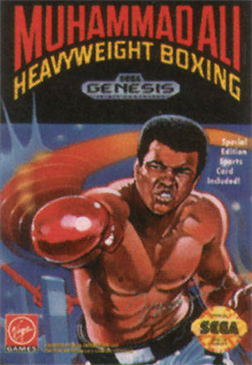
Muhammad Ali Heavyweight Boxing

Será que alguém se lembra de Cassius Clay? Sim, de Cassius Marcellus Clay Jr., nome de baptismo do homem que em 1964, após a conquista do primeiro título de campeão de pesos-pesados, anunciou ao mundo que, a partir dali, apagava Cassius Clay e adoptava o nome de Muhammad Ali? Sim, todos se lembram de Cassius Clay porque sem esse nome de escravo, Muhammad Ali não seria nome de homem livre.
Hoje, na morte de Ali, a mudança de nome, a contestação à guerra do Vietname, a recusa em alistar-se para combater quem nunca lhe tinha feito mal, quem nunca o tinha chamado de “preto”, a fanfarronice do “maior”, o génio das conferências de imprensa, ou seja, tudo o que acontecia e aconteceu fora do ringue há-de eclipsar a elegância de bailarino, a contundência de bola de demolição, a velocidade de pés, a rapidez dos golpes, a graça e a leveza quase impossíveis numa viga de 1,91 metros e mais de cem quilos de peso.
[Veja aqui os 10 maiores knock outs de Muhammad Ali]

Observador - Portugal

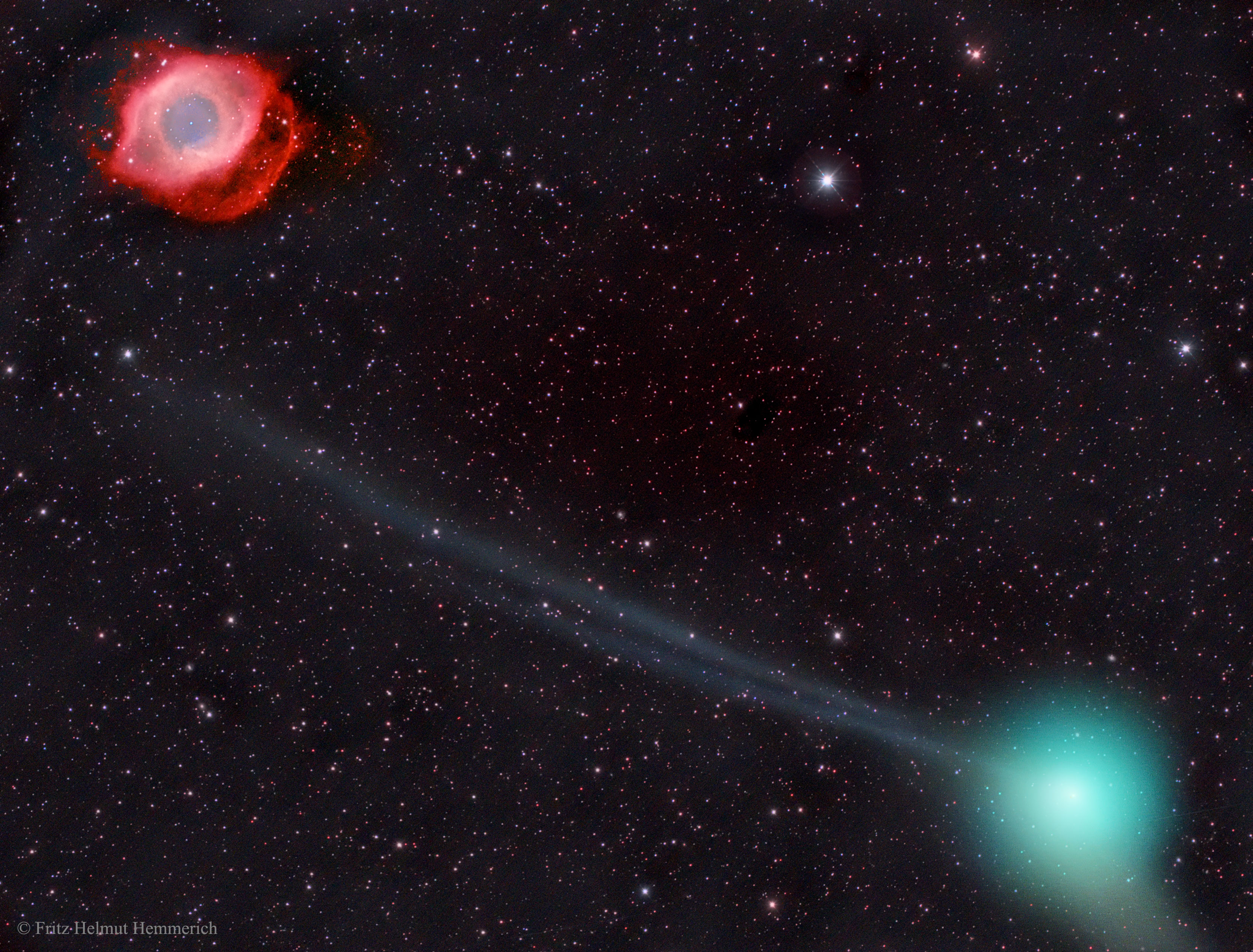
Astronomy picture of the day - 2016 June 5 - Comet PanSTARRS and the Helix Nebula

See Explanation.  Clicking on the picture will download
 the highest resolution version available.
Comet PanSTARRS and the Helix Nebula 
Image Credit & Copyright: Fritz Helmut Hemmerich
Explanation: It's rare that such different objects are imaged so close together. Such an occasion is occurring now, though, and was captured two days ago in combined parallel exposures from the Canary Islands of Spain. On the lower right, surrounded by a green coma and emanating an unusually split blue ion tail diagonally across the frame, is Comet C/2013 X1 (PanSTARRS). This giant snowball has been falling toward our Sun and brightening since its discovery in 2013. Although Comet PannSTARRS is a picturesque target for long-duration exposures of astrophotography, it is expected to be only barely visible to the unaided eye when it reaches its peak brightness in the next month. On the upper left, surrounded by red-glowing gas, is the also-picturesque Helix Nebula. At 700 light years distant, the Helix is not only much further away than the comet, but is expected to retain its appearance for thousands of years.

2016-06-04

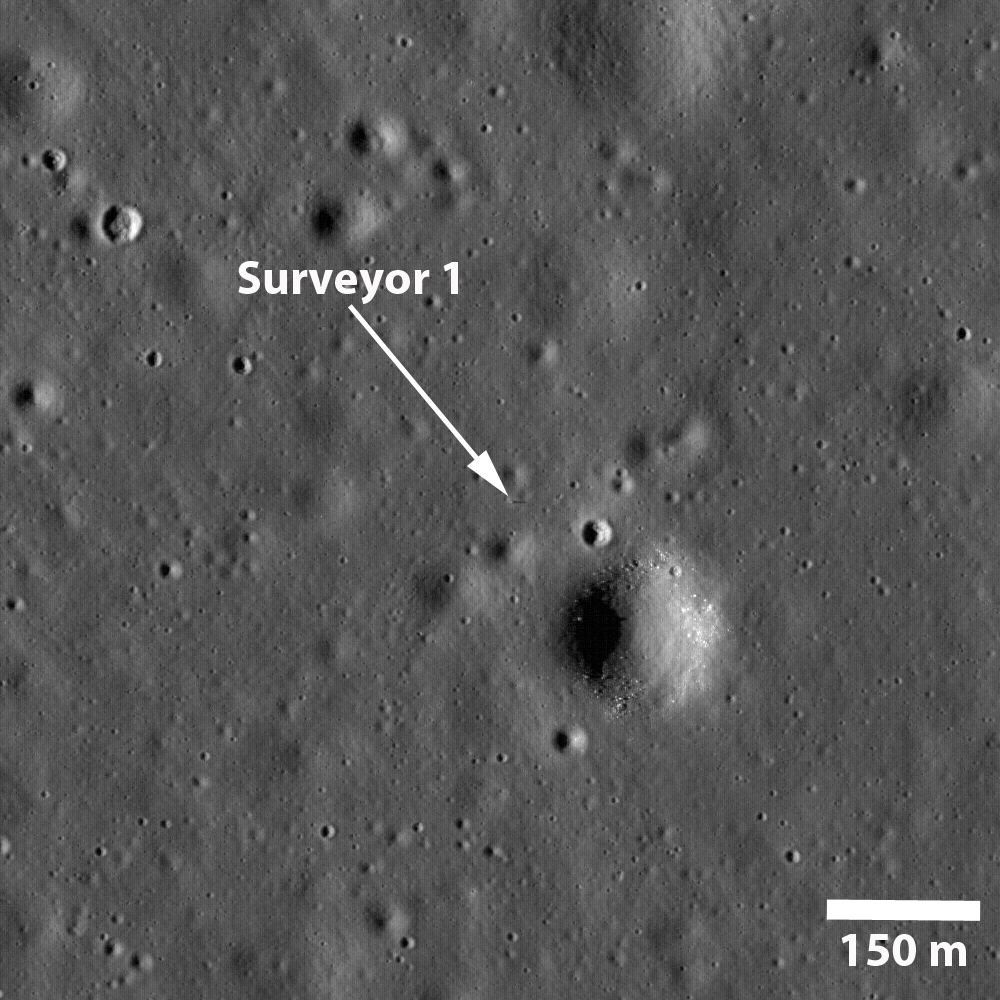
Astronomy picture of the day - 2016 June 4 - The Shadow of Surveyor 1

See Explanation.  Clicking on the picture will download
 the highest resolution version available.
The Shadow of Surveyor 1 
Image Credit: NASA / GSFC / Arizona State U. / Lunar Reconnaissance Orbiter
Explanation: Fifty years ago, Surveyor 1 reached the Moon. Launched on May 30, 1966 and landed on June 2, 1966 with the Moon at full phase it became the first US spacecraft to make a soft landing on another world. The first of seven Surveyor missions intended to test the lunar terrain for the planned Apollo landings it sent back over 10,000 images before lunar nightfall on June 14. The total rose to over 11,000 images returned before its second lunar night began on July 13. Surveyor 1 continued to respond from the lunar surface until January 7, 1967. Captured in this 2009 image from the Lunar Reconnaissance Orbiter, the first Surveyor still stands at its landing site, a speck in the Oceanus Procellarum (the Ocean of Storms). With the Sun low on the western horizon the lonely, 3.3 meter tall spacecraft casts a shadow almost 15 meters long in the late lunar afternoon.