
Ilha de São Miguel, Um paraiso no Arquipelago dos Açores.
2016-06-08


Astronomy picture of the day - 2016 June 8 - The Horsehead Nebula in Infrared from Hubble
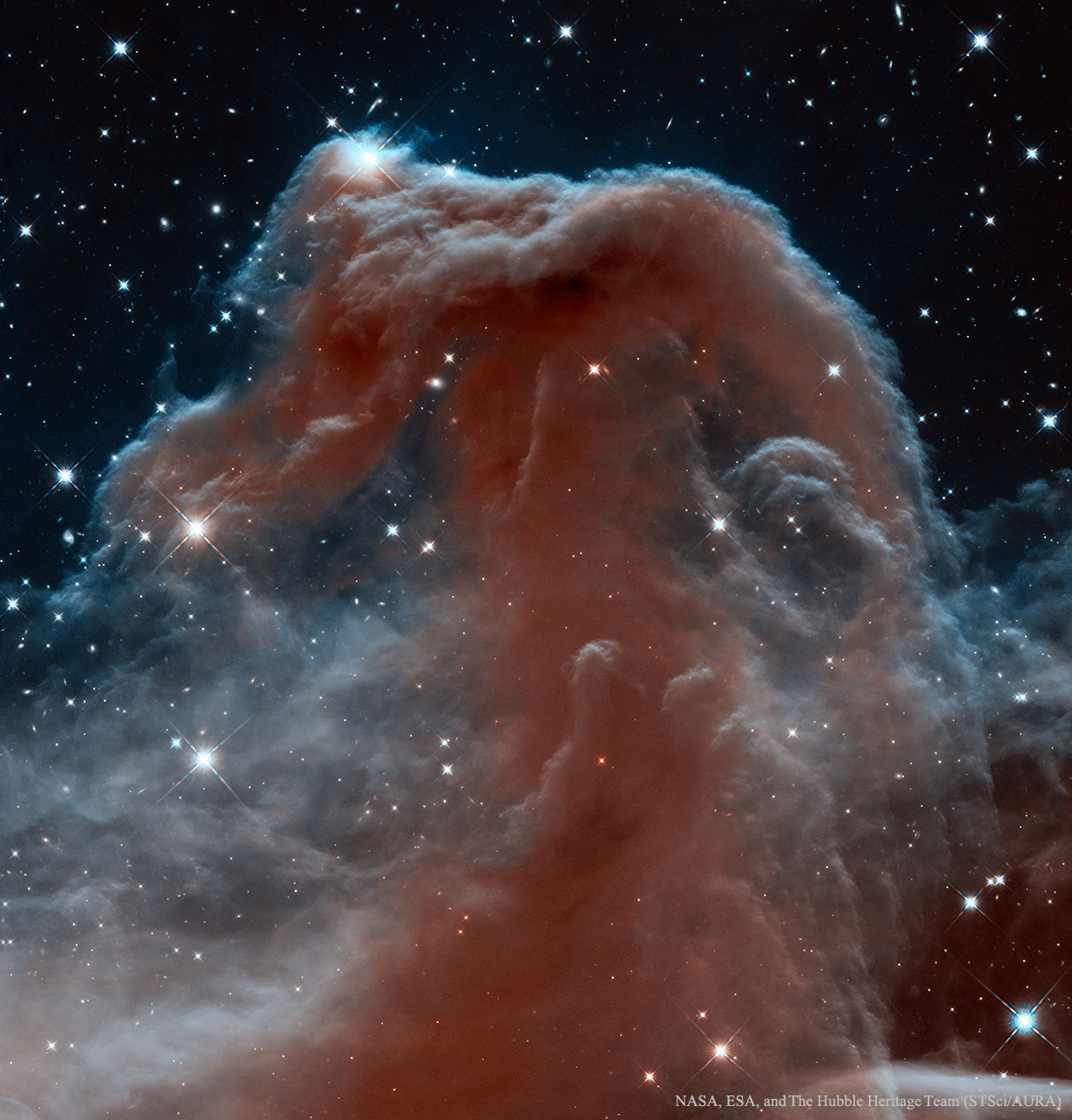
Image Credit: NASA, ESA, and The Hubble Heritage Team (STScI/AURA)
Explanation: While drifting through the cosmos, a magnificent interstellar dust cloud became sculpted by stellar winds and radiation to assume a recognizable shape. Fittingly named the Horsehead Nebula, it is embedded in the vast and complex Orion Nebula (M42). A potentially rewarding but difficult object to view personally with a small telescope, the above gorgeously detailed image was taken in 2013 in infrared light by the orbiting Hubble Space Telescopein honor of the 23rd anniversary of Hubble's launch. The dark molecular cloud, roughly 1,500 light years distant, is cataloged as Barnard 33 and is seen above primarily because it is backlit by the nearby massive star Sigma Orionis. The Horsehead Nebula will slowly shift its apparent shape over the next few million years and will eventually be destroyed by the high energy starlight.
2016-06-07
Astronomy picture of the day - 2016 June 7 - Night on Venus in Infrared from Orbiting Akatsuki

Image Credit & Copyright: ISAS, JAXA
Explanation: Why is Venus so different from Earth? To help find out, Japan launched the robotic Akatsuki spacecraft which entered orbit around Venus late last year after an unplanned five-year adventure around the inner Solar System. Even though Akatsuki has passed its original planned lifetime, the spacecraft and its instruments are operating so well that much of its original mission has been reinstated. In the featured image taken by Akatsuki late last month, Venus was captured in infrared light showing a surprising amount of atmospheric structure on its night side. The vertical orange terminator stripe between night and day is so wide because of light is so diffused by Venus' thick atmosphere. Also known as the Venus Climate Orbiter, Akatsuki has cameras and instruments that will investigate unknowns about the planet, including whether volcanoes are still active, whether lightning occurs in the dense atmosphere, and why wind speeds greatly exceed the planet's rotation speed.
2016-06-06


Astronomy picture of the day - 2016 June 6 - The Supernova and Cepheids of Spiral Galaxy UGC 9391

Image Credit: NASA, ESA, and A. Riess (STScI/JHU) et al.
Explanation: What can this galaxy tell us about the expansion rate of the universe? Perhaps a lot because UGC 9391, featured, not only contains Cepheid variable stars (red circles) but also a recent Type Ia supernova (blue X). Both types of objects have standard brightnesses, with Cepheids typically being seen relatively nearby, while supernovas are seen much further away. Therefore, this spiral is important because it allows a calibration between the near and distant parts of our universe. Unexpectedly, a recent analysis of new Hubble data from UGC 9391 and several similar galaxies has bolstered previous indications that Cepheids and supernovas are expanding with the universe slightlyfaster than expected from expansion measurements of the early universe. Given the multiple successes of early universe concordance cosmology, astrophysicists are now vigorously speculating about possible reasons for this discrepancy. Candidate explanations range from the sensational, such as the inclusion of unusual cosmological components types such as phantom energy and dark radiation, to the mundane, including statistical flukes and underestimated sources of systematic errors. Numerous future observations are being planned to help resolve the conundrum.
2016-06-05
Imagenes del Mundo - (Polonia) árboles en el planeta

Los árboles se reflejan en un río en el bosque de Bialowieza, el último bosque virgen en Europa, cerca del pueblo de Bialowieza (Polonia).
Imagenes del Mundo - El colibri

Un colibrí busca de miel en la zona de Guápiles, al este de San José (Costa Rica).



Inscription à :
Articles (Atom)