Cerca de 250 adeptos ingleses envolveram-se em confrontos com a polícia na zona do Porto Velho de Marselha, com a polícia a ser obrigada a usar gás lacrimogéneo, detendo um inglês de 24 anos. Também se verificaram incidentes com um grupo de jovens franceses, com um inglês a ter de ser transportado a um hospital por ter sido ferido sem gravidade. No sábado, a Inglaterra vai defrontar a Rússia, na primeira jornada do grupo B do Euro2016, que se inicia hoje com o França-Roménia, em Paris. O encontro, considerado de "alto risco", vai envolver cerca de 1800 polícias, distribuídos pelo interior e exterior do estádio.
2016-06-10
Ja "começou" o Euro 2016 com confrontos entre ingleses e franceses!
Imagens do Mundo - Sitios lindos de Portugal - Estremoz
O seu castelo transformado em pousada, a sala de audiências do rei D. Diniz, a muralha construida no século XVII, são trunfos de Estremoz.
TOLO BALAGUER/AGE
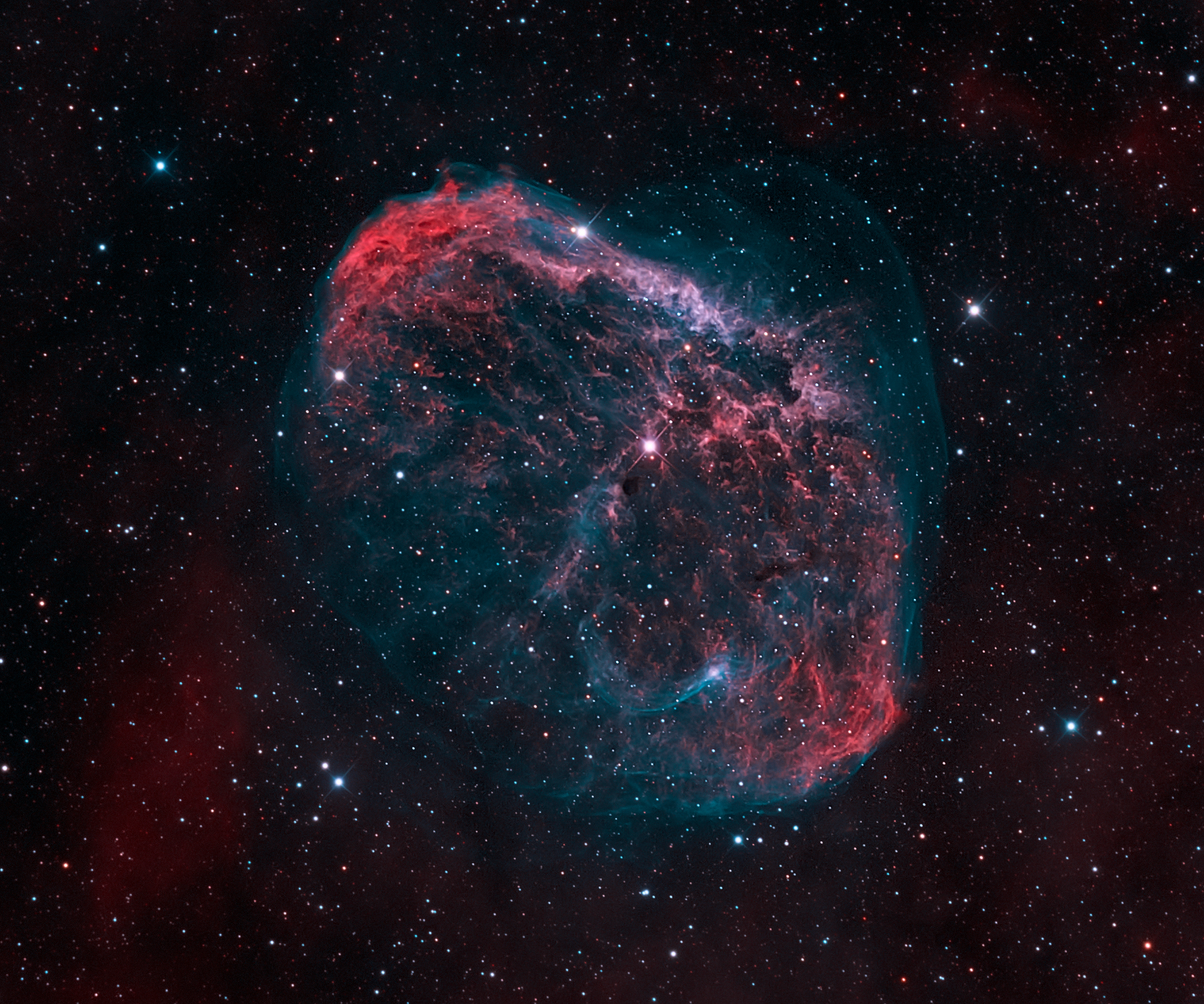
L'image du jour - 2016 June 10 - NGC 6888: The Crescent Nebula
Image Credit & Copyright: Michael Miller, Jimmy Walker
Explanation: NGC 6888, also known as the Crescent Nebula, is a cosmic bubble about 25 light-years across, blown by winds from its central, bright, massive star. This sharp telescopic portrait uses narrow band image data that isolates light from hydrogen and oxygen atoms in the wind-blown nebula. The oxygen atoms produce the blue-green hue that seems to enshroud the detailed folds and filaments. Visible within the nebula, NGC 6888's central star is classified as a Wolf-Rayet star (WR 136). The star is shedding its outer envelope in a strong stellar wind, ejecting the equivalent of the Sun's mass every 10,000 years. The nebula's complex structures are likely the result of this strong wind interacting with material ejected in an earlier phase. Burning fuel at a prodigious rate and near the end of its stellar life this star should ultimately go out with a bang in a spectacular supernova explosion. Found in the nebula richconstellation Cygnus, NGC 6888 is about 5,000 light-years away.
2016-06-09
Imagens do Mundo - Sitios lindos de Portugal - Obidos
Um lugar encantado. Terra da grande pintora Josefa de Obidos, cercada por muralhas do século XV.
CARLOS CAETANO/ISTOCK
Astronomy picture of the day - 2016 June 9 - Pluto at Night
Image Credit: NASA, Johns Hopkins Univ./APL, Southwest Research Institute
Explanation: The night side of Pluto spans this shadowy scene. The spacebased view with the Sun behind the distant world was captured by New Horizons last July. The spacecraft was at a range of over 21,000 kilometers, about 19 minutes after its closest approach. A denizen of the Kuiper Belt in dramatic silhouette, the image also reveals Pluto's tenuous, surprisingly complex layers of hazy atmosphere. The crescent twilight landscape near the top of the frame includes southern areas of nitrogen ice plains informally known as Sputnik Planum and rugged mountains of water-ice in the Norgay Montes.
2016-06-08
Imagens do Mundo - Sitios lindos de Portugal - Vila Franca do Campo
Ilha de São Miguel, Um paraiso no Arquipelago dos Açores.
THOMAS STANKIEWICZ/AGE
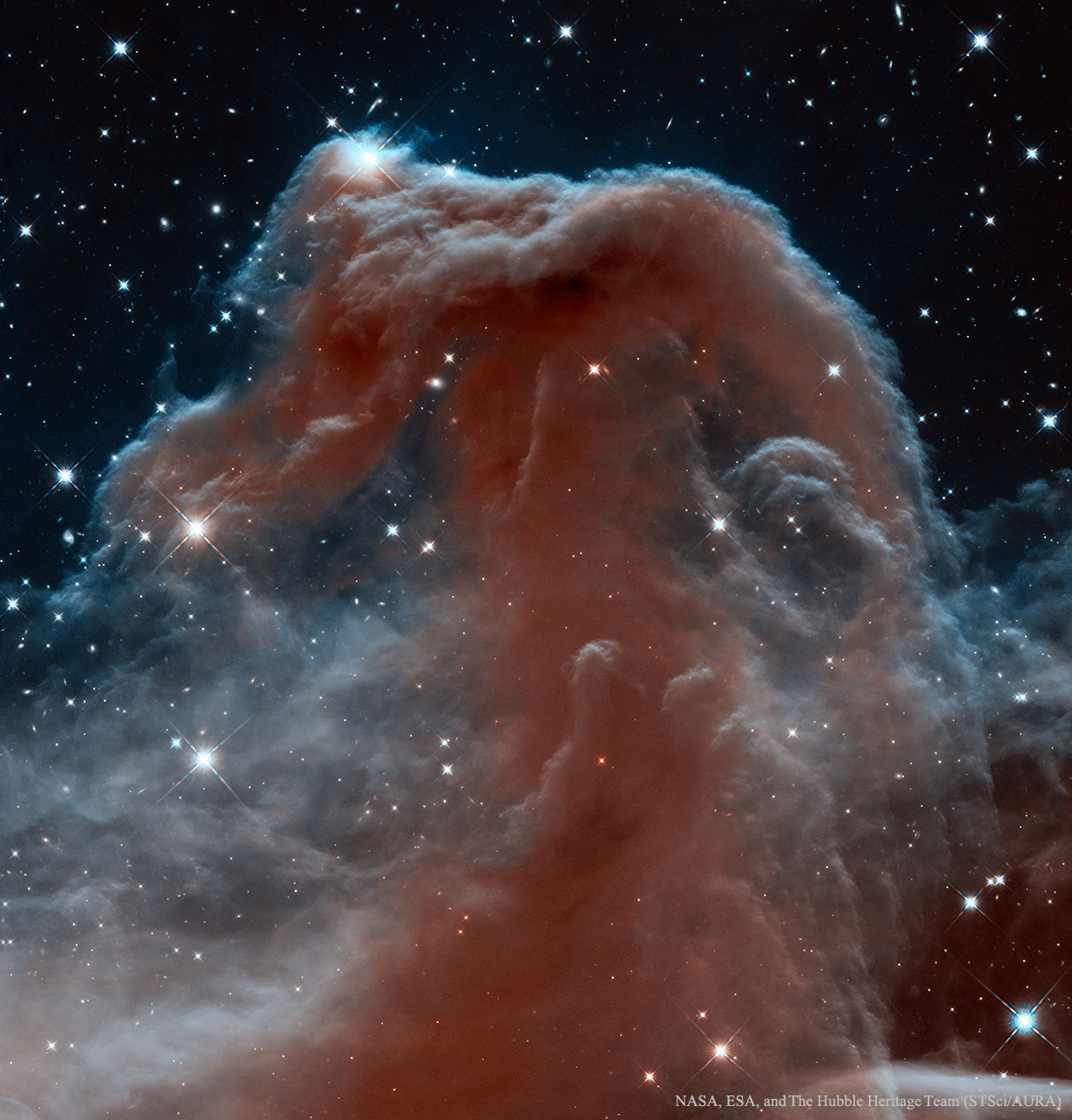
Astronomy picture of the day - 2016 June 8 - The Horsehead Nebula in Infrared from Hubble
Image Credit: NASA, ESA, and The Hubble Heritage Team (STScI/AURA)
Explanation: While drifting through the cosmos, a magnificent interstellar dust cloud became sculpted by stellar winds and radiation to assume a recognizable shape. Fittingly named the Horsehead Nebula, it is embedded in the vast and complex Orion Nebula (M42). A potentially rewarding but difficult object to view personally with a small telescope, the above gorgeously detailed image was taken in 2013 in infrared light by the orbiting Hubble Space Telescopein honor of the 23rd anniversary of Hubble's launch. The dark molecular cloud, roughly 1,500 light years distant, is cataloged as Barnard 33 and is seen above primarily because it is backlit by the nearby massive star Sigma Orionis. The Horsehead Nebula will slowly shift its apparent shape over the next few million years and will eventually be destroyed by the high energy starlight.
2016-06-07
Astronomy picture of the day - 2016 June 7 - Night on Venus in Infrared from Orbiting Akatsuki
Image Credit & Copyright: ISAS, JAXA
Explanation: Why is Venus so different from Earth? To help find out, Japan launched the robotic Akatsuki spacecraft which entered orbit around Venus late last year after an unplanned five-year adventure around the inner Solar System. Even though Akatsuki has passed its original planned lifetime, the spacecraft and its instruments are operating so well that much of its original mission has been reinstated. In the featured image taken by Akatsuki late last month, Venus was captured in infrared light showing a surprising amount of atmospheric structure on its night side. The vertical orange terminator stripe between night and day is so wide because of light is so diffused by Venus' thick atmosphere. Also known as the Venus Climate Orbiter, Akatsuki has cameras and instruments that will investigate unknowns about the planet, including whether volcanoes are still active, whether lightning occurs in the dense atmosphere, and why wind speeds greatly exceed the planet's rotation speed.
Inscription à :
Commentaires (Atom)