"Você e eu"
2017-03-22

Astronomy picture of the day - 2017 March 22 - Central Cygnus Skyscape
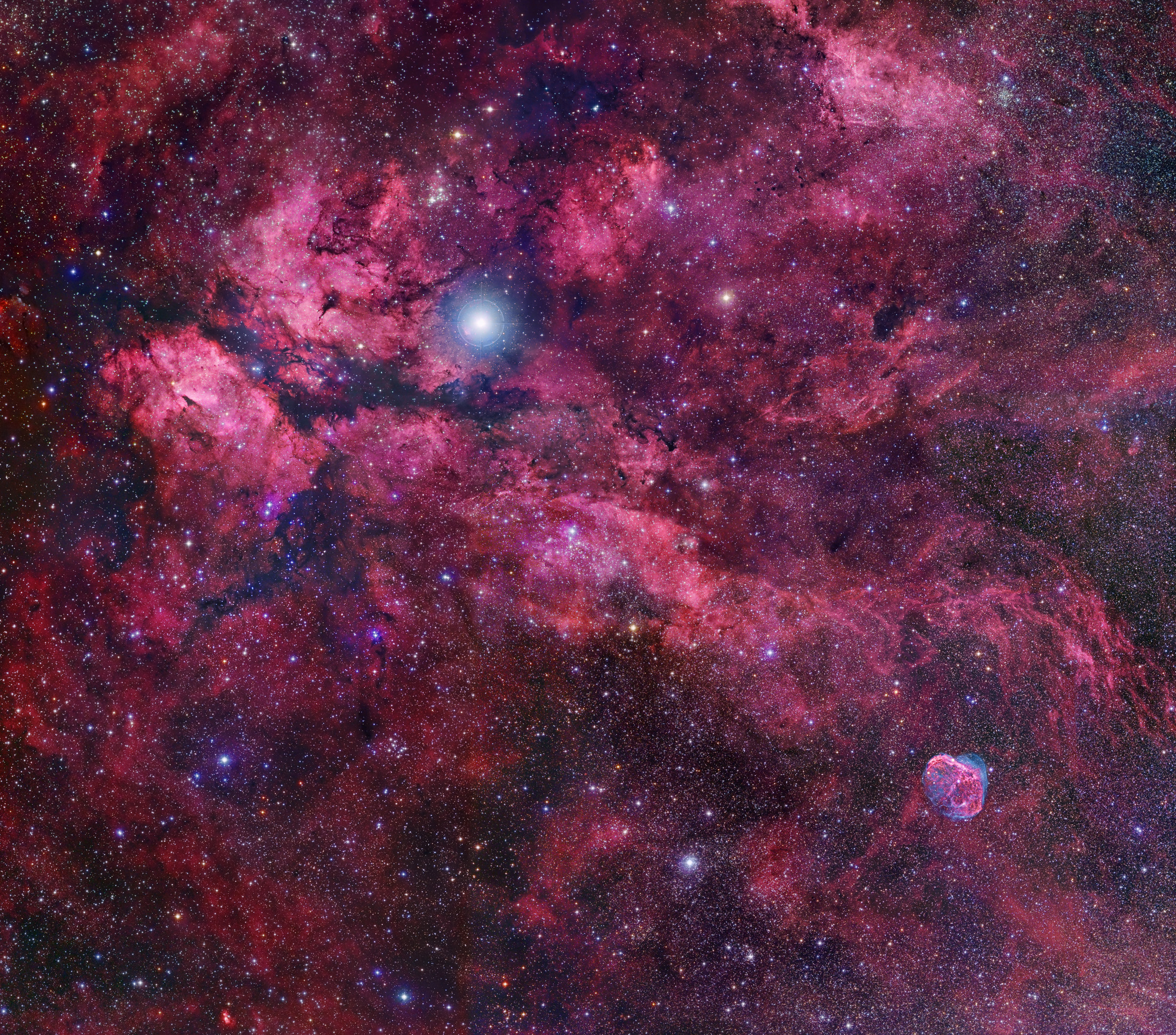
Image Credit & Copyright: Robert Gendler, DSS, BYU
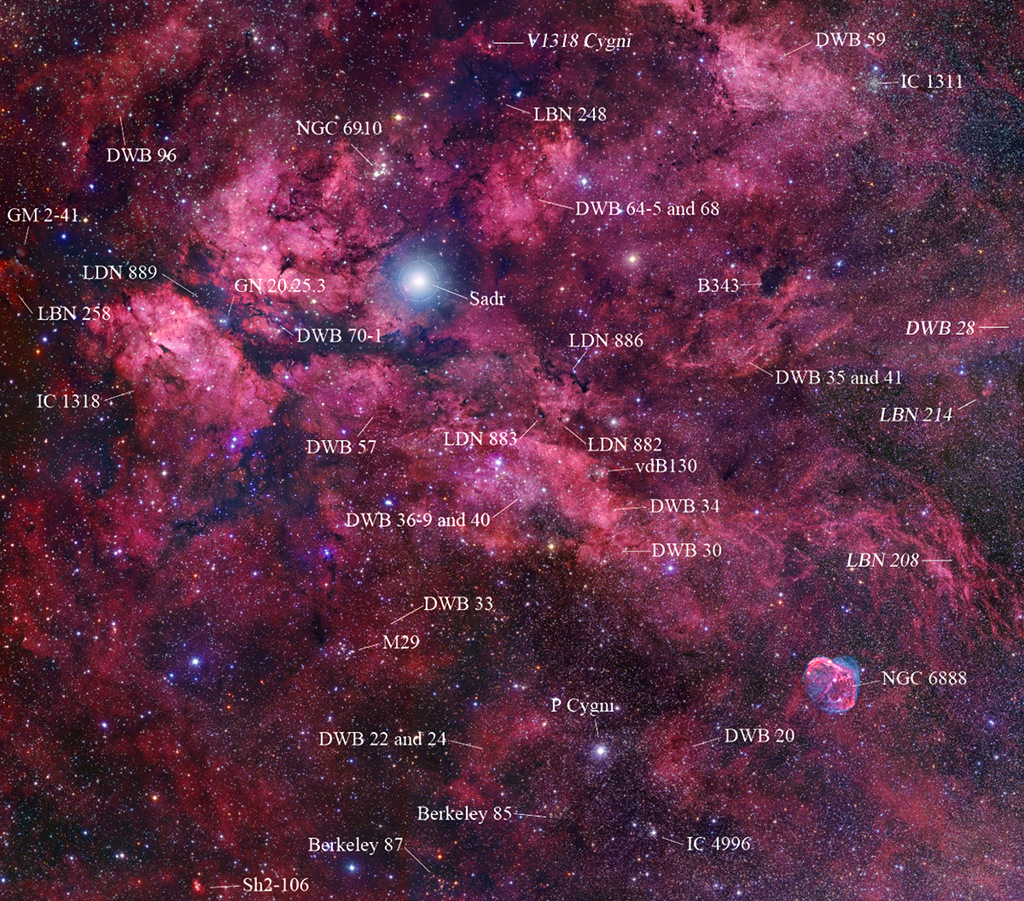
Explanation: In cosmic brush strokes of glowing hydrogen gas, this beautiful skyscape unfolds across the plane of our Milky Way Galaxy near the northern end of the Great Rift and the center of the constellation Cygnus the Swan. A 36 panel mosaic of telescopic image data, the scene spans about six degrees. Bright supergiant star Gamma Cygni (Sadr) to the upper left of the image center lies in the foreground of the complex gas and dust clouds and crowded star fields. Left of Gamma Cygni, shaped like two luminous wings divided by a long dark dust lane is IC 1318 whose popular name is understandably the Butterfly Nebula. The more compact, bright nebula at the lower right is NGC 6888, the Crescent Nebula. Some distance estimates for Gamma Cygni place it at around 1,800 light-years while estimates for IC 1318 and NGC 6888 range from 2,000 to 5,000 light-years.
2017-03-21
Astronomy picture of the day - 2017 March 21 - Fast Stars and Rogue Planets in the Orion Nebula
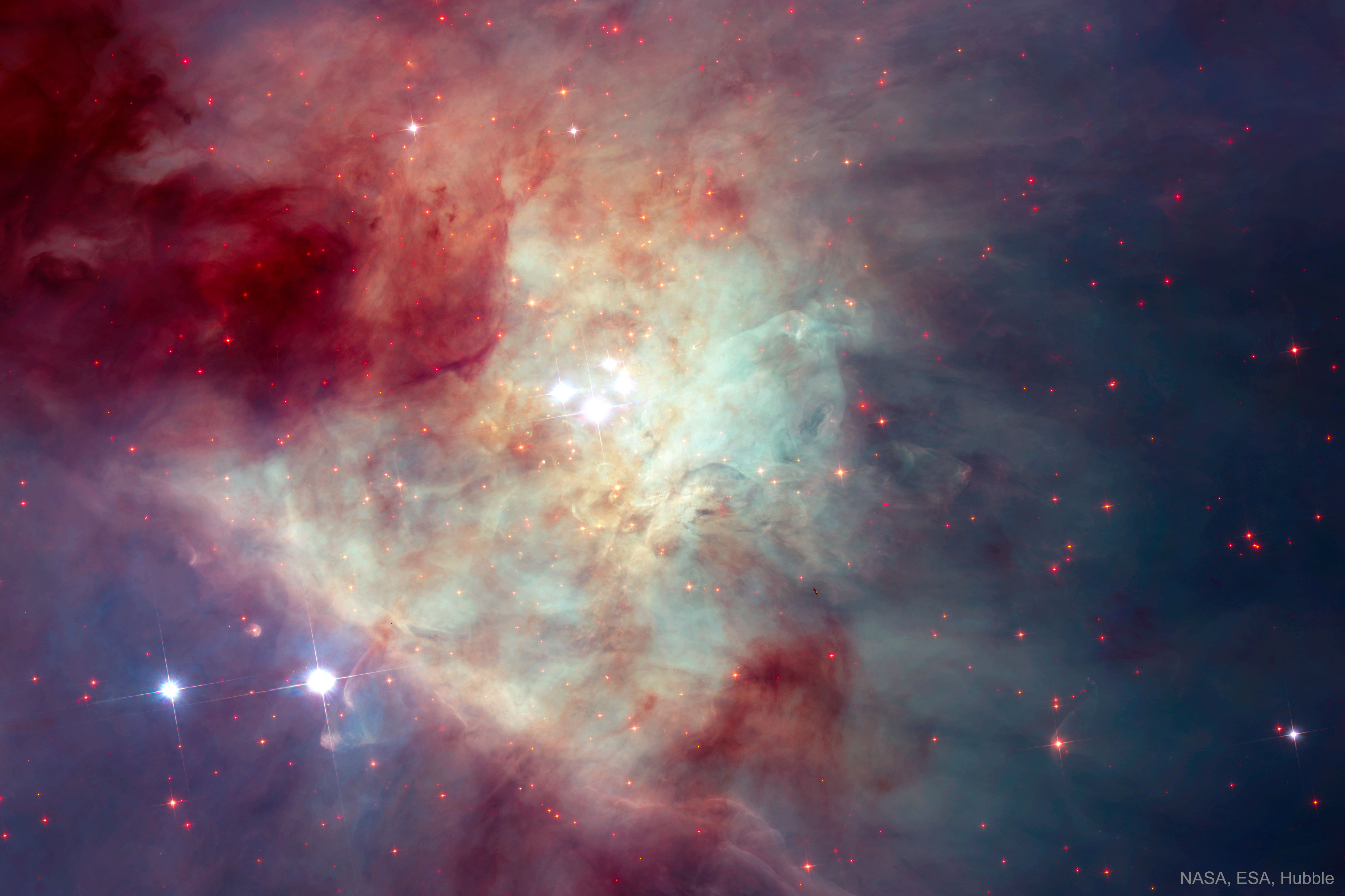
Image Credit: NASA, ESA, Hubble
Explanation: Start with the constellation of Orion. Below Orion's belt is a fuzzy area known as the Great Nebula of Orion. In this nebula is a bright star cluster known as the Trapezium, marked by four bright stars near the image center. The newly born stars in the Trapezium and surrounding regions show the Orion Nebula to be one of the most active areas of star formation to be found in our area of the Galaxy. In Orion, supernova explosions and close interactions between stars have created rogue planets and stars that rapidly move through space. Some of these fast stars have been found by comparing different images of this region taken by the Hubble Space Telescope many years apart. Many of the stars in the featured image, taken in visible and near-infrared light, appear unusually red because they are seen through dust that scatters away much of their blue light.
2017-03-20
Astronomy picture of the day - 2017 March 20 - The Aurora Tree
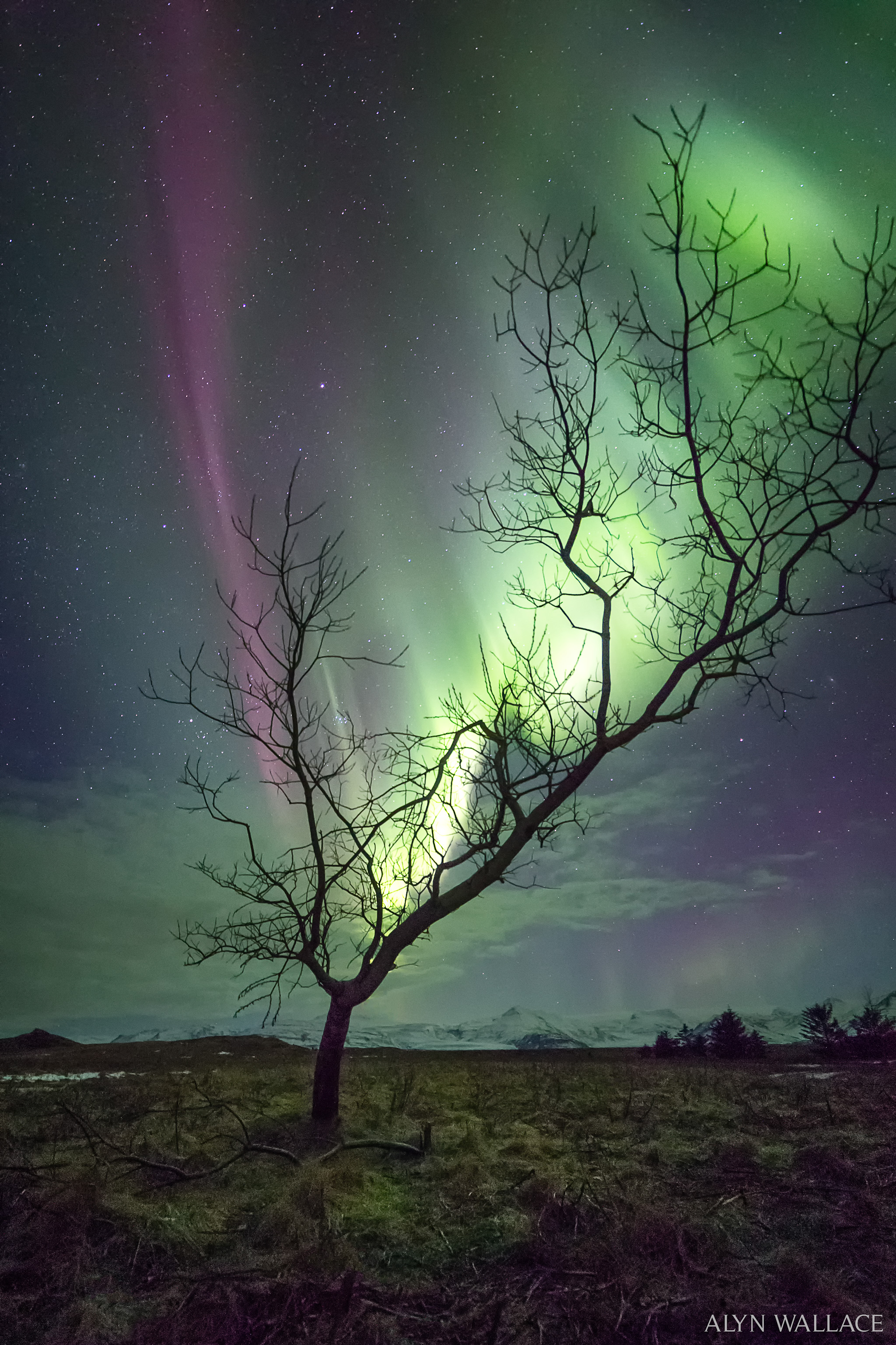
Image Credit & Copyright: Alyn Wallace Photography
Explanation: Yes, but can your tree do this? Pictured is a visual coincidence between the dark branches of a nearby tree and bright glow of a distant aurora. The beauty of the aurora -- combined with how it seemed to mimic a treeright nearby -- mesmerized the photographer to such a degree that he momentarily forgot to take pictures. When viewed at the right angle, it seemed that this tree had aurora for leaves! Fortunately, before the aurora morphed into adifferent overall shape, he came to his senses and capture the awe-inspiring momentary coincidence. Typically triggered by solar explosions, aurora are caused by high energy electrons impacting the Earth's atmosphere around 150 kilometers up. The unusual Earth-sky collaboration was witnessed earlier this month in Iceland.

2017-03-19
Astronomy picture of the day - 2017 March 19 - Equinox on a Spinning Earth
Image Credit: NASA, Meteosat, Robert Simmon
Explanation: When does the line between day and night become vertical? Tomorrow. Tomorrow is an equinox on planet Earth, a time of year when day and night are most nearly equal. At an equinox, the Earth's terminator -- the dividing line between day and night -- becomes vertical and connects the north and south poles. The featured time-lapse video demonstrates this by displaying an entire year on planet Earth in twelve seconds. From geosynchronous orbit, the Meteosat satellite recorded these infrared images of the Earth every day at the same local time. The video started at the September 2010 equinox with the terminator line being vertical. As the Earth revolved around the Sun, the terminator was seen to tilt in a way that provides less daily sunlight to the northern hemisphere, causing winter in the north. As the year progressed, the March 2011 equinox arrived halfway through the video, followed by the terminator tilting the other way, causing winter in the southern hemisphere -- and summer in the north. The captured year ends again with the September equinox, concluding another of billions of trips the Earth has taken -- and will take -- around the Sun.
2017-03-18
Astronomy picture of the day - 2017 March 18 - JWST: Ghosts and Mirrors
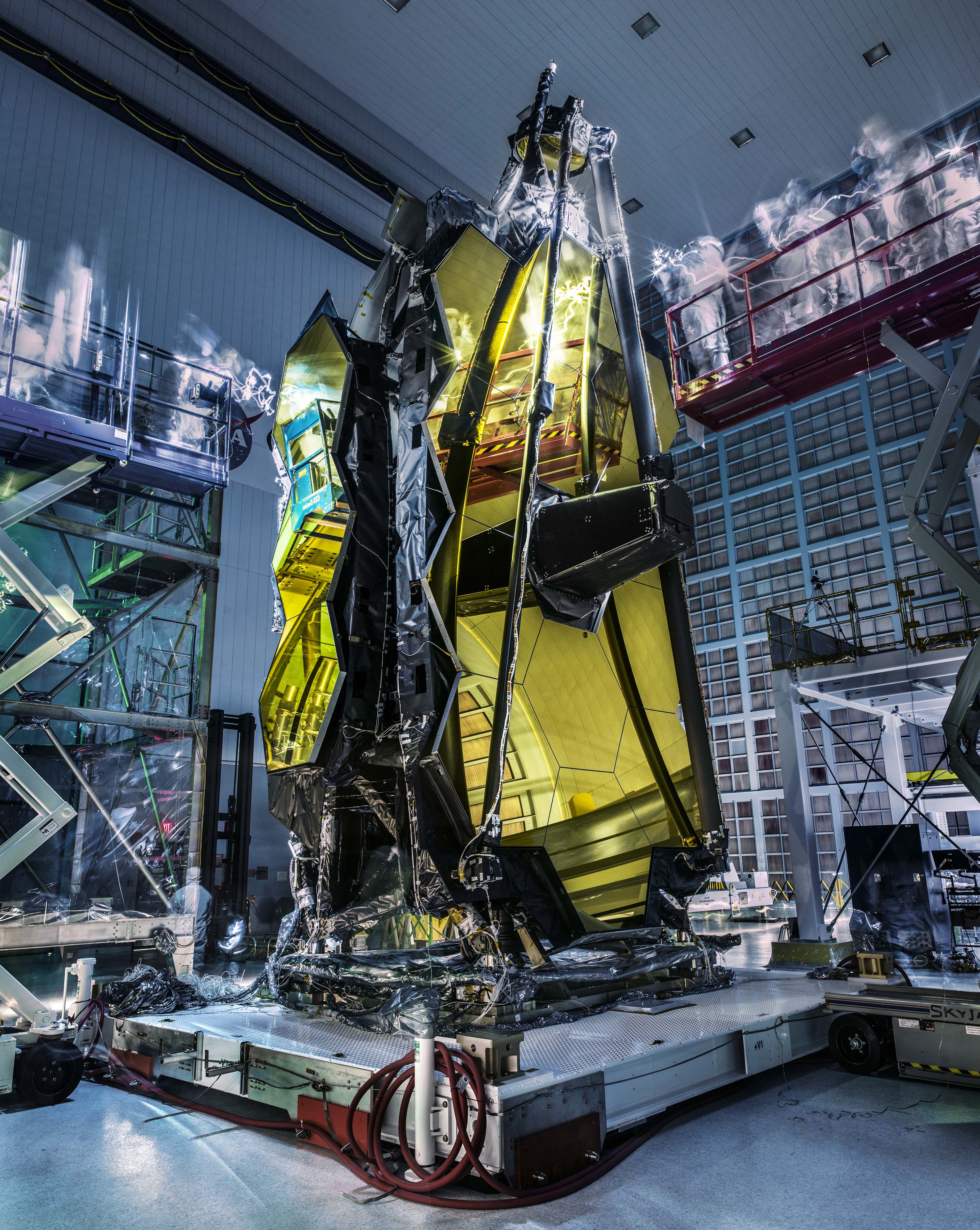
Image Credit: Chris Gunn, NASA
Explanation: Ghosts aren't actually hovering over the James Webb Space Telescope. But the lights are out as it stands with gold tinted mirror segments and support structures folded in Goddard Space Flight Center's Spacecraft Systems Development and Integration Facility clean room. Following vibration and acoustic testing, bright flashlights and ultraviolet lights are played over the stationary telescope looking for contamination, easier to spot in a darkened room. In the dimness the camera's long exposure creates the ghostly apparitions, blurring the moving lights and engineers. A scientific successor to Hubble, the James Webb Space Telescope is optimized for the infrared exploration of the early Universe. Its planned launch is in 2018 from French Guiana on a European Space Agency Ariane 5 rocket.
2017-03-17
Fotografia - Lisboa nocturna - Padrão dos descobrimentos

Estúdio Mário Novais, padrão dos Descobrimentos e espelho de água, lisboa, 1940 Colecções da Fundação Calouste Gulbenkian, Lisboa, Portugal (Flickr Commons)
Astronomy picture of the day - 2017 March 17 - Phases of Venus
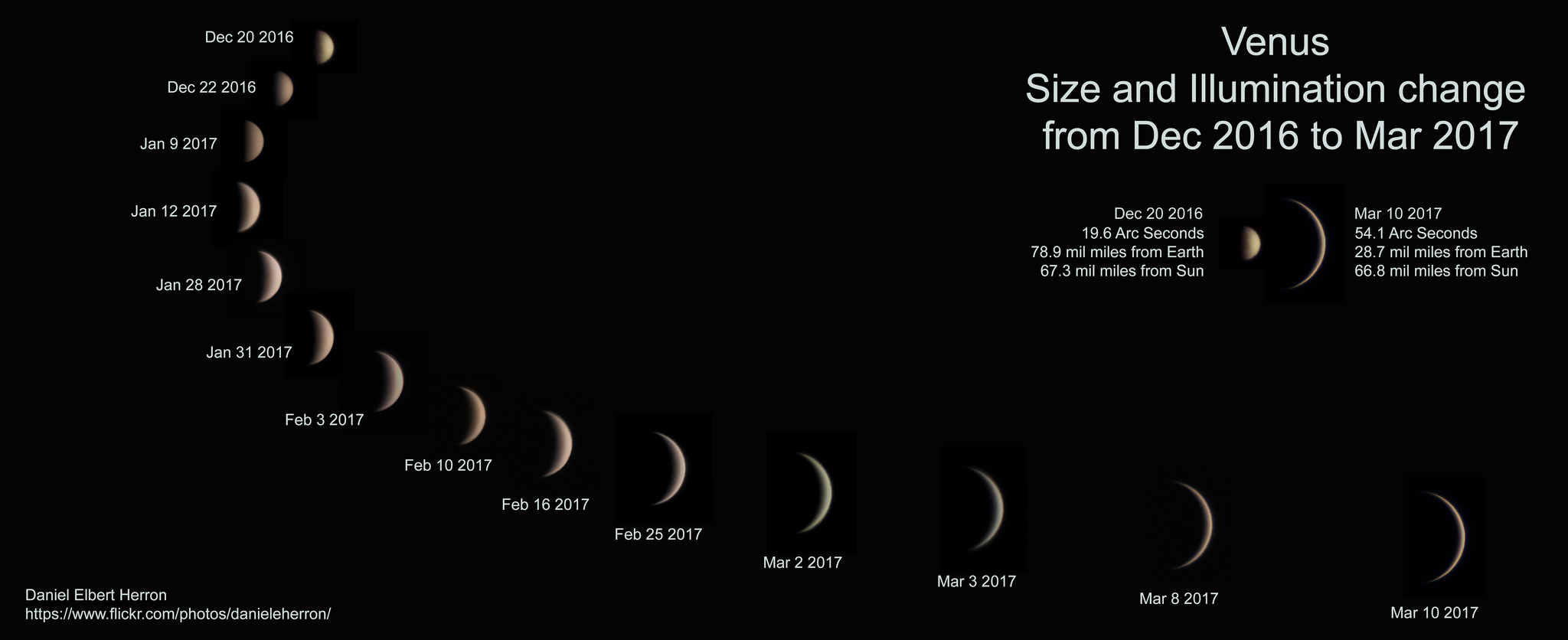
Image Credit & Copyright: Daniel Herron
Explanation: Just as the Moon goes through phases, Venus' visible sunlit hemisphere waxes and wanes. This composite of telescopic images illustrates the steady changes for the inner planet, seen in the west as the evening star, as Venus grows larger but narrows to a thin crescent from December 20, 2016 through March 10. Gliding along its interior orbit between Earth and Sun, Venus grows larger during that period because it is approaching planet Earth. Its crescent narrows, though, as Venus swings closer to our line-of-sight to the Sun. Closest to the Earth-Sun line but passing about 8 degrees north of the Sun on March 25, Venus will reach a (non-judgmental) inferior conjunction. Soon after, Venus will shine clearly above the eastern horizon in predawn skies as planet Earth's morning star.
2017-03-16
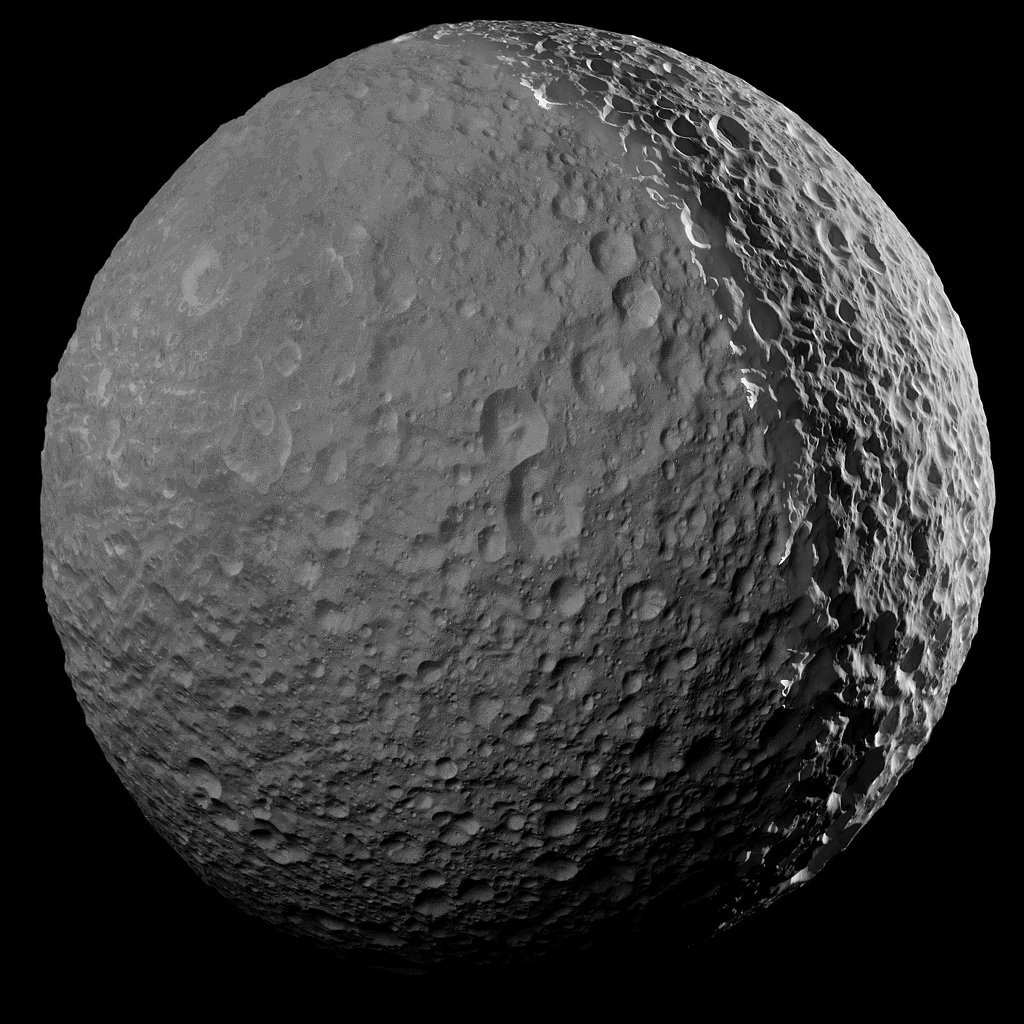
Astronomy picture of the day - 2017 March 16 - Mimas in Saturnlight
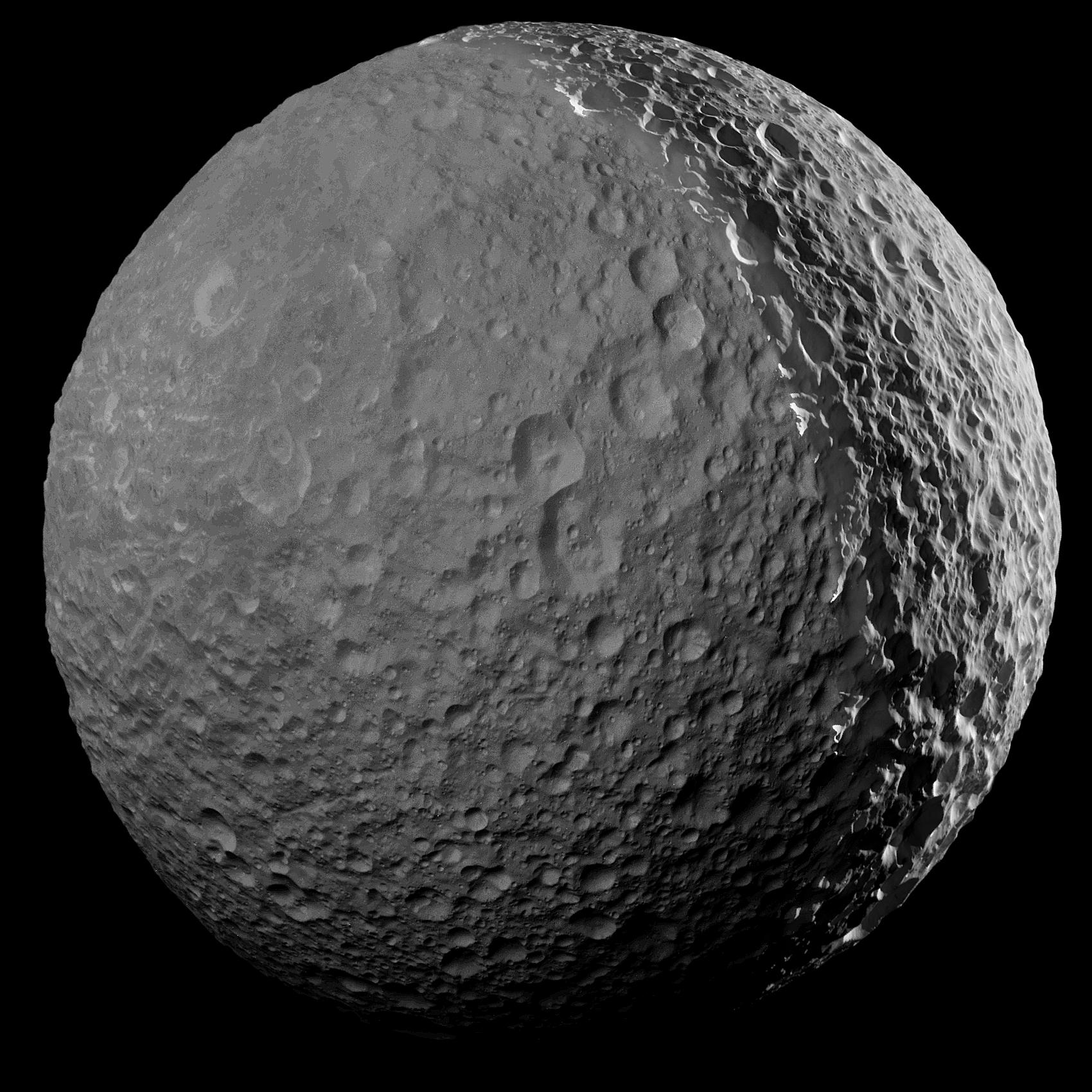
Image Credit: Cassini Imaging Team, SSI, JPL, ESA, NASA
Explanation: Peering from the shadows, the Saturn-facing hemisphere of Mimas lies in near darkness alongside a dramatic sunlit crescent. The mosaic was captured near the Cassini spacecraft's final close approach on January 30, 2017. Cassini's camera was pointed in a nearly sunward direction only 45,000 kilometers from Mimas. The result is one of the highest resolution views of the icy, crater-pocked, 400 kilometer diameter moon. An enhanced version better reveals the Saturn-facing hemisphere of the synchronously rotating moon lit by sunlight reflected from Saturn itself. To see it, slide your cursor over the image (or follow this link). Other Cassini images of Mimas include the small moon's large and ominous Herschel Crater.
2017-03-15
Astronomy picture of the day - 2017 March 15 - The Cone Nebula from Hubble
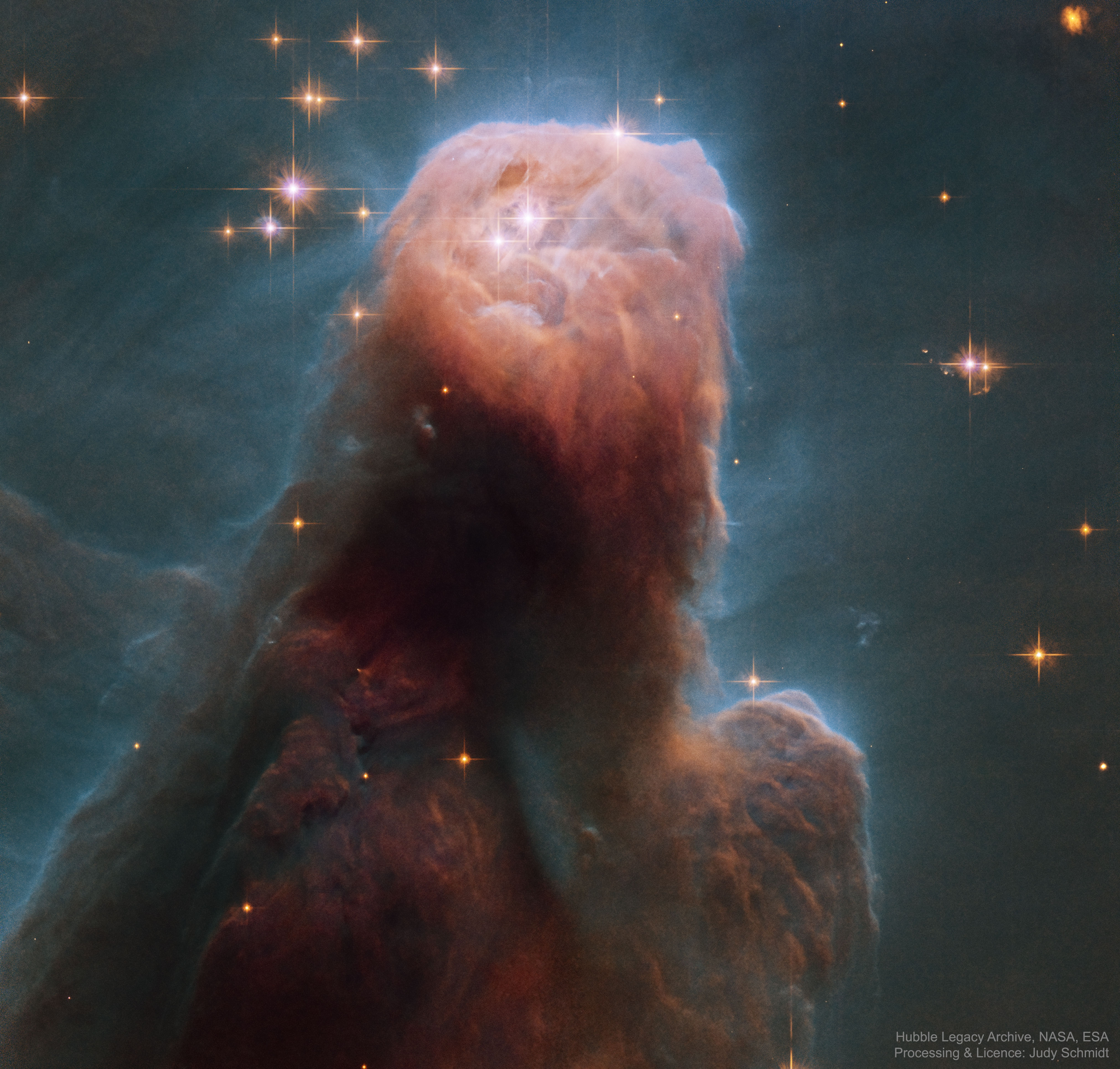
Image Credit: Hubble Legacy Archive, NASA, ESA - Processing & Licence: Judy Schmidt
Explanation: Stars are forming in the gigantic dust pillar called the Cone Nebula. Cones, pillars, and majestic flowing shapes abound in stellar nurseries where natal clouds of gas and dust are buffeted by energetic winds from newborn stars. The Cone Nebula, a well-known example, lies within the bright galactic star-forming region NGC 2264. The Cone was captured in unprecedented detail in this close-up composite of several observations from the Earth-orbitingHubble Space Telescope. While the Cone Nebula, about 2,500 light-years away in Monoceros, is around 7 light-years long, the region pictured here surrounding the cone's blunted head is a mere 2.5 light-years across. In our neck of the galaxy that distance is just over half way from our Sun to its nearest stellar neighbors in the Alpha Centauri star system. The massive star NGC 2264 IRS, seen by Hubble's infrared camera in 1997, is the likely source of the wind sculpting the Cone Nebula and lies off the top of the image. The Cone Nebula's reddish veil is produced by glowing hydrogen gas.
Inscription à :
Articles (Atom)