IC 1396: Emission Nebula in Cepheus
Image Credit & Copyright: César Blanco González
Explanation: Stunning emission nebula IC 1396 mixes glowing cosmic gas and dark dust clouds in the high and far off constellation of Cepheus. Energized by the bright central star seen here, this star forming region sprawls across hundreds of light-years, spanning over three degrees on the sky while nearly 3,000 light-years from planet Earth. Among the intriguing dark shapes within IC 1396, the winding Elephant's Trunk nebula lies just below center. Stars could still be forming inside the dark shapes by gravitational collapse. But as the denser clouds are eroded away by powerful stellar winds and radiation, any forming stars will ultimately be cutoff from the reservoir of star stuff. The gorgeous color view is a composition of image data from narrowband filters, mapping emission from the nebula's atomic oxygen, hydrogen, and sulfur into blue, green, and red hues.
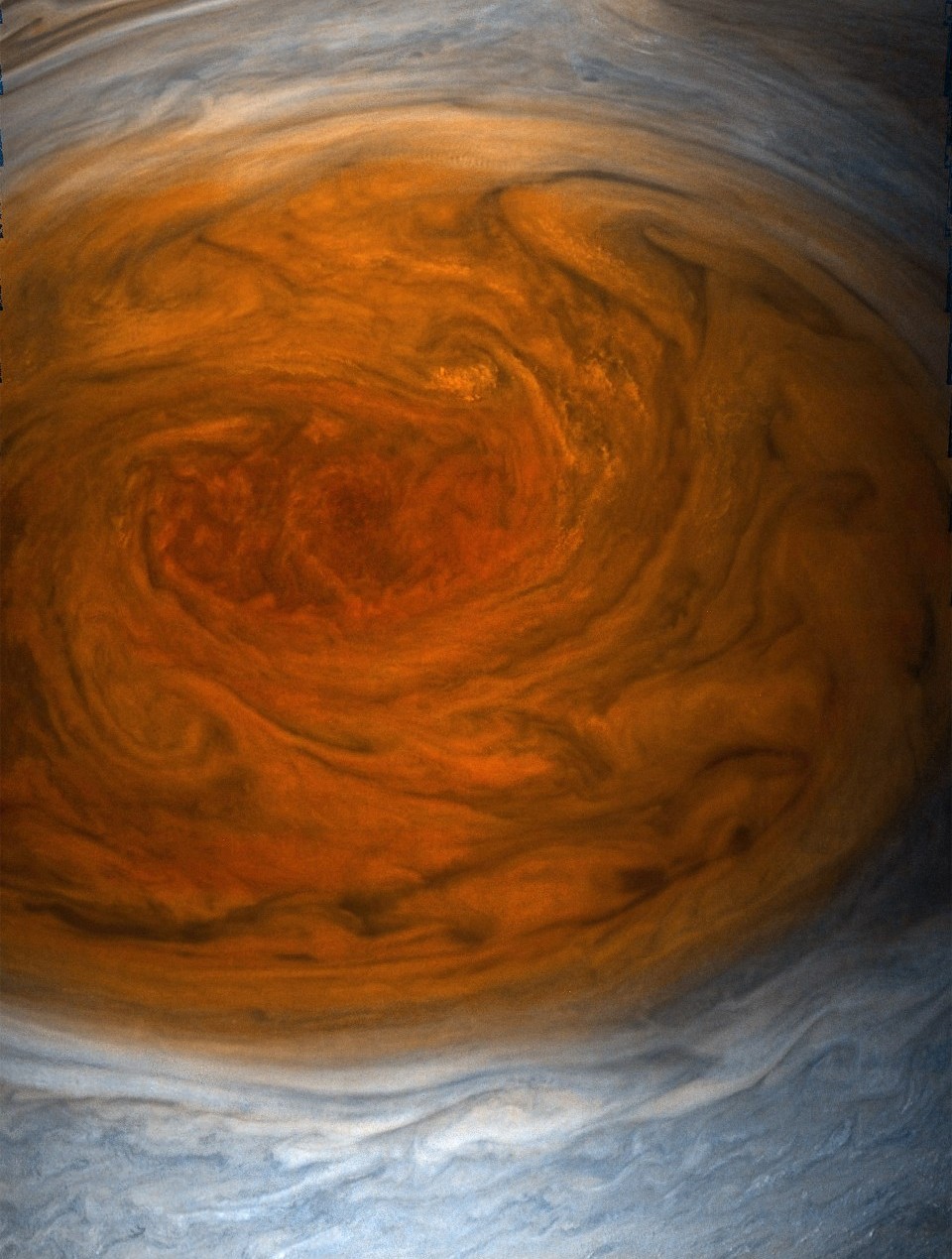 Close-up of The Great Red Spot
Image Credit: NASA, Juno, SwRI, MSSS, Gerald Eichstadt, Sean Doran
Explanation: On July 11, the Juno spacecraft once again swung near to Jupiter's turbulent cloud tops in its looping 53 day orbit around the Solar System's ruling gas giant. About 11 minutes after perijove 7, its closest approach on this orbit, it passed directly above Jupiter's Great Red Spot. During the much anticipated fly over, it captured this close-up image data from a distance of less than 10,000 kilometers. The raw JunoCam data was subsequently processed by citizen scientists. Very long-lived but found to be shrinking, the Solar System's largest storm system was measure to be 16,350 kilometers wide on April 15. That's about 1.3 times the diameter of planet Earth.
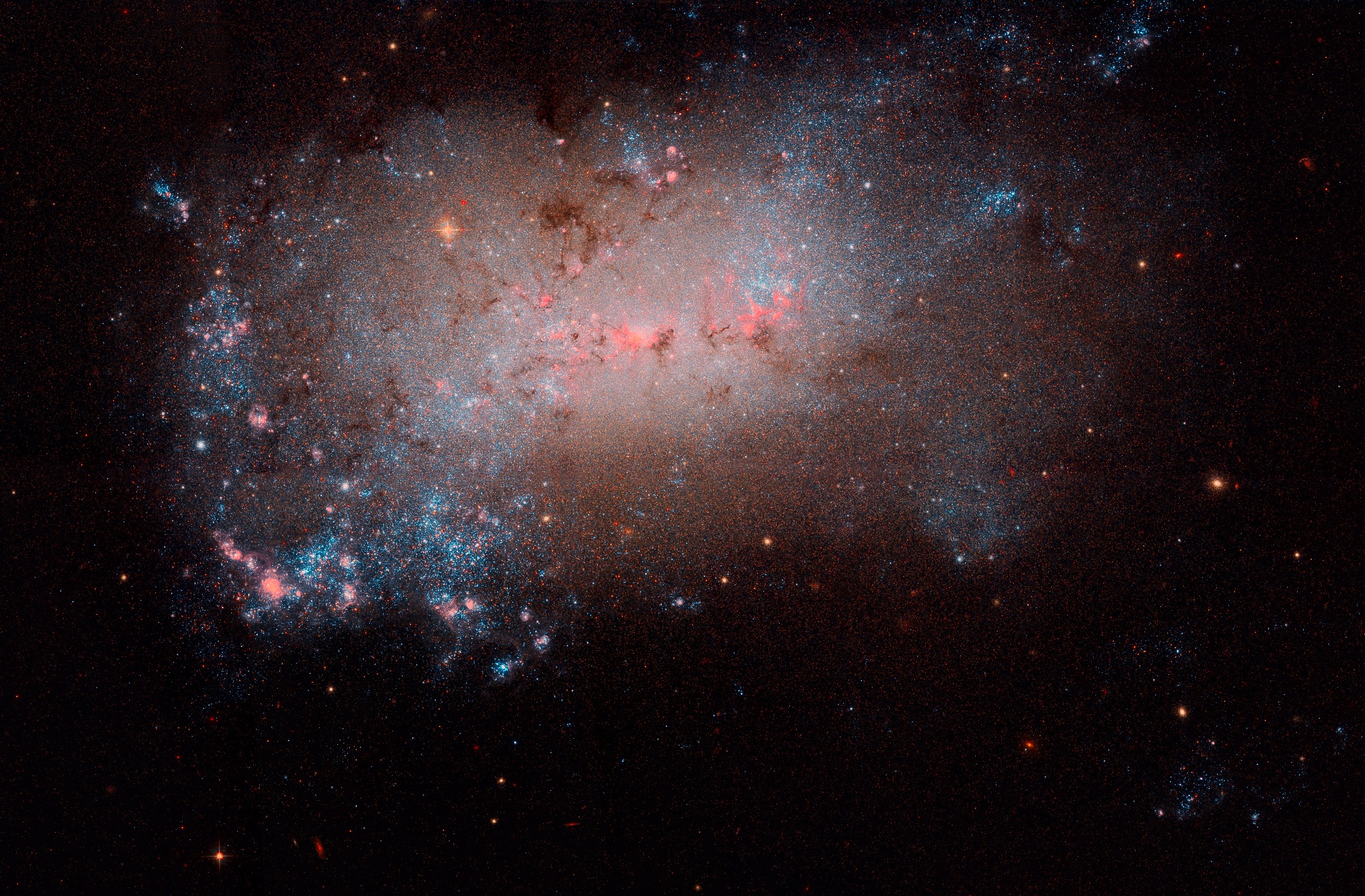
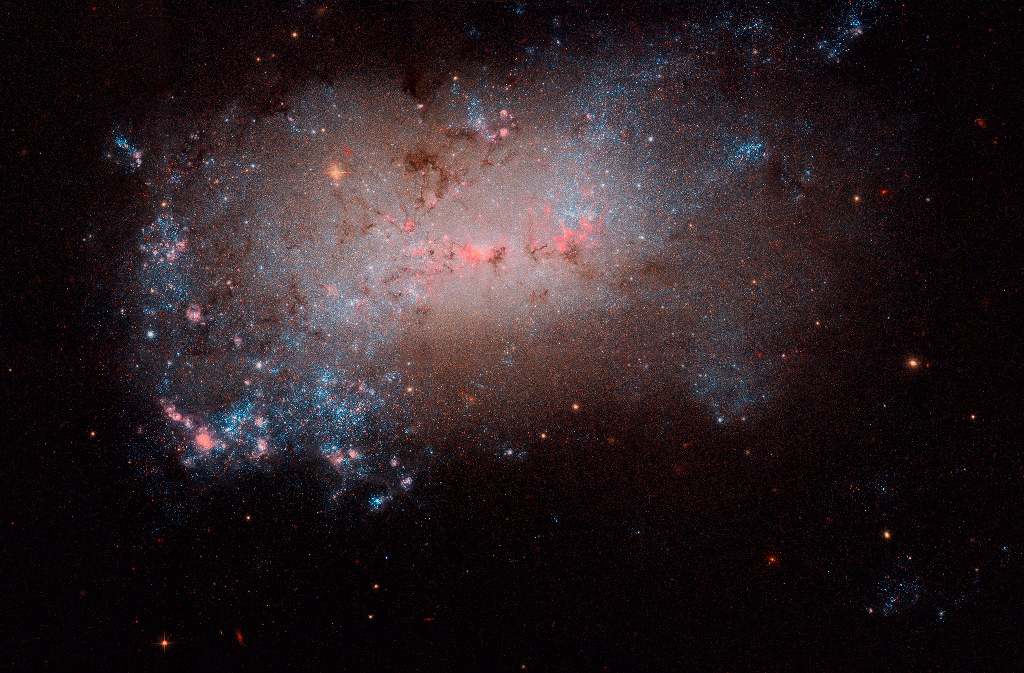 NGC 4449: Close-up of a Small Galaxy
Image Credit & Copyright: Data - Hubble Legacy Archive, ESA, NASA;
Processing - Domingo Pestana Galvan, Raul Villaverde Fraile
Explanation: (xxxedit and linkxxx) Grand spiral galaxies often seem to get all the glory. Their young, blue star clusters and pink star forming regions along sweeping spiral arms are guaranteed to attract attention. But small irregular galaxies form stars too, like NGC 4449, about 12 million light-years distant. Less than 20,000 light-years across, the small island universe is similar in size, and often compared to our Milky Way's satellite galaxy, the Large Magellanic Cloud (LMC). This remarkable Hubble Space Telescope close-up of the well-studied galaxy was reprocessed to highlight the telltale reddish glow of hydrogen gas. The glow traces NGC 4449's widespread star forming regions, some even larger than those in the LMC, with enormous interstellar arcs and bubbles blown by short-lived, massive stars. NGC 4449 is a member of a group of galaxies found in the constellation Canes Venatici. It also holds the distinction of being the first dwarf galaxy with an identified tidal star stream.
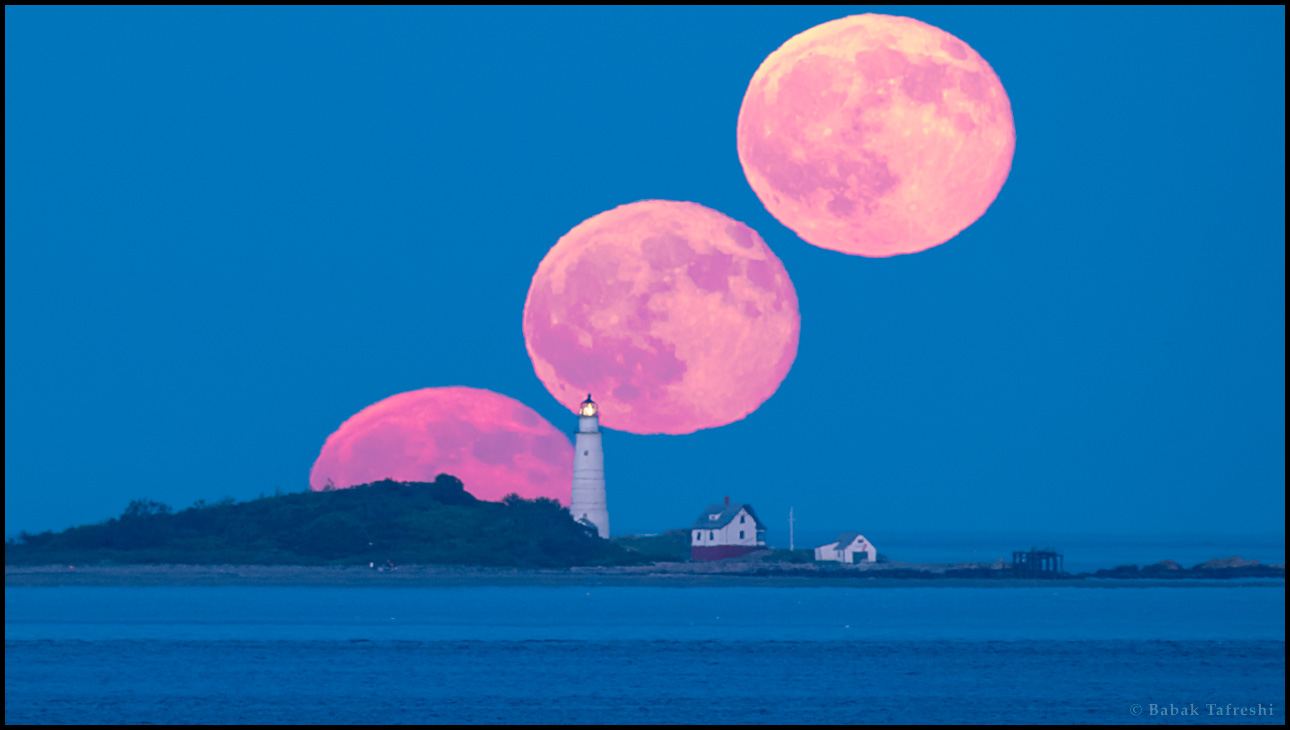 Full Moon and Boston Light
Image Credit & Copyright: Babak Tafreshi (TWAN)
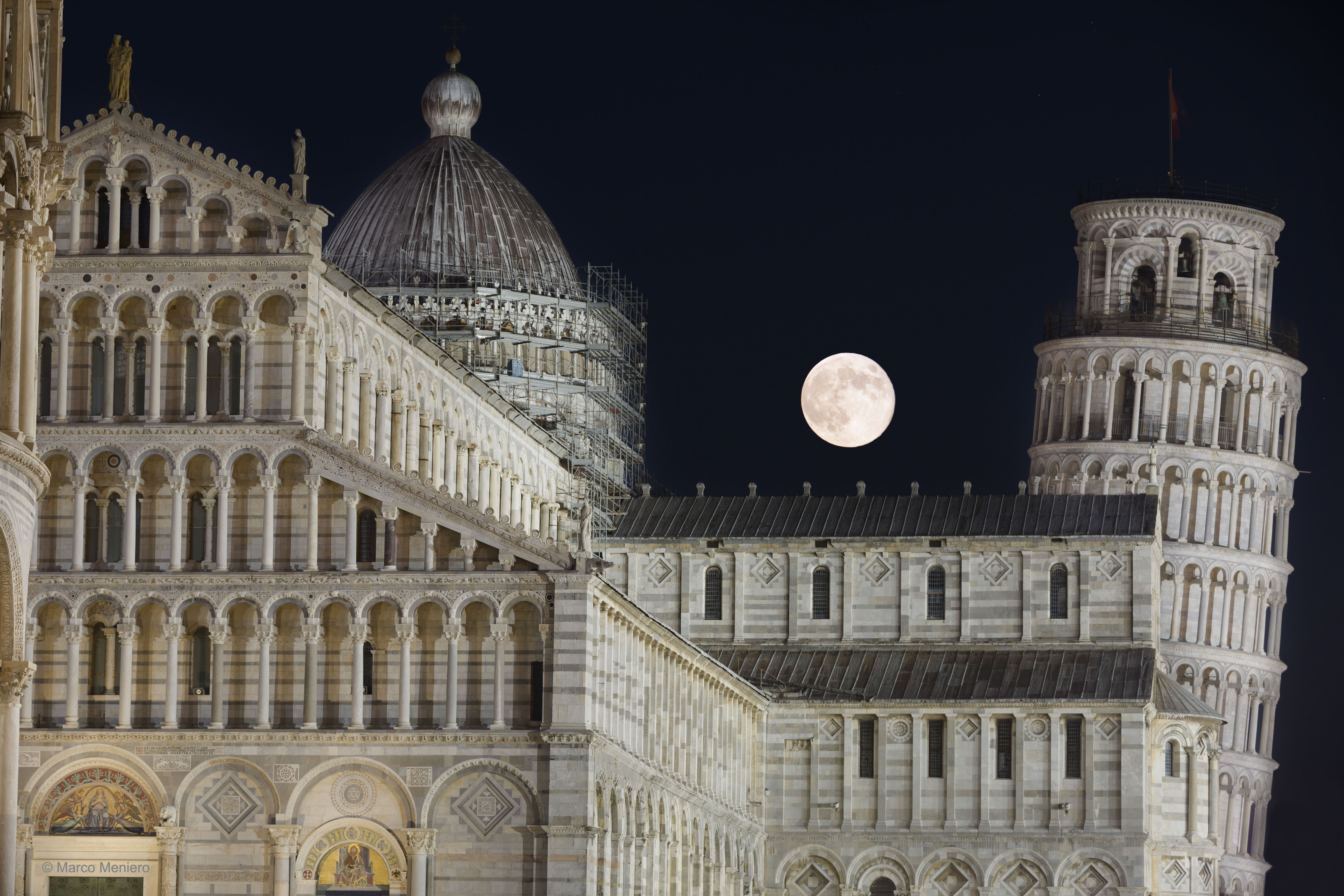
Explanation: This well-planned telephoto timelapse captures July's Full Moon rise across outer Boston Harbor, Massachusetts, planet Earth. In the foreground, the historic terrestrial beacon is known as Boston Light. July's Full Moon is known to some as a Thunder Moon, likely a reference to the sounds of the northern summer month's typically stormy weather. But the eastern sky was clear for this video sequence. Near the horizon, the long sight-line throughatmospheric layers filters and refracts the moonlight, causing the rising Moon's reddened color, ragged edges and distorted shape.
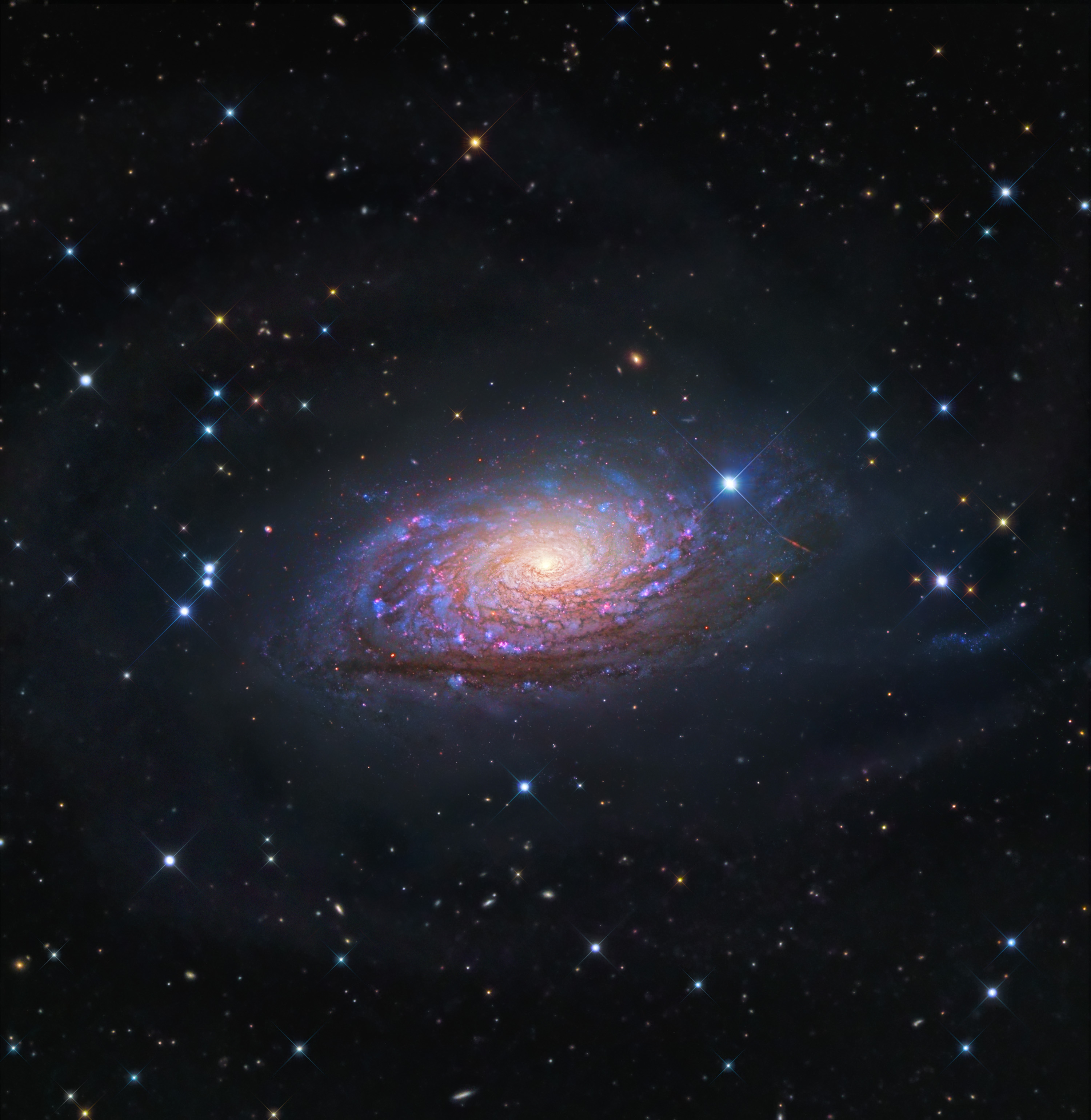
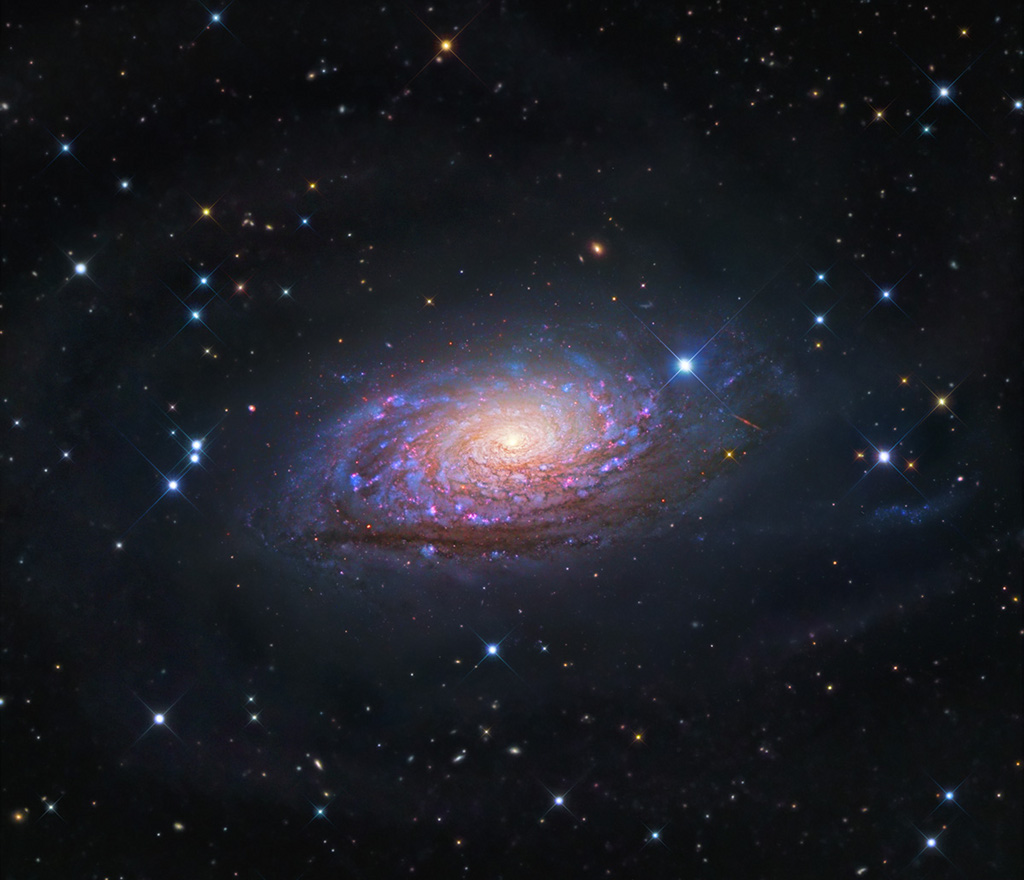 Messier 63: The Sunflower Galaxy
Image Credit & Copyright: Data - Hubble Legacy Archive, Subaru Telescope (NAOJ), Don Goldman
Processing - Robert Gendler, Roberto Colombari, Don Goldman
Explanation: A bright spiral galaxy of the northern sky, Messier 63 is about 25 million light-years distant in the loyal constellation Canes Venatici. Also cataloged as NGC 5055, the majestic island universe is nearly 100,000 light-years across. That's about the size of our own Milky Way Galaxy. Known by the popular moniker, The Sunflower Galaxy, M63 sports a bright yellowish core in this sharp composite image from space- and ground-based telescopes. Its sweeping blue spiral arms are streaked with cosmic dust lanes and dotted with pink star forming regions. A dominant member of a known galaxy group, M63 has faint, extended features that are likely star streams from tidally disruptedsatellite galaxies. M63 shines across the electromagnetic spectrum and is thought to have undergone bursts of intense star formation.
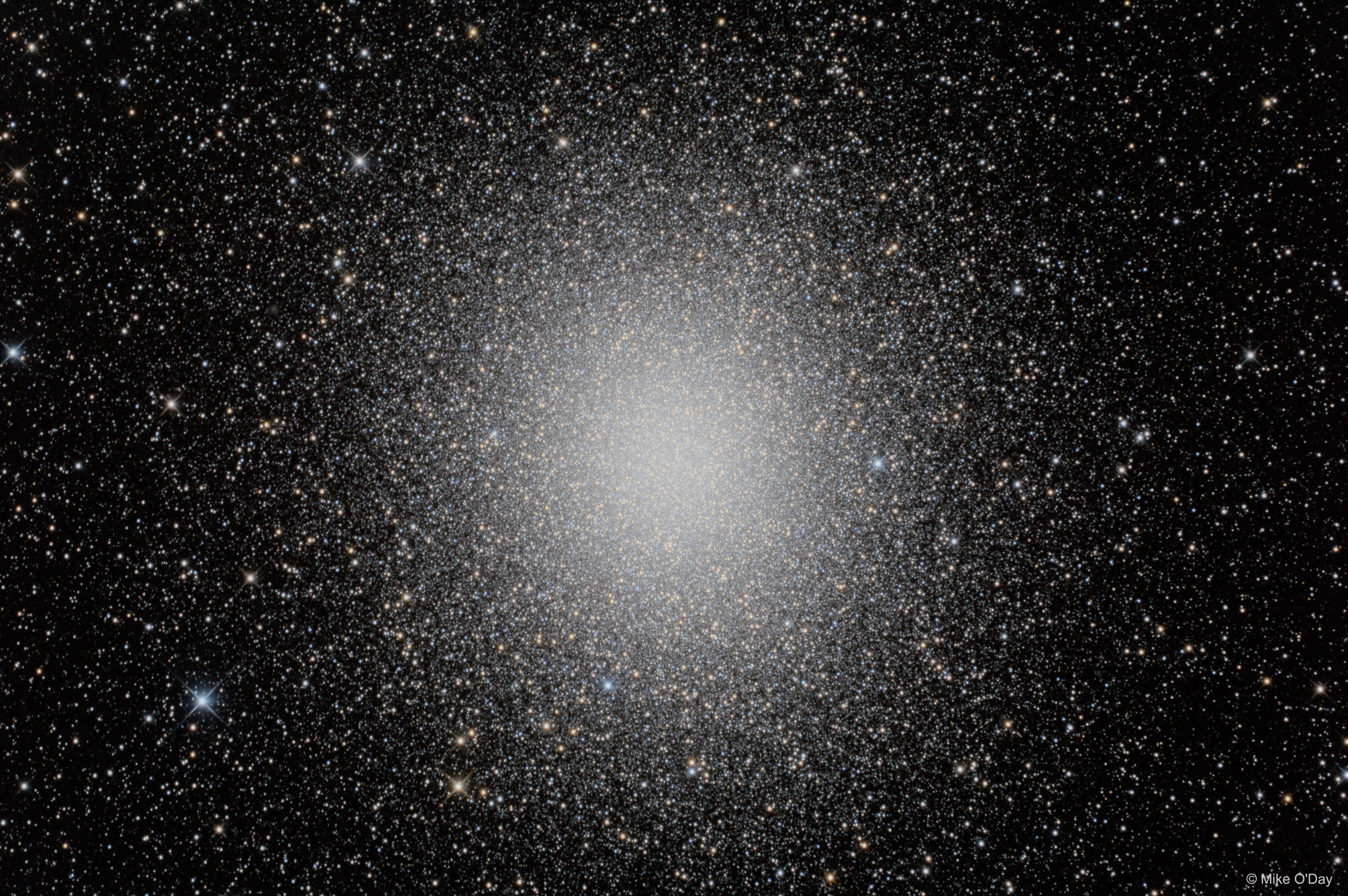
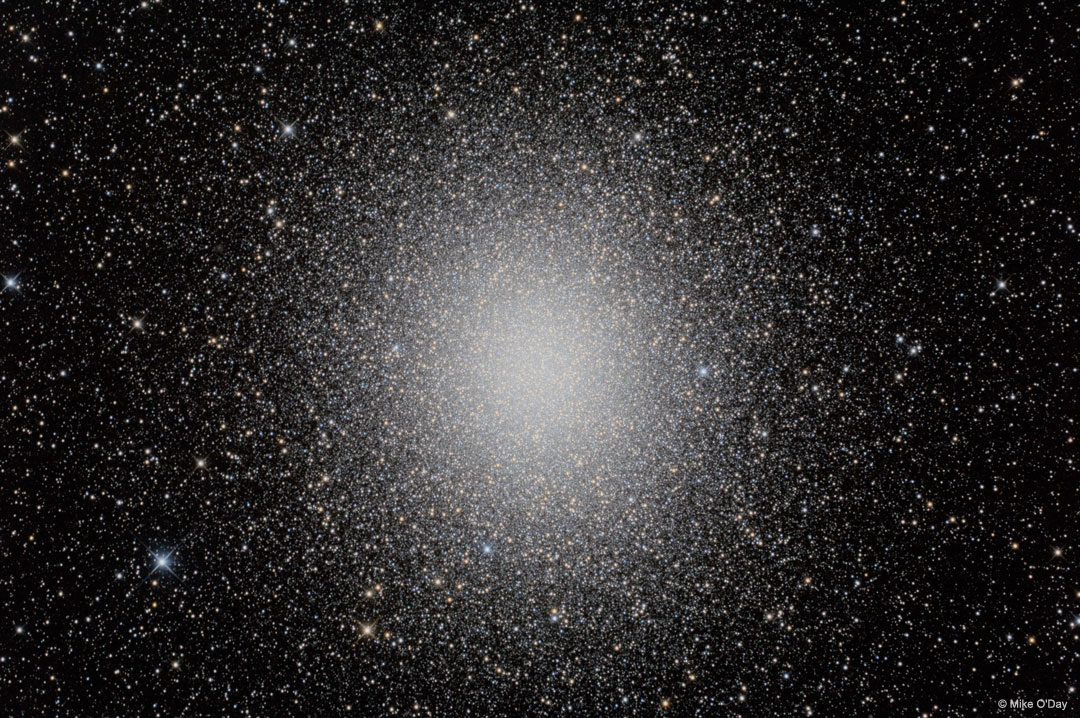 Star Cluster Omega Centauri in HDR
Image Credit & Copyright: Mike O'Day