"She used to love me a lot"
2017-09-15

Astronomy picture of the day - 2017 September 15 - 100 Steps Forward
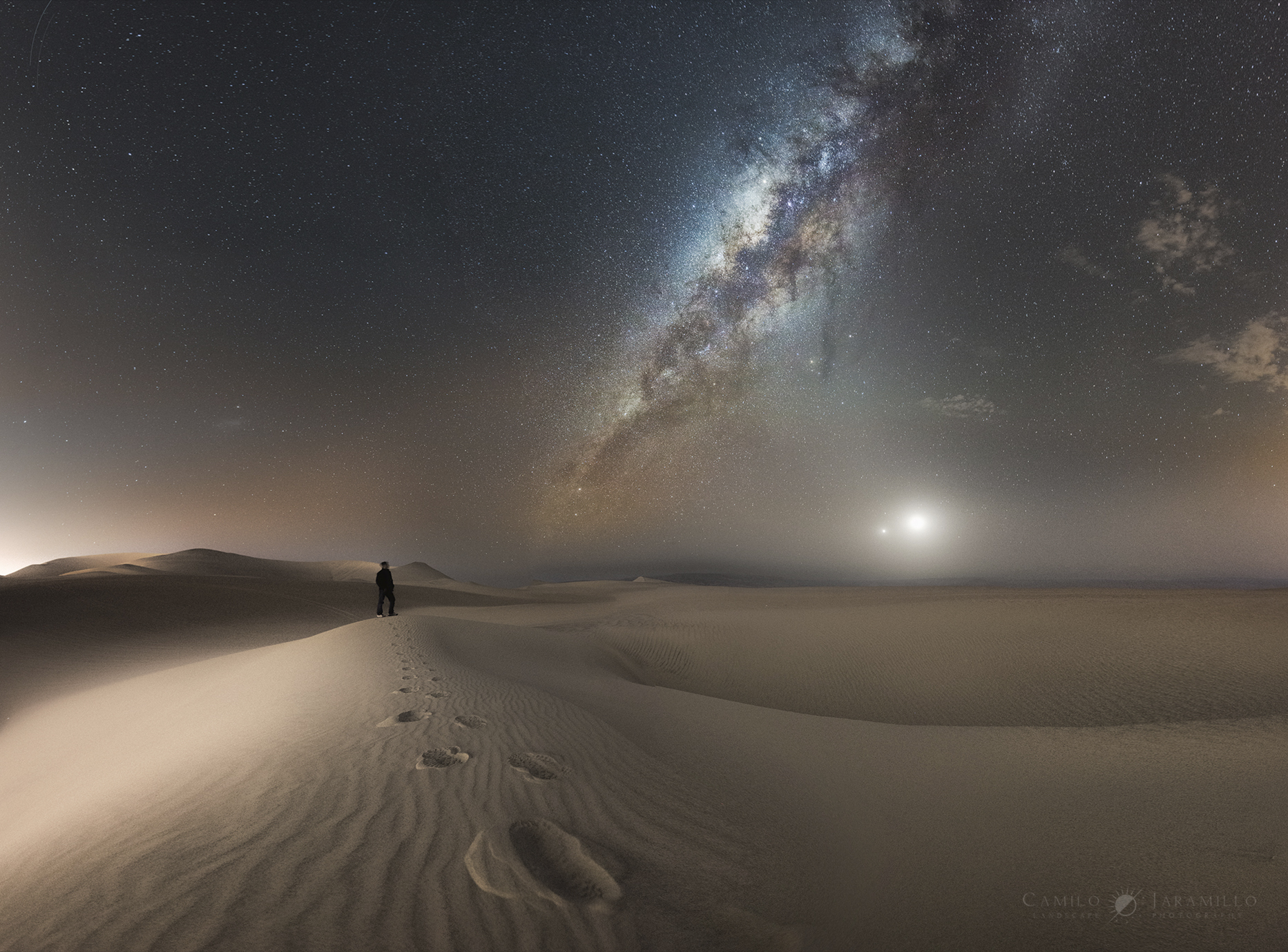
Image Credit & Copyright: Camilo Jaramillo
Explanation: A beautiful conjunction of Venus and Moon, human, sand, and Milky Way is depicted in this night skyscape from planet Earth. The scene is a panorama of 6 photos taken in a moment near the end of a journey. In the foreground, footsteps along the wind-rippled dunes are close to the Huacachina oasis in the southwestern desert of Peru. An engaging perspective on the world at night, the stunning final image was also chosen as a winner in The World at Night's 2017 International Earth and Sky Photo Contest.
2017-09-14
Expressões populares portuguesas : “Há mar e mar, há ir e voltar”
 Há frases que todos usamos que nasceram da publicidade. Alguns dos anúncios têm que se lhe diga, pois foram criados por grandes poetas. Basta lembrar o “Primeiro estranha-se, depois entranha-se” que Fernando Pessoa criou para a Coca-Cola quando estava ao serviço da agência Hora nos finais dos anos 20.
Já o “Há mar e mar, há ir e voltar”, segundo Andreia Vale, foi criada porAlexandre O’Neill, um dos autores que mais expressões criou para o mundo publicitário, nos anos 60. O Instituto de Socorros a Náufragos estava preocupado com os afogamentos nas praias e decidiu lançar uma campanha de segurança. O poeta português ajudou e lançou esta frase, que agora é usada como alerta para diversas situações.
Mas a primeira ideia do poeta era outra, marcada pelo seu humor negro: “Passe um verão desafogado”, propôs ele, mas não foi aceite. Nem desta vez, nem com a proposta que mandou à marca de colchões Lusopuma: “Com colchões Lusopuma você dá duas que parecem uma”. E como não há duas sem três, a ironia de Alexandre O’Neill, que quase pôs em causa o seu trabalho no Jornal de Letras, ficou bem patente no slogan para o Metropolitano de Lisboa: “Vá de metro, Satanás”. Um criativo, como se vê.
Artigo - Portugal sobe ao 3° lugar do ranking FIFA

Portugal ascendeu à terceira posição do ranking da FIFA, cuja atualização foi divulgada esta quinta-feira pelo organismo que tutela o futebol mundial.
A equipa das quinas, com 1386 pontos, relegou a Argentina para o quarto lugar, numa classificação agora comandada pela Alemanha, que destronou o Brasil da liderança.
Segundo a Federação Portuguesa de Futebol, a Seleção Nacional ocupa o terceiro lugar do ranking FIFA pela quinta vez no seu historial, depois das atualizações de abril e maio de 2010, outubro de 2012 e abril de 2014.
Esta é a melhor classificação de Portugal desde abril de 2014.
Classificação dos 10 primeiros:
1. Alemanha, 1606 pontos
2. Brasil, 1590
3. Portugal, 1386
4. Argentina, 1325
5. Bélgica, 1265
6. Polónia, 1250
7. Suíça, 1210
8. França, 1208
9. Chile, 1195
10. Colômbia, 1191
A Bola - Portugal
Astronomy picture of the day - 2017 September 14 - Flare Well AR2673

Image Credit: NASA, SDO, GSFC
Explanation: Almost out of view from our fair planet, rotating around the Sun's western edge giant active region AR2673 lashed out with another intense solar flare followed by a large coronal mass ejection on September 10. The flare itself is seen here at the right in an extreme ultraviolet image from the sun-staring Solar Dynamics Observatory. This intense flare was the fourth X-class flare from AR2673 this month. The active region's most recent associated coronal mass ejection collided with Earth's magnetosphere 2 days later. Say farewell to the mighty AR2673, for now. For the next two weeks, the powerful sunspot group will be on the Sun's far side.
2017-09-13
Astronomy picture of the day - 2017 September 13 - NGC 6334: The Cat's Paw Nebula
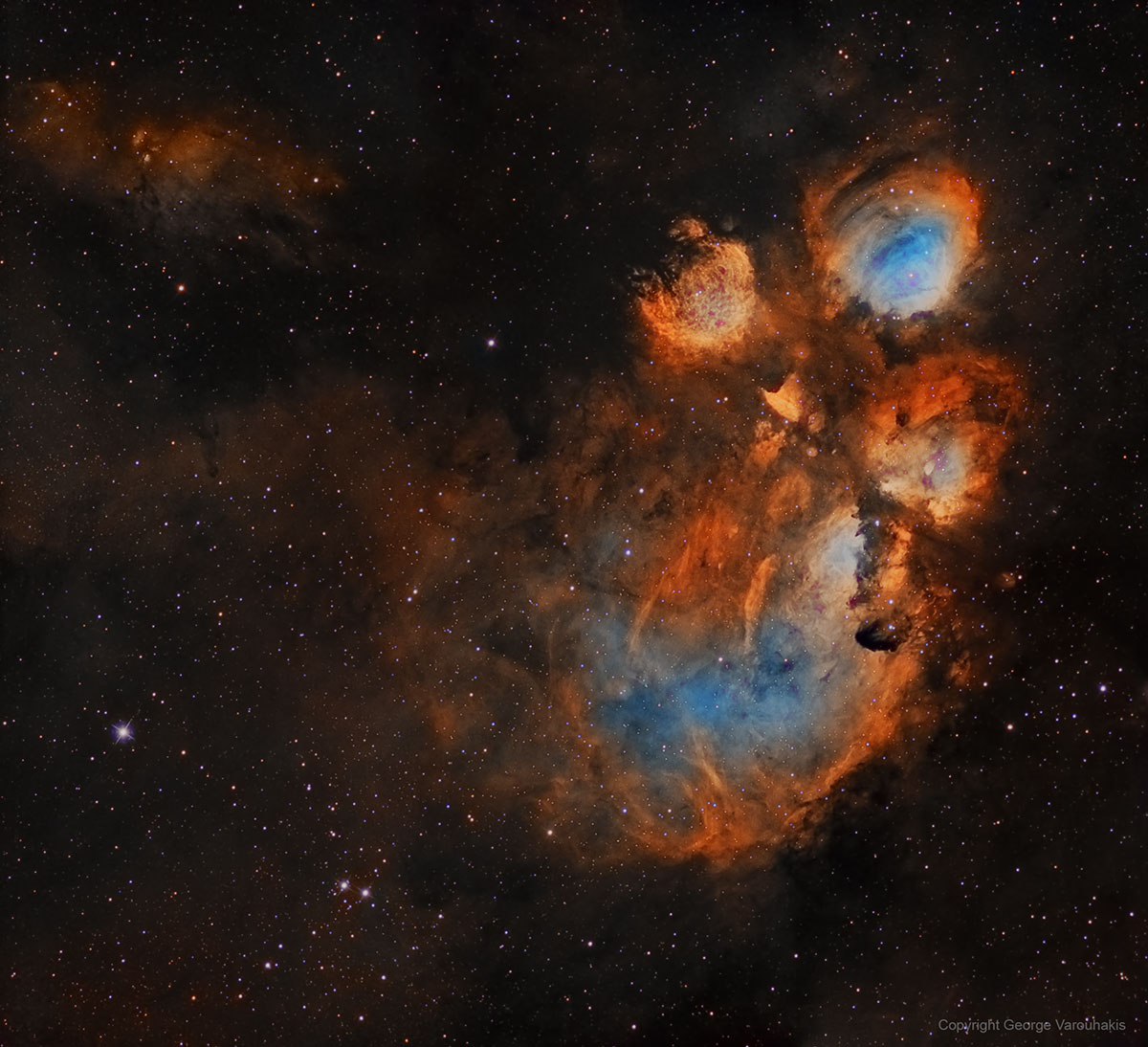
Image Credit & Copyright: George Varouhakis
Explanation: Nebulas are perhaps as famous for being identified with familiar shapes as perhaps cats are for getting into trouble. Still, no known cat could have created the vast Cat's Paw Nebula visible in Scorpius. At 5,500 light years distant, Cat's Paw is an emission nebula with a red color that originates from an abundance of ionized hydrogen atoms. Alternatively known as the Bear Claw Nebula or NGC 6334, stars nearly ten times the mass of our Sun have been born there in only the past few million years. Pictured here is a deep field image of the Cat's Paw Nebula in light emitted by hydrogen, oxygen, and sulfur.

2017-09-12
Astronomy picture of the day - 2017 September 12 - A Total Solar Eclipse Close-Up in Real Time
Video Credit & Copyright: Jun Ho Oh (KAIST, HuboLab);
Music: Flowing Air by Mattia Vlad Morleo
Explanation: How would you feel if the Sun disappeared? Many eclipse watchers across the USA surprised themselves with the awe that they felt and the exclamations that they made as the Sun momentarily disappeared behind the Moon. Perhaps expecting just a brief moment of dusk, the spectacle of unusually rapid darkness, breathtakingly bright glowing beads around the Moon's edge, shockingly pink solar prominences, and a strangely detailed coronastretching across the sky caught many a curmudgeon by surprise. Many of these attributes were captured in the featured real-time, three-minute video of last month's total solar eclipse. The video frames were acquired in Warm Springs,Oregon with equipment specifically designed by Jun Ho Oh to track a close-up of the Sun's periphery during eclipse. As the video ends, the Sun is seen being reborn on the other side of the Moon from where it departed.
2017-09-11
Imagens - Porto - Portugal (2)

O Porto foi eleito o melhor destino europeu de 2017, ficando à frente de Milão e de Gdansk, no pódio das três cidades mais votadas
Foto Pedro Granadeiro/global Imagens
Astronomy picture of the day - 2011 September 11 - X-Rays Indicate Star Ripped Up by Black Hole
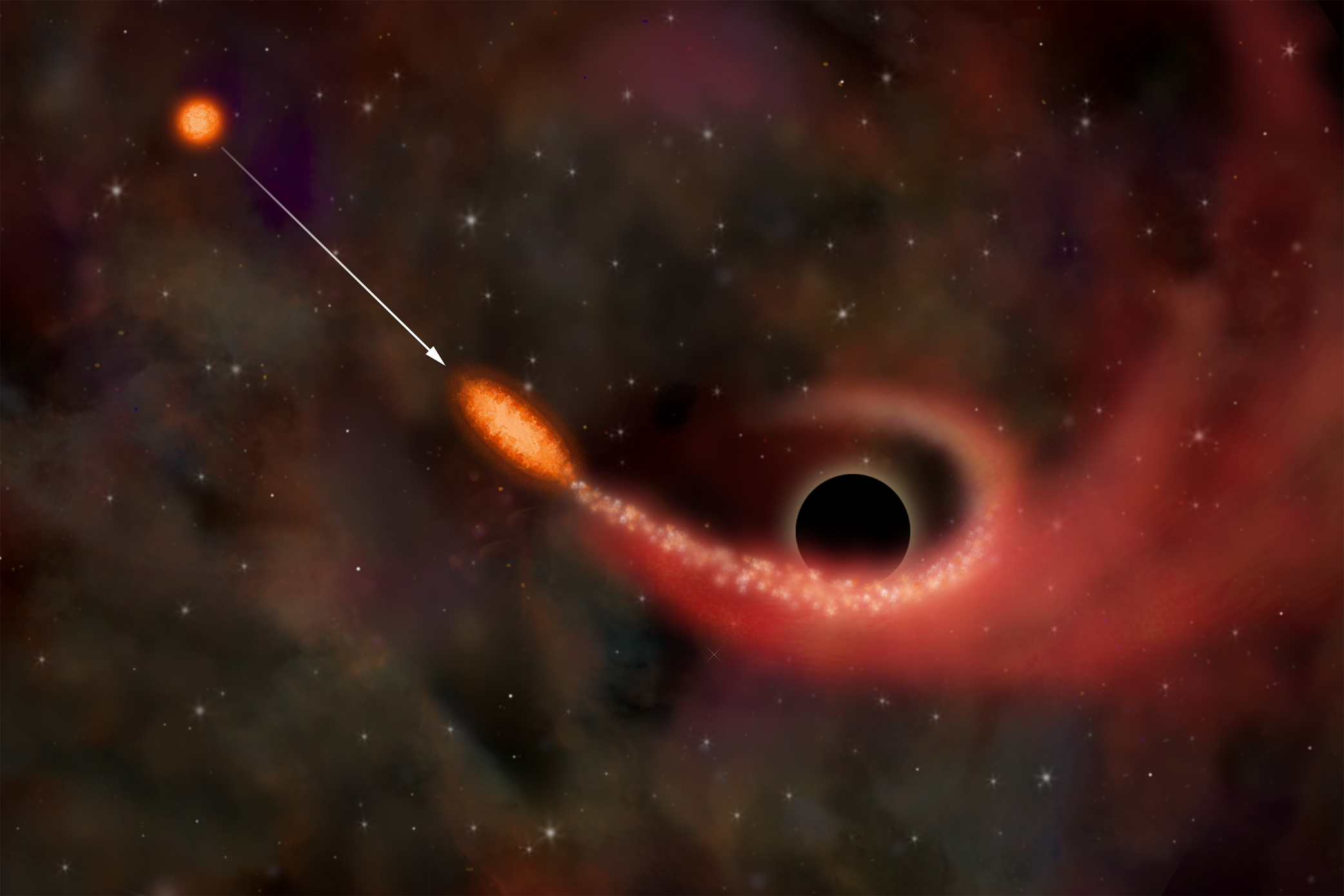
Illustration Credit: M. Weiss, CXC, NASA
Explanation: What could rip a star apart? A black hole. Giant black holes in just the right mass range would pull on the front of a closely passing star much more strongly than on the back. Such a strong tidal force would stretch out a star and likely cause some of the star's gasses to fall into the black hole. The infalling gas has been predicted to emit just the same blast of X-rays that have recently been seen in the center of galaxy RX J1242-11. Above, an artist's illustration depicts the sequence of destruction (assuming that image-distorting gravitational-lens effects of the black hole are somehow turned off). Most of the stellar remains would be flung out into the galaxy. Such events are rare, occurring perhaps only one in 10,000 years for typical black holes at the center of typical galaxies.
2017-09-10
Astronomy picture of the day - 2017 September 10 - Swirling Around the Eye of Hurricane Irma
Video Credit: NASA, GOES-16 Satellite, SPoRT
Explanation: Why does a hurricane have an eye at its center? No one is yet sure. What happens in and around a hurricane's eye is well documented, though. Warm air rises around the eye's edges, cools, swirls, and spreads out over the large storm, sinking primarily at the far edges. Inside the low-pressure eye, air also sinks and warms -- which causes evaporation, calm, and clearing -- sunlight might even stream through. Just at the eye's edge is a towering eyewall, the area of the highest winds. It is particularly dangerous to go outside when the tranquil eye passes over because you are soon to experience, again, the storm's violent eyewall. Featured is one of the most dramatic videos yet taken of an eye and rotating eyewall. The time-lapse video was taken from space by NASA's GOES-16 satellite last week over one of the most powerful tropical cyclones in recorded history: Hurricane Irma. Hurricanes can beextremely dangerous and their perils are not confined to the storm's center.

Inscription à :
Articles (Atom)