2017-10-21

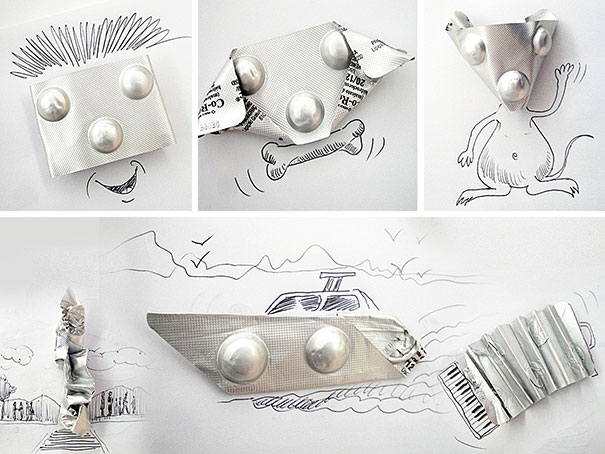
Desenhos com objectos - Diversos

Desenhos com objetos de Victor Nunes
Diversos

Victor Nunes

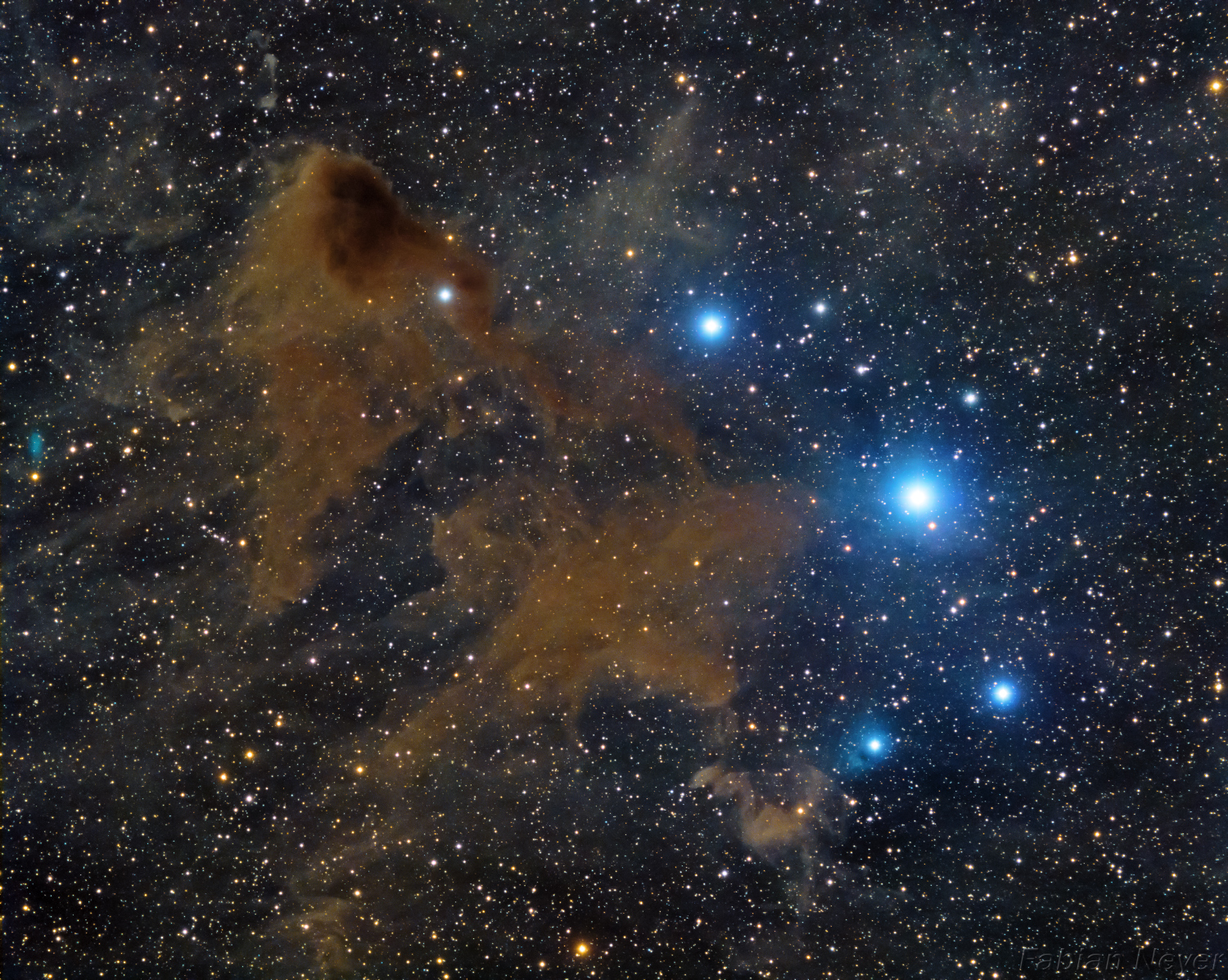
Astronomy picture of the day - 2017 October 21 - Lynds Dark Nebula 183

See Explanation.  Clicking on the picture will download
 the highest resolution version available.
Lynds Dark Nebula 183 
Image Credit & CopyrightFabian Neyer
Explanation: Beverly Lynds Dark Nebula 183 lies a mere 325 light-years away, drifting high above the plane of our Milky Way Galaxy. Obscuring the starlight behind it when viewed at optical wavelengths, the dark, dusty molecular cloud itself seems starless. But far infrared explorations reveal dense clumps within, likely stars in the early stages of formation as enhanced regions of the cloud undergo gravitational collapse. One of the closest molecular clouds, it is seen toward the constellation Serpens Caput. This sharp cosmic cloud portrait spans about half a degree on the sky. That's about 3 light-years at the estimated distance of Lynds Dark Nebula 183.

2017-10-20

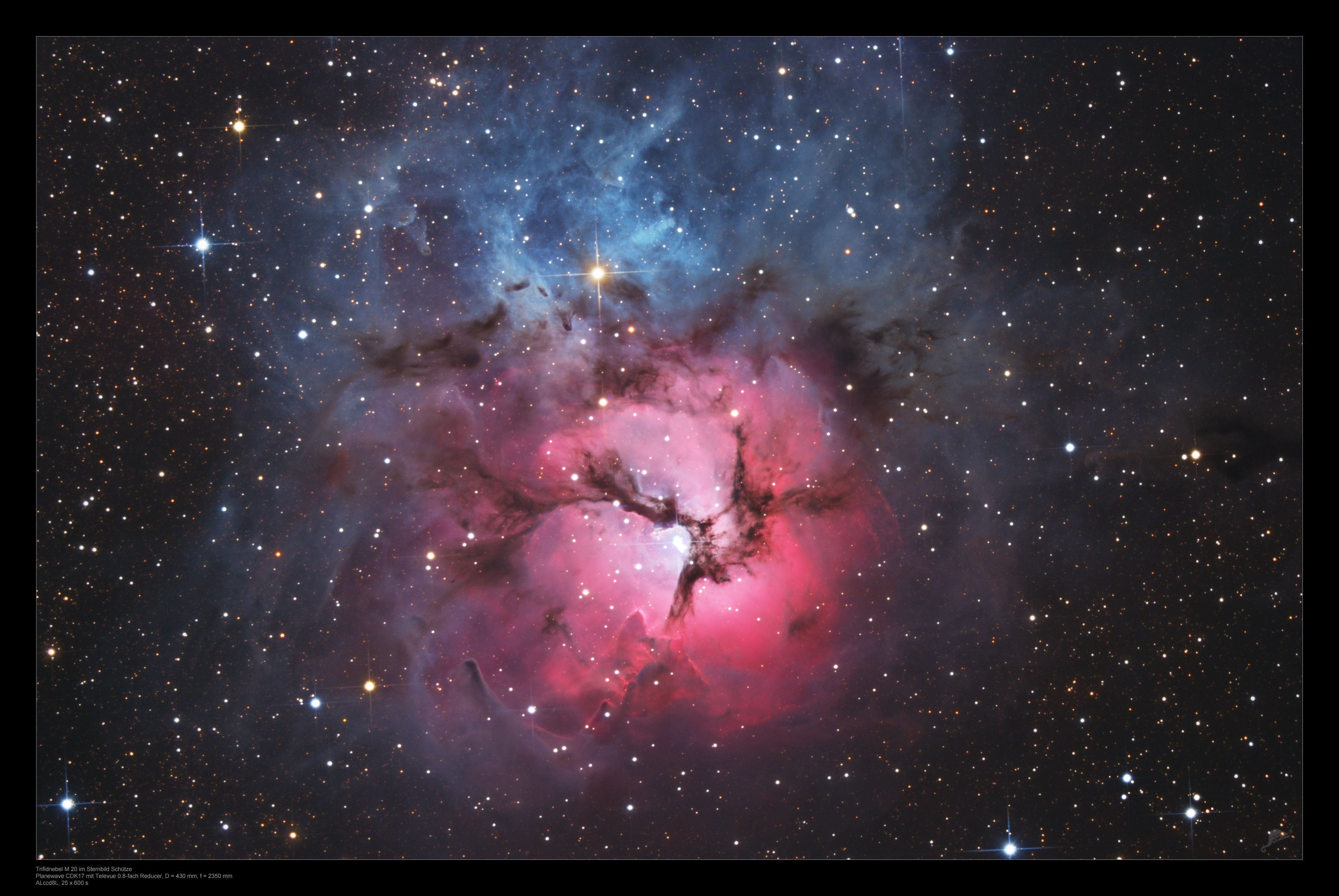
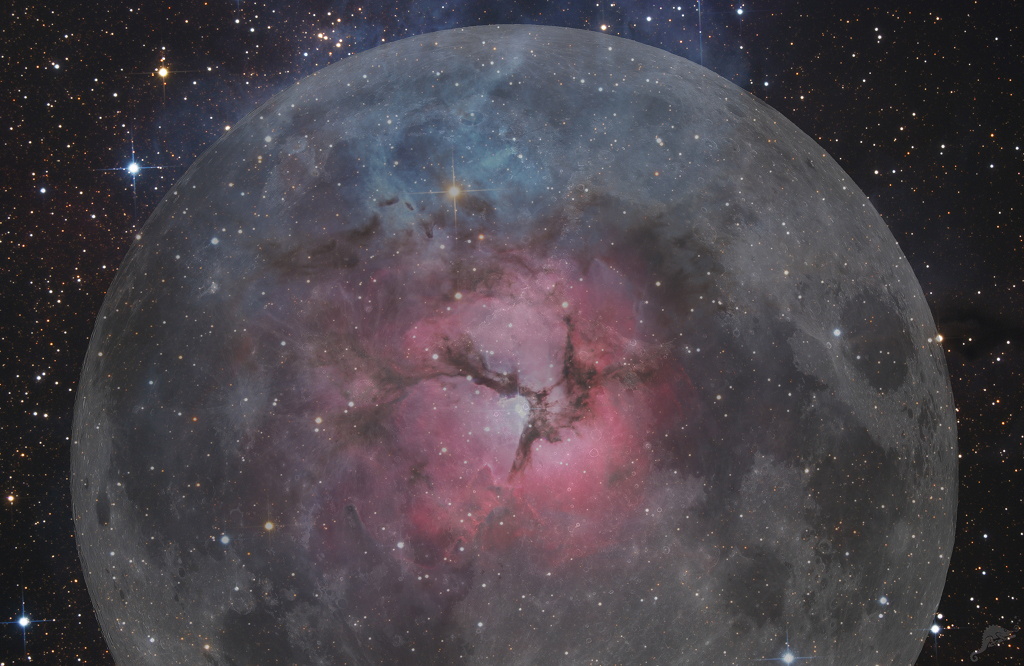
Astronomy picture of the day - 2017 October 20 - A Beautiful Trifid

See Explanation.
Moving the cursor over the image will bring up an annotated version.
Clicking on the image will bring up the highest resolution version
available.
A Beautiful Trifid 
Image Credit & CopyrightChamaeleon Team - Franz Hofmann, Wolfgang Paech
Explanation: The beautiful Trifid Nebula is a cosmic study in contrasts. Also known as M20, it lies about 5,000 light-years away toward the nebula rich constellation Sagittarius. A star forming region in the plane of our galaxy, the Trifid does illustrate three different types of astronomical nebulae; red emission nebulae dominated by light from hydrogen atoms, blue reflection nebulae produced by dust reflecting starlight, and dark nebulae where dense dust clouds appear in silhouette. But the red emission region roughly separated into three parts by obscuring dust lanes is what lends the Trifid its popular name. Pillars and jets sculpted by newborn stars, below and left of the emission nebula's center, appear in famous Hubble Space Telescope close-up images of the region. The Trifid Nebula is about 40 light-years across. Just too faint to be seen by the unaided eye, it almost covers the area of the Moon in planet Earth's sky.

2017-10-19

Desenhos com objectos - Tesouras

Desenhos com objetos de Victor Nunes
Tesouras

Victor Nunes

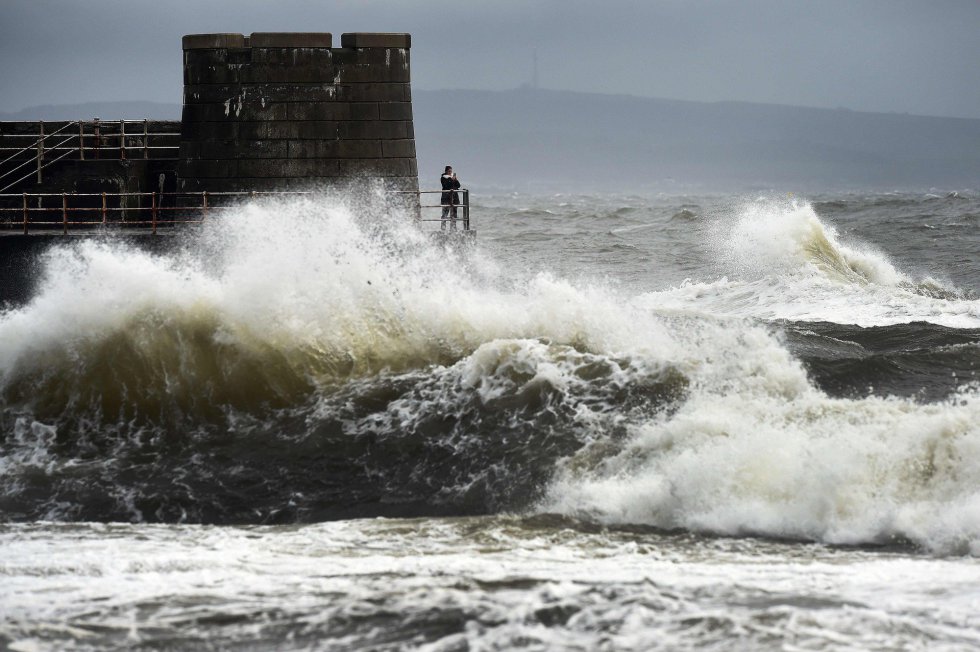
Imagenes del mundo - Saltcoats, Escocia

Las olas se rompen contra el puerto de Saltcoats, en la costa oeste de Escocia, por el efecto de la tormenta Ophelia.
ANDY BUCHANAN AFP

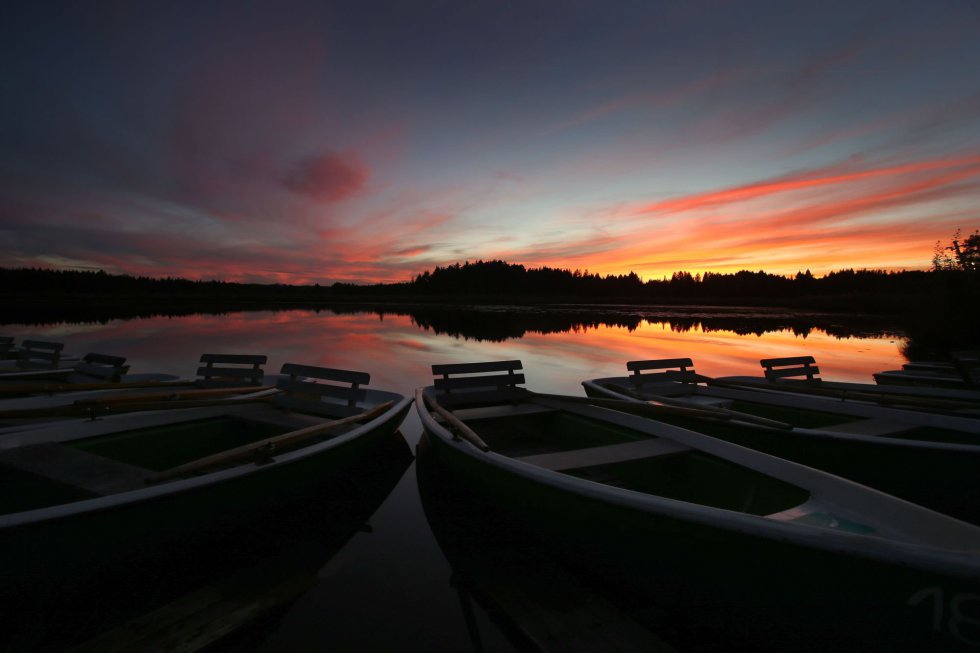
Imagenes del mundo - Aitrang (Alemania)

Varios botes permanecen amarrados en el lago Elbsee durante una puesta de sol en Aitrang (Alemania).
KARL-JOSEF HILDENBRAND AFP

Astronomy picture of the day - 2017 October 19 - M51: The Whirlpool Galaxy

See Explanation.  Clicking on the picture will download
 the highest resolution version available.
M51: The Whirlpool Galaxy 
Image Credit & CopyrightKerry-Ann Lecky Hepburn (Weather and Sky Photography)
Explanation: Find the Big Dipper and follow the handle away from the dipper's bowl until you get to the last bright star. Then, just slide your telescope a little south and west and you'll come upon this stunning pair of interacting galaxies, the 51st entry in Charles Messier's famous catalog. Perhaps the original spiral nebula, the large galaxy with well defined spiral structure is also cataloged as NGC 5194. Its spiral arms and dust lanes clearly sweep in front of its companion galaxy (bottom), NGC 5195. The pair are about 31 million light-years distant and officially lie within the angular boundaries of the small constellation Canes Venatici. Though M51 looks faint and fuzzy to the eye, deep images like this one can reveal striking colors and the faint tidal debris around the smaller galaxy

2017-10-18

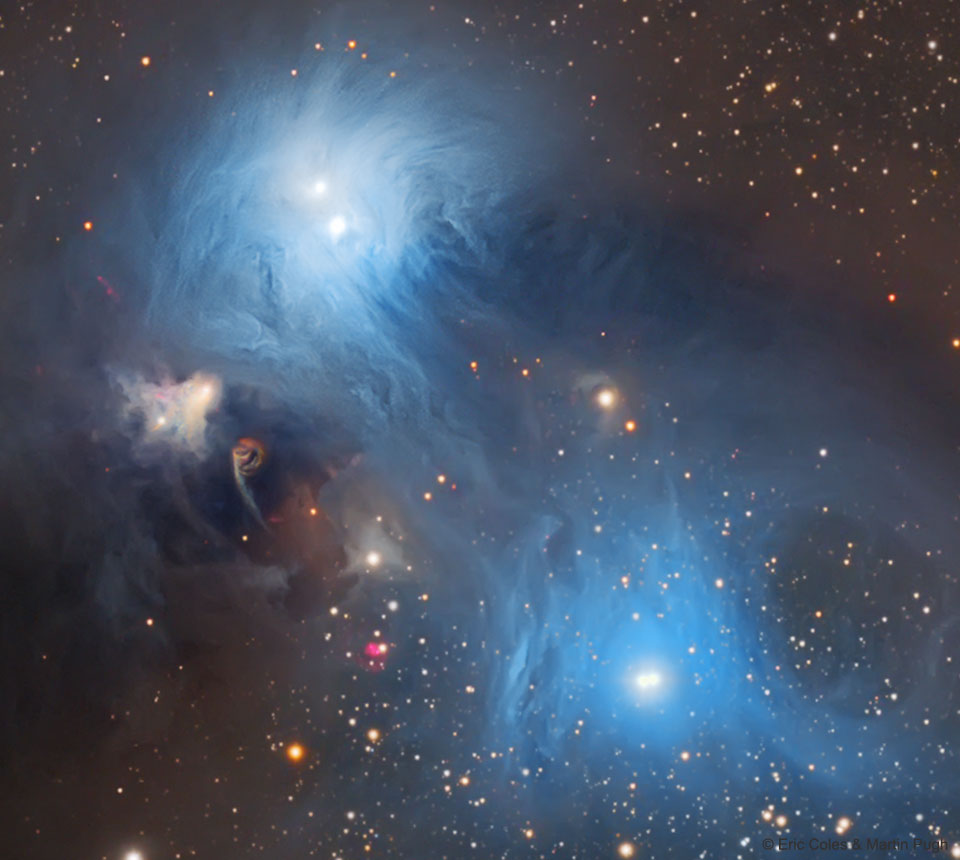
Astronomy picture of the day - 2017 October 18 - Stars and Dust in Corona Australis

See Explanation.  Clicking on the picture will download
 the highest resolution version available.
Stars and Dust in Corona Australis 
Image Credit & Copyright: Eric Coles & Martin Pugh
Explanation: Blue dust clouds and young, energetic stars inhabit this telescopic vista, less than 500 light-years away toward the northern boundary of Corona Australis, the Southern Crown. The dust clouds effectively block light from more distant background stars in the Milky Way. But the striking complex of reflection nebulas cataloged as NGC 6726, 6727, and IC 4812 produce a characteristic blue color as light from the region's bright blue stars is reflected bythe cosmic dust. The dust also obscures from view stars still in the process of formation. At the left, smaller yellowish nebula NGC 6729 bends around young variable star R Coronae Australis. Just below it, glowing arcs and loopsshocked by outflows from embedded newborn stars are identified as Herbig-Haro objects. On the sky this field of view spans about one degree, corresponding to almost nine light-years at the estimated distance of the nearby star forming region.

2017-10-16

Astronomy picture of the day - 2017 october 16 - The Summer Triangle over the Great Wall

Ce résumé n'est pas disponible. Veuillez cliquer ici pour afficher l'article.

Artigo - Incêndios : grande catastrofe em Portugal

A imagem mostra o incêndio que lavra em Braga

Mais de 500 fogos deflagraram este domingo, fazendo do 15 de outubro o “pior dia de incêndios do ano”, nas palavras de Patrícia Gaspar, porta-voz da Proteção Civil, aos jornalistas. Depois de casas ardidas e aldeias evacuadas, esta manhã de segunda-feira a Proteção Civil confirmou que há 27 mortos e mais de 50 feridos, entre os quais 15 em estado grave. “Os números não são definitivos”, alerta a Proteção Civil.
Por estar a aguardar as previsões da meteorologia, explicou a Proteção Civil, apenas às 11h desta manhã houve um briefing para atualizar as informações oficiais, designadamente no que diz respeito ao número de mortos. Inicialmente, com vários jornais a noticiarem que o número de mortos não seria inferior a 20 pessoas, a Proteção Civil dizia que a “informação que vem do terreno é contraditória”.
Observador - Portugal