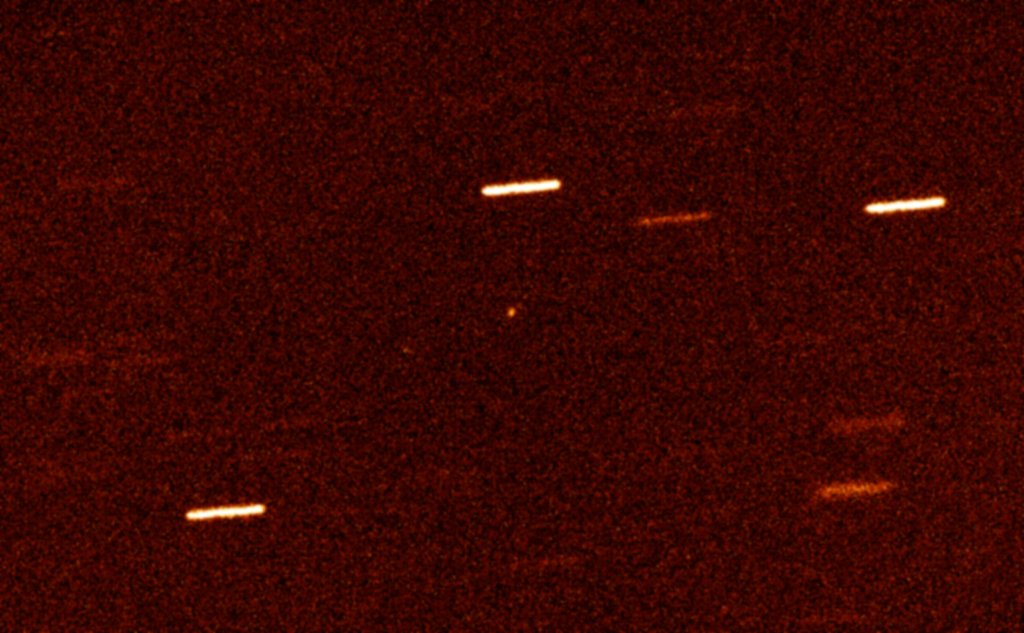
 A/2017 U1: An Interstellar Visitor
Image Credit: Alan Fitzsimmons (ARC, Queen's University Belfast), Isaac Newton Group
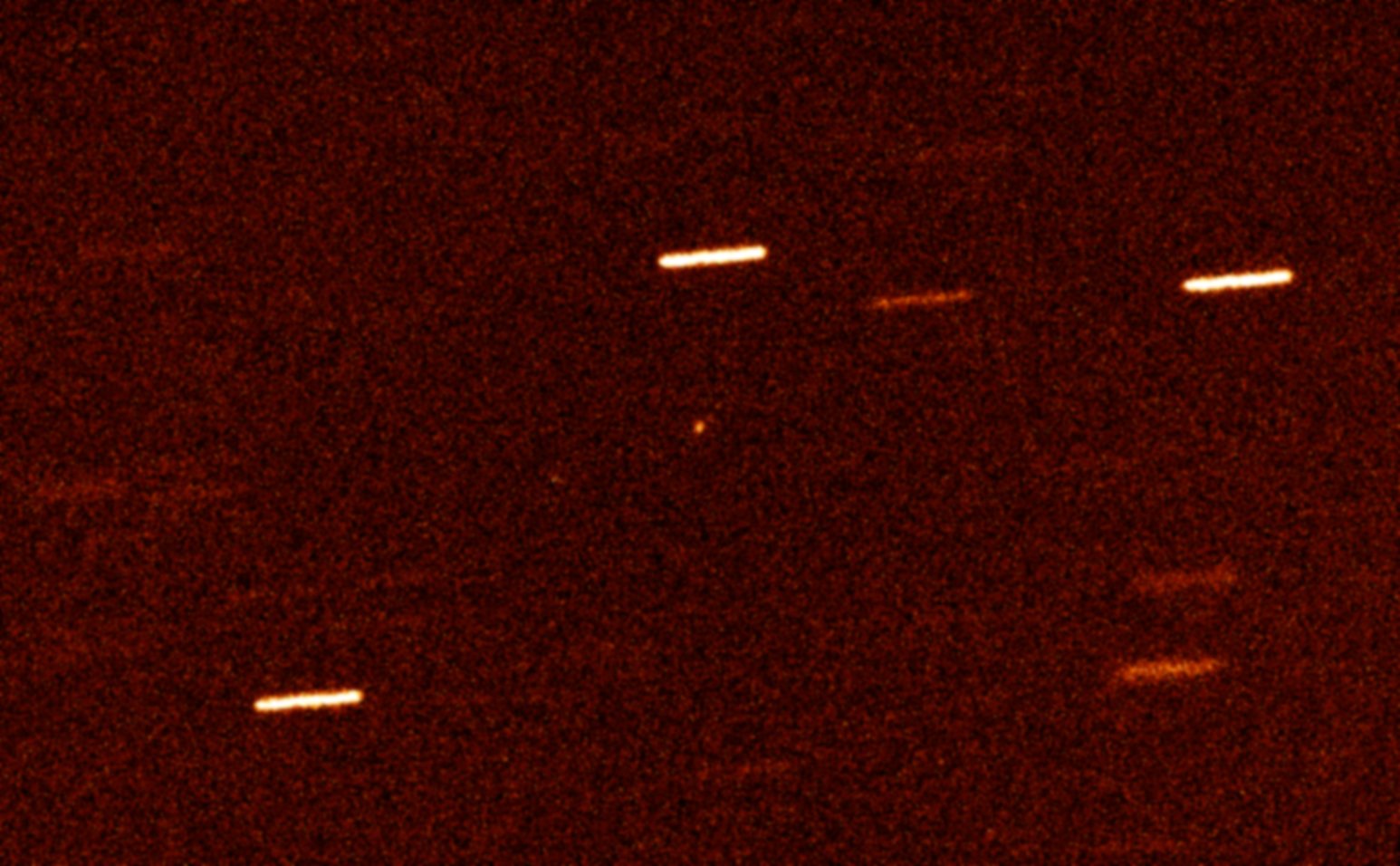
Explanation: Traveling at high velocity along an extreme hyperbolic orbit and making a hairpin turn as it swung past the Sun, the now designated A/2017 U1 is the first known small body from interstellar space. A point of light centered in this 5 minute exposure recorded with the William Herschel Telescope in the Canary Islands on October 28, the interstellar visitor is asteroid-like with no signs of cometary activity. Faint background stars appear streaked because the massive 4.2 meter diameter telescope is tracking the rapidly moving A/2017 U1 in the field of view. Astronomer Rob Weryk (IfA) first recognized the moving object in nightly Pan-STARRS sky survey data on October 19. A/2017 is presently outbound, never to return to the Solar System, and already only visible from planet Earth in large optical telescopes. Though an interstellar origin has been established based on its orbit, it is still unknown how long the object could have drifted among the stars of the Milky Way. But its interstellar cruise speed would be about 26 kilometers per second. By comparison humanity's Voyager 1 spacecraft travels about 17 kilometers per second through interstellar space.
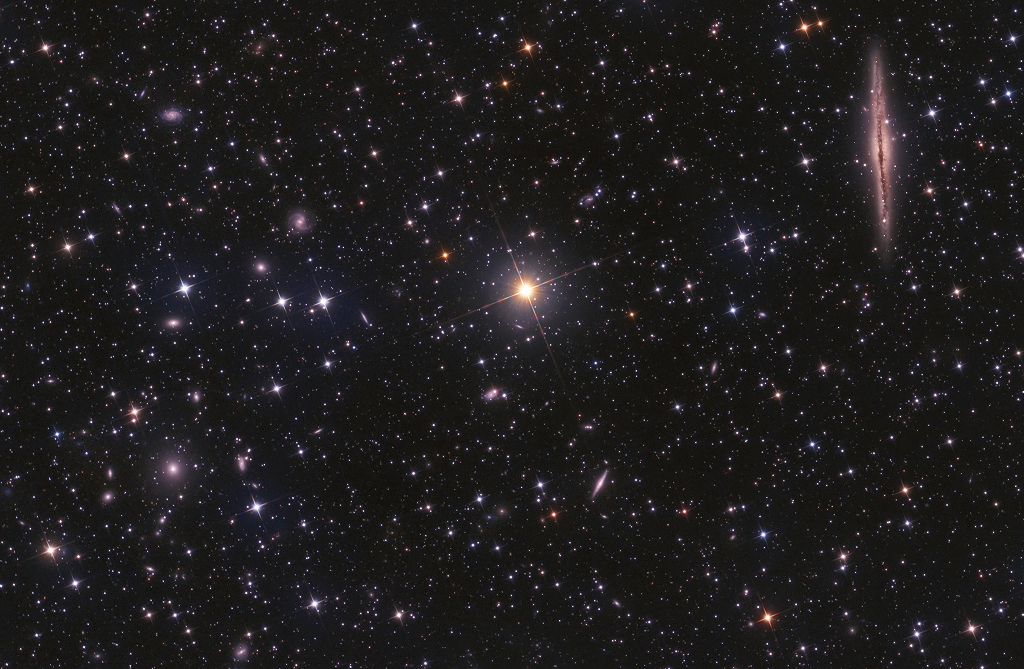 NGC 891 vs Abell 347
Image Credit & Copyright: Laszlo Bagi
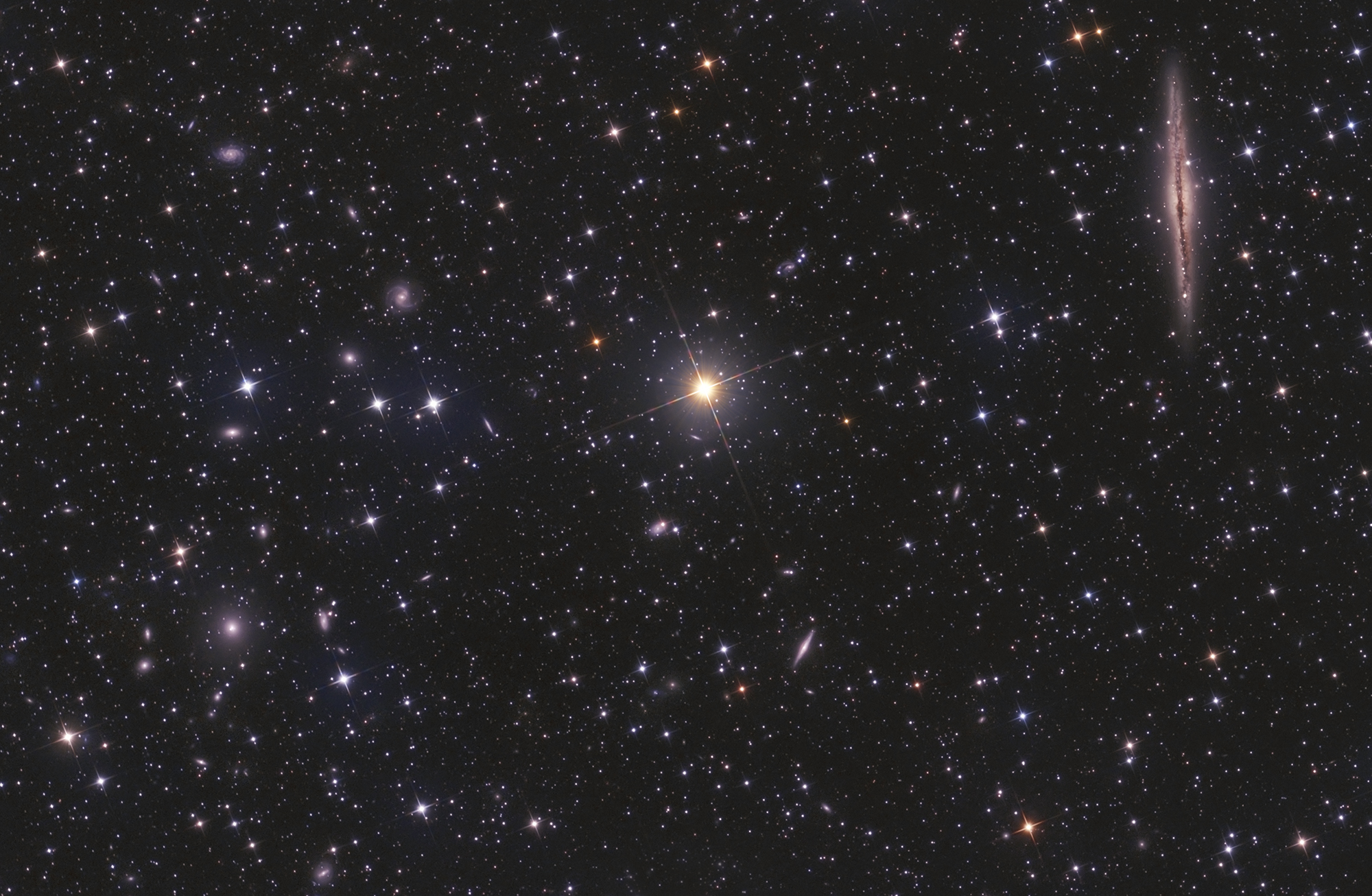
Explanation: Distant galaxies lie beyond a foreground of spiky Milky Way stars in this telescopic field of view. Centered on yellowish star HD 14771, the scene spans about 1 degree on the sky toward the northern constellation Andromeda. At top right is large spiral galaxy NGC 891, 100 thousand light-years across and seen almost exactly edge-on. About 30 million light-years distant, NGC 891 looks a lot like our own Milky Way with a flattened, thin, galactic disk. Its disk and central bulge are cut along the middle by dark, obscuring dust clouds. Scattered toward the lower left are members of galaxy cluster Abell 347. Nearly 240 million light-years away, Abell 347 shows off its own large galaxies in the sharp image. They are similar to NGC 891 in physical size but located almost 8 times farther away, so Abell 347 galaxies have roughly one eighth the apparent size of NGC 891.
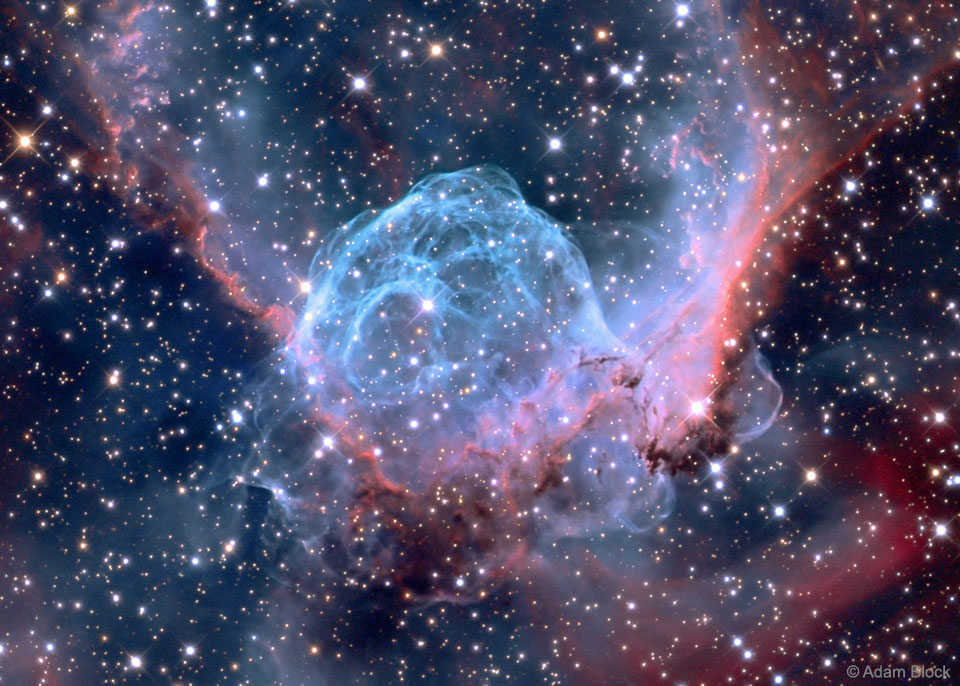 Thor's Helmet Emission Nebula
Image Credit & Copyright: Adam Block, Mt. Lemmon SkyCenter, U. Arizona
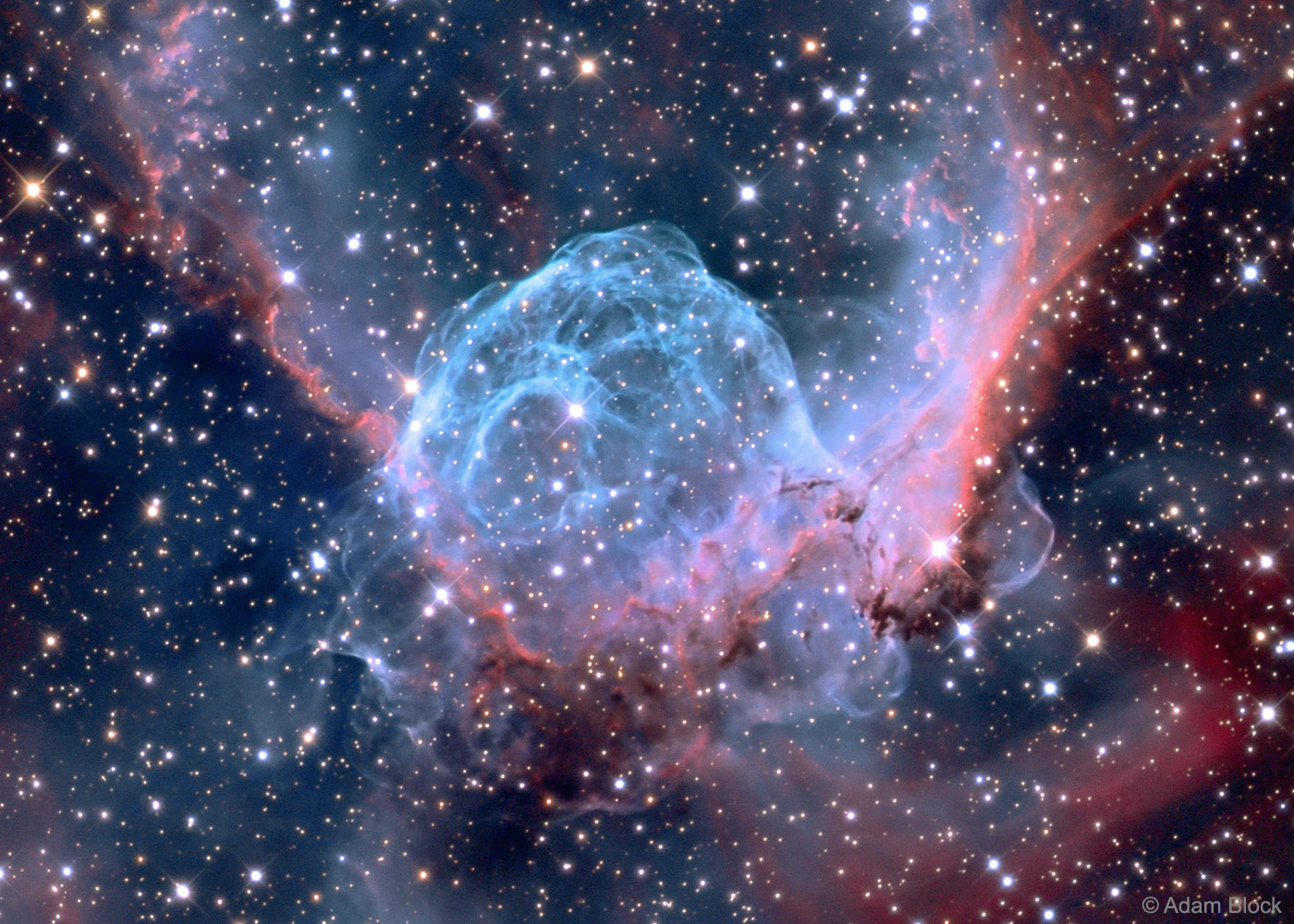
Explanation: This helmet-shaped cosmic cloud with wing-like appendages is popularly called Thor's Helmet. Heroically sized even for a Norse god, Thor's Helmet spans about 30 light-years across. In fact, the helmet is more like an interstellar bubble, blown as a fast wind -- from the bright star near the center of the bubble's blue-hued region -- sweeps through a surrounding molecular cloud. This star, a Wolf-Rayet star, is a massive and extremely hot giant starthought to be in a brief, pre-supernova stage of evolution. Cataloged as NGC 2359, the emission nebula is located about 12,000 light-years away toward the constellation of the Big Dog (Canis Major). The sharp image, made using broadband and narrowband filters, captures striking details of the nebula's filamentary gas and dust structures. The blue color originates from strong emission from oxygen atoms in the nebula.
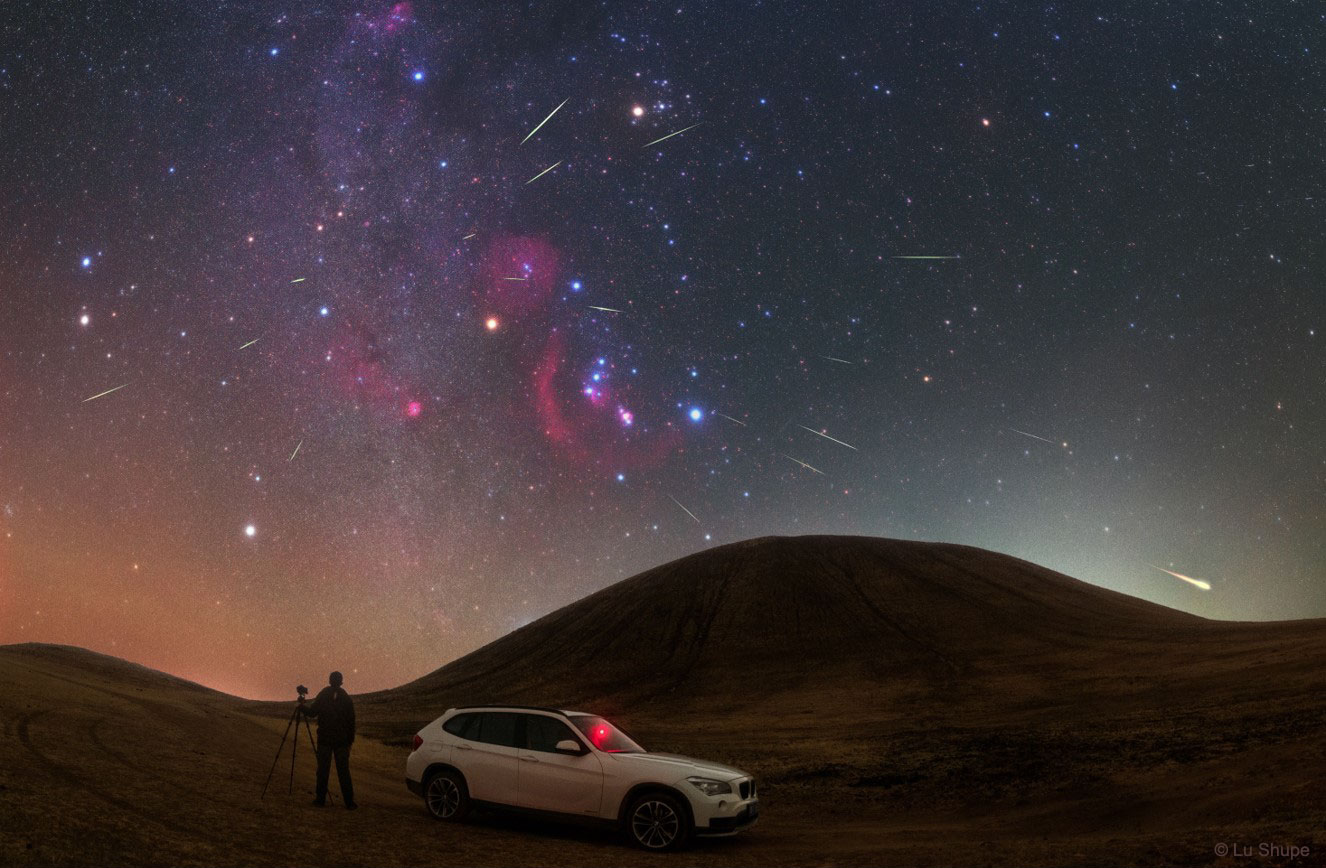
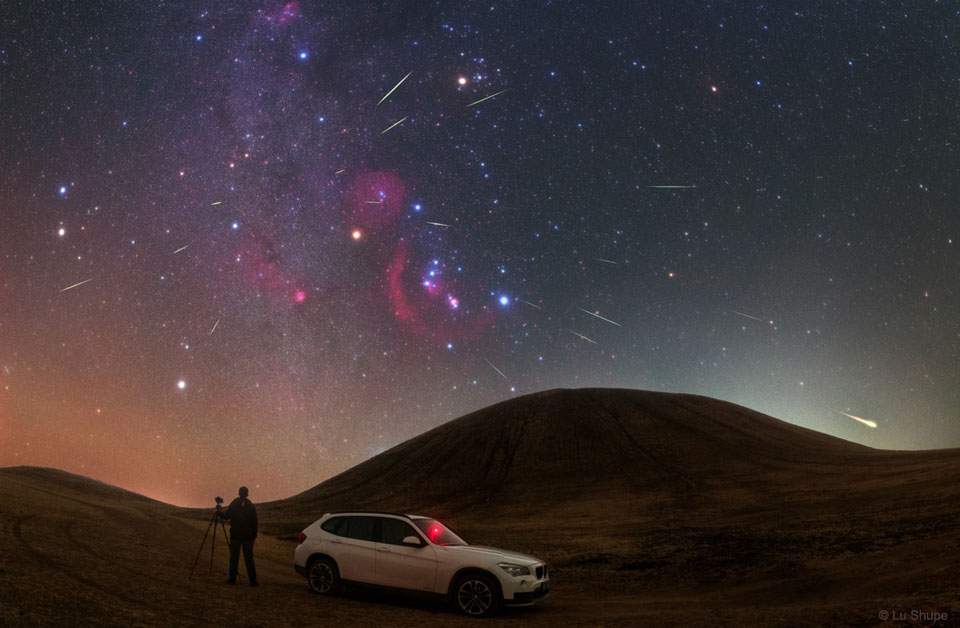 Orionid Meteors from Orion
Image Credit & Copyright: Lu Shupei
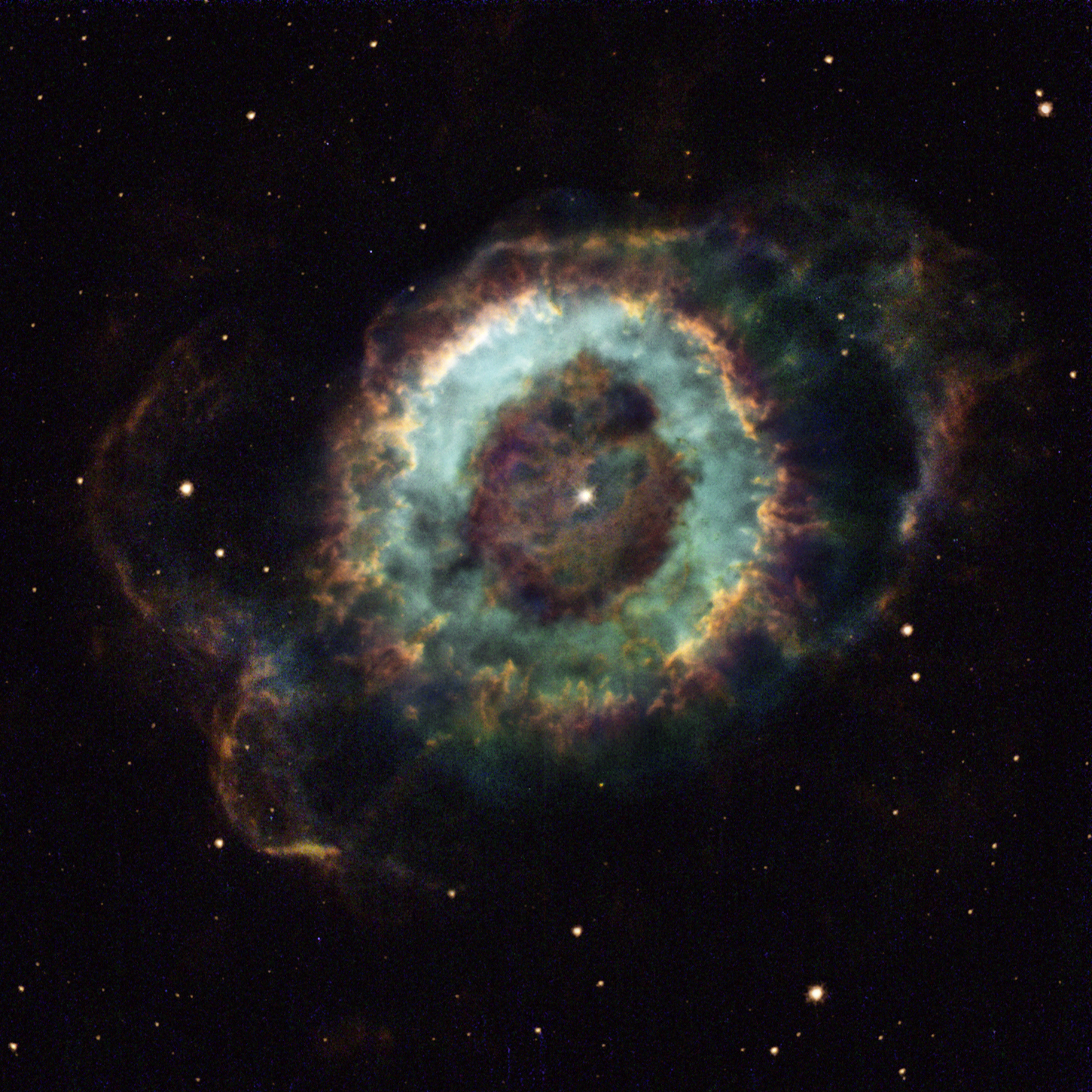
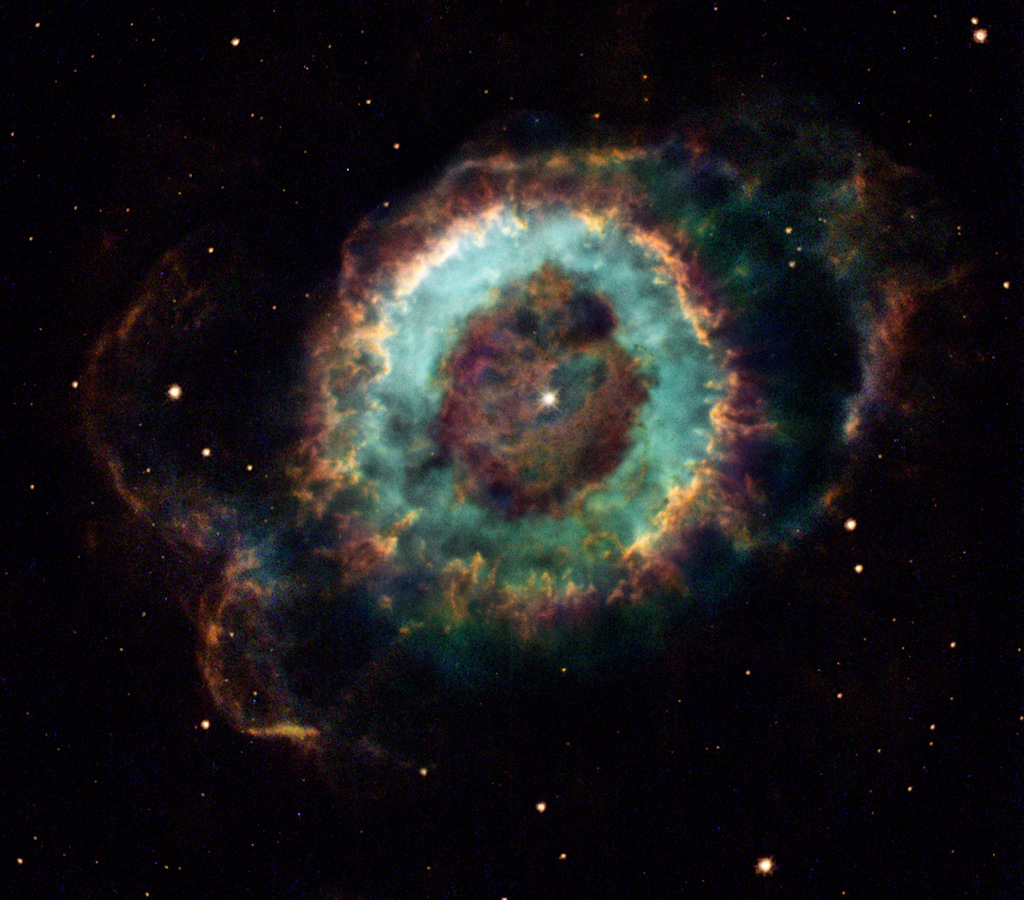 NGC 6369: The Little Ghost Nebula
Image Credit: Hubble Heritage Team, NASA
Explanation: Wraithlike NGC 6369 is a faint apparition in night skies popularly known as the Little Ghost Nebula. It was discovered by 18th century astronomer Sir William Herschel as he used a telescope to explore the medicinalconstellation Ophiucus. Herschel historically classified the round and planet-shaped nebula as a Planetary Nebula. But planetary nebulae in general are not at all related to planets. Instead they are gaseous shrouds created at the end of a sun-like star's life, the dying star's outer layers expanding into space while its core shrinks to become a white dwarf. The transformed white dwarf star, seen near the center, radiates strongly at ultraviolet wavelengths and powers the expanding nebula's glow. Surprisingly complex details and structures of NGC 6369 are revealed in this tantalizing image composed from Hubble Space Telescope data. The nebula's main round structure is about a light-year across and the glow from ionized oxygen, hydrogen, and nitrogen atoms are colored blue, green, and red respectively. Over 2,000 light-years away, the Little Ghost Nebula offers a glimpse of the fate of our Sun, which could produce its own planetary nebula about 5 billion years from now.