2018-01-26

Toshiyuki Abe - "Pintura do sol" - Aguarela

"Pintura do sol" 

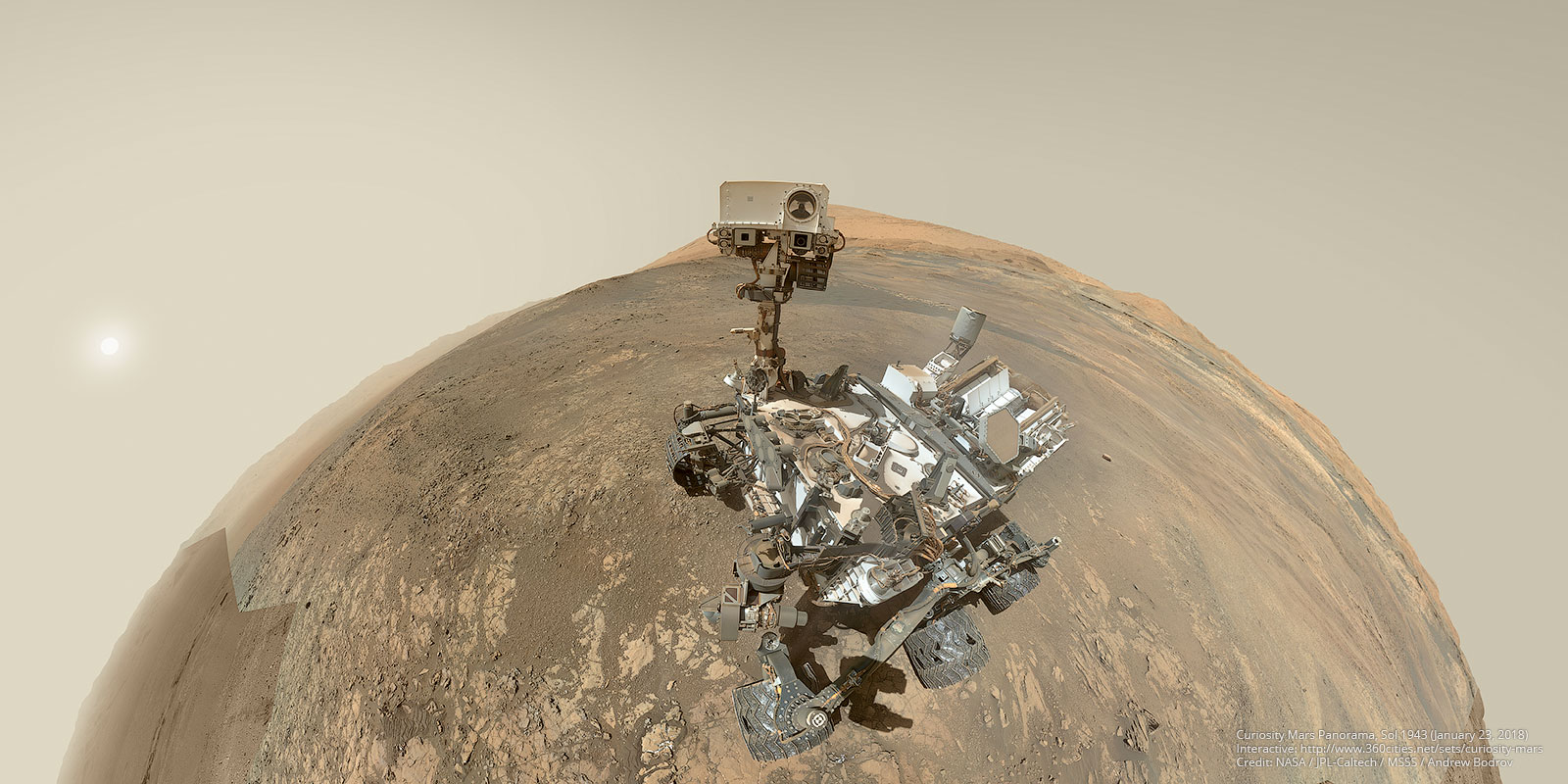
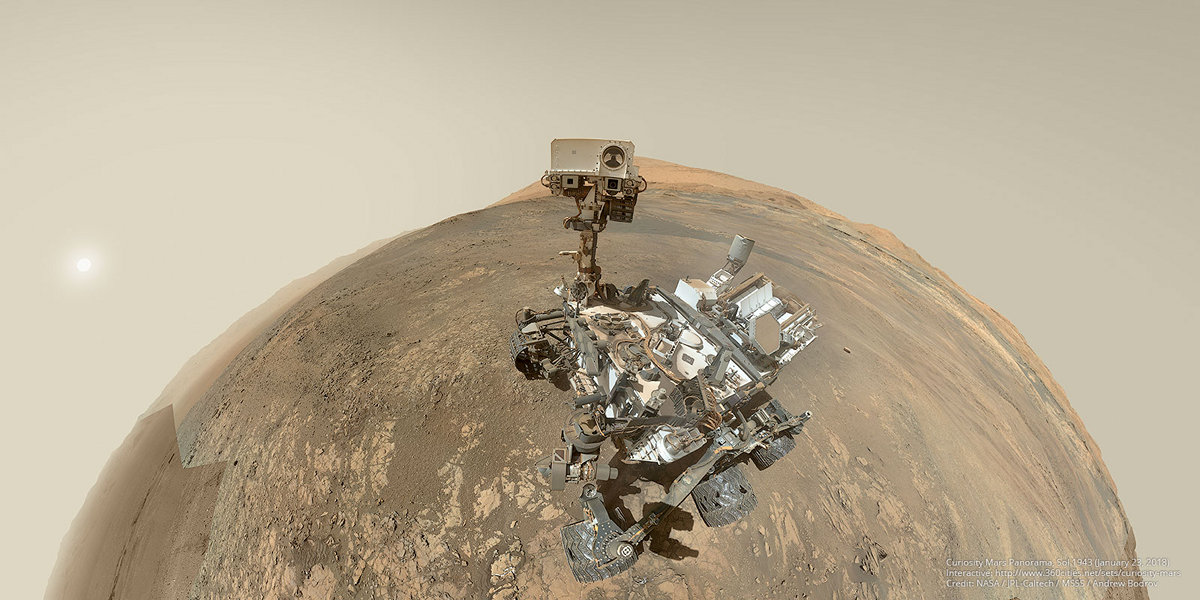
Astronomy picture of the day - 2018 January 26 - Selfie at Vera Rubin Ridge

See Explanation.  Clicking on the picture will download
 the highest resolution version available.
Selfie at Vera Rubin Ridge 
Image Credit: Image Credit: NASAJPL-CaltechMSSS - Panorama: Andrew Bodrov
Explanation: On sol 1943 of its journey of exploration across the surface of Mars, the Curiosity Rover recorded this selfie at the south rim of Vera Rubin Ridge. Of course a sol is a Martian solar day, about 40 minutes longer than an Earth day. Curiosity's sol 1943 corresponds to Earth date January 23, 2018. Also composed as an interactive 360 degree VR, the mosaicked panorama combines 61 exposures taken by the car-sized rover's Mars Hand Lens Imager (MAHLI). Frames containing the imager's arm have been edited out while the extended background used was taken by the rover's Mastcam on sol 1903. At the top of the rover's mast, sitting above the Mastcam, the laser-firingChemCam housing blocks out the distant peak of Mount Sharp.
2018-01-25

Liu Yi - "A mágica do balé" - Aguarela

"A mágica do balé" 

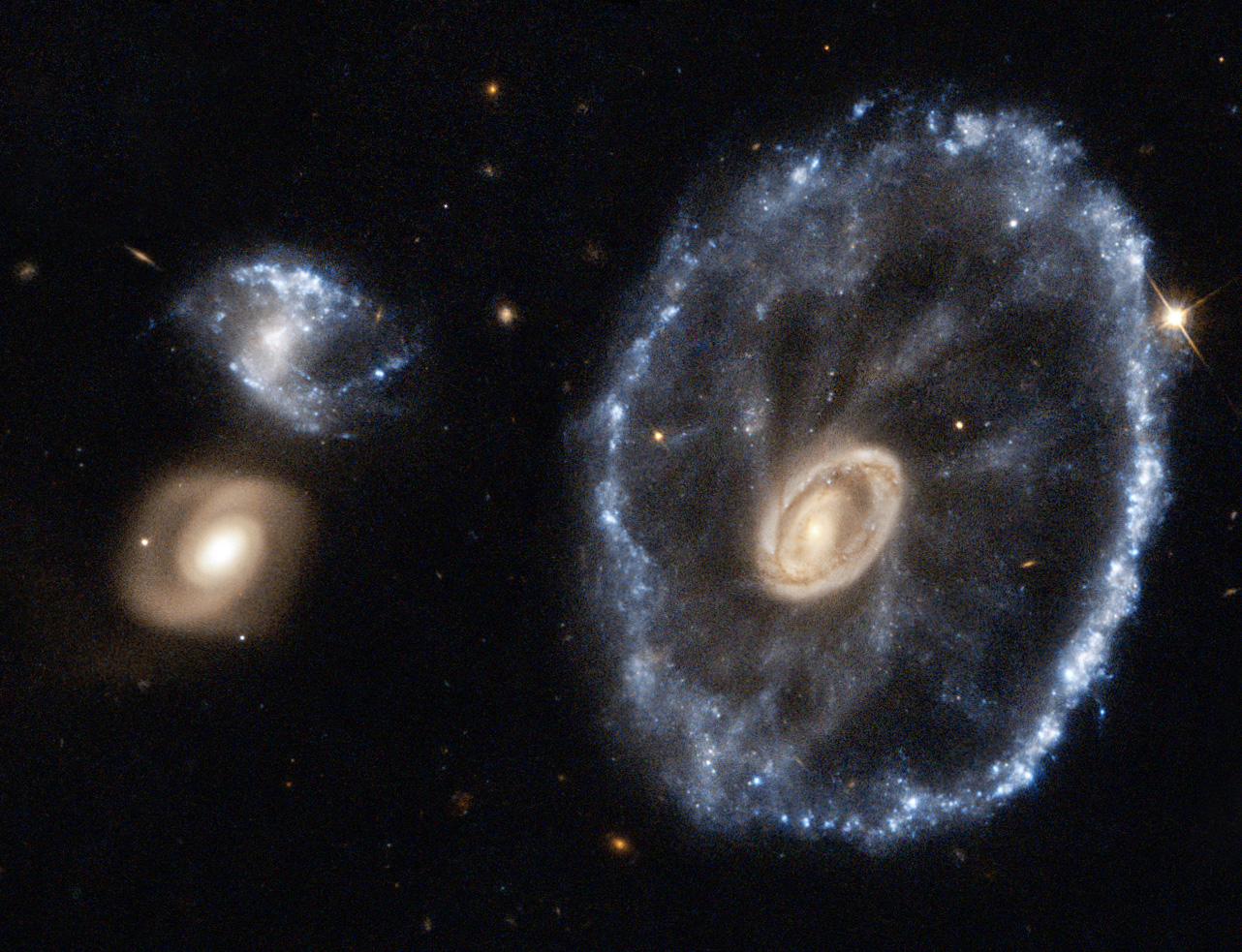
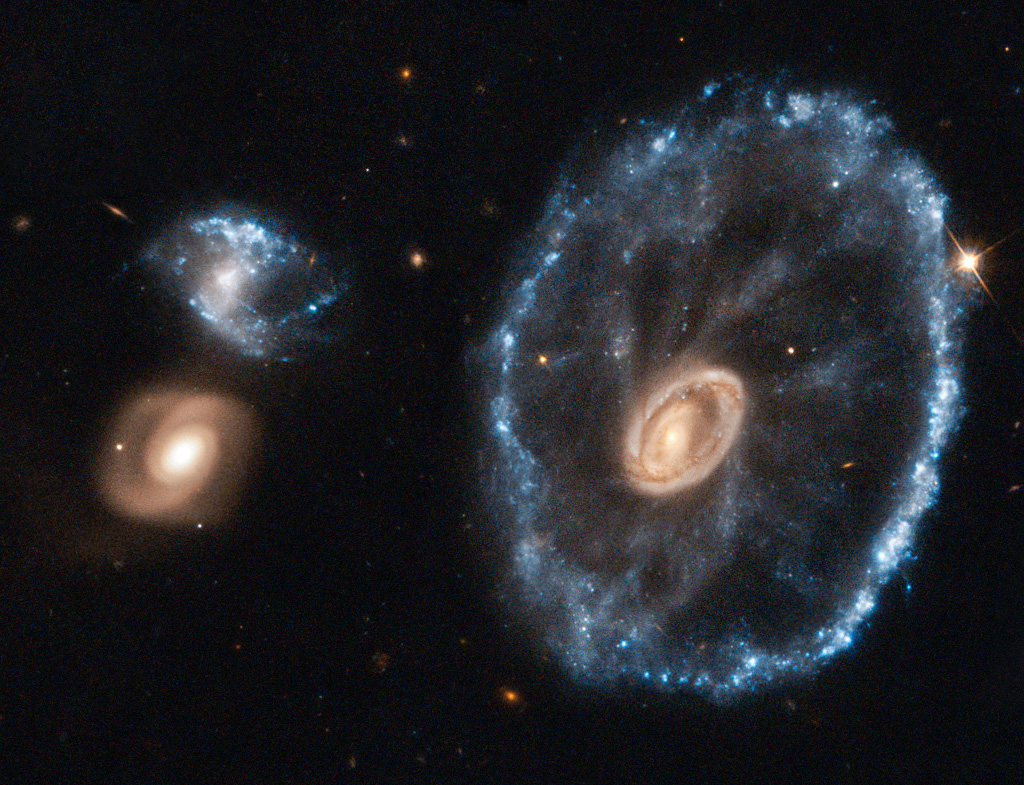
Astronomy picture of the day - 2018 January 25 - Cartwheel of Fortune

See Explanation.  Clicking on the picture will download
 the highest resolution version available.
Cartwheel of Fortune 
Image Credit: ESANASA
Explanation: By chance, a collision of two galaxies has created a surprisingly recognizable shape on a cosmic scale, The Cartwheel Galaxy. The Cartwheel is part of a group of galaxies about 500 million light years away in the constellation Sculptor. Two smaller galaxies in the group are visible on the right. The Cartwheel Galaxy's rim is an immense ring-like structure 150,000 light years in diameter composed of newly formed, extremely bright, massive stars.When galaxies collide they pass through each other, their individual stars rarely coming into contact. Still, the galaxies' gravitational fields are seriously distorted by the collision. In fact, the ring-like shape is the result of the gravitational disruption caused by a small intruder galaxy passing through a large one, compressing the interstellar gas and dust and causing a a star formation wave to move out from the impact point like a ripple across the surface of a pond. In this case the large galaxy may have originally been a spiral, not unlike our own Milky Way, transformed into the wheel shape by the collision. But ... what happened to the small intruder galaxy?


2018-01-24

Sesimbra, Portugal - Fotos


Sesimbra, 30-03-2017
JoanMira

Joe Francis Dowd - "Caminhos" - Aguarela

"Caminhos" 

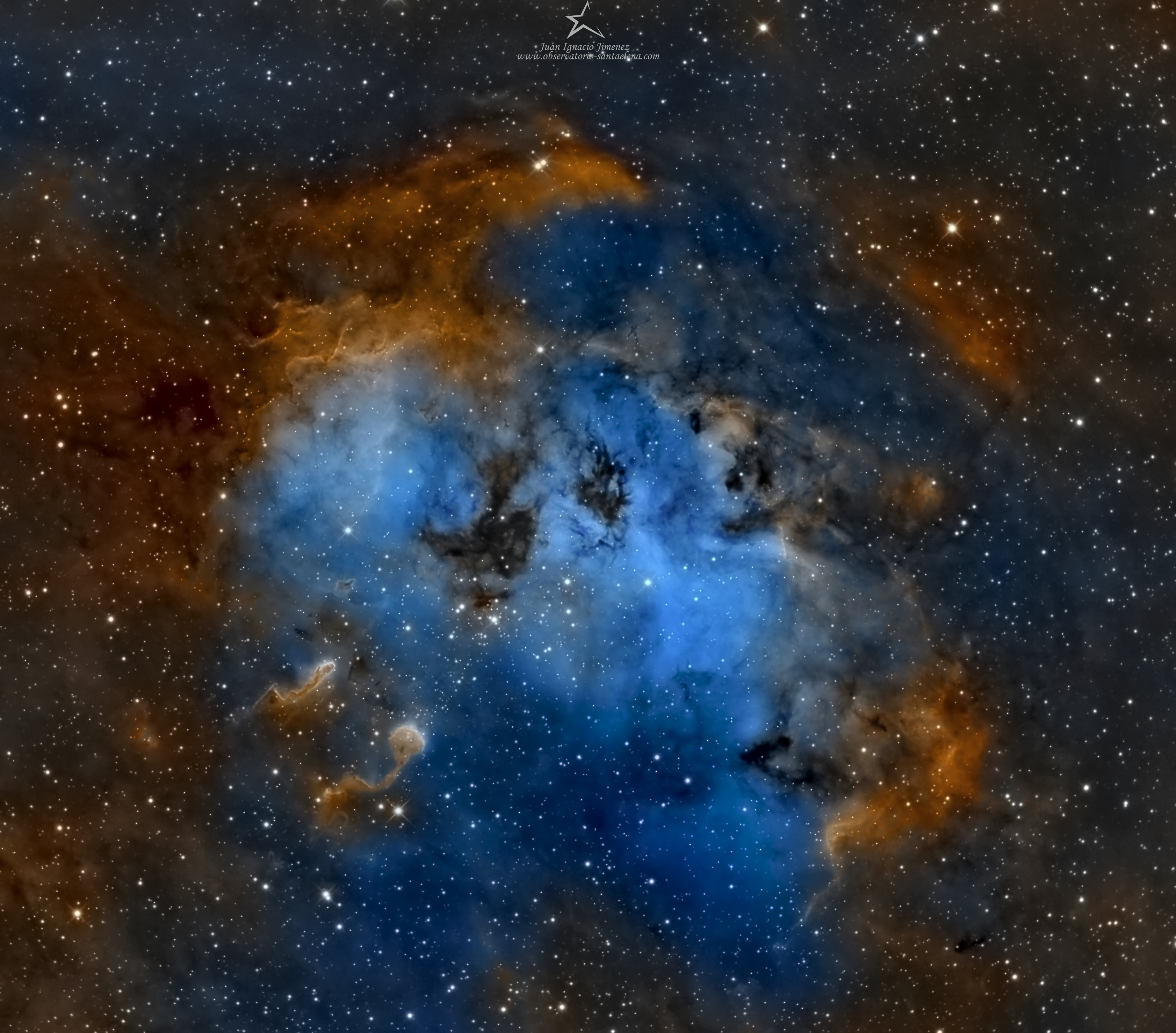
Astronomy picture of the day - 2018 January 24 - The Tadpoles of IC 410

See Explanation.  Clicking on the picture will download
 the highest resolution version available.
The Tadpoles of IC 410 
Image CreditJuan Ignacio Jimenez
Explanation: This telescopic close-up shows off the otherwise faint emission nebula IC 410. It also features two remarkable inhabitants of the cosmic pond of gas and dust below and left of center, the tadpoles of IC 410. Partly obscured by foreground dust, the nebula itself surrounds NGC 1893, a young galactic cluster of stars. Formed in the interstellar cloud a mere 4 million years ago, the intensely hot, bright cluster stars energize the glowing gas. Composed of denser cooler gas and dust, the tadpoles are around 10 light-years long and are likely sites of ongoing star formationSculpted by winds and radiation from the cluster stars, their heads are outlined by bright ridges of ionized gas while their tails trail away from the cluster's central region. IC 410 lies some 10,000 light-years away, toward the nebula-rich constellation Auriga.

2018-01-23

Myo Win Ong - "Segredos do Oriente" - Aguarela

"Segredos do Oriente" 

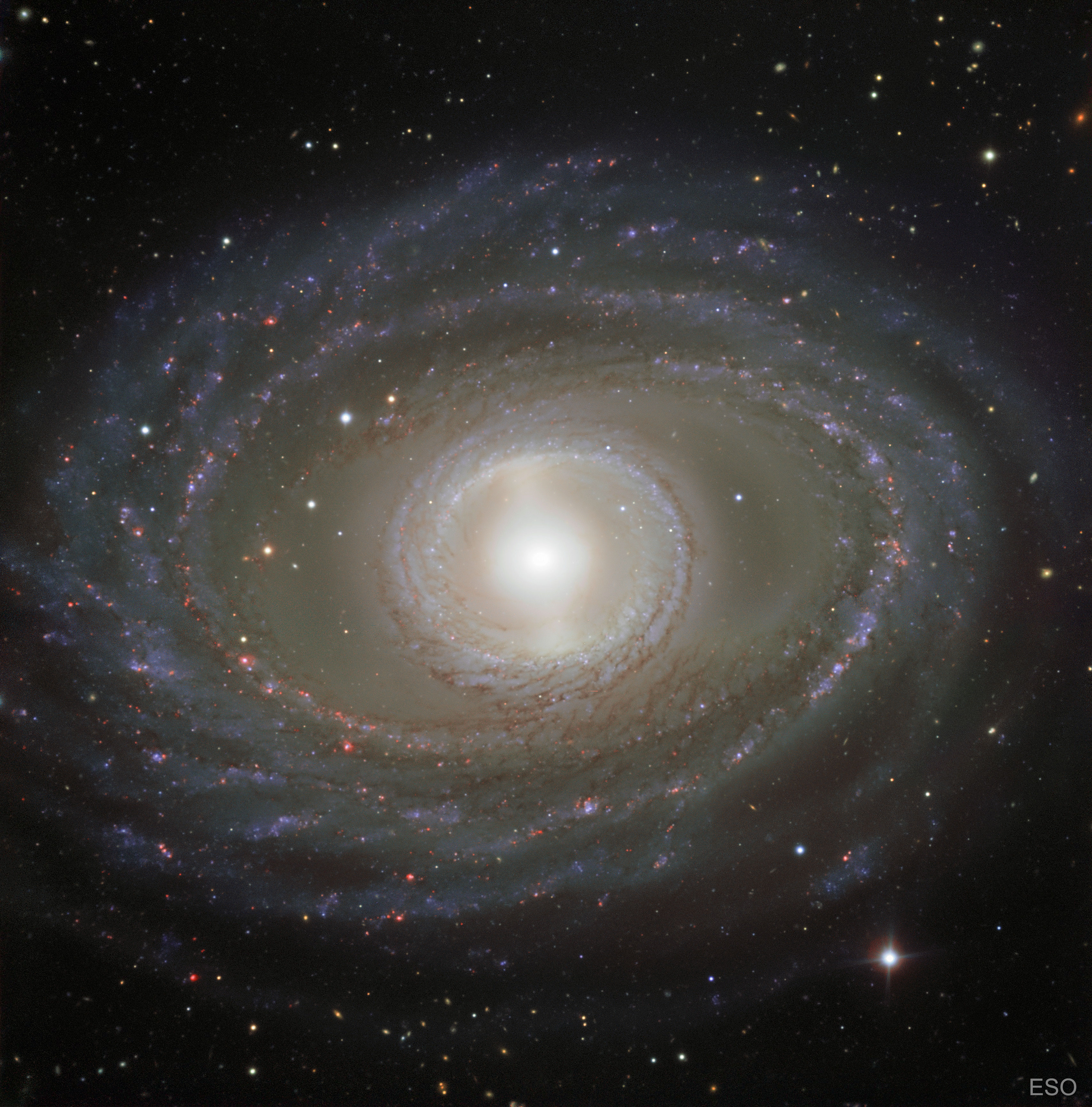
Astronomy picture of the day - 2018 January 23 - Ribbons and Pearls of Spiral Galaxy NGC 1398

See Explanation.  Clicking on the picture will download
 the highest resolution version available.
Ribbons and Pearls of Spiral Galaxy NGC 1398 
Image Credit: European Southern Observatory
Explanation: Why do some spiral galaxies have a ring around the center? Spiral galaxy NGC 1398 not only has a ring of pearly stars, gas and dust around its center, but a bar of stars and gas across its center, and spiral arms that appear like ribbons farther out. The featured image was taken with ESO's Very Large Telescope at the Paranal Observatory in Chile and resolves this grand spiral in impressive detail. NGC 1398 lies about 65 million light years distant, meaning the light we see today left this galaxy when dinosaurs were disappearing from the Earth. The photogenic galaxy is visible with a small telescope toward the constellation of the Furnace (Fornax). The ring near the center is likely an expanding density wave of star formation, caused either by a gravitational encounter with another galaxy, or by the galaxy's own gravitational asymmetries.