"A cidade"
2018-02-01


Astronomy picture of the day - 2018 February 1 - Moonset Eclipse
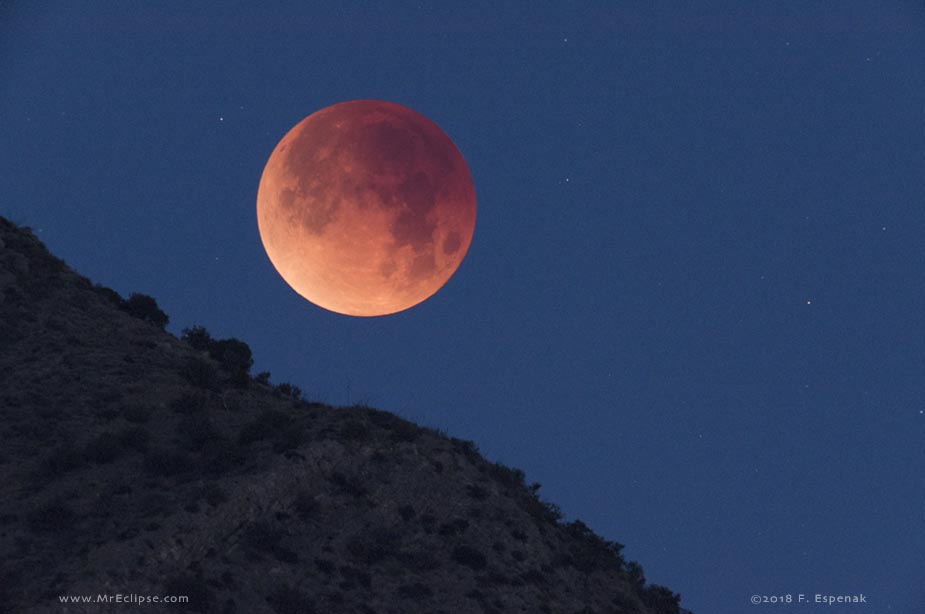
Image Credit & Copyright: Fred Espenak (MrEclipse.com)
Explanation: Near the closest point in its orbit, the second Full Moon of the month occurred on January 31. So did the first Total Lunar Eclipse of 2018, as the Moon slid through planet Earth's shadow. In a postcard from planet Earth, this telescopic snapshot captures the totally eclipsed Moon as it set above the western horizon and the Chiricahua Mountains of southern Arizona. The Moon's evocative reddened hue is due to sunlight scattered into the shadow. Still, the planet's shadow visibly grows darker near the center, toward the top of the lunar disk.
2018-01-31
Astronomy picture of the day - 2018 January 31 - The First Explorer
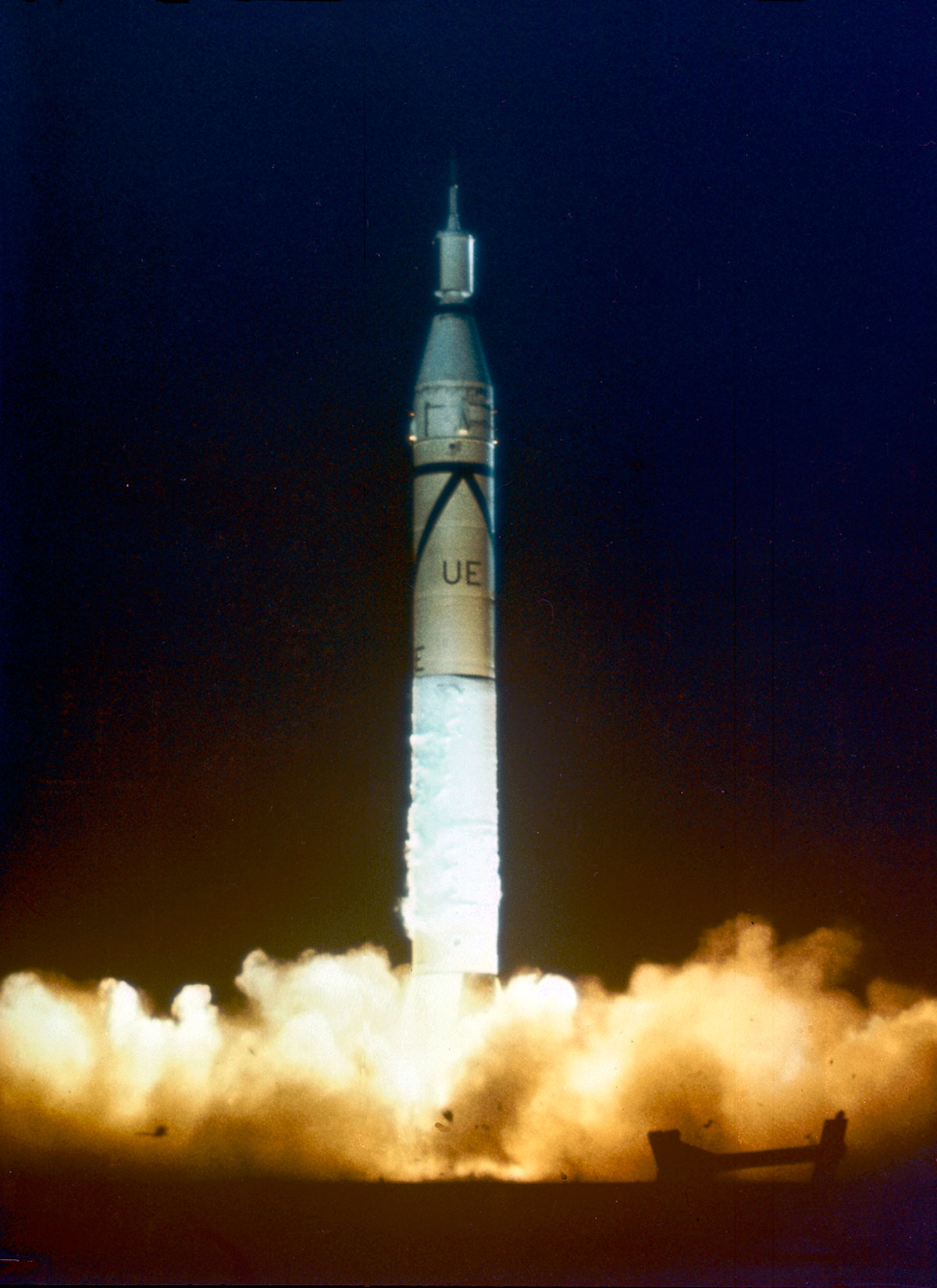
Image Credit: NASA
Explanation: Sixty years ago, on January 31, 1958, the First Explorer was successfully launched by the Army Ballistic Missile Agency on a Jupiter-C rocket. Inaugurating the era of space exploration for the United States, Explorer I was a thirty pound satellite that carried instruments to measure temperatures, and micrometeorite impacts, along with an experiment designed by James A. Van Allen to measure the density of electrons and ions in space. The measurements made by Van Allen's experiment led to an unexpected and then startling discovery of two earth-encircling belts of high energy electrons and ions trapped in the magnetosphere. Now known as the Van Allen Radiation belts, the regions are located in the inner magnetosphere, beyond low Earth orbit. Explorer I ceased transmitting on February 28, 1958, but remained in orbit until March of 1970.

2018-01-30

Astronomy picture of the day - 2018 January 30 - Venus at Night in Infrared from Akatsuki

Image Credit: JAXA, ISAS, DARTS; Processing & Copyright: Damia Bouic
Explanation: Why is Venus so different from Earth? To help find out, Japan launched the robotic Akatsuki spacecraft which entered orbit around Venus late in 2015 after an unplanned five-year adventure around the inner Solar System. Even though Akatsuki was past its original planned lifetime, the spacecraft and instruments were operating so well that much of its original mission was reinstated. Also known as the Venus Climate Orbiter, Akatsuki'sinstruments investigated unknowns about Earth's sister planet, including whether volcanoes are still active, whether lightning occurs in the dense atmosphere, and why wind speeds greatly exceed the planet's rotation speed. In thefeatured image taken by Akatsuki's IR2 camera, Venus's night side shows a jagged-edged equatorial band of high dark clouds absorbing infrared light from hotter layers deeper in Venus' atmosphere. The bright orange and black stripe on the upper right is a false digital artifact that covers part of the much brighter day side of Venus. Analyses of Akatsuki images and data has shown that Venus has equatorial jet similar to Earth's jet stream.

2018-01-29
Imagenes del Mundo - Volcán Mayon - Filipinas
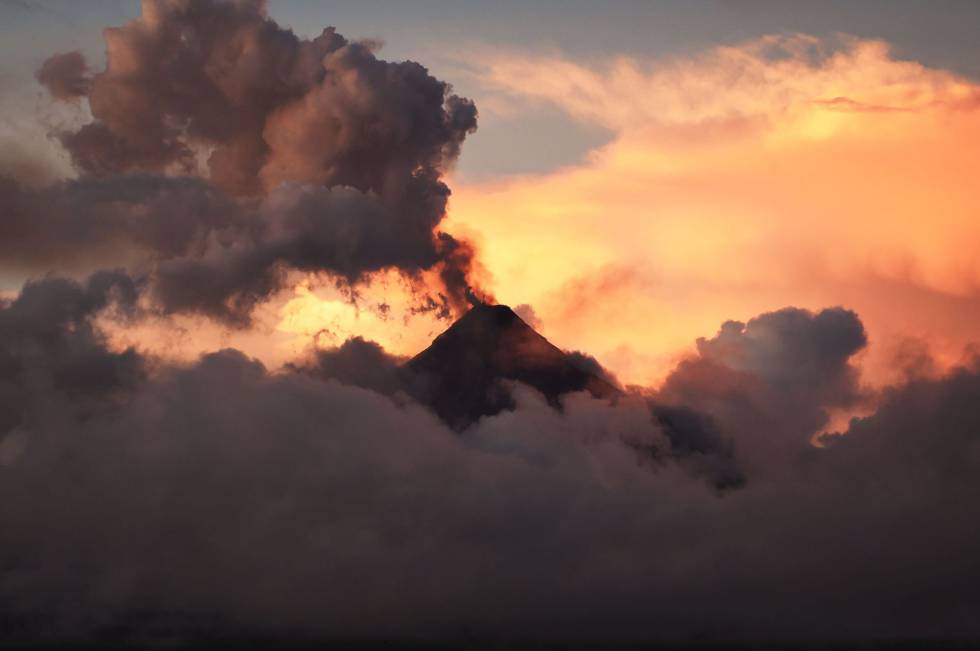
Vista del volcán Mayon desde la ciudad de Legazpi (Filipinas).
Inscription à :
Articles (Atom)