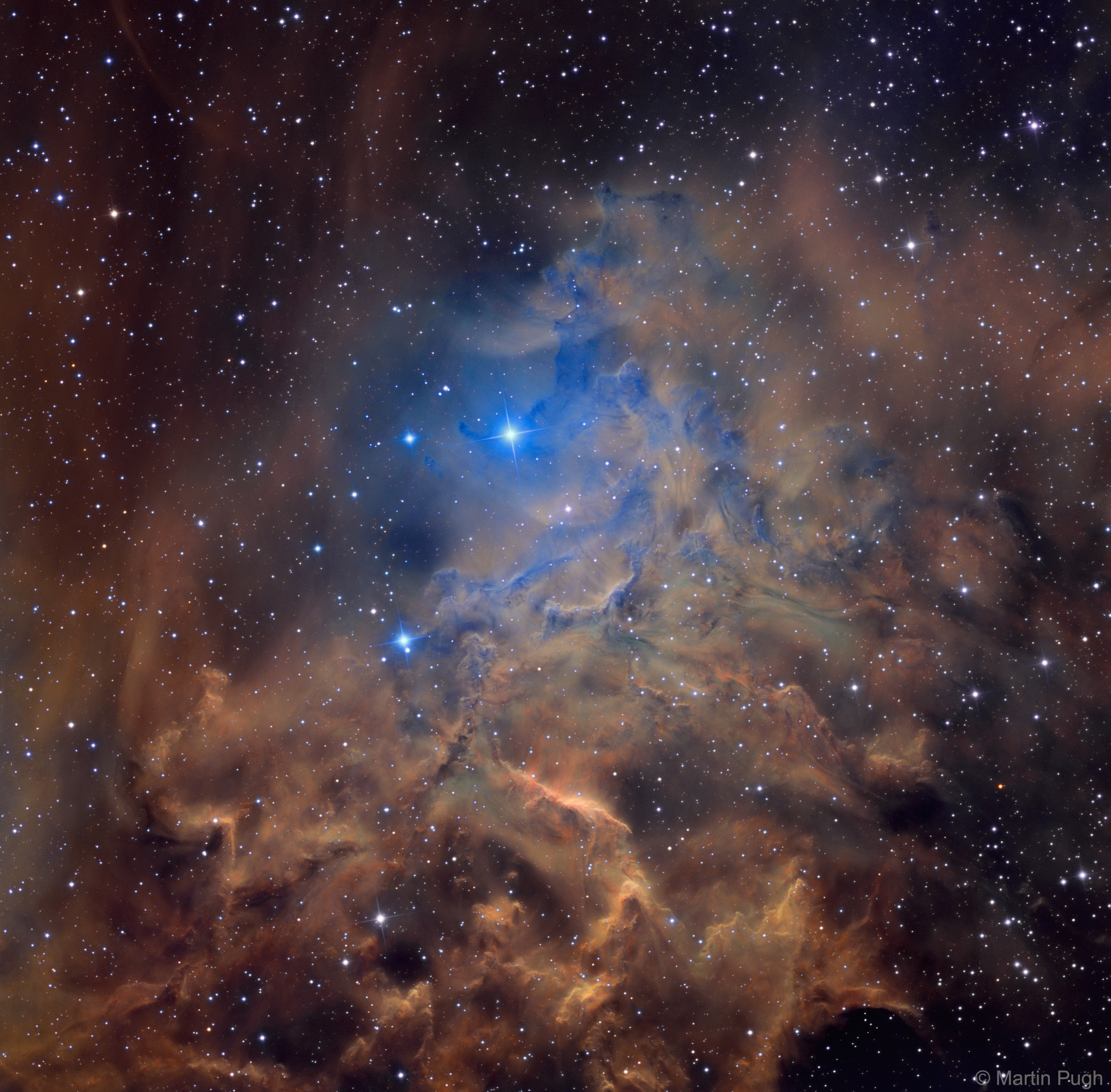
 AE Aurigae and the Flaming Star Nebula
Image Credit & Copyright: Martin Pugh
Explanation: Why is AE Aurigae called the flaming star? For one reason, the surrounding nebula IC 405 is named the Flaming Star Nebula because the region seems to harbor smoke, even though nothing is on fire, including interior star AE Aurigae. Fire, typically defined as the rapid molecular acquisition of oxygen, happens only when sufficient oxygen is present and is not important in such high-energy, low-oxygen environments. The material that appears assmoke is mostly interstellar hydrogen, but does contain smoke-like dark filaments of carbon-rich dust grains. The bright star AE Aurigae is visible near the nebula center and is so hot it is blue, emitting light so energetic it knockselectrons away from atoms in the surrounding gas. When an atom recaptures an electron, light is emitted creating the surrounding emission nebula. The Flaming Star nebula lies about 1,500 light years distant, spans about 5 light years, and is visible with a small telescope toward the constellation of the Charioteer (Auriga).
"Diva distinta"
2017
Alita Pinheiro
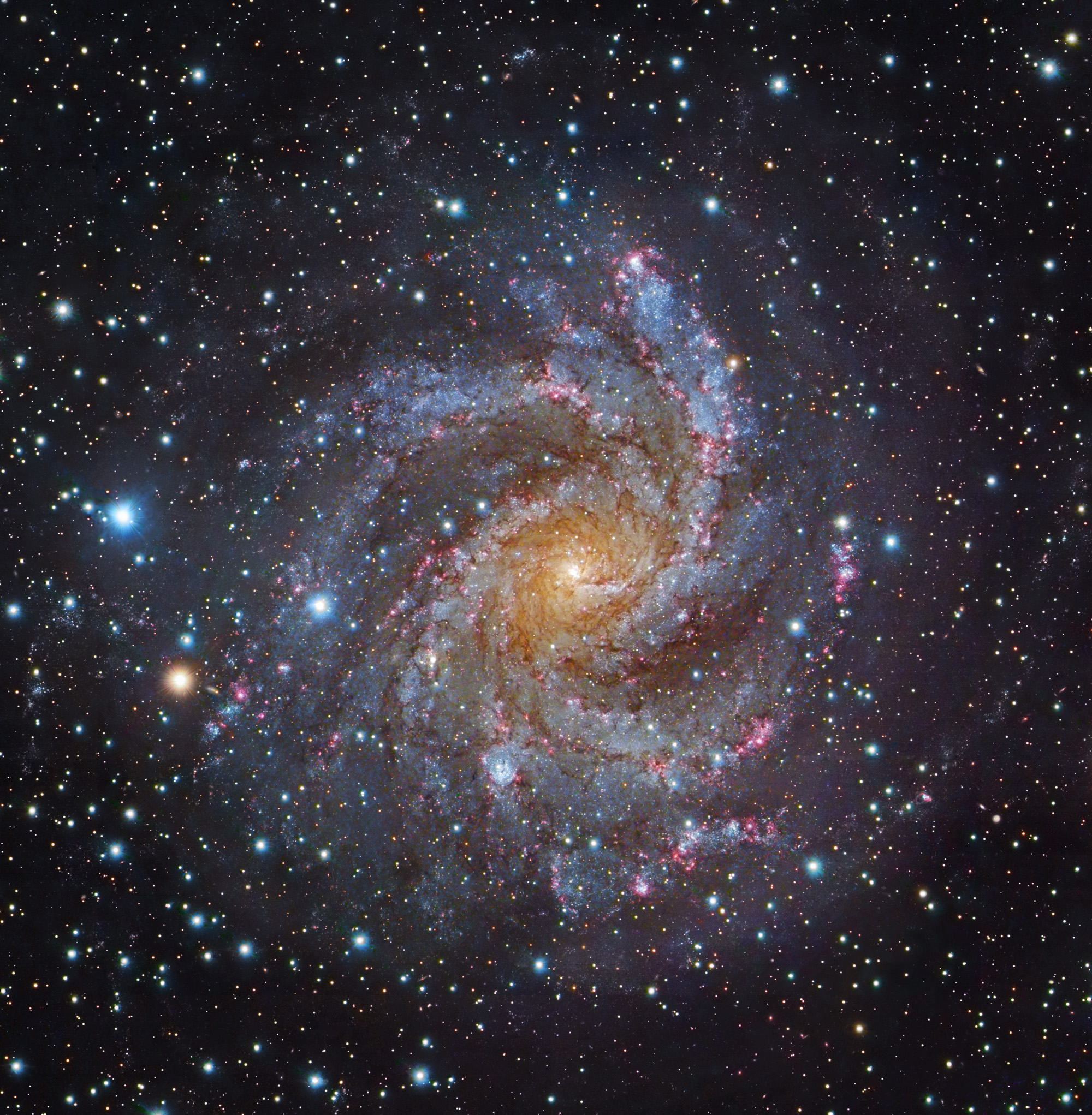
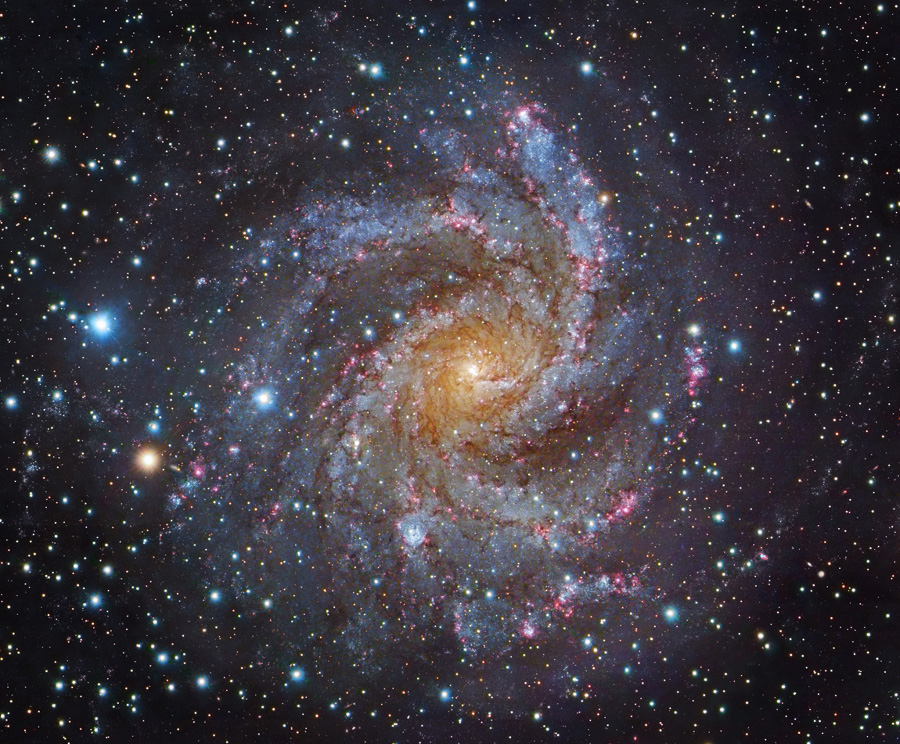 Facing NGC 6946
Composite Image Data - Subaru Telescope (NAOJ) and Robert Gendler; Processing - Robert Gendler
Explanation: From our vantage point in the Milky Way Galaxy, we see NGC 6946 face-on. The big, beautiful spiral galaxy is located just 10 million light-years away, behind a veil of foreground dust and stars in the high and far-off constellation of Cepheus. From the core outward, the galaxy's colors change from the yellowish light of old stars in the center to young blue star clusters and reddish star forming regions along the loose, fragmented spiral arms. NGC 6946 is also bright in infrared light and rich in gas and dust, exhibiting a high star birth and death rate. In fact, since the early 20th century at least nine supernovae, the death explosions of massive stars, were discovered in NGC 6946. Nearly 40,000 light-years across, NGC 6946 is also known as the Fireworks Galaxy. This remarkable portrait of NGC 6946 is a composite that includes image data from the 8.2 meter Subaru Telescope on Mauna Kea.
"Clorofila"
24-02-2018
JoanMira
"O cepticismo da Diva"
2017
Alita Pinheiro
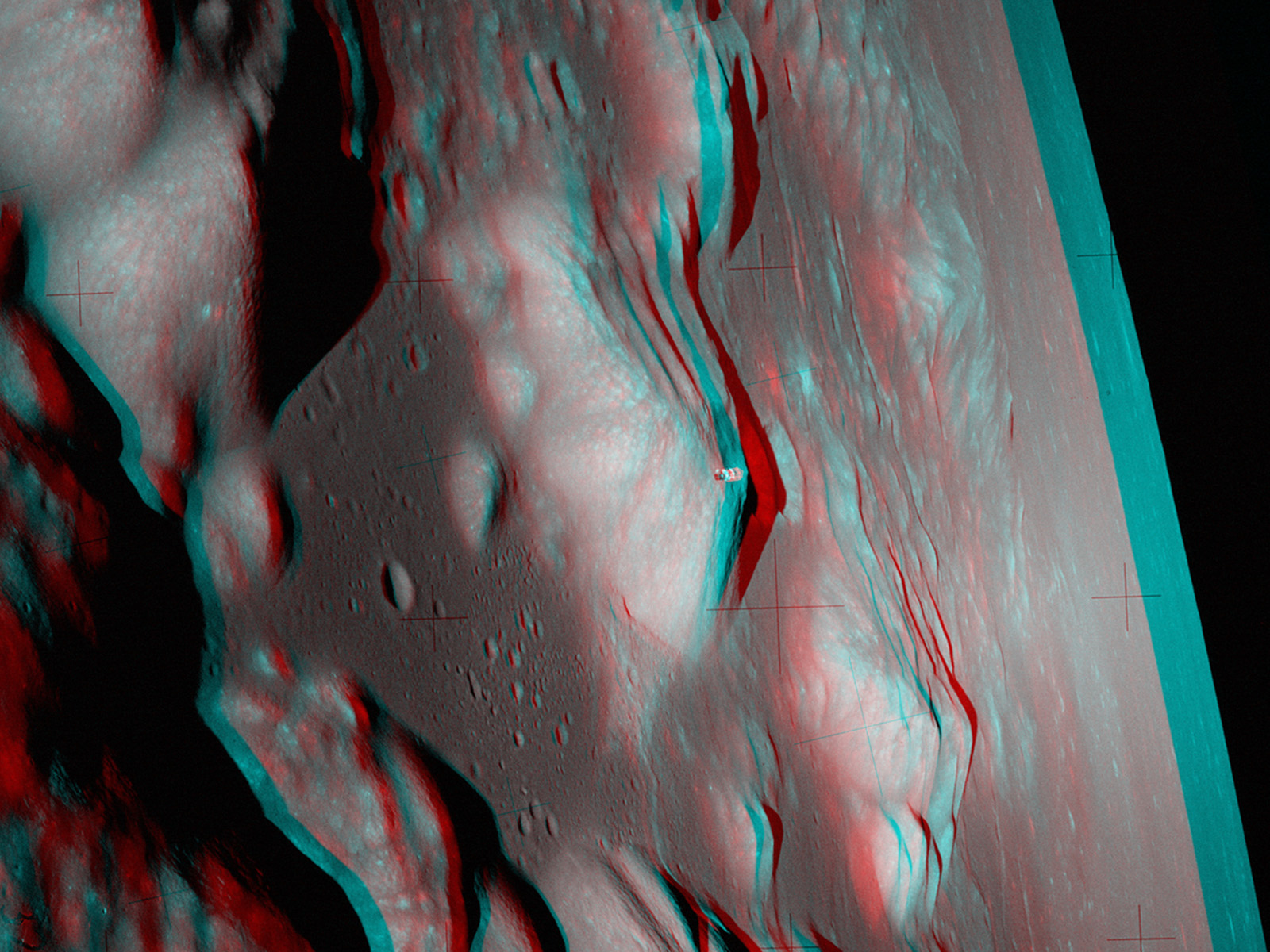
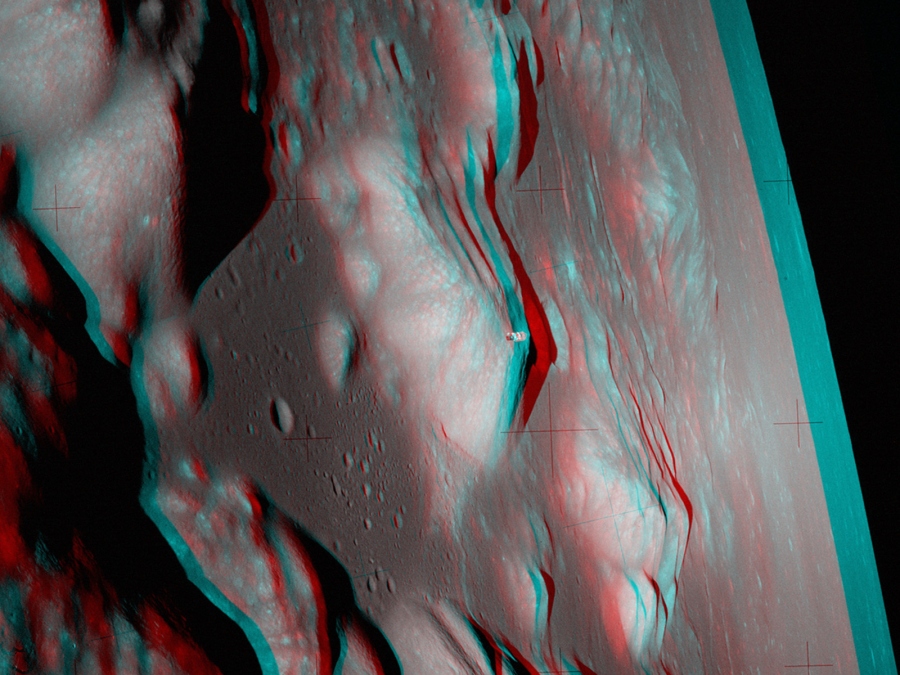 Apollo 17: A Stereo View from Lunar Orbit
Image Credit: Gene Cernan, Apollo 17, NASA; Anaglyph by Patrick Vantuyne
Explanation: Get out your red/blue glasses and check out this awesome stereo view of another world. The scene was recorded by Apollo 17 mission commander Eugene Cernan on December 11, 1972, one orbit before descending to land on the Moon. The stereo anaglyph was assembled from two photographs (AS17-147-22465, AS17-147-22466) captured from his vantage point on board the Lunar Module Challenger as he and Dr. Harrison Schmitt flew over Apollo 17's landing site in the Taurus-Littrow Valley. The broad, sunlit face of the mountain dubbed South Massif rises near the center of the frame, above the dark floor of Taurus-Littrow to its left. Beyond the mountains, toward the lunar limb, lies the Moon's Mare Serenitatis. Piloted by Ron Evans, the Command Module America is visible in orbit in the foreground against the South Massif's peak.