Un águila sobrevuela a los espectadores durante una exhibición en el zoo italiano, Zoom Torino, en Cumiana (Italia).
2015-04-24
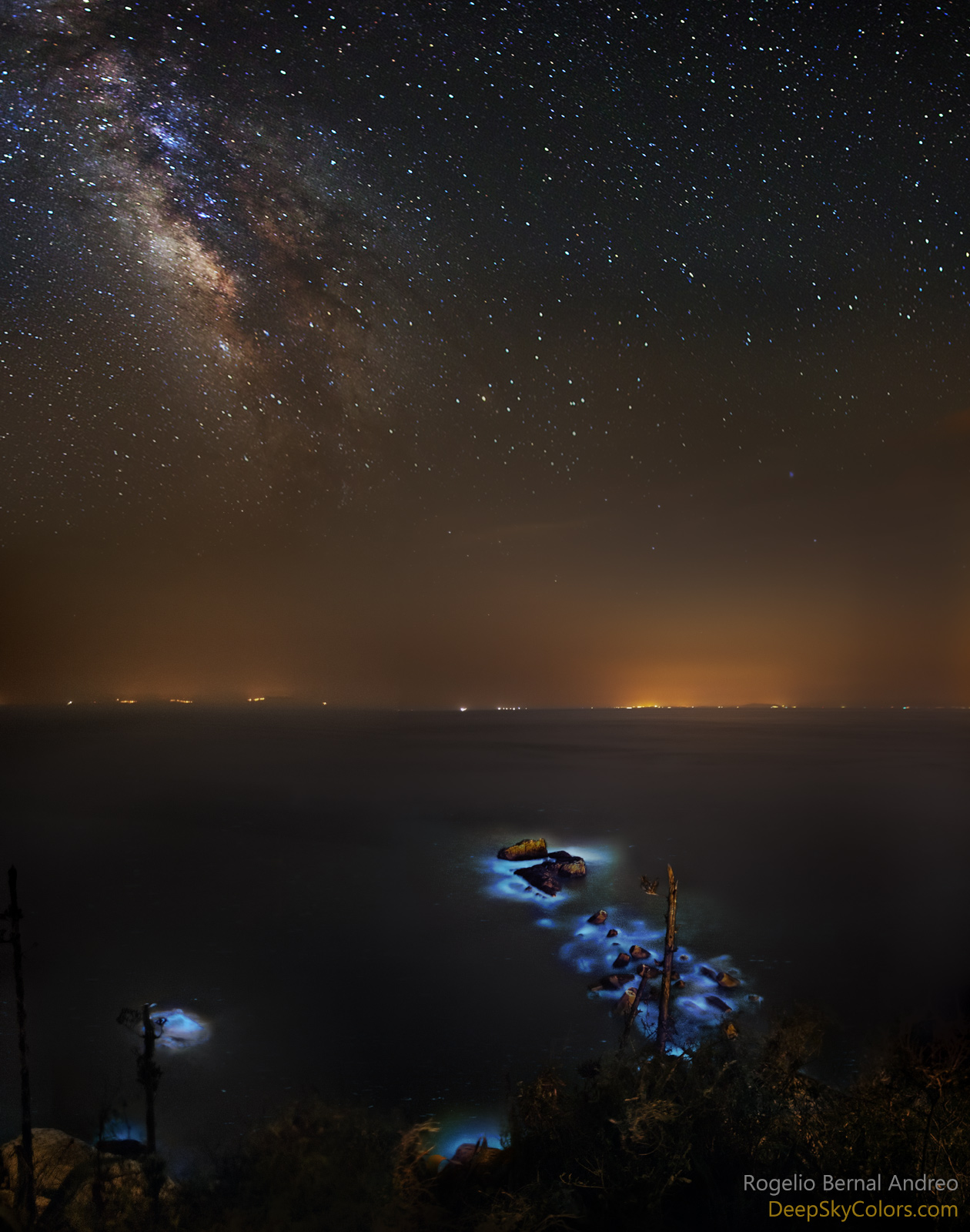
Astronomy picture of the day - 2015 April 24 - Blue Tears and the Milky Way
Image Credit & Copyright: Rogelio Bernal Andreo (Deep Sky Colors)
Explanation: Lapping at rocks along the shore of the Island of Nangan, Taiwan, planet Earth, waves are infused with a subtle blue light in this sea and night skyscape. Composed of a series of long exposures made on April 16 the image captures the faint glow from Noctiluca scintillans. Also known as sea sparkles or blue tears, the marine plankton's bioluminescence is stimulated by wave motion. City lights along the coast of mainland China shine beneath low clouds in the west but stars and the faint Milky Way still fill the night above. Over the horizon the galaxy's central bulge and dark rifts seem to echo the rocks and luminous waves.
2015-04-23
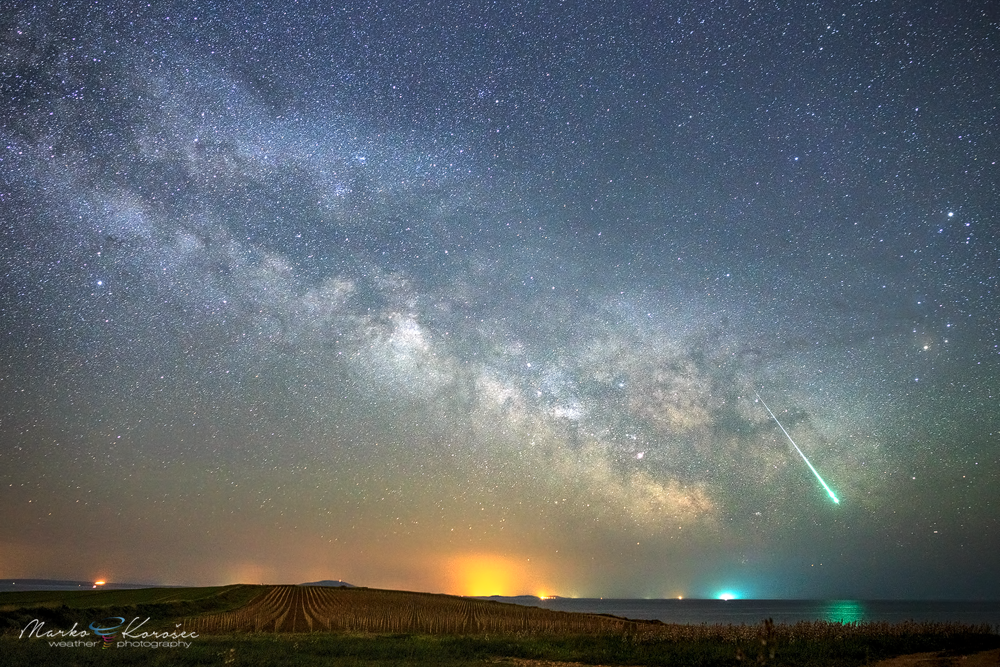
Astronomy picture of the day - 2015 April 24 - Meteor in the Milky Way
Image Credit & Copyright: Marko Korosec
Explanation: Earth's April showers include the Lyrid Meteor Shower, observed for more than 2,000 years when the planet makes its annual passage through the dust stream of long-period Comet Thatcher. A grain of that comet's dust, moving 48 kilometers per second at an altitude of 100 kilometers or so, is swept up in this night sky view from the early hours of April 21. Flashing toward the southeastern horizon, the meteor's brilliant streak crosses the central region of the rising Milky Way. Its trail points back toward the shower's radiant in the constellation Lyra, high in the northern springtime sky and off the top of the frame. The yellowish hue of giant star Antares shines to the right of the Milky Way's bulge. Higher still is bright planet Saturn, near the right edge. Seen from Istra, Croatia, the Lyrid meteor's greenish glow reflects in the waters of the Adriatic Sea.
2015-04-22
Astronomy picture of the day - 2015 April 22 - Colorful Star Clouds in Cygnus
Image Credit & Copyright: André van der Hoeven
2015-04-21
Astronomy picture of the day - 21-04-2015 - Vesta Trek: A Digital Model of Asteroid Vesta
Image Credit: NASA, JPL, LMMP, SSERVI, USGS, DLR
Explanation: You can explore asteroid Vesta. Recently, NASA's robotic spaceship Dawn visited Vesta, the second largest object in our Solar System's main asteroid belt, which lies between Mars and Jupiter. During a year-long stopover, Dawn's cameras photographed Vesta's entire surface, documenting all of the minor planet's major mountains and craters. These images have now been combined into a digital model that allows anyone with a full-featured browser to fly all around Vesta, virtually, and even zoom in on interesting surface features, by just dragging and clicking. If desired, the initially flat 2D map can be wrapped into a nearly spherical object by clicking on the 3D icon at the bottom. Dawn departed Vesta in 2012 and is now just beginning to photograph and explore the mysteries of the largest object in the asteroid belt: dwarf-planet Ceres.
2015-04-20
Inscription à :
Commentaires (Atom)