Avenida da Republica - 1904 -
2015-08-02
Imagenes del Mundo - Los sumideros del Mar Muerto,
Los sumideros están devorando la tierra donde la costa estuvo alguna vez.
AMIR COHEN (REUTERS)
Astronomy picture of the day - 2015 August 2 - Apollo 17 at Shorty Crater
Image Credit: Apollo 17 Crew, NASA
Explanation: On the Moon, it is easy to remember where you parked. In December of 1972, Apollo 17 astronauts Eugene Cernan and Harrison Schmitt spent about 75 hours on the Moon in the Taurus-Littrow valley, while colleague Ronald Evans orbited overhead. This sharp image was taken by Cernan as he and Schmitt roamed the valley floor. The image shows Schmitt on the left with the lunar rover at the edge of Shorty Crater, near the spot where geologist Schmitt discovered orange lunar soil. The Apollo 17 crew returned with 110 kilograms of rock and soil samples, more than was returned from any of the other lunar landing sites. Now forty three years later, Cernan and Schmitt are stillthe last to walk on the Moon.
2015-08-01
Imagens do Mundo - Mondim de Basto - Portugal
Mondim de Basto
- em véspera da chegada à Senhora da Graça da Volta a Portugal em bicicleta -
01-08-2015
25 miradouros em Lisboa - Elevador de Santa Justa
From the top of this monument are bird's-eye views of the city center. No visitor to Lisbon should miss it, except those who suffer from vertigo, as you'll feel like you're literally standing above the city.
Do topo deste monumento tem-se uma vista espetacular do centro da cidade. Ninguém que visita Lisboa deve deixar de passar por aqui, a não ser aqueles que sofrem de vertigens, pois aqui tem-se a sensação de se estar a flutuar sobre a cidade.
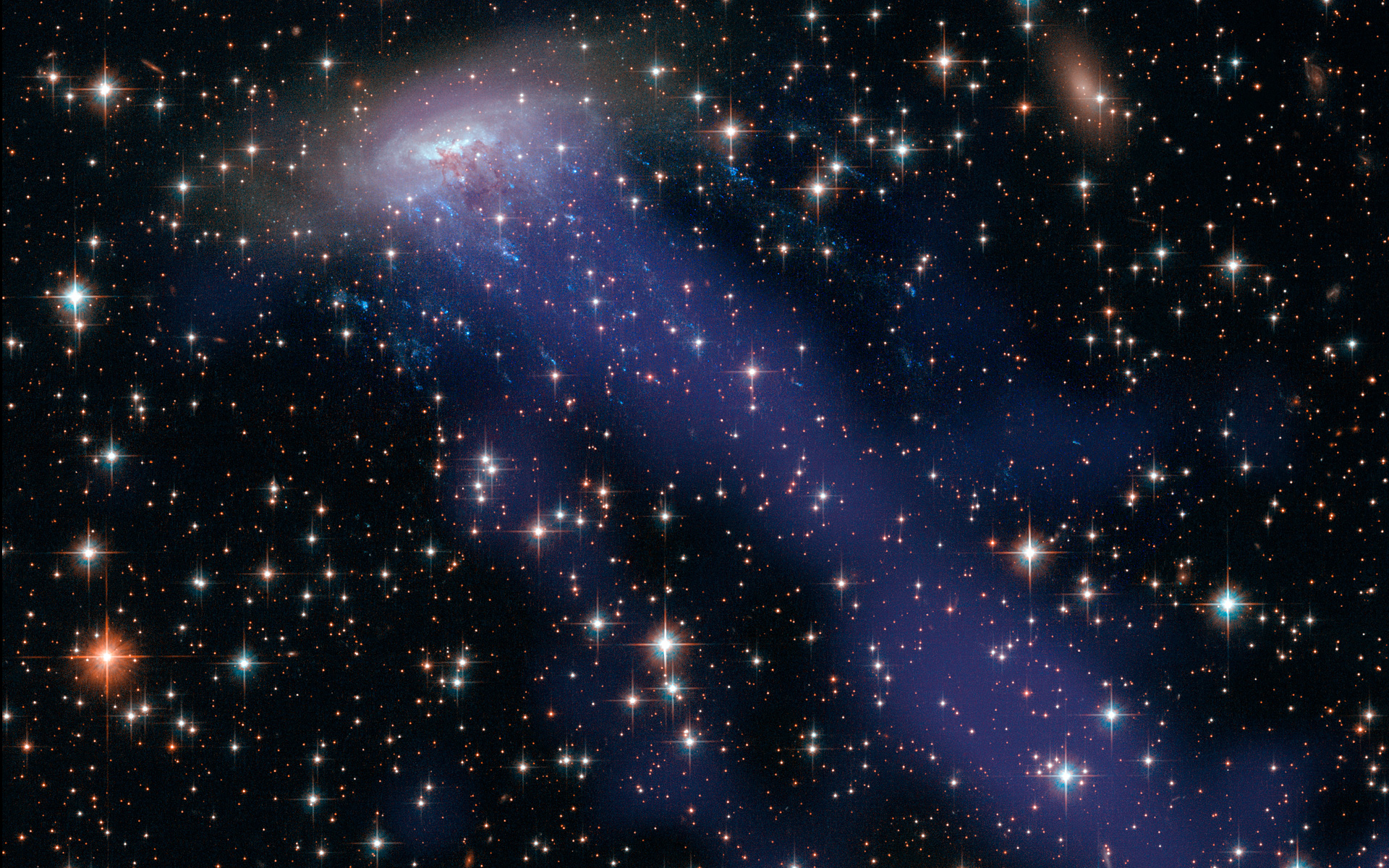
Astronomy picture of the day - 2015 August 1 - Stripping ESO 137-001
NASA, ESA, CXC
Explanation: Spiral galaxy ESO 137-001 hurtles through massive galaxy cluster Abell 3627 some 220 million light years away. The distant galaxy is seen in this colorful Hubble/Chandra composite image through a foreground of the Milky Way's stars toward the southern constellation Triangulum Australe. As the spiral speeds along at nearly 7 million kilometers per hour, its gas and dust are stripped away when ram pressure with the cluster's own hot, tenuous intracluster medium overcomes the galaxy's gravity. Evident in Hubble's near visible light data, bright star clusters have formed in the stripped material along the short, trailing blue streaks. Chandra's X-ray data shows off the enormous extent of the heated, stripped gas as diffuse, darker blue trails stretching over 400,000 light-years toward the bottom right. The significant loss of dust and gas will make new star formation difficult for this galaxy. A yellowish elliptical galaxy, lacking in star forming dust and gas, is just to the right of ESO 137-001 in the frame.
Inscription à :
Commentaires (Atom)