2015-09-28

Portugal. “Nous sommes tous des réfugiés”


Cette semaine, l’hebdomadaire Visão consacre sa une aux réfugiés vivant déjà au Portugal. Barré du titre “Nous sommes tous des réfugiés”, le portrait de six personnes en couverture met en avant la diversité de leurs origines. Un long article revient sur les “histoires de ceux qui ont choisi le Portugal pour échapper à la mort”.
Pour illustrer le reportage, Diaby, Sabina, Obai, Ahmed, Ali, Ayad et Mubarak sont photographiés de face car, selon le journal, “ils nous regardent en face comme ils sont habitués à le faire depuis qu’ils ont regagné leur dignité”. Plusieurs fois reproduit, le hashtag#portugalacolhe (#leportugalaccueille) lancé par le magazine prend clairement position pour un accueil volontaire des migrants.


Pourtant situé à l’écart des routes migratoires, le Portugal apparaît mobilisé sur la question de l’accueil des demandeurs d’asile. Le pays, confronté à une émigration massive depuis la crise économique, se montre disposé à accueillir plus de migrants que ce que prévoient les quotas européens.

Même António Guterres, haut-commissaire de l’agence de l’ONU pour les réfugiés (ACNUR) et ancien Premier ministre portugais, a déclaré à la chaîne RTP ce 22 septembre que les capacités du pays lui permettraient de recevoir au moins 4 000 réfugiés “sans que cela ait un impact sociétal important”. Le ministère des affaires étrangères portugais a annoncé le 23 septembre que le pays irait finalement recevoir 4500 réfugiés. Les premiers quotas évoqués par la Commission européenne concernaient l’accueil de seulement 1 500 personnes.

Courrier International - France

Astronomy picture of the day - 28-09-2015 - Yesterday: A Supermoon Lunar Eclipse - Video

2015 September 27

Tonight: A Supermoon Lunar Eclipse 
Video Credit: NASA's GSFC, David Ladd (USRA) & Krystofer Kim (USRA)
Explanation: Tonight a bright full Moon will fade to red. Tonight's moon will be particularly bright because it is reaching its fully lit phase when it is relatively close to the Earth in its elliptical orbit. In fact, by some measures of size and brightness, tonight's full Moon is designated a supermoon, although perhaps the "super" is overstated because it will be only a few percent larger and brighter than the average full Moon. However, our Moon will fade to a dim redbecause it will also undergo a total lunar eclipse -- an episode when the Moon becomes completely engulfed in Earth's shadow. The faint red color results from blue sunlight being more strongly scattered away by the Earth's atmosphere. Tonight's moon can also be called a Harvest Moon as it is the full Moon that occurs closest to the September equinox, a time signaling crop harvest in Earth's northern hemisphere. Total eclipses of supermoons are relatively rare -- the last supermoon lunar eclipse was in 1982, and the next will be in 2033. Tonight's supermoon total eclipse will last over an hour and be best visible from eastern North America after sunset, South America in the middle of the night, and Western Europe before sunrise.

2015-09-24

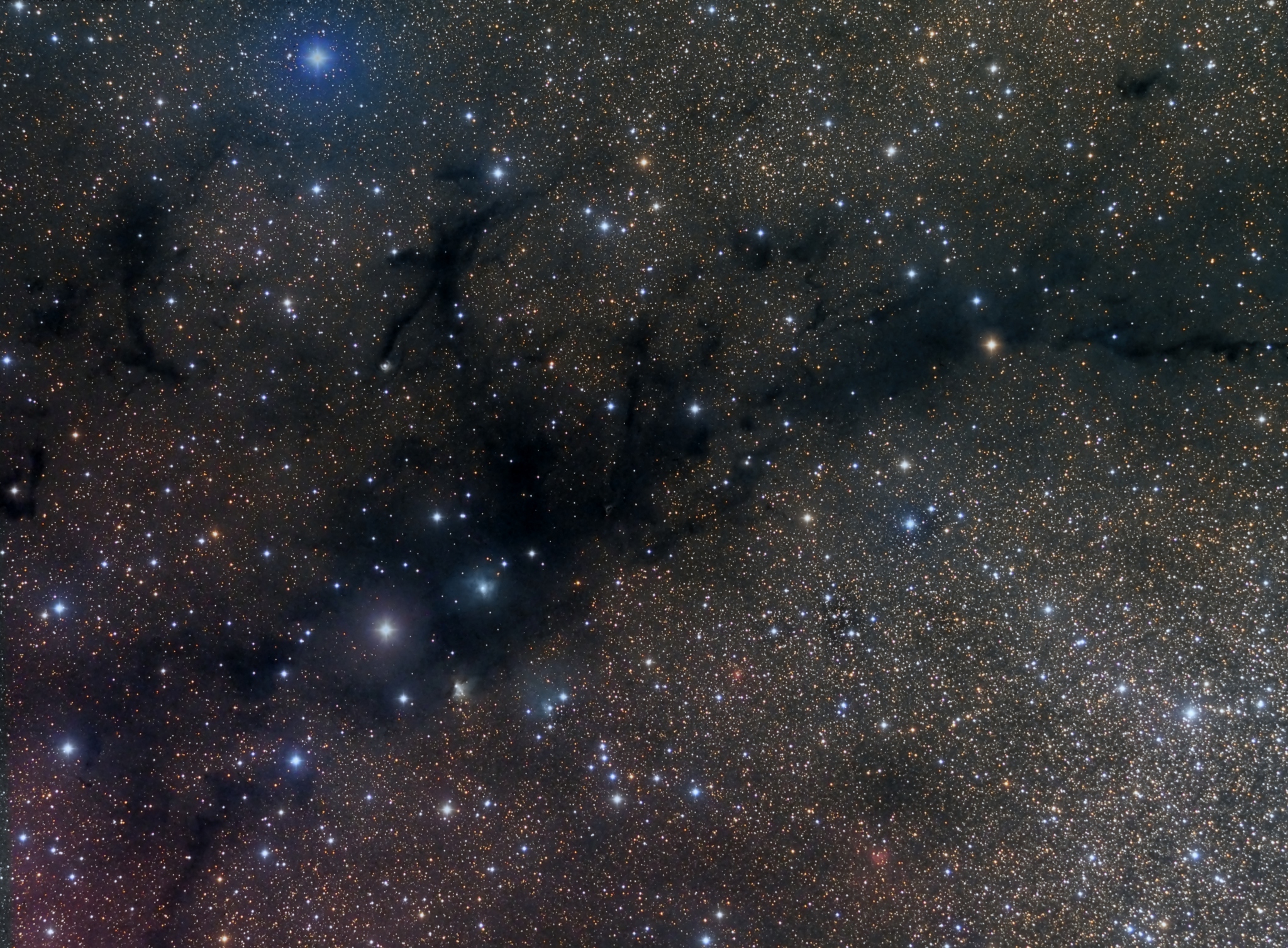
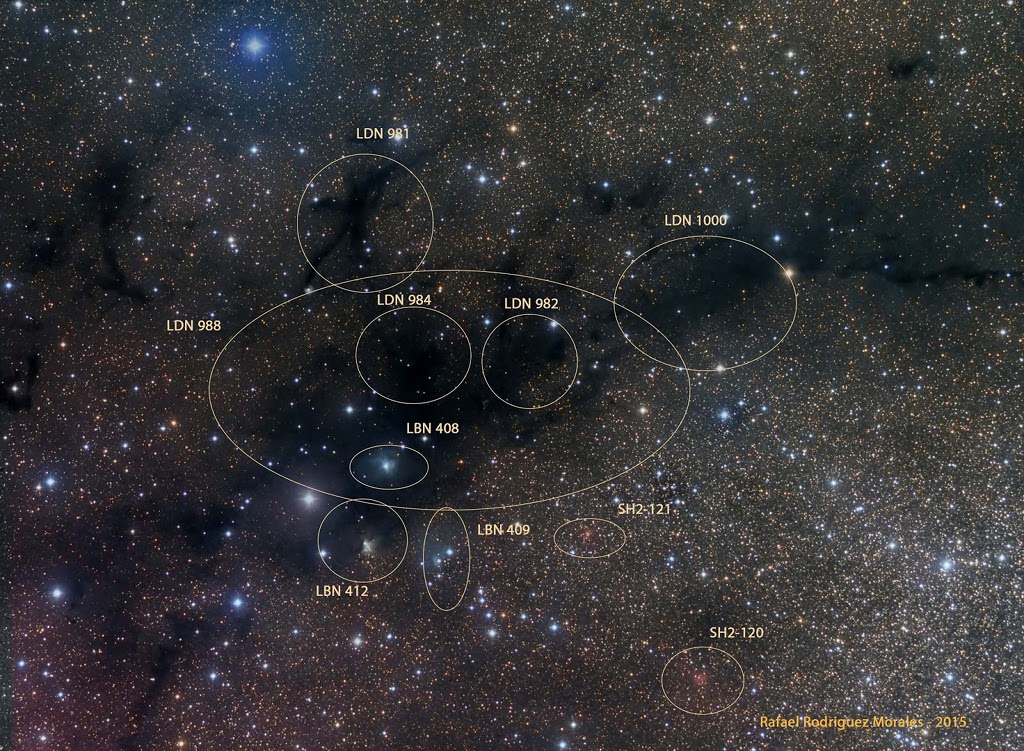
Astronomy picture of the day - 2015 September 24 - LDN 988 and Friends

See Explanation.  Clicking on the picture will download
 the highest resolution version available.
LDN 988 and Friends 
Image Credit & Copyright: Rafael Rodríguez Morales
Explanation: Stars are forming in dark, dusty molecular cloud LDN 988. Seen near picture center some 2,000 light-years distant, LDN 988 and other nearby dark nebulae were cataloged by Beverly T. Lynds in 1962 using Palomar Observatory Sky Survey plates. Narrowband and near-infrared explorations of the dark nebula reveal energetic shocks and outflows light-years across associated with dozens of newborn stars. But in this sharp optical telescopic view, the irregular outlines of LDN 988 and friends look like dancing stick figures eclipsing the rich starfields of the constellation Cygnus. From dark sky sites the region can be identified by eye alone. It's part of the Great Rift of dark nebulae along the plane of the Milky Way galaxy known as the Northern Coalsack.

Drawing from my mind - "Ignore the rain; Look for the Rainbow!"

"Ignore the rain, look for the rainbow"!

Bordeaux, 05-05-2014
JoanMira

2015-09-23

Conhece todos os miradouros em Lisboa?... Miradouro da Calçada de Santo Amaro

Miradouro de Santo Amaro, Lisboa
Hidden on Calçada de Santo Amaro, a small chapel dating from 1549 offers a beautiful little-known terrace. Usually deserted, it has a view towards 25 de Abril Bridge and over the river.
Escondida na Calçada de Santo Amaro, uma pequena capela fundada em 1549 oferece um belo miradouro muito pouco conhecido. Quase sempre deserto, tem uma vista privilegiada sobre o rio e da Ponte 25 de Abril.

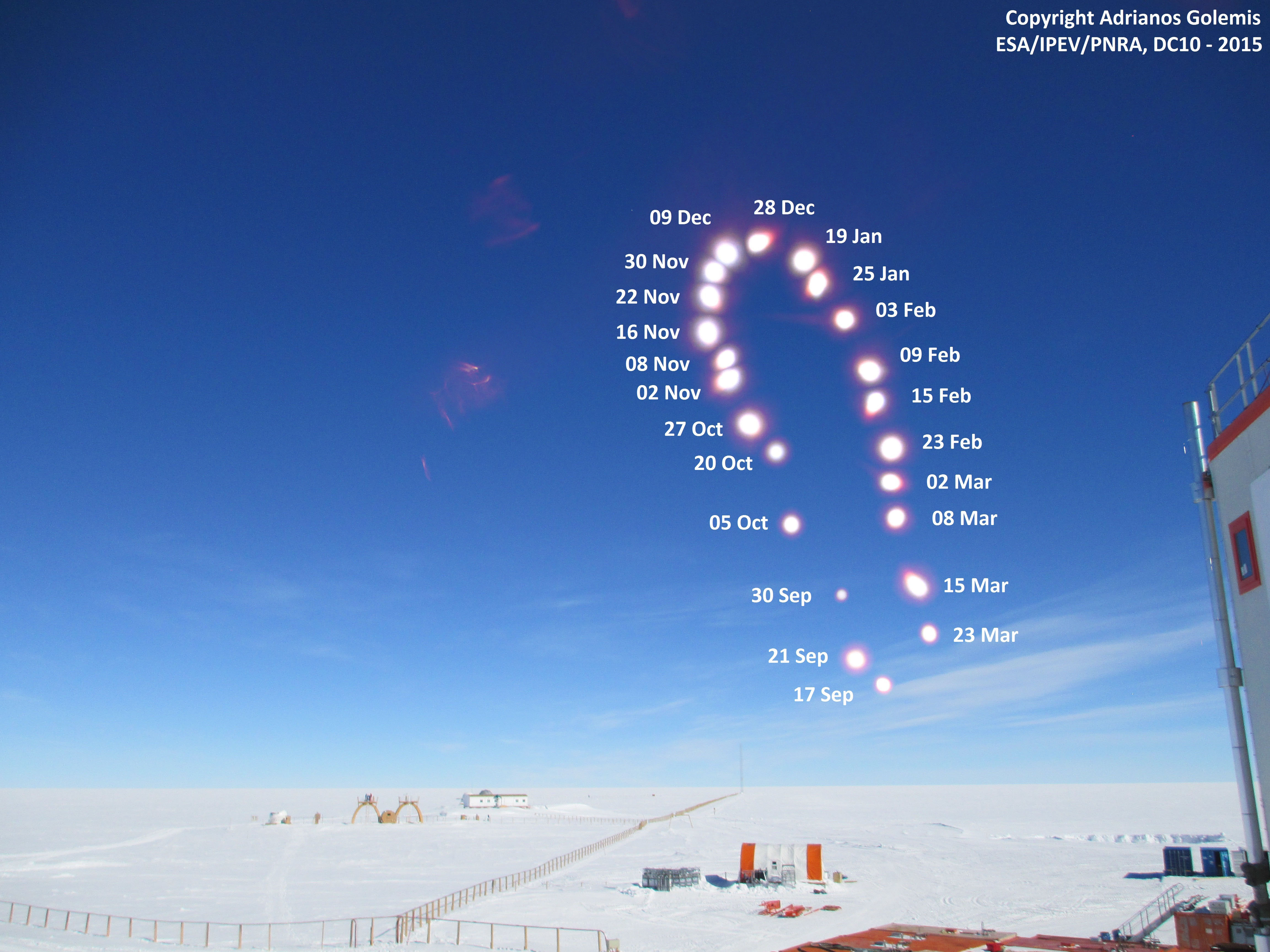
Astronomy picture of the day - 2015 September 23 - Antarctic Analemma

See Explanation.  Clicking on the picture will download
 the highest resolution version available.
Antarctic Analemma 
Image Credit & Copyright: Adrianos Golemis
Explanation: Does the Sun return to the same spot on the sky every day? No. A better and more visual answer to that question is an analemma, a composite image taken from the same spot at the same time over the course of a year. The featured weekly analemma was taken despite cold temperatures and high winds near the Concordia Station in Antarctica. The position of the Sun at 4 pm was captured on multiple days in the digital composite image, believed to be the first analemma constructed from Antarctica. The reason the image only shows the Sun from September to March is because the Sun was below the horizon for much of the rest of the year. In fact, today being an equinox, the Sun rises today at the South Pole after a six month absence and won't set again until the next equinox in March, baring large atmospheric refraction effects. Conversely, today the Sun sets at the North Pole after half a year of continuous daylight. For all of the Earth in between, though, the equinox means that today will have a nighttime and daytime that are both 12 hours long.

Antonio Vivaldi - "The four seasons - Autumn" - Video - Music

Jour d'automne sous la pluie -02 - Forêt d'Ermenonville, Oise
"The four seasons - Autumn"

2015-09-22

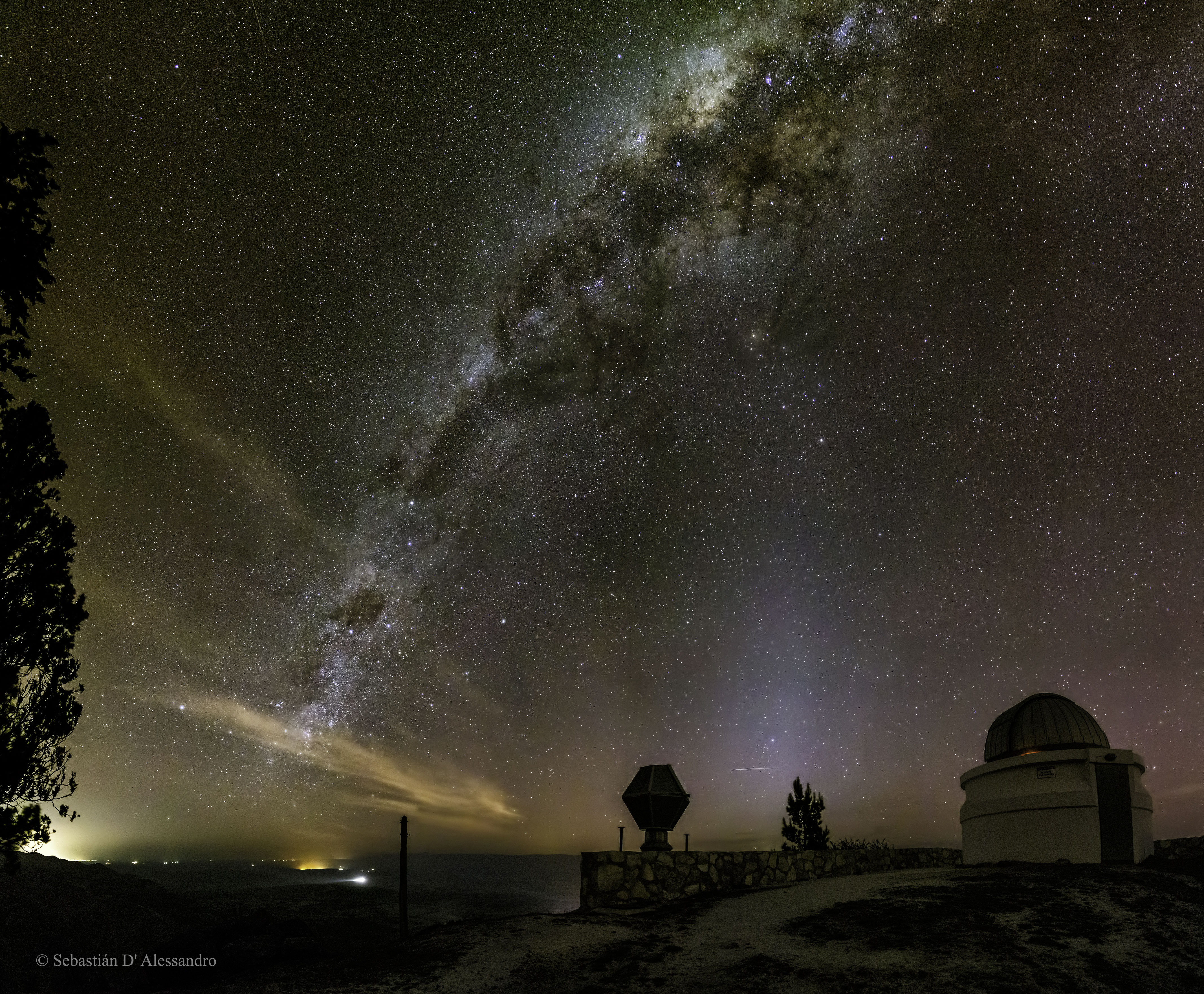
Astronomy picture of the day - 2015 September 22 - Milky Way over Bosque Alegre Station in Argentina

See Explanation.
Moving the cursor over the image will bring up an annotated version.
Clicking on the image will bring up the highest resolution version
available.
Milky Way over Bosque Alegre Station in Argentina 
Image Credit & Copyright: Sebastián D' Alessandro
Explanation: What are those streaks of light in the sky? First and foremost, the arching structure is the central band of our Milky Way galaxy. Visible in this galactic band are millions of distant stars mixed with numerous lanes of dark dust. Harder to discern is a nearly vertical beam of light rising from the horizon, just to the right of the image center. This beam is zodiacal light, sunlight scattered by dust in our Solar System that may be surprisingly prominent just after sunset or just before sunrise. In the foreground are several telescopes of the Bosque Alegre Astrophysical Station of the National University of Cordoba in Argentina. The station schedules weekend tours and conducts research into the nature of many astronomical objects including cometsactive galaxies, and clusters of galaxies. The featured image was taken early this month.

Drawing from my mind - "Le jour se lève"

"Le jour se lève"

09-03-2010
JoanMira