2016-02-09

Imagens - O Porto em fotos - Vista da Ribeira com parte da Muralha Fernandina


Vista da Ribeira com parte da Muralha Fernandina

Sitios imperdiveis em Lisboa - Rua Augusta e Terreiro do Paço

Visitar a rua Augusta e o Terreiro do Paço 

Astronomy picture of the day - 2016 February 9 - The Rise and Fall of Supernova 2015F

Ver imagem original

The Rise and Fall of Supernova 2015F 
Video Credit & Copyright: Changsu Choi & Myungshin Im (Seoul National University)
Explanation: Sit back and watch a star explode. The actual supernova occurred back when dinosaurs roamed the Earth, but images of the spectacular event began arriving last year. Supernova 2015F was discovered in nearby spiral galaxy NGC 2442 by Berto Monard in 2015 March and was unusually bright -- enough to be seen with only a small telescope. The pattern of brightness variation indicated a Type Ia supernova -- a type of stellar explosion that results when an Earth-size white dwarf gains so much mass that its core crosses the threshold of nuclear fusion, possibly caused by a lower mass white-dwarf companion spiraling into it. Finding and tracking Type Ia supernovae are particularly important because their intrinsic brightness can be calibrated, making their apparent brightness a good measure of their distance -- and hence useful toward calibrating the distance scale of the entire universe. The featured video tracked the stellar disruption from before explosion images arrived, as it brightened, and for several months as the fission-powered supernova glow faded. The remnants of SN2015F are now too dim to see without a large telescope. Just yesterday, however, the night sky lit up once again, this time with an even brighter supernova in an even closer galaxy: Centaurus A.

2016-02-08

Expressões populares portuguesas - "Tirar o cavalinho da chuva"


Ver imagem original

O cavalo é um dos meios de transporte mais antigos do mundo. Na era medieval, a maneira como alguém amarrava o cavalo ao chegar ao destino - na rua, ou não - era revelador da sua intenção: se um visitante ou viajante deixava o cavalo num sítio abrigado, era sinal de que a paragem ia ser longa. Se o deixava à porta, no exterior, e, logo, sujeito a eventuais intempéries, significava que não tencionava demorar-se muito, que a estada deveria ser curta. Portanto, para estadas mais prolongadas ou tarefas mais complicadas, seria melhor abrigar o cavalo - tirá-lo da chuva.
Significa hoje desistir de alguma coisa, abandonar pretensões, perder as ilusões. 

Fotos - Arrabida, Portugal - 07-09-2014

"Arrabida"

07-09-2014
JoanMira

Imagens do Mundo - "Carnaval no Rio é assim"!

Musa da Mocidade tira selfie com admirador Thiago Freitas / O Globo


"Carnaval 
no Rio 
é assim"!

Sitios Imperdiveis em Lisboa - Parque das Nações e Gare do Oriente


Admirar a parte mais moderna de Lisboa, o Parque das Nações, a estação de comboio Gare do Oriente projetada por Calatrava, e o equipamento cultural mais visitado de Portugal - o Oceanário de Lisboa.

Fotografia - "Album de familia" de Isabel Muñoz


La fotógrafa Isabel Muñoz (Barcelona, 1951) ha pasado los tres últimos años trabajando en una serie sobre primates de la que expone una selección de 15 imágenes en la galería Blanca Berlín, en Madrid. Muñoz ha titulado su trabajo 'Álbum de familia' y puede verse hasta el 27 de febrero. Un ejemplo es esta imagen de la serie 'Primates' (2014).

Fotos incriveis do passado - Mulher com um carrinho de bebe resistente ao gás, Inglaterra, 1938


Mulher com um carrinho de bebe resistente ao gás, Inglaterra, 1938

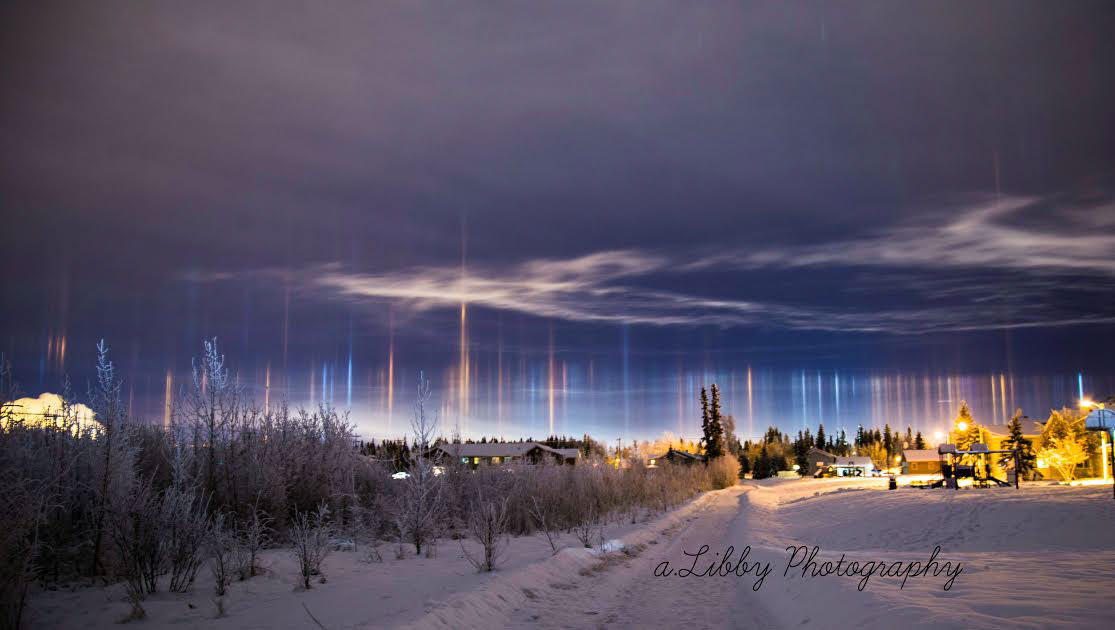
Astronomy picture of the day - 2016 February 8 - Light Pillars over Alaska

See Explanation.  Clicking on the picture will download
 the highest resolution version available.
Light Pillars over Alaska 
Image Credit & Copyright: Allisha Libby
Explanation: What's happening behind those houses? Pictured here are not auroras but nearby light pillars, a nearby phenomenon that can appear as a distant one. In most places on Earth, a lucky viewer can see a Sun-pillar, a column of light appearing to extend up from the Sun caused by flat fluttering ice-crystals reflecting sunlight from the upper atmosphere. Usually these ice crystals evaporate before reaching the ground. During freezing temperatures, however, flat fluttering ice crystals may form near the ground in a form of light snow, sometimes known as a crystal fog. These ice crystals may then reflect ground lights in columns not unlike a Sun-pillar. The featured image was taken in FortWainwright near Fairbanks in central Alaska.