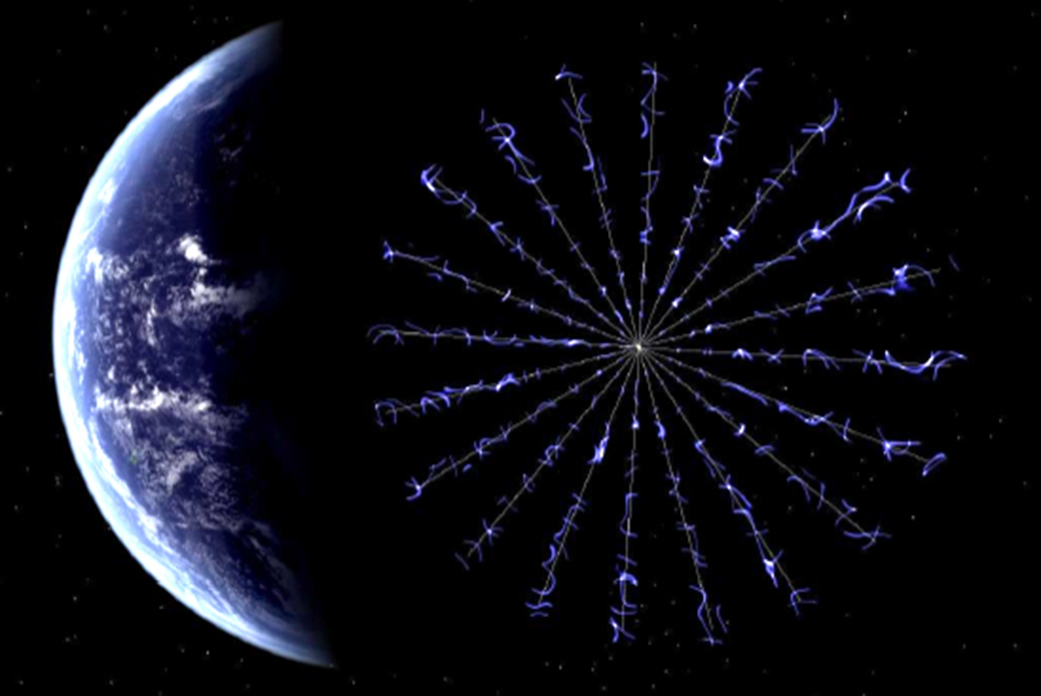
Explanation: Want to take a fast trip to the edge of the Solar System? Consider a ride on a Heliopause Electrostatic Rapid Transit System (HERTS). The concept is currently being tested and it might take only 10 to 15 years to make the trip of over 100 Astronomical Units (15 billion kilometers). That's fast compared to the 35 years it took Voyager 1, presently humanity's most distant spacecraft, to approach the heliopause or outer boundary of the influence of the solar wind. HERTS would use an advanced electric solar sail that works by extending multiple, 20 kilometer or so long, 1 millimeter thin, positively charged wires from a rotating spacecraft. The electrostatic force generated repels fast moving solar wind protons to create thrust. Compared to a reflective solar light sail, another propellantless deep space propulsion system, the electric solar wind sail could continue to accelerate at greater distances from the Sun, still developing thrust as it cruised toward the outer planets.
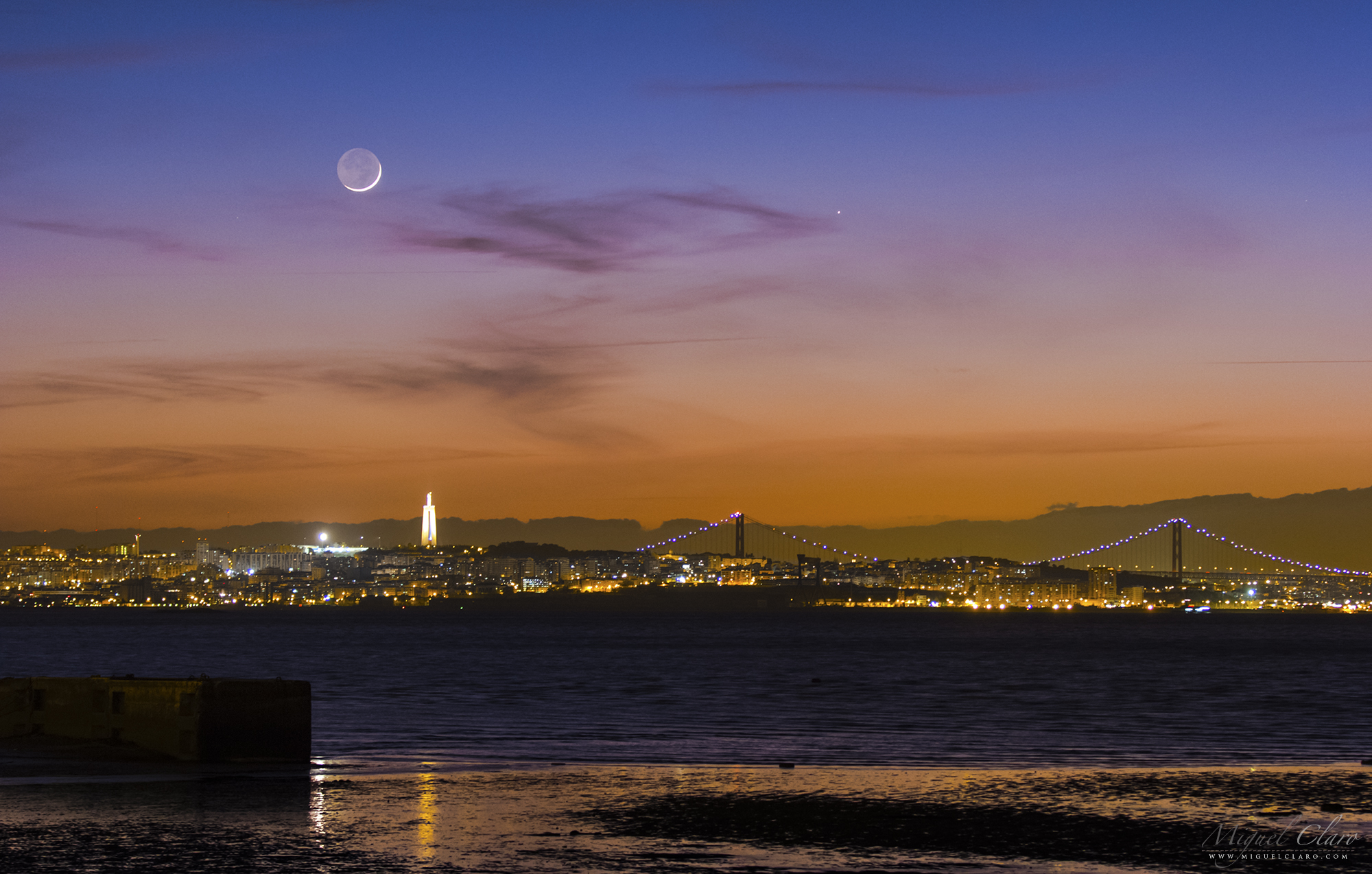
Explanation: Innermost planet Mercury and a thin crescent Moon are never found far from the Sun in planet Earth's skies. Taken near dusk on April 8, this colorful evening skyscape shows them both setting toward the western horizon just after the Sun. The broad Tagus River and city lights of Lisbon, Portugal run through the foreground under the serene twilight sky. Near perigee or closest approach to Earth, the Moon's bright, slender crescent represents about 3 percent of the lunar disk in sunlight. Of course as seen from the Moon, a nearly full Earth would light up the lunar night, and that strong perigee earthshine makes the rest of the lunar disk visible in this scene. Bright Mercury stays well above the western horizon at sunset for northern skywatchers in the coming days. The fleeting planet reaches maximum elongation, or angular distance from the Sun, on April 18. But Mercury will swing back toward the Sun and actually cross the solar disk on May 9, the first transit of Mercury since November 8, 2006.


-A22607-Rua%2Bdos%2BC.%2BFerro-Correios%2Be%2BFontan%C3%A1rio-1953-.jpg)