2016-08-13

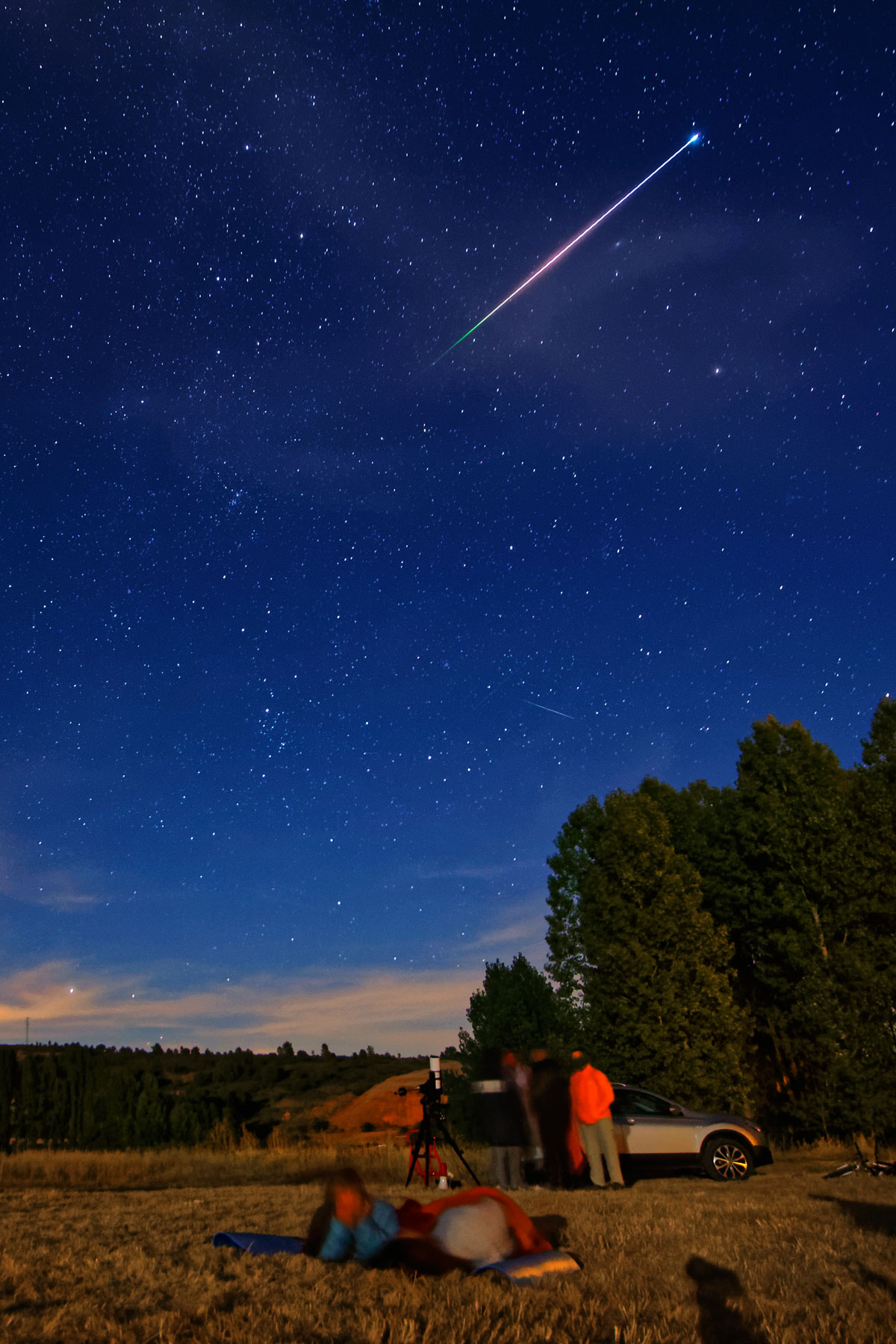
Astronomy picture of the day - 2016 August 13 - Perseid from Torralba del Burgo

See Explanation.  Clicking on the picture will download
 the highest resolution version available.
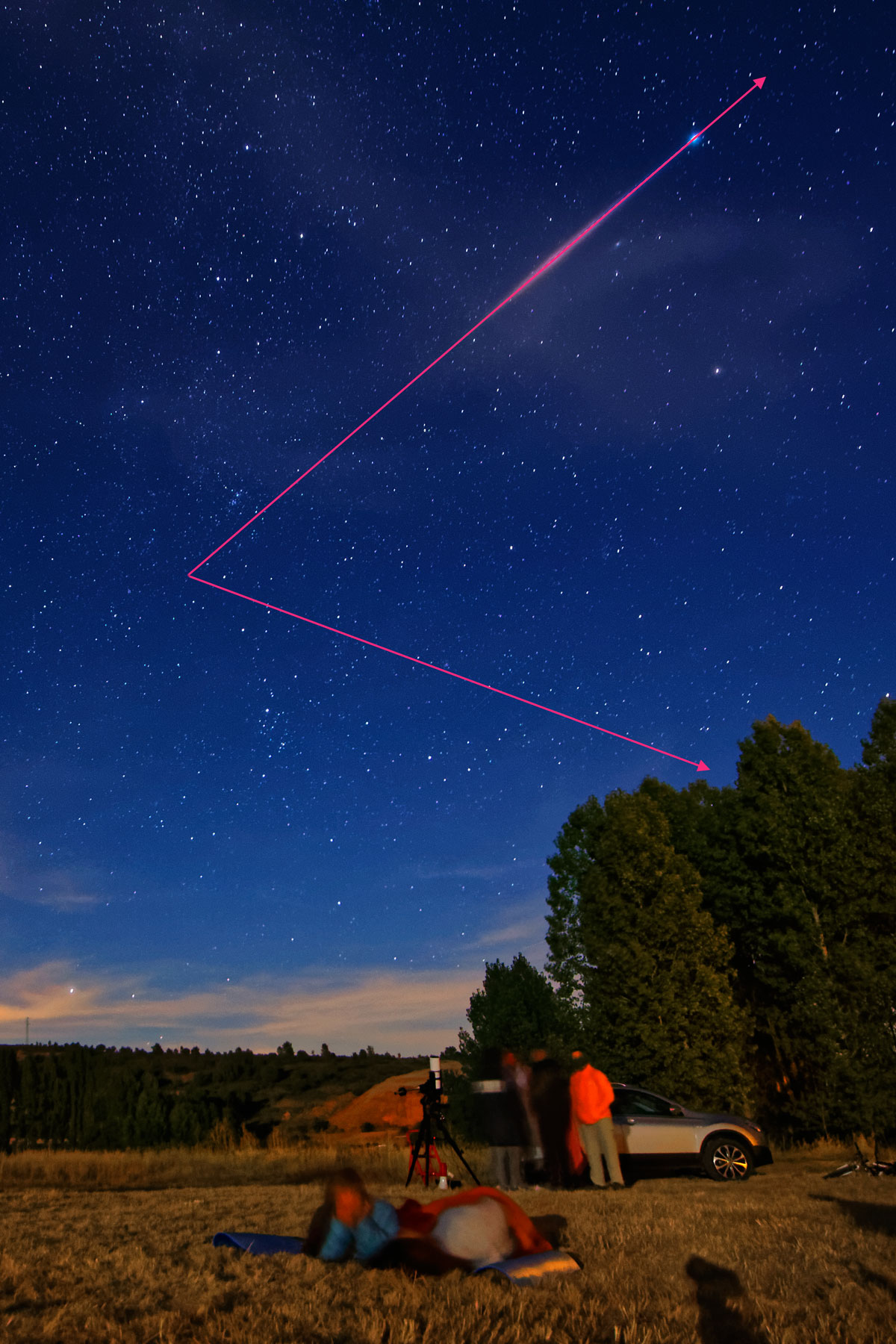
Perseid from Torralba del Burgo 
Image Credit & CopyrightFernando Cabrerizo
Explanation: Perseid meteors rained on planet Earth last night. This year the stream of dust from periodic comet Swift-Tuttle has produced a stunningly active shower of bright cosmic streaks. In this 25 second long exposure, one luminous Perseid trail, fast and colorful with a small explosion at the end, is witnessed by night skygazers from Torralba del Burgo, Soria, Spain. A second fainter meteor trail appears well below the first. The two can be extended to intersect at the meteor shower's radiant just above the brighter stars of the heroic constellation Perseus. Though the meteor shower's activity is waning, in the coming days Perseids will still flash through the night. But you won't see any if you don't go outside and look up.

2016-08-12

Imagenes del Mundo - En el cielo de Burgos, España

Vista de una Perseida en el cielo cerca de Pesquera de Ebro (Burgos).
CESAR MANSO AFP

Imagenes del Mundo - Arbo, Galicia, España

Rayos de luz a través de los árboles dejan entrever el humo y tierra quemada tras un incendio en Arbo (Galicia).
MIGUEL RIOPA AFP

Astronomy picture of the day - 2016 August 12 - The Easterbunny Comes to NGC 4725

See Explanation.  Clicking on the picture will download
 the highest resolution version available.
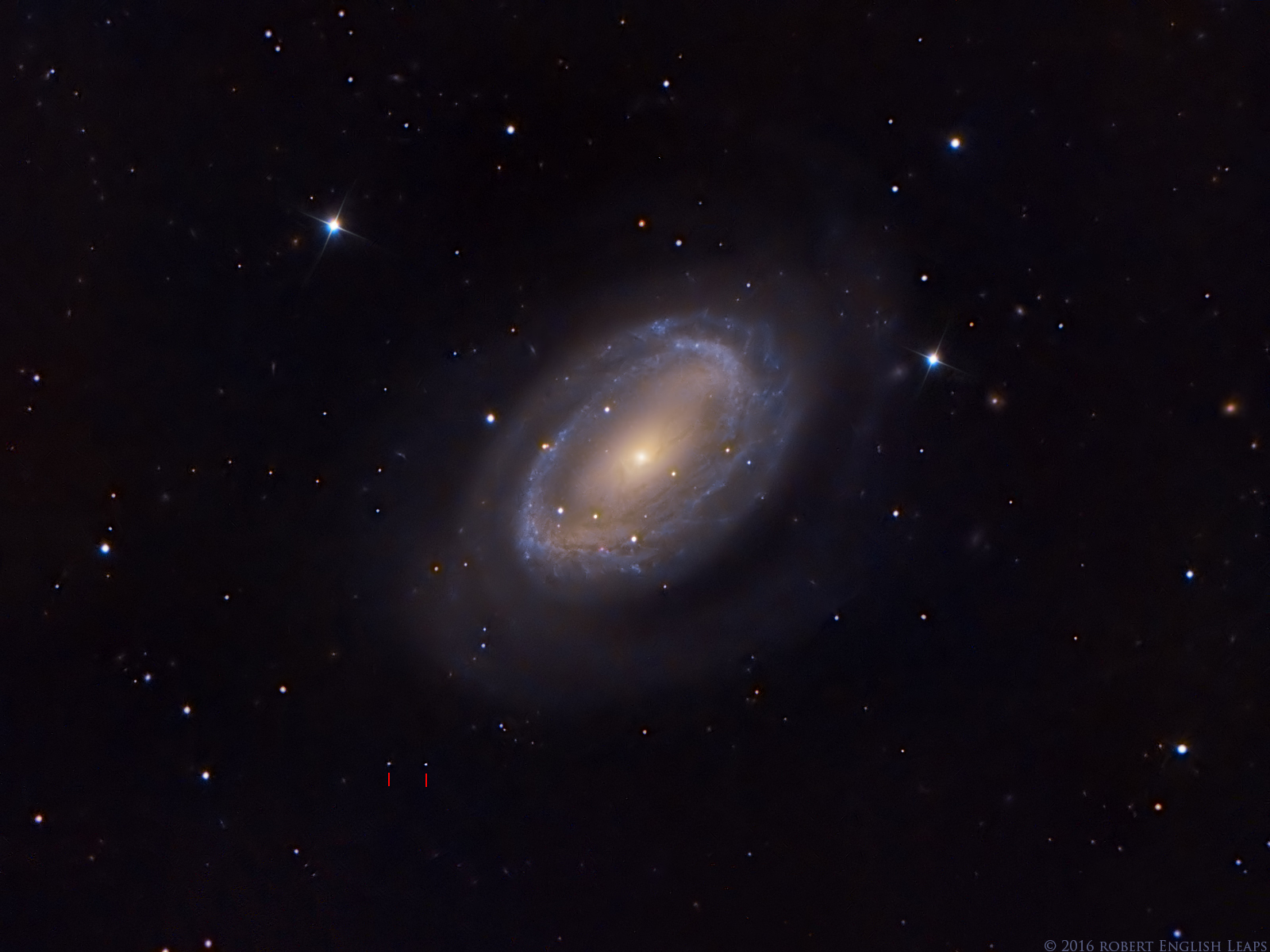
The Easterbunny Comes to NGC 4725 
Image Credit & CopyrightBob English
Explanation: At first called "Easterbunny" by its discovery team, officially named Makemake is the second brightest dwarf planet of the Kuiper belt. The icy world appears twice in this astronomical image, based on data taken on June 29 and 30 of the bright spiral galaxy NGC 4725. Makemake is marked by short red lines, its position shifting across a homemade telescope's field-of-view over two nights along a distant orbit. On those dates nearly coincident with the line-of-sight to the spiral galaxy in the constellation Coma Bernices, Makemake was about 52.5 astronomical units or 7.3 light-hours away. NGC 4725 is over 100,000 light-years across and 41 million light-years distant. Makemake isnow known to have at least one moon. NGC 4725 is a famous one-armed spiral galaxy.

2016-08-11

Fotos do passado - Chimpanzé astronauta

Chimpanzé astronauta após uma missão bem sucedida no espaço em 1961

Fotos do passado - Menina e sua boneca

Menina e sua boneca em frente a sua casa destruída 
em Londres na Segunda Guerra Mundial

Imagenes del Mundo - Cárcel Quezón City en Manila (Filipinas).

CELIS AFP

Imagenes del Mundo - Región de Aveiro, Portugal

Señales de tráfico cerca de una carretera quemadas debido a un incendio en la región de Aveiro, en el norte de Portugal.Señales de tráfico cerca de una carretera quemadas debido a un incendio en la región de Aveiro, en el norte de Portugal.
SERGIO AZENHA AP

Astronomy picture of the day - 2016 August 11 - Perseid, Aurora, and Noctilucent Clouds

See Explanation.  Clicking on the picture will download
 the highest resolution version available.
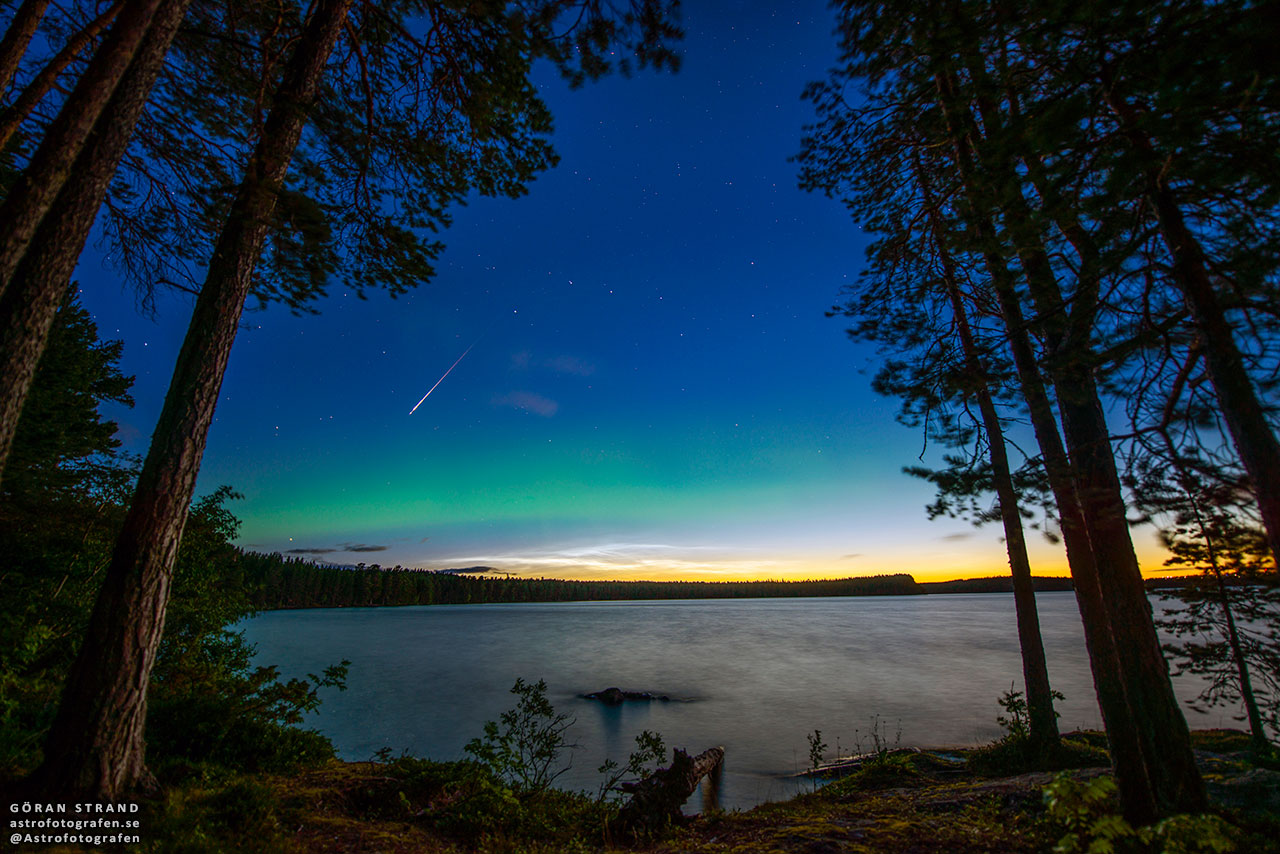
Perseid, Aurora, and Noctilucent Clouds 
Image Credit & CopyrightGöran Strand
Explanation: Night skies over northern Sweden can hold some tantalizing sights in August. Gazing toward the Big Dipper, this beautiful northern skyscape captures three of them in a single frame taken last August 12/13. Though receding from northern skies for the season, night shining or noctilucent clouds are hanging just above the horizon. Extreme altitude icy condensations on meteoric dust, they were caught here just below an early apparition of a lovely green auroral band, also shining near the edge of space. The flash of a Perseid meteor near the peak of the annual shower punctuates the scene. In fact, this year's Perseid shower will peak in the coming days, offering a continuing chance for a night sky photographer's hat trick.

2016-08-10

Astronomy picture of the day - 2016 August 10 - Colliding Galaxies in Stephan's Quintet

See Explanation.  Clicking on the picture will download
 the highest resolution version available.
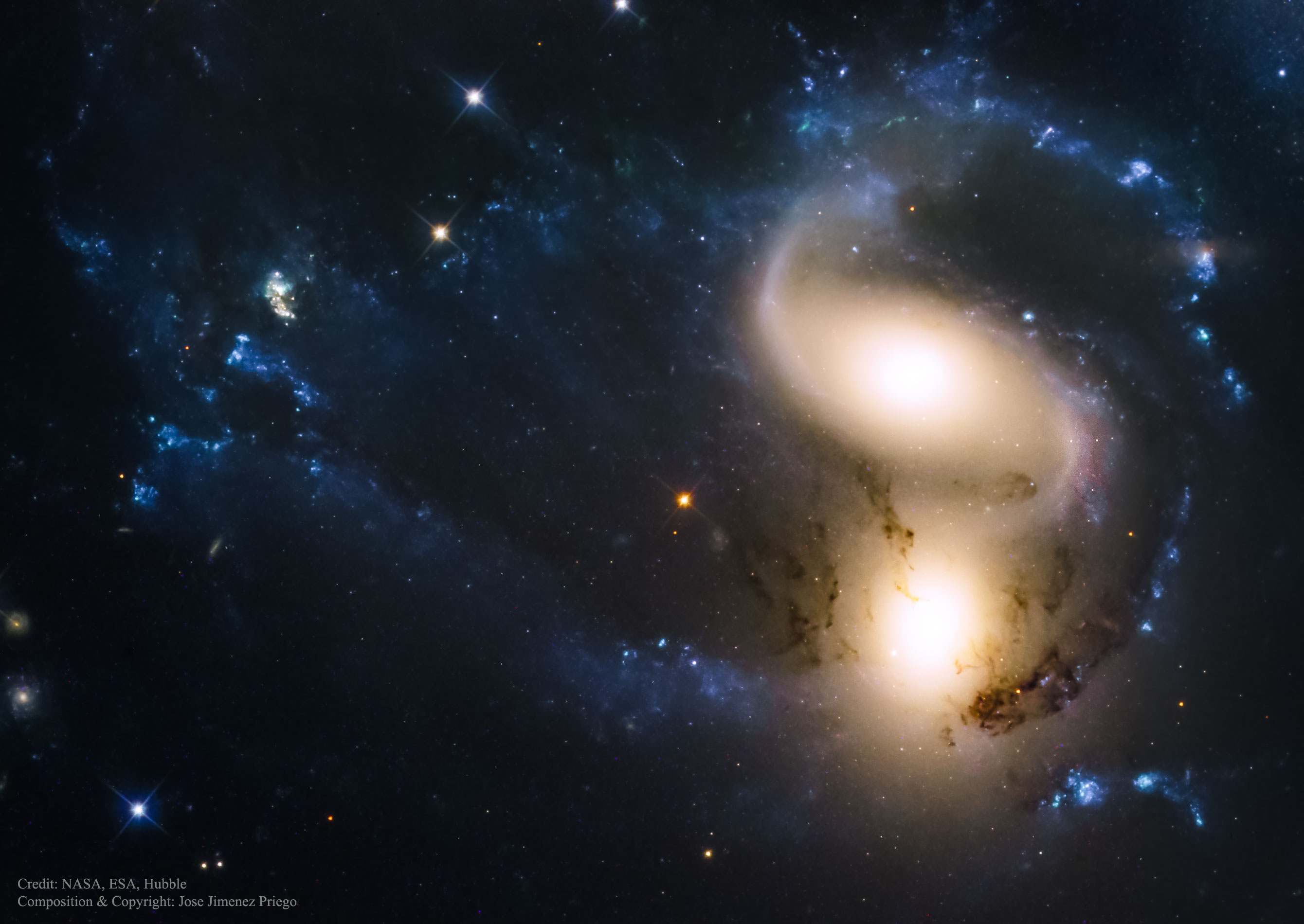
Colliding Galaxies in Stephan's Quintet 
Image Credit: Hubble Legacy ArchiveNASAESAProcessing & Copyright: Jose Jimenez Priego
Explanation: Will either of these galaxies survive? In what might be dubbed as a semi-final round in a galactic elimination tournament, the two spirals of NGC 7318 are colliding. The featured picture was created from images taken by the Hubble Space Telescope. When galaxies crash into each other, many things may happen including gravitational distortion, gas condensing to produce new episodes of star formation, and ultimately the two galaxies combining into one. Since these two galaxies are part of Stephan's Quintet, a final round of battling galaxies will likely occur over the next few billion years with the eventual result of many scattered stars and one large galaxy. Quite possibly, theremaining galaxy will not be easily identified with any of its initial galactic components. Stephan's Quintet was the first identified galaxy group, lies about 300 million light years away, and is visible through a moderately-sized telescopetoward the constellation of the Winged Horse (Pegasus).