Diziam que era impossível. Que uma balada nunca iria vencer a Eurovisão. Que a música não era festivaleira e que Salvador Sobral iria ter de mudar tudo o que é para vencer o concurso. O músico de 27 anos dispensou um espectáculo de luzes impressionante e subiu ao palco com uma indumentária tão simples quanto a eficácia da sua música. Sem bailarinos ou um coro, Salvador Sobral colocou um país inteiro a olhar para a Eurovisão novamente. E, em português, conseguiu conquistar também a atenção além-fronteiras. A canção do músico de 27 anos tornou-se um fenómeno global e durante semanas surgiam dos quatro cantos do mundo vídeos de fãs a interpretar as suas versões. Na imprensa internacional multiplicaram-se títulos a elogiar a “voz de anjo” e a “actuação perfeita”. A esperança foi crescendo entre as vozes mais cépticas. Este sábado, os resultados do festival não deixaram margem para dúvidas: a Europa rendeu-se a Salvador Sobral
2017-05-14
2017-05-13
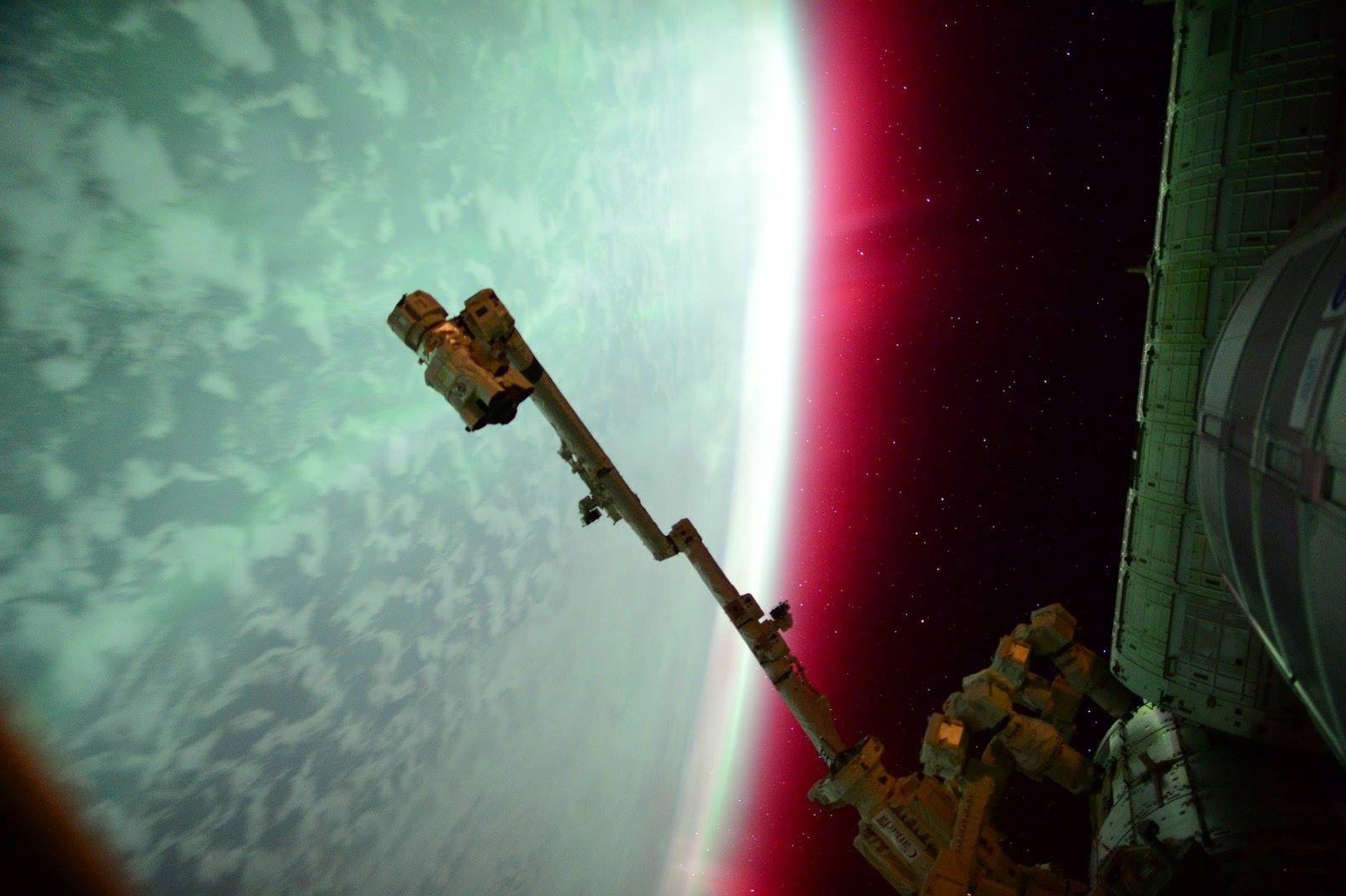
Astronomy picture of the day - 2017 May 13 -

Image Credit: Scott Kelly, Expedition 44, NASA
Explanation: What bizarre alien planet is this? It's planet Earth of course, seen from the International Space Station through the shimmering glow of aurorae. About 400 kilometers (250 miles) above Earth, the orbiting station is itself within the upper realm of the auroral displays. Aurorae have the signature colors of excited molecules and atoms at the low densities found at extreme altitudes. Emission from atomic oxygen dominates this view. The eerie glow is green at lower altitudes, but a rarer reddish band extends above the space station's horizon. Also visible from the planet's surface, this auroral display began during a geomagnetic storm. The storm was triggered after a coronal mass ejection impacted Earth's magnetosphere in June of 2015.
2017-05-12
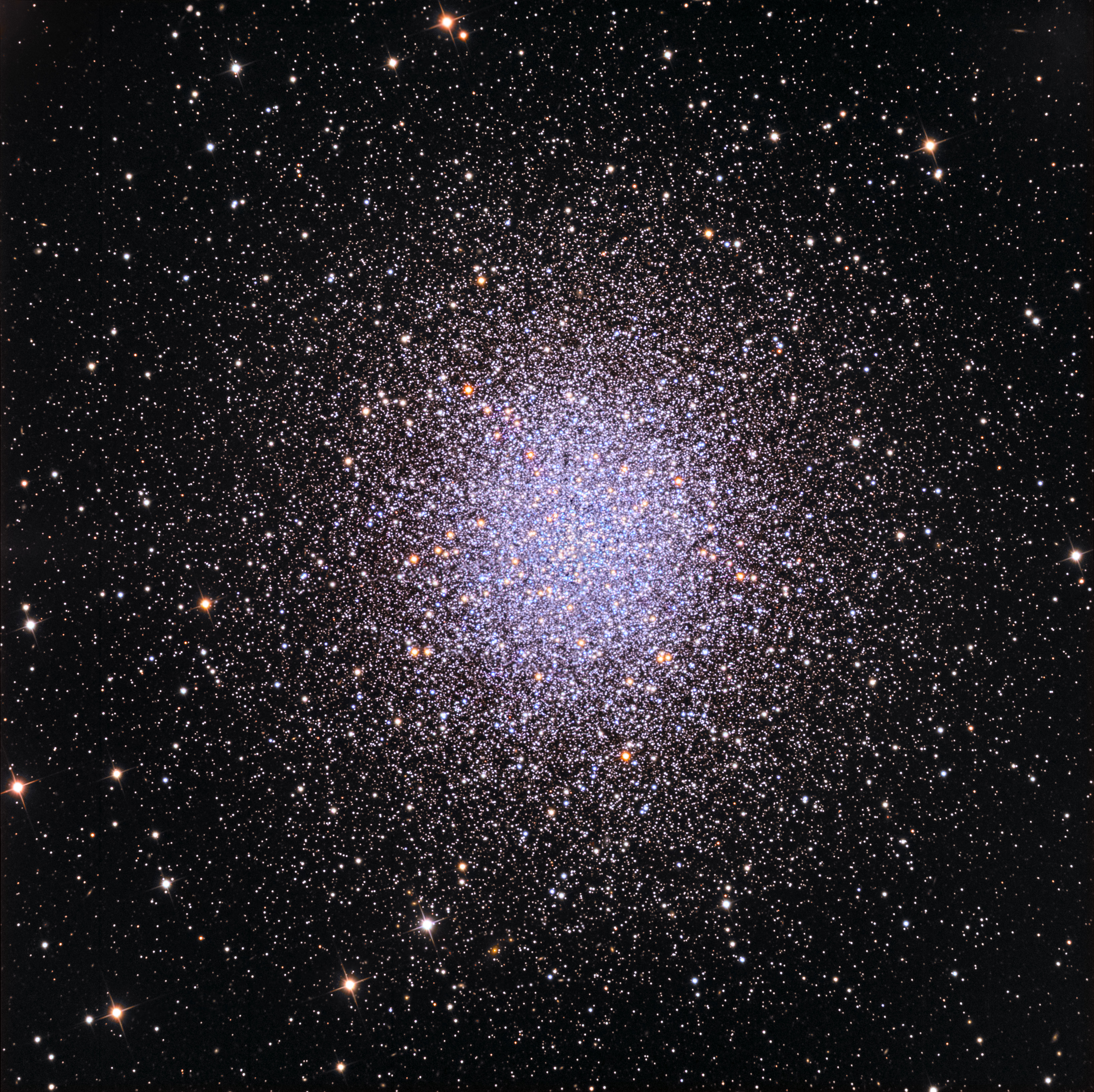
Astronomy picture of the day - 2017 May 12 - M13: The Great Globular Cluster in Hercules

Image Credit & Copyright: Adam Block, Mt. Lemmon SkyCenter, U. Arizona
Explanation: In 1716, English astronomer Edmond Halley noted, "This is but a little Patch, but it shews itself to the naked Eye, when the Sky is serene and the Moon absent." Of course, M13 is now less modestly recognized as the Great Globular Cluster in Hercules, one of the brightest globular star clusters in the northern sky. Telescopic views reveal the spectacular cluster's hundreds of thousands of stars. At a distance of 25,000 light-years, the cluster stars crowd into a region 150 light-years in diameter. Approaching the cluster core upwards of 100 stars could be contained in a cube just 3 light-years on a side. For comparison, the closest star to the Sun is over 4 light-years away. Along with the cluster's dense core, the outer reaches of M13 are highlighted in this sharp color image. The cluster's evolved red and blue giant stars show up in yellowish and blue tints.
2017-05-11
Images - La Terre vue de l'Espace - Delhi
Première photo prise de nuit par Thomas Pesquet, le 25 novembre 2016. Selon plusieurs internautes, la ville scintillant de mille feux serait Delhi.
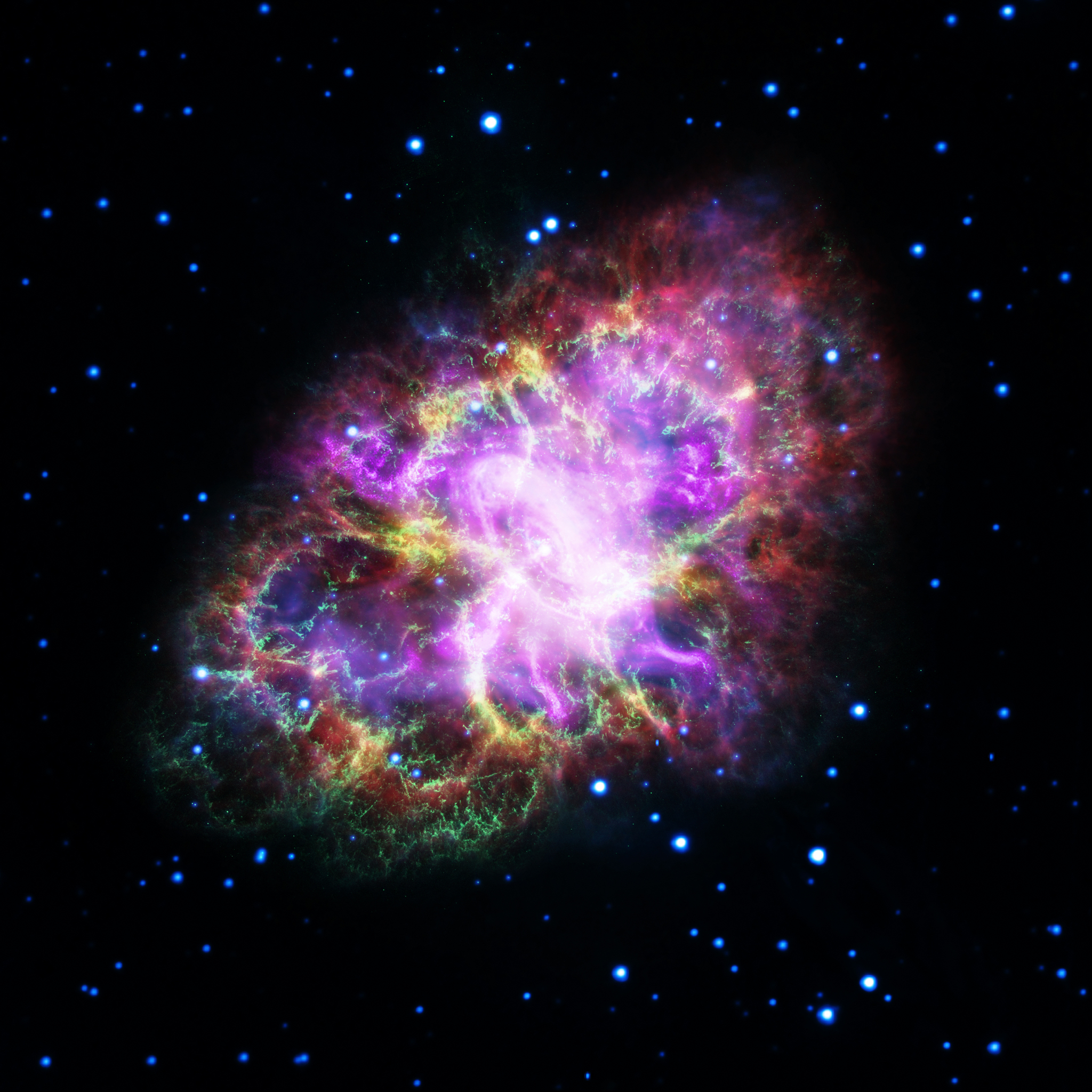
Astronomy picture of the day - 2017 May 11 - The Multiwavelength Crab

Image Credit: NASA, ESA, G. Dubner (IAFE, CONICET-University of Buenos Aires) et al.;
A. Loll et al.; T. Temim et al.; F. Seward et al.; VLA/NRAO/AUI/NSF; Chandra/CXC;
Spitzer/JPL-Caltech; XMM-Newton/ESA; Hubble/STScI
Explanation: The Crab Nebula is cataloged as M1, the first object on Charles Messier's famous list of things which are not comets. In fact, the Crab is now known to be a supernova remnant, expanding debris from massive star's death explosion, witnessed on planet Earth in 1054 AD. This brave new image offers a 21st century view of the Crab Nebula by presenting image data from across the electromagnetic spectrum as wavelengths of visible light. From space, Chandra (X-ray) XMM-Newton (ultraviolet), Hubble (visible), and Spitzer (infrared), data are in purple, blue, green, and yellow hues. From the ground, Very Large Array radio wavelength data is in shown in red. One of the most exotic objects known to modern astronomers, the Crab Pulsar, a neutron star spinning 30 times a second, is the bright spot near picture center. Like a cosmic dynamo, this collapsed remnant of the stellar core powers the Crab's emission across the electromagnetic spectrum. Spanning about 12 light-years, the Crab Nebula is 6,500 light-years away in the constellation Taurus.
2017-05-10
Images - La Terre vue de l'Espace - Le Moyen Orient
Le Moyen-Orient de nuit photographié par Thomas Pesquet le 26 novembre. "J'ai encore un peu de mal avec les photos à 400 kilomètres d'altitude et 28.000 km/h, mais je m'entraîne !", fait-il savoir.
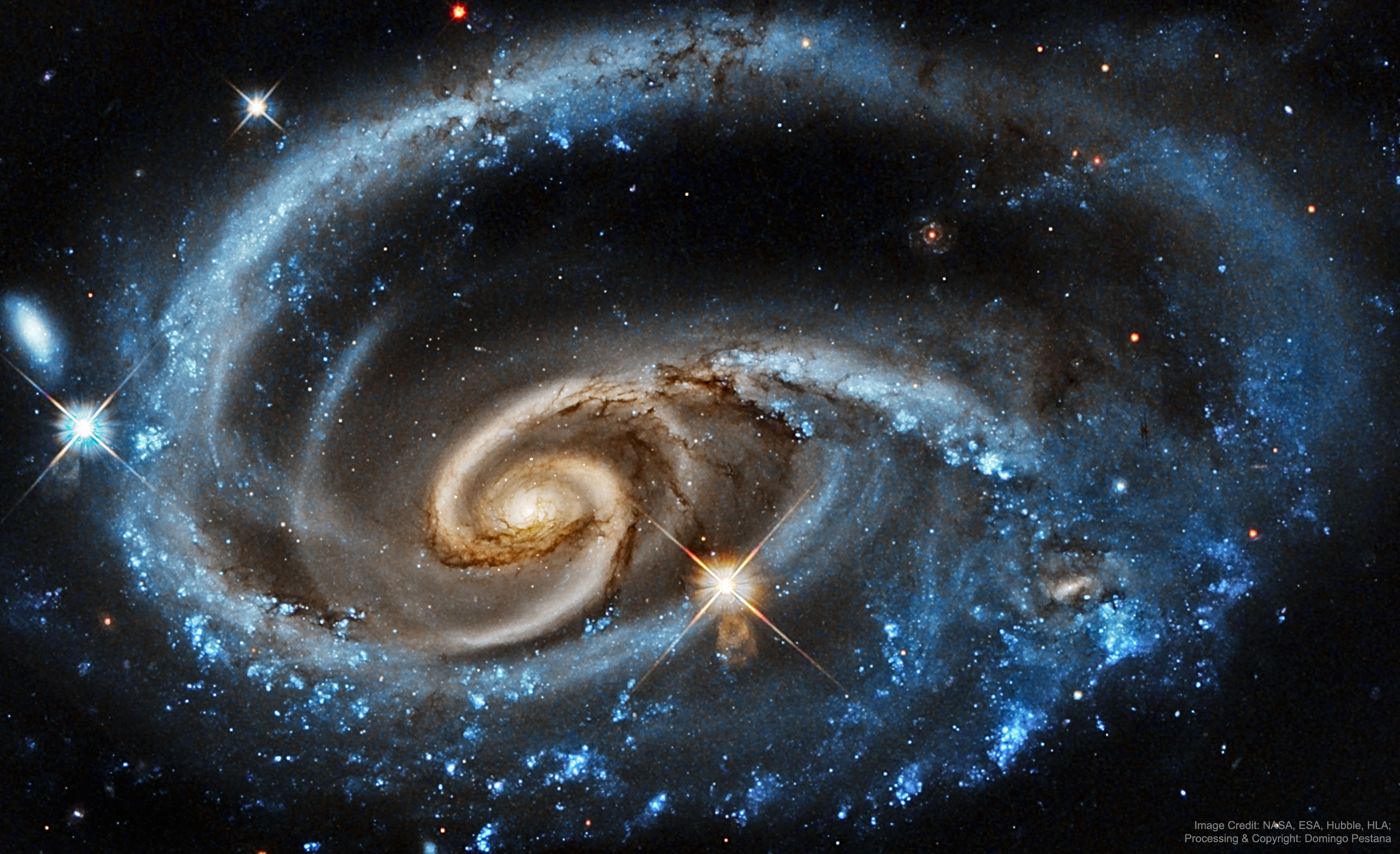
Astronomy picture of the day - 2017 May 10 - UGC 1810: Wildly Interacting Galaxy from Hubble

Image Credit: NASA, ESA, Hubble, HLA; Processing & Copyright: Domingo Pestana
Explanation: What's happening to this spiral galaxy? Although details remain uncertain, it surely has to do with an ongoing battle with its smaller galactic neighbor. The featured galaxy is labelled UGC 1810 by itself, but together with itscollisional partner is known as Arp 273. The overall shape of the UGC 1810 -- in particular its blue outer ring -- is likely a result of wild and violent gravitational interactions. This ring's blue color is caused by massive stars that are blue hot and have formed only in the past few million years. The inner galaxy appears older, redder, and threaded with cool filamentary dust. A few bright stars appear well in the foreground, unrelated to UGC 1810, while several galaxies are visible well in the background. Arp 273 lies about 300 million light years away toward the constellation of Andromeda. Quite likely, UGC 1810 will devour its galactic sidekick over the next billion years and settle into a classic spiral form.
Inscription à :
Commentaires (Atom)