"Serpa de Guadalupe"
2017-09-23

Astronomy picture of the day - 2017 September 20 - The Big Corona
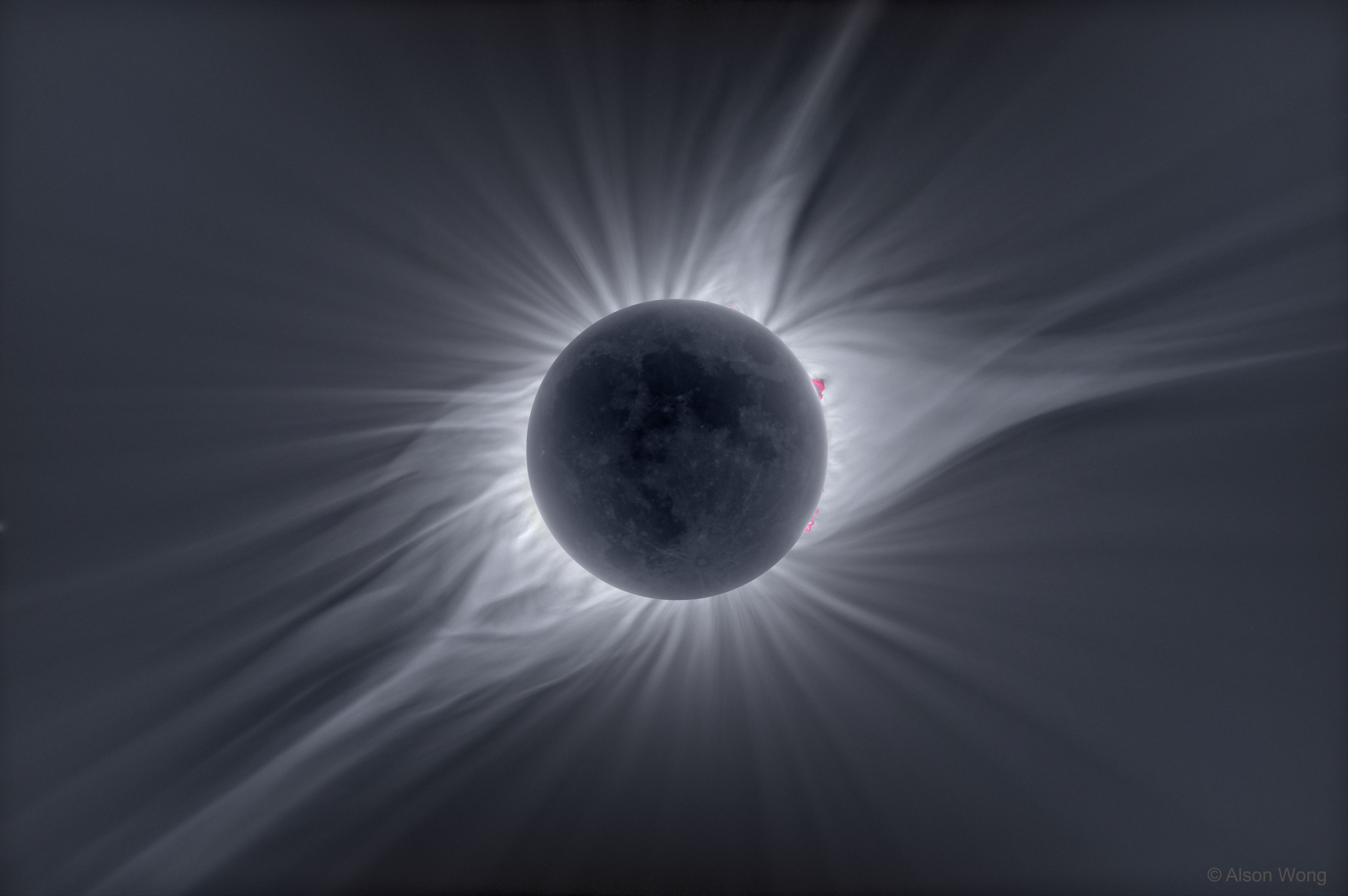
Image Credit & Copyright: Alson Wong
Explanation: Most photographs don't adequately portray the magnificence of the Sun's corona. Seeing the corona first-hand during a total solar eclipse is unparalleled. The human eye can adapt to see coronal features and extent that average cameras usually cannot. Welcome, however, to the digital age. The featured picture is a combination of forty exposures from one thousandth of a second to two seconds that, together, were digitally combined and processed to highlight faint features of the total solar eclipse that occurred in August of 2017. Clearly visible are intricate layers and glowing caustics of an ever changing mixture of hot gas and magnetic fields in the Sun's corona. Looping prominencesappear bright pink just past the Sun's limb. Faint details on the night side of the New Moon can even be made out, illuminated by sunlight reflected from the dayside of the Full Earth.
2017-09-22
Sitios lindos de Portugal - Albufeira da barragem de Vilarinho das Furnas

Albufeira da Barragem de Vilarinho das Furnas
Vilarinho da Furna (normalmente chamada de Vilarinho das Furnas) era uma aldeia situada no concelho de Terras de Bouro, no distrito de Braga. Com a construção da barragem de Vilarinho das Furnas em 1971 a aldeia ficou submersa, mas em anos de seca extrema, com o nível da albufeira baixo, é possível ainda ver os restos da aldeia. A Albufeira da Barragem de Vilarinho das Furnas cobre 77 km2 e é cercada de uma beleza natural que torna o lugar óptimo para desfrutar da natureza e de actividades ao ar-livre.
Autor : João Leitão



Astronomy picture of the day - 2017 September 22 - Solar Eclipse Solargraph
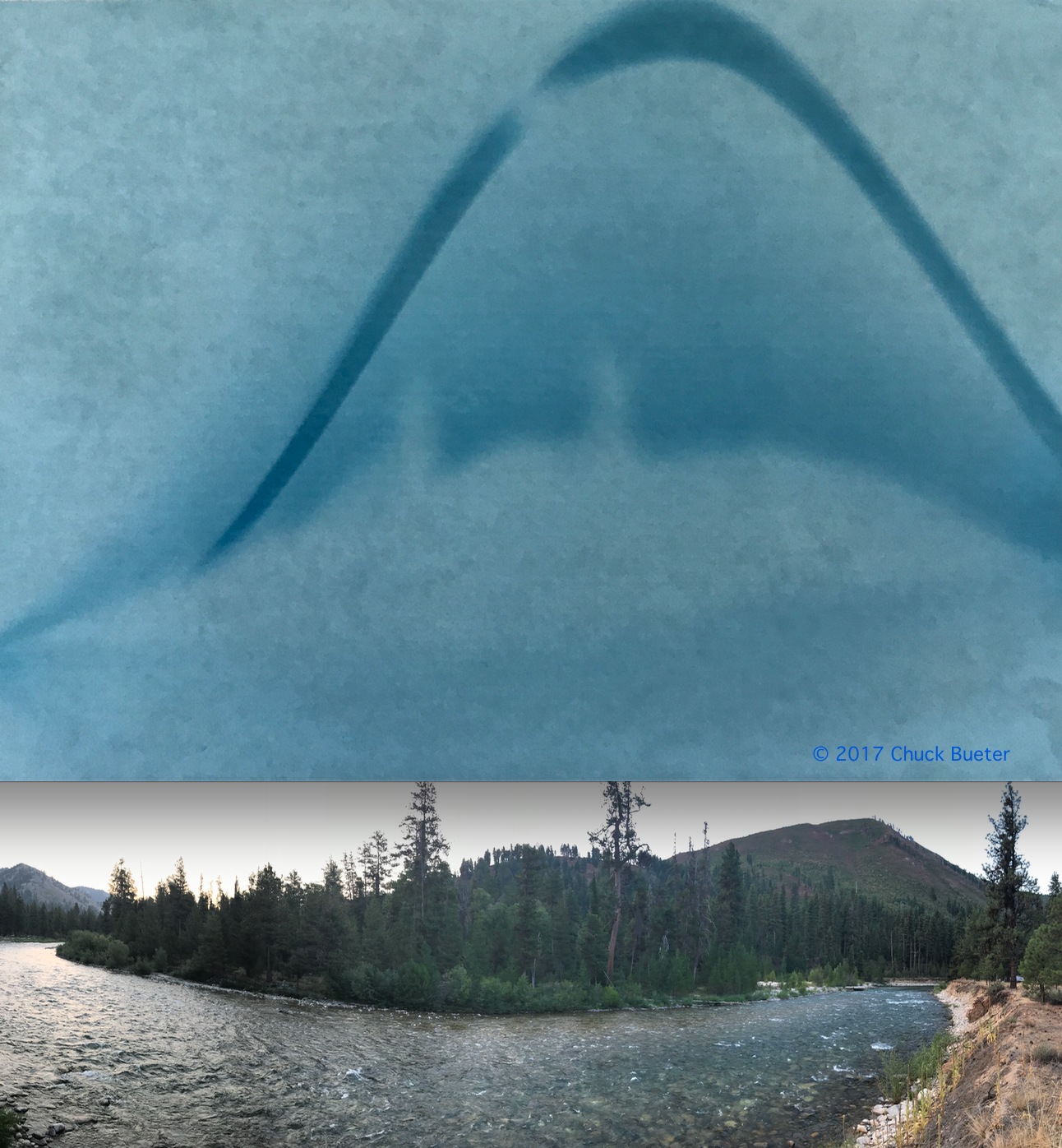
Image Credit & Copyright: Chuck Bueter (Nightwise.org)
Explanation: Today is the September equinox. Heading south, the Sun's path through the sky will cross the celestial equator at 20:02 UT. Of course the equinox date results in (mostly) equal night and day all over planet Earth. But on August 21 the Sun's path through the sky found a little extra-night for some. Made with a drink can pinhole camera and light-sensitive paper, this creative solargraph follows the Sun's path on that date. An all-day exposure, it traces the Sun's arc still rising high in northern skies, aligned with a panoramic snapshot of the local landscape at the bottom. The gap in the arc represents the duration of the partial and total phases of the solar eclipse in clear skies over Lowman, Idaho, USA. There, the extra-night (totality) lasted for about 2 minutes. The broad gap in the Sun's arc also covers the loss of sunlight during the more extended partial eclipse phases.
2017-09-21
Imagens do Mundo - Lua e Castelo de S. Jorge (Portugal)
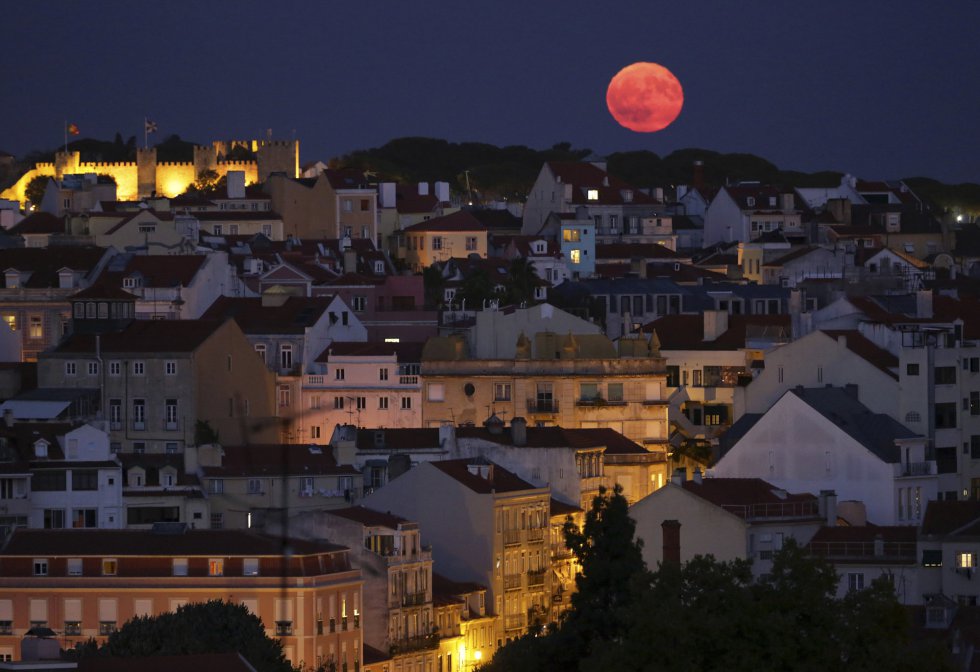
A lua ilumina o Castelo de São Jorge. Lisboa, Portugal.
ARMANDO FRANCA AP
Imagens do Mundo - Vista de uma praia em Alexandria (Egipto)
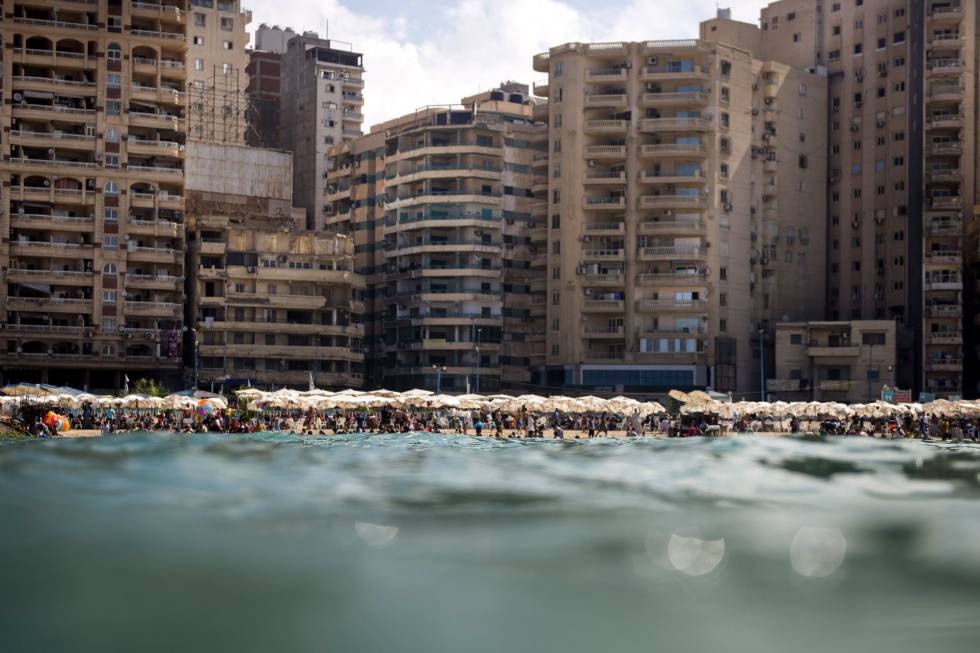
Vista de uma praia em Alexandria (Egipto).
MOHAMED HOSSAM EFE
Imagens do Mundo - Hong Kong, China
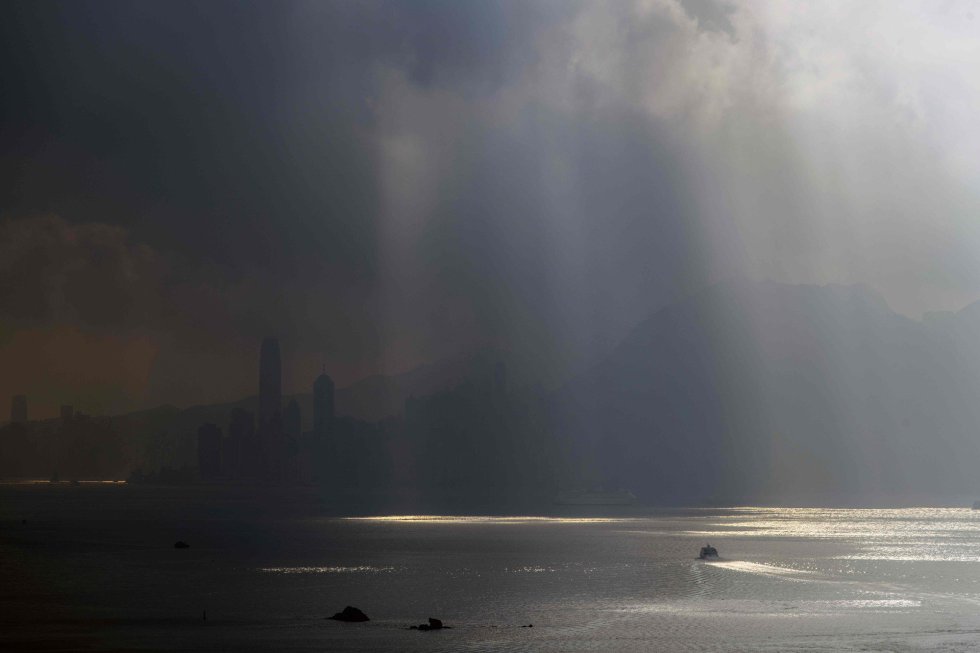
Um ferry navega até à Ilha de Hong Kong, China.
ANTHONY WALLACE AFP
Astronomy picture of the day - 2017 September 21 - A September Morning Sky
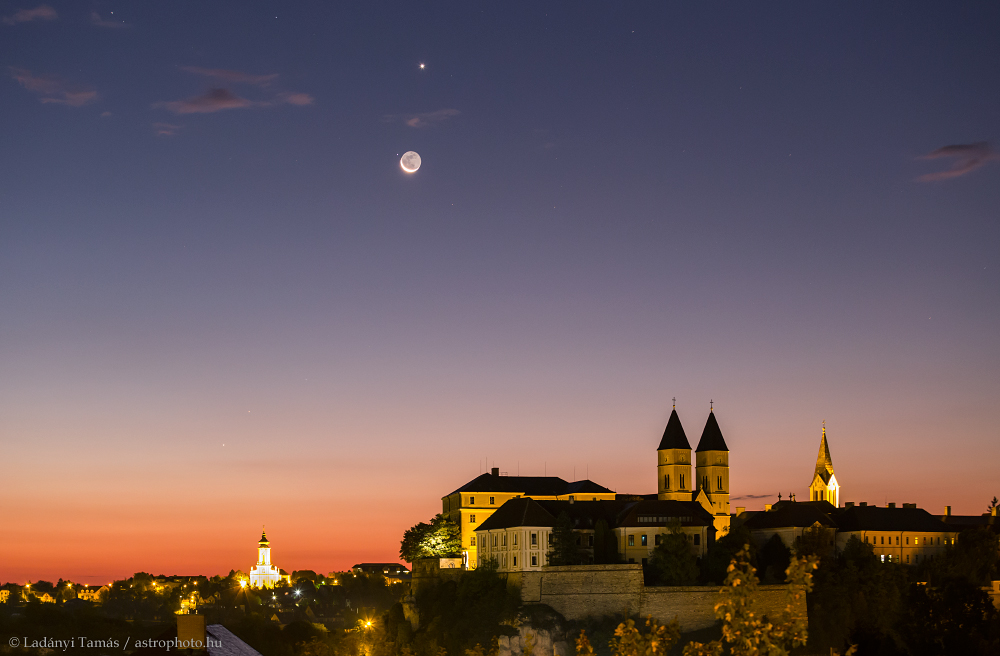
Image Credit & Copyright: Tamas Ladanyi (TWAN)
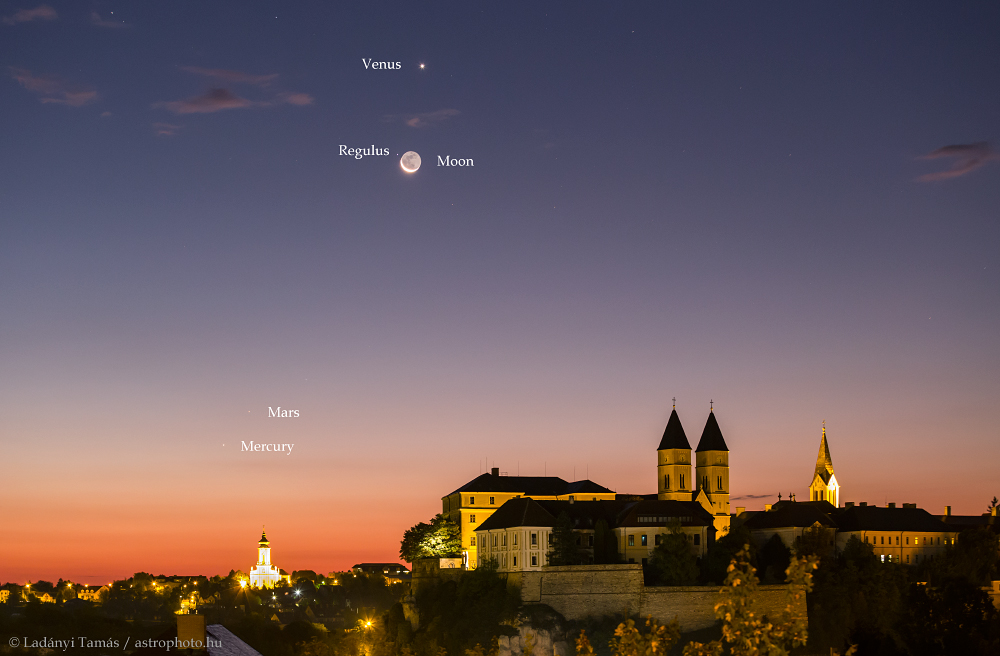
Explanation: The Moon, three planets, and a bright star gathered near the ecliptic plane in the September 18 morning sky over Veszprem Castle, Hungary. In this twilight skyscape, Mercury and Mars still shine close to the eastern horizon, soon to disappear in the glare of the Sun. Regulus, alpha star of the constellation Leo, is the bright point next to a waning crescent Moon, with brilliant Venus near the top of the frame. The beautiful morning conjunction of Moon, planets, and bright star could generally be followed by early morning risers all around planet Earth. But remarkably, the Moon also occulted, or passed directly in front of, Regulus and each of the three planets within 24 hours, all on September 18 UT. Visible from different locations, timing and watching the lunar occultations was much more difficult though, and mostly required viewing in daytime skies.
Inscription à :
Articles (Atom)