Une rivalité entre les illustres poètes Luís Vaz de Camões et Fernando Pessoa, une partie de poker entre l’ancien dictateur António de Oliveira Salazar et James Bond, ou encore la chanteuse de fado Amália Rodrigues œuvrant dans une ruelle du célèbre quartier de l’Alfama à Lisbonne : ce sont quelques-unes des scènes qui émaillent The Portuguese (Les Portugais), une comédie musicale destinée aux touristes.
Joué entièrement en anglais par des acteurs portugais, le spectacle affichait complet pour sa première, samedi 13 janvier, au Casino de Lisbonne. Il revisite l’histoire du Portugal de manière “totalement absurde”, assument dans le quotidien Público ses deux auteurs, Rui Cardoso Martins et Filipe Homem Fonseca. L’idée de cette comédie musicale a germé chez eux il y a deux ans, alors que le pays connaissait un boom du tourisme qui s’est poursuivi depuis.
La bande-son s’étend du fado aux Spice Girls
L’intrigue est simple : un couple d’étrangers arrive à Lisbonne et embarque pour une aventure à travers la ville, où des figures marquantes vont leur raconter les événements historiques les plus importants du pays. La mise en scène, volontiers humoristique, s’accompagne d’une bande-son éclectique, qui va du fado aux Spice Girls, en passant par Abba.
Le projet est né de “la volonté de montrer le Portugal au monde”, assure, toujours dans Público, Ana Brito e Cunha, qui met en scène le spectacle avec Sónia Aragão. “On révèle un petit peu de nous. On porte un regard sur les Portugais avec humour, plutôt qu’à travers lasaudade [une forme de nostalgie typiquement portugaise] et la tristesse.” La comédie musicale se veut aussi porteuse de l’idée selon laquelle le Portugal est le champion de la desenrasca (débrouille), que les auteurs ont pris le parti de traduire par un néologisme, “to desenrascate”, in english.
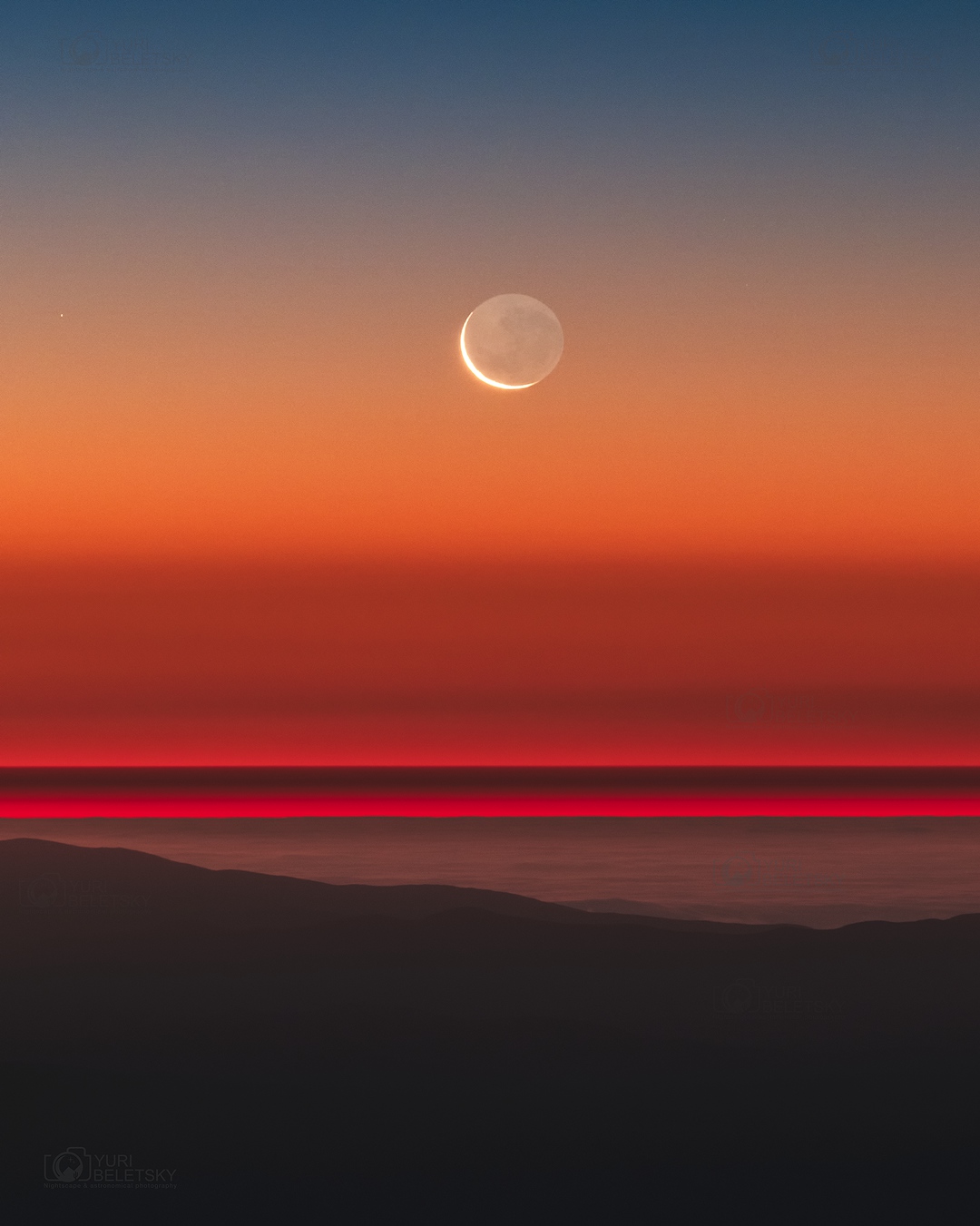
Explanation: Also known as the Moon's "ashen glow" or the "Old Moon in the New Moon's arms", earthshine is earthlight reflected from the Moon's night side. This stunning image of earthshine from a young crescent moon was taken from Las Campanas Observatory, Atacama Desert, Chile, planet Earth near moonset on January 18. Dramatic atmospheric inversion layers appear above the Pacific Ocean, colored by the sunset at the planet's western horizon. But the view from the Moon would have been stunning, too. When the Moon appears in Earth's sky as a slender crescent, a dazzlingly bright, nearly full Earth would be seen from the lunar surface. A description of earthshine, in terms of sunlight reflected by Earth's oceans in turn illuminating the Moon's dark surface, was written 500 years ago by Leonardo da Vinci.
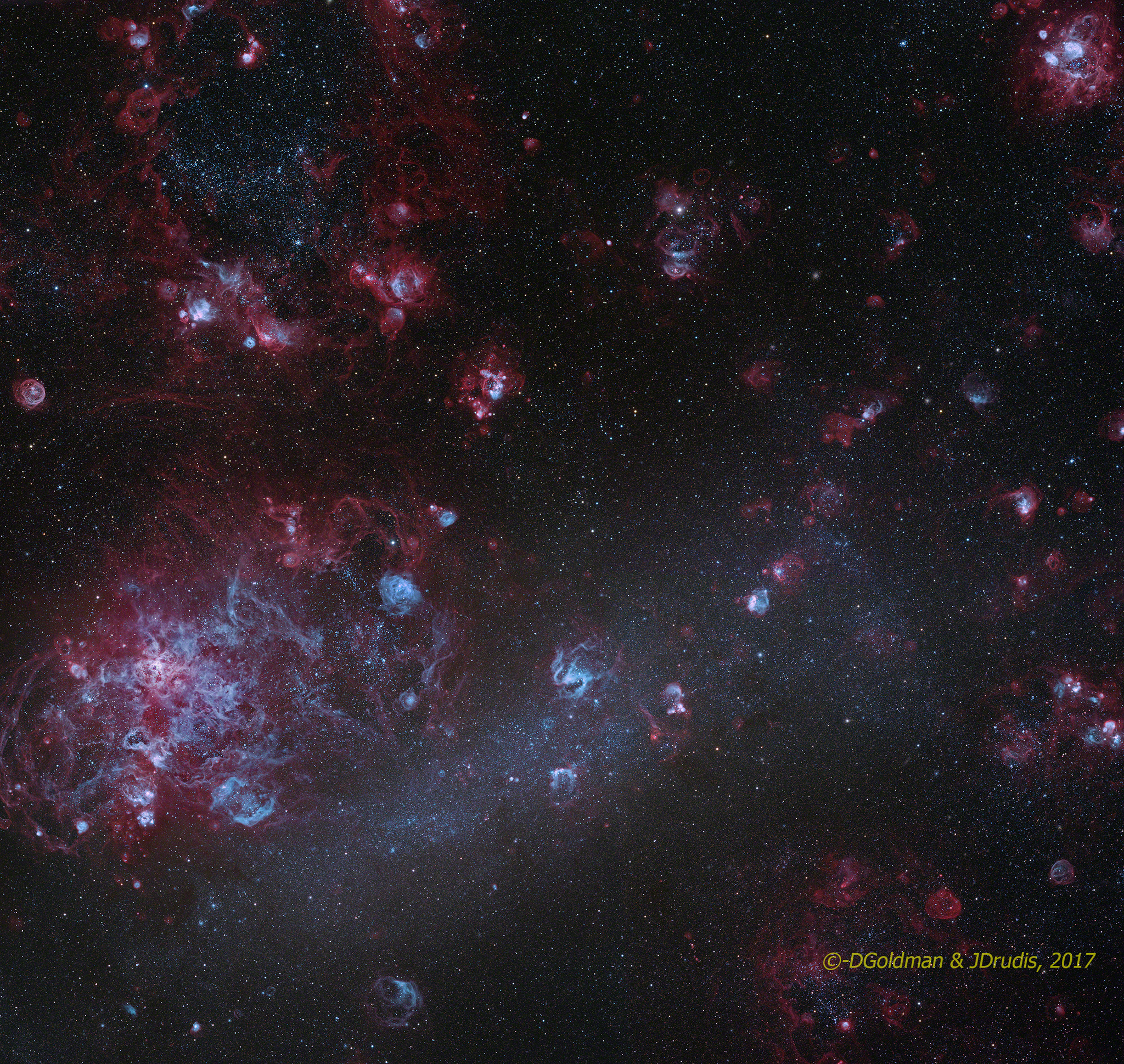
Explanation: An alluring sight in southern skies, the Large Magellanic Cloud (LMC) is seen in this deep and detailed telescopic mosaic. Recorded with broadband and narrowband filters, the scene spans some 5 degrees or 10 full moons. The narrowband filters are designed to transmit only light emitted by hydrogen, and oxygen atoms. Ionized by energetic starlight, the atoms emit their characteristic light as electrons are recaptured and the atoms transition to a lower energy state. As a result, in this image the LMC seems covered with its own clouds of ionized gas surrounding its massive, young stars. Sculpted by the strong stellar winds and ultraviolet radiation, the glowing clouds, dominated by emission from hydrogen, are known as H II (ionized hydrogen) regions. Itself composed of many overlapping H II regions, the Tarantula Nebula is the large star forming region at the left. The largest satellite of our Milky Way Galaxy, the LMC is about 15,000 light-years across and lies a mere 160,000 light-years away toward the constellation Dorado.
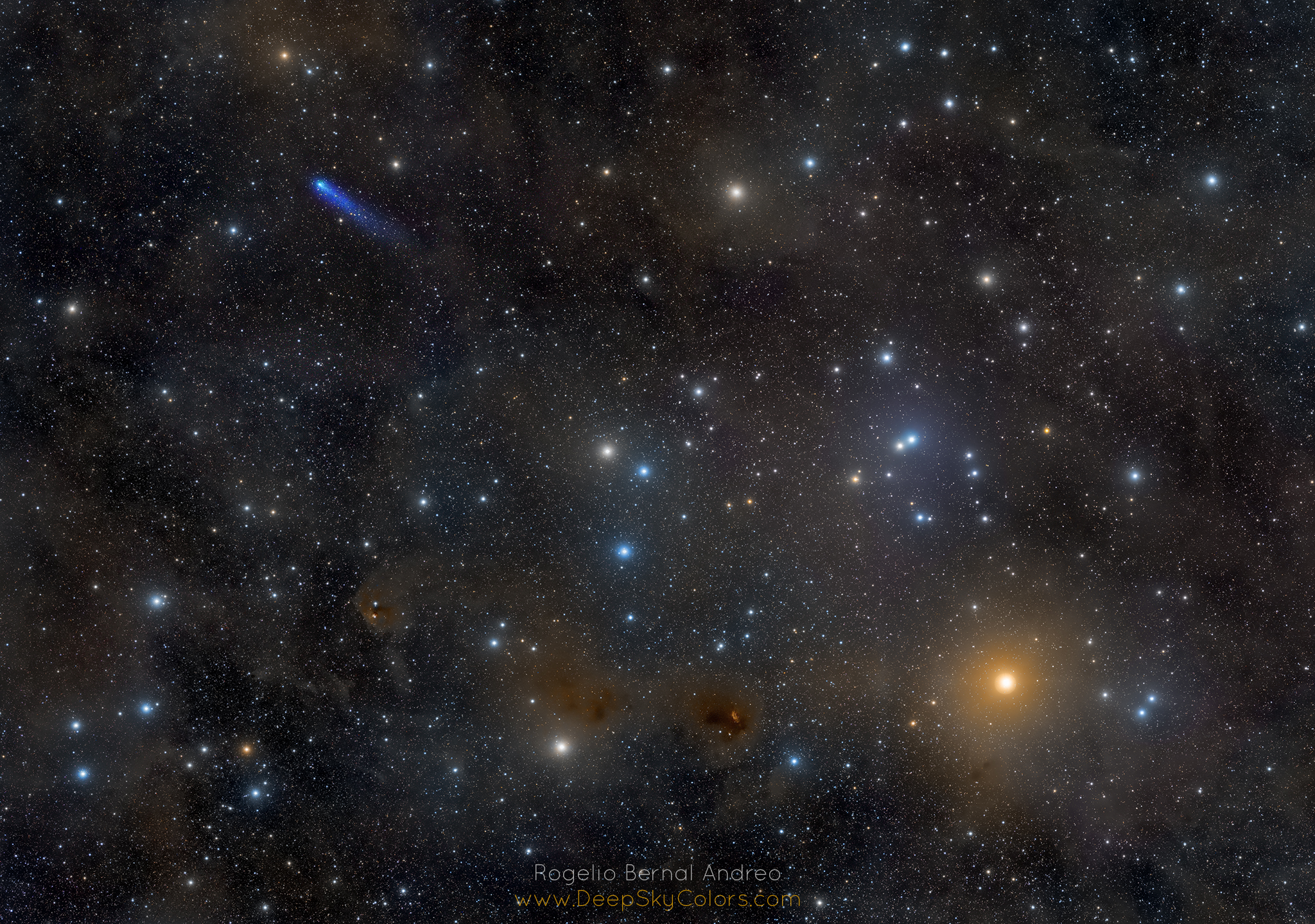
Explanation: Stars of the Hyades cluster are scattered through this mosaic spanning over 5 degrees on the sky toward the constellation Taurus. Presently cruising through the Solar System, the remarkably blue comet C/2016 R2 PanSTARRS is placed in the wide field of view using image data from January 12. With the apex of the V-shape in the Hyades cluster positioned near the top center, bright Aldebaran, alpha star of Taurus, anchors the frame at the lower right. A cool red giant, Aldebaran is seen in orange hues in the colorful starfield. While the stars of the Hyades are gathered 151 light-years away, Aldebaran lies only 65 light-years distant and so is separate from the cluster stars.On January 12, C/2016 R2 was over 17 light-minutes from planet Earth and nearly 24 light-minutes from the Sun. Its blue tinted tail largely due to CO+ gas fluorescing in sunlight, the head or coma of the comet appears with a slightly greenish hue, likely emission from diatomic carbon.
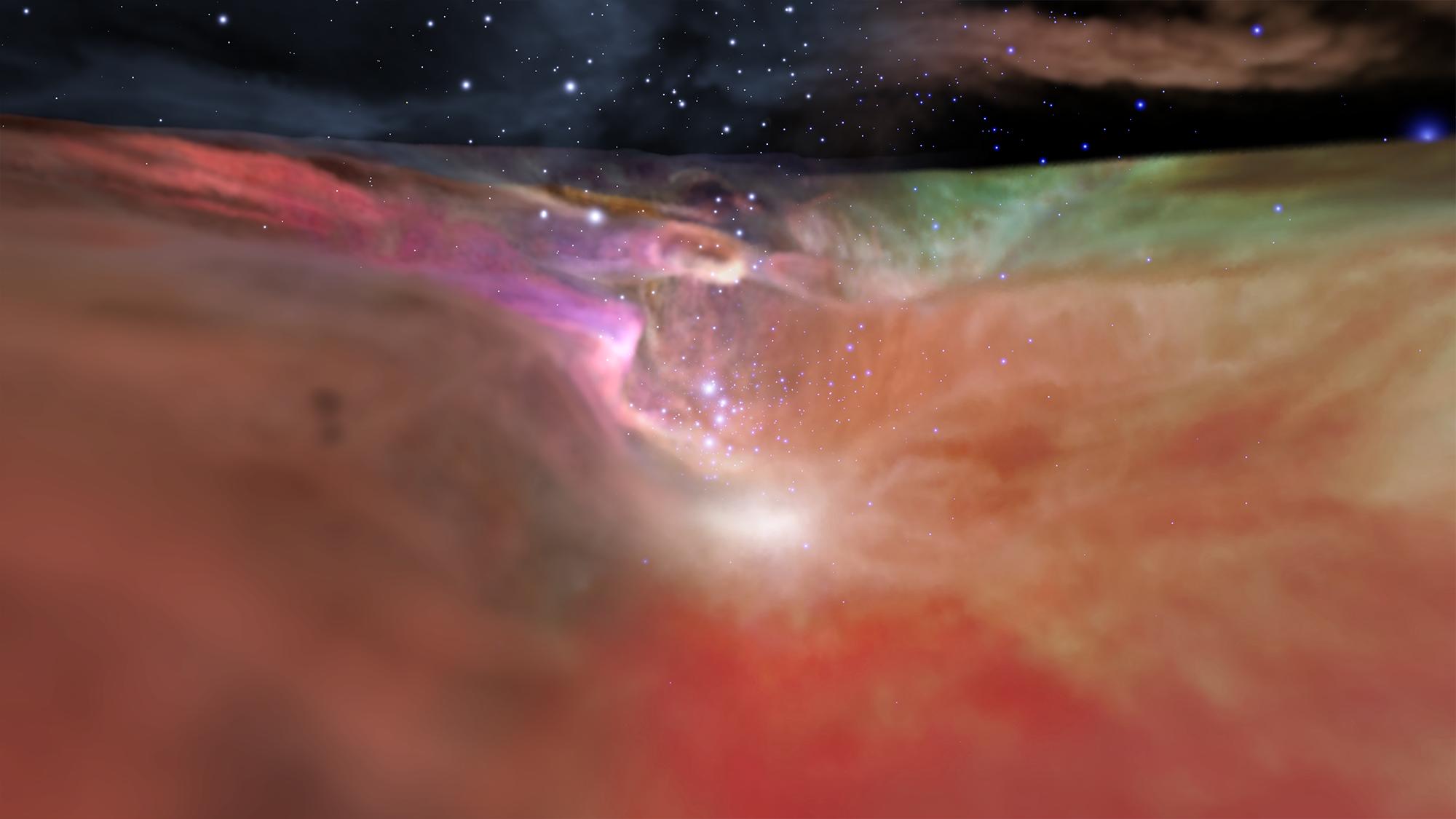
In the Valley of Orion Visualization Credit: NASA, ESA, F. Summers, G. Bacon, Z. Levay, J. DePasquale, L. Frattare, M. Robberto, M. Gennaro (STScI) and R. Hurt (Caltech/IPAC)
Explanation: This exciting and unfamiliar view of the Orion Nebula is a visualization based on astronomical data and movie rendering techniques. Up close and personal with a famous stellar nursery normally seen from 1,500 light-years away, the digitally modeled frame transitions from a visible light representation based on Hubble data on the left to infrared data from the Spitzer Space Telescope on the right. The perspective at the center looks along a valley over a light-year wide, in the wall of the region's giant molecular cloud. Orion's valley ends in a cavity carved by the energetic winds and radiation of the massive central stars of the Trapezium star cluster. The single frame is part of a multiwavelength, three-dimensional video that lets the viewer experience an immersive, three minute flight through the Great Nebula of Orion.