2016-11-11

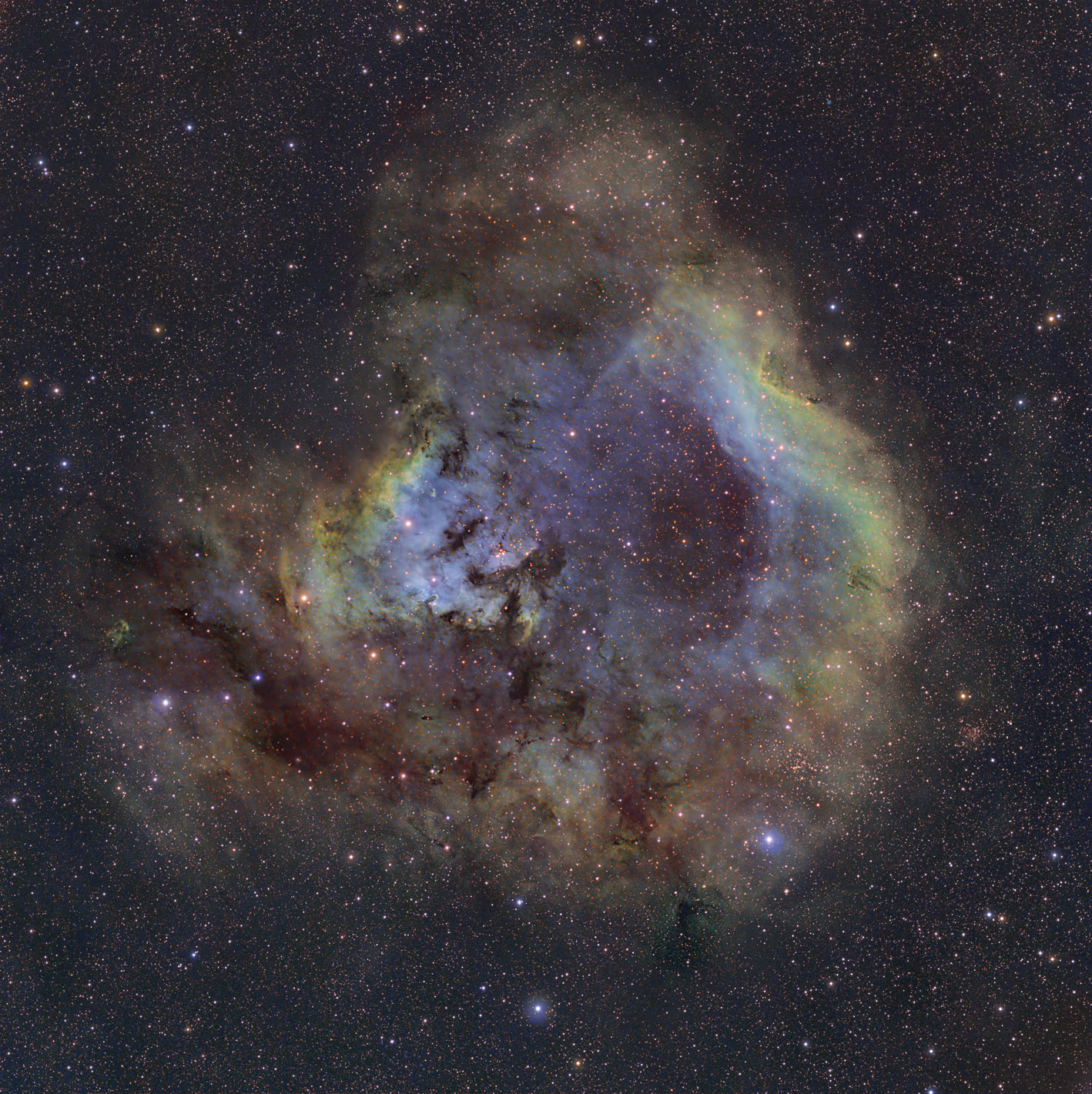
Astronomy picture of the day - 2016 November 11 - NGC 7822 in Cepheus

See Explanation.  Clicking on the picture will download
 the highest resolution version available.
NGC 7822 in Cepheus 
Image Credit & Copyright: Steve Cannistra (StarryWonders)
Explanation: Hot, young stars and cosmic pillars of gas and dust seem to crowd into NGC 7822. At the edge of a giant molecular cloud toward the northern constellation Cepheus, the glowing star forming region lies about 3,000 light-years away. Within the nebula, bright edges and dark shapes stand out in this colorful skyscape. The image includes data from narrowband filters, mapping emission from atomic oxygen, hydrogen, and sulfur into blue, green, and red hues. The emission line and color combination has become well-known as the Hubble palette. The atomic emission is powered by energetic radiation from the central hot stars. Their powerful winds and radiation sculpt and erode the denser pillar shapes and clear out a characteristic cavity light-years across the center of the natal cloud. Stars could still be forming inside the pillars by gravitational collapse but as the pillars are eroded away, any forming stars will ultimately be cutoff from their reservoir of star stuff. This field of view spans over 40 light-years at the estimated distance of NGC 7822.

2016-11-10

Peter Gabriel - "The book of love" - Video - Music - Live

Afficher l'image d'origine
"The book of love"

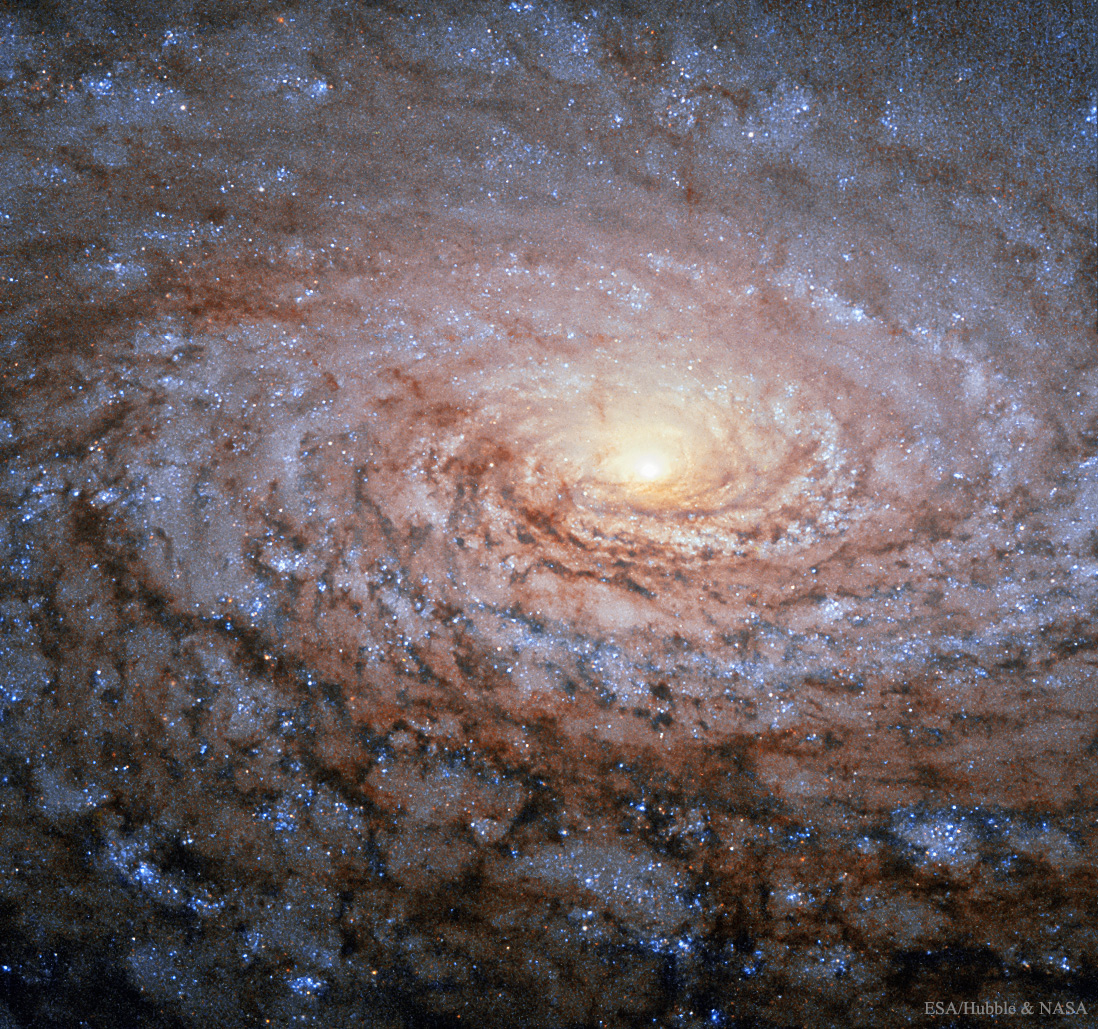
Astronomy picture of the day - 2016 November 10 - M63: The Sunflower Galaxy from Hubble

See Explanation.  Clicking on the picture will download
 the highest resolution version available.
M63: The Sunflower Galaxy from Hubble 
Image Credit: ESANASAHubble
Explanation: One of the bright spiral galaxies visible in the north sky is M63, the Sunflower Galaxy. M63, also catalogued as NGC 5055, can be found with a small telescope toward the constellation of Hunting Dogs (Canes Venatici). The featured picture from the Hubble Space Telescope exhibits the center of M63, complete with long winding spiral arms glowing blue from a few bright young stars, emission nebulae glowing red from hot ionized hydrogen gas, and dark dust in numerous filaments. M63 interacts gravitationally with M51 (the Whirlpool Galaxy) and several smaller galaxies. Light takes about 35 million years to reach us from M63, and about 60,000 years to cross the spiral galaxy. Stars in the outer regions of the Sunflower Galaxy rotate about the center at a speed so high that, given the matter seen and assuming normal gravity, they should fly off into space. The fact that the stars remain indicates the presence of sort of invisible, gravitationally-binding, dark matter.

2016-11-09

Astronomy picture of the day - 2016 November 9 - Inverted City Beneath Clouds

2016 November 9
See Explanation.  Clicking on the picture will download
 the highest resolution version available.
Inverted City Beneath Clouds 
Image Credit & Copyright: Mark Hersch
Explanation: How could that city be upside-down? The city, Chicago, was actually perfectly right-side up. The long shadows it projected onto nearby Lake Michigan near sunset, however, when seen in reflection, made the buildings appear inverted. This fascinating, puzzling, yet beautiful image was captured by a photographer in 2014 on an airplane on approach to Chicago's O'Hare International Airport. The Sun can be seen both above and below the cloud deck, with the latter reflected in the calm lake. As a bonus, if you look really closely -- and this is quite a challenge -- you can find another airplane in the image, likely also on approach to the same airport.

2016-11-06

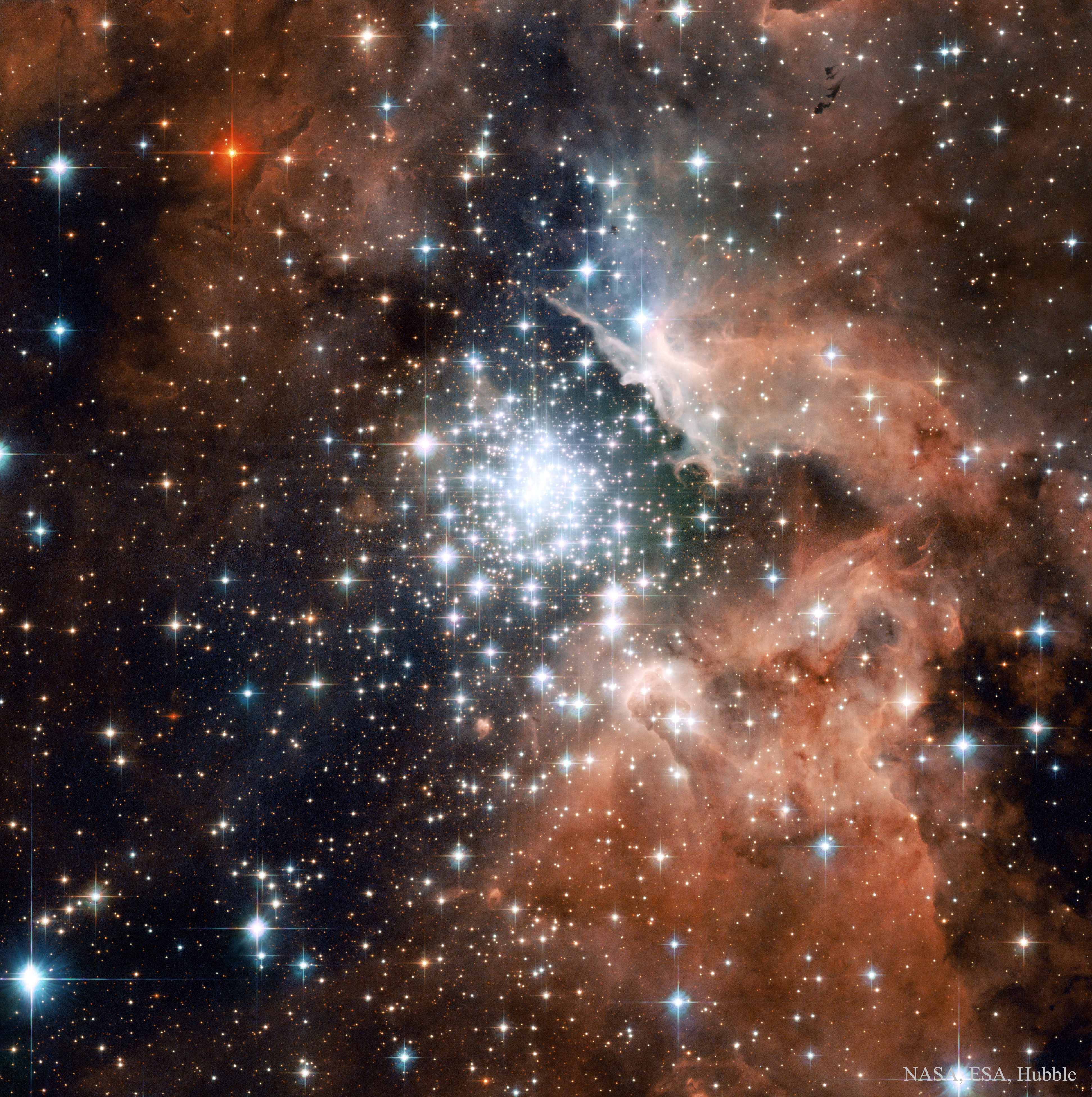
Astronomy picture of the day - 2016 November 6 - Starburst Cluster in NGC 3603

See Explanation.  Clicking on the picture will download
 the highest resolution version available.
Starburst Cluster in NGC 3603 
Image Credit: NASAESAHubble Heritage (STScI/AURA)-ESA/ Hubble Collaboration;
Acknowledgment: J. Maiz Apellaniz (Inst. Astrofisica Andalucia) et al., & Davide de Martin (skyfactory.org)
Explanation: A mere 20,000 light-years from the Sun lies NGC 3603, a resident of the nearby Carina spiral arm of our Milky Way GalaxyNGC 3603 is well known to astronomers as one of the Milky Way's largest star-forming regions. The central open star cluster contains thousands of stars more massive than our Sun, stars that likely formed only one or two million years ago in a single burst of star formation. In fact, nearby NGC 3603 is thought to contain a convenient example of the massive star clusters that populate much more distant starburst galaxiesSurrounding the cluster are natal clouds of glowing interstellar gas and obscuring dust, sculpted by energetic stellar radiation and winds.Recorded by the Hubble Space Telescope, the image spans about 17 light-years.

2016-11-05

Kids United -"Tout le bonheur du monde" - Video - Music

"Tout le bonheur du monde"

Astronomy picture of the day - 2016 November 5 - ISS Fisheye Fly-Through

ISS Fisheye Fly-Through 
Image Credit: NASA, ISSHarmonic
Explanation: Shot in Ultra HD, this stunning video can take you on a tour of the International Space Station. A fisheye lens with sharp focus and extreme depth of field provides an immersive visual experience of life in the orbital outpost. In the 18 minute fly-through, your point of view will float serenely while you watch our fair planet go by 400 kilometers below the seven-windowed Cupola, and explore the interior of the station's habitable nodes and modules from an astronaut's perspective. The modular International Space Station is Earth's largest artificial satellite, about the size of a football field in overall length and width. Its total pressurized volume is approximately equal to that of a Boeing 747 aircraft.

2016-11-03

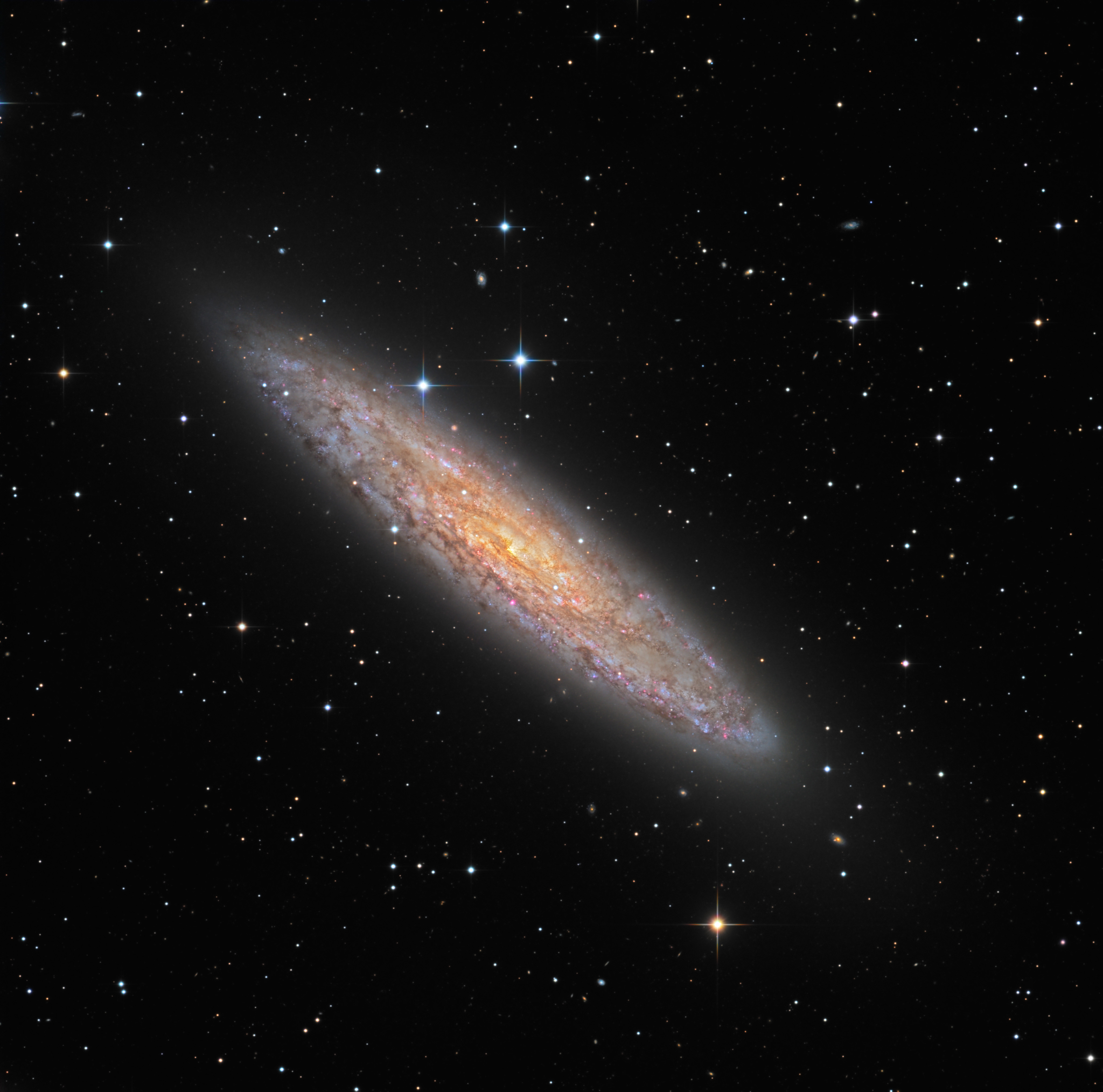
Astronomy picture of the day - 2016 November 3 - NGC 253: Dusty Island Universe

See Explanation.  Clicking on the picture will download
 the highest resolution version available.
NGC 253: Dusty Island Universe 
Image Credit & Copyright: Dietmar HagerEric Benson
Explanation: Shiny NGC 253 is one of the brightest spiral galaxies visible, and also one of the dustiest. Some call it the Silver Dollar Galaxy for its appearance in small telescopes, or just the Sculptor Galaxy for its location within the boundaries of the southern constellation Sculptor. First swept up in 1783 by mathematician and astronomer Caroline Herschel, the dusty island universe lies a mere 10 million light-years away. About 70 thousand light-years across, NGC 253 is the largest member of the Sculptor Group of Galaxies, the nearest to our own Local Group of Galaxies. In addition to its spiral dust lanes, tendrils of dust seem to be rising from a galactic disk laced with young star clusters and star forming regions in this sharp color image. The high dust content accompanies frantic star formation, earning NGC 253 the designation of a starburst galaxy. NGC 253 is also known to be a strong source of high-energy x-rays and gamma rays, likely due to massive black holes near the galaxy's center.