2014-08-06

Images du Monde - Phnom Penh - Cambodge

A la mémoire de nos pères
Au Cambodge, à Phnom Penh, l'ancienne prison Tuol Sleng appartenant aux Kmer rouges est devenue aujourd'hui un musée. Ce lieu est à la mémoire de tous ceux qui ont perdu la vie pendant le génocide.
©Damir Sagolj / Reuters

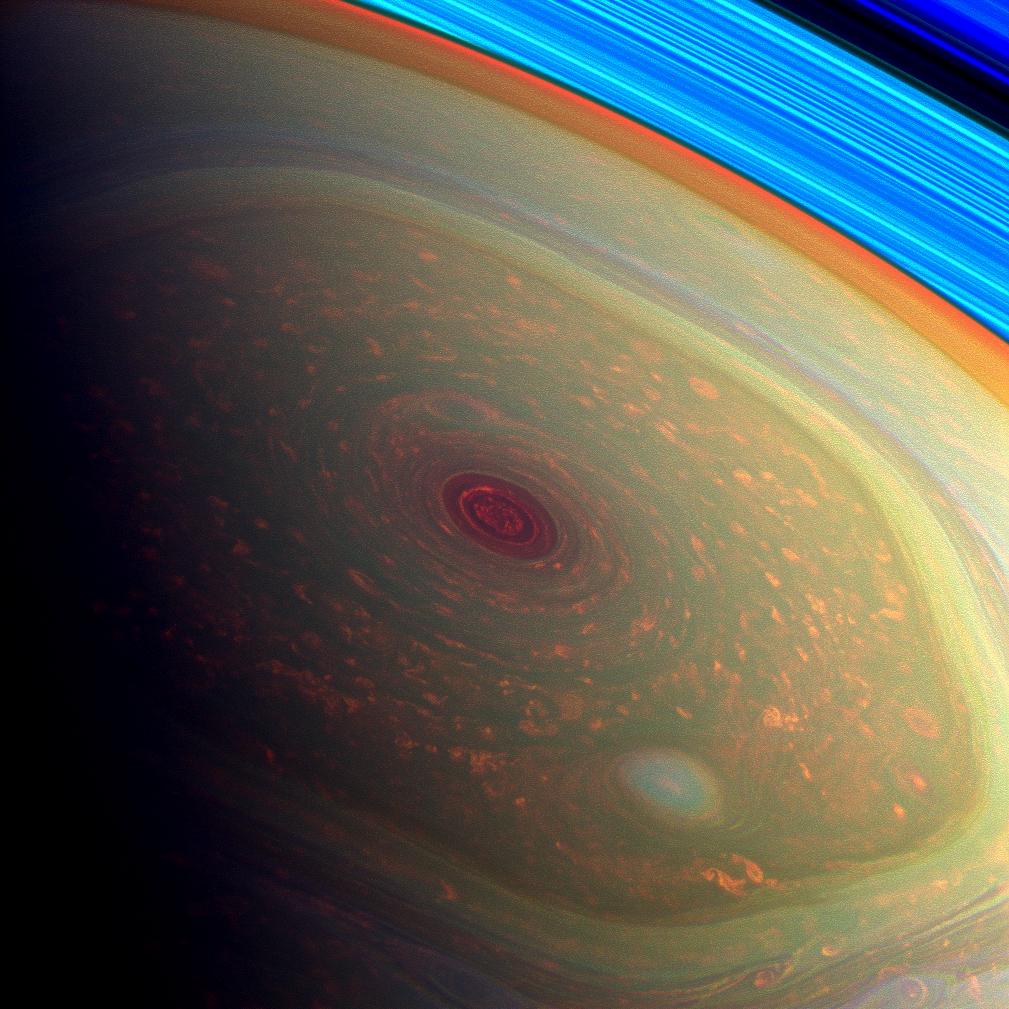
Picture - Saturn's Swirling Cloudscape

See Explanation.  Clicking on the picture will download
 the highest resolution version available.
Saturn's Swirling Cloudscape
Image Credit: Cassini Imaging Team,SSI,JPL,ESA,NASA
Explanation: Acquiring its first sunlit views of far northernSaturn in late 2012, the Cassini spacecraft's wide-angle camera recorded thisstunning, false-color image of the ringed planet's north pole. The composite of near-infrared image data results in red hues for low clouds and green for high ones, giving theSaturniancloudscape a vivid appearance.Enormous by terrestrial standards, Saturn's north polarhurricane-like storm is deep, red, and about 2,000 kilometers wide. Clouds at its outer edge travel at over 500 kilometers per hour. Other atmospheric vorticesalso swirl inside the large, yellowish green,six-sided jet streamknown as the hexagon. Beyond the cloud tops at the upper right, arcs of the planet'seye-catching rings appear bright blue.

2014-08-05

Imagens do Mundo - Nova Delhi - India

Una madre y su niño descansan sobre sus pertenencias a la sombra de un edificio en Nueva Delhi, India.

Imagens do Mundo - A miséria a que Portugal chegou!

Um banco de uma rua de Lisboa serve de cama a un mendigo. 

Objectivo: Cometa 67P/Churyumov-Gerasimenko


La nave espacial Rosetta, que partió de la Tierra hace algo más de 10 años, llega mañana a su objetivo: el cometa 67P/Churyumov-Gerasimenko, un cuerpo del Sistema Solar hecho de hielo y polvo, con forma de pato de goma y de unos cuatro kilómetros de largo que está ahora mismo entre las órbitas de Júpiter y Marte, a tres veces y media la distancia entre la Tierra y el Sol. Si todo sale como está previsto, la sonda automática de la Agencia Europea del Espacio (ESA) se pondrá en órbita del cometa y lo acompañará en su viaje hacia el Sol para estudiar de cerca los cambios que sufra. El encuentro mañana será a 100 kilómetros de la superficie del 67P/Churyumov-Gerasimenko, que ha ido desvelando algunas de sus características, como la temperatura y forma, en las últimas semanas, a medida que la Rosetta, cargada de cámaras y sensores, estaba más y más cerca y frenando para acompasar su velocidad a la del cometa.
 
La temperatura media de la superficie del cometa es de unos 70 grados centígrados bajo cero. Parece muy baja, pero en realidad es demasiado alta: si fuera una capa exclusivamente de hielo limpio lo que cubre el 67P/Churyumov-Gerasimenko, los sensores de la nave Rosetta habrían medido 20 o 30 grados menos. Así que los científicos de la misión concluyen que, tal y como sospechaban por la luz que habían captado los telescopios, el cometa está cubierto por una capa de polvo oscuro, aunque con algunas zonas de hielo limpio.
“Este resultado es muy interesante dado que nos proporciona las primeras pistas sobre la composición y las propiedades físicas de la superficie del cometa”, comentó el científico Fabrizio Capaccioni, responsable del instrumento Virtis del Rosetta con el que se tomaron las medidas de temperatura entre el 13 y el 21 de julio, cuando la nave estaba aún a 14.000 y 5.000 kilómetros del objetivo, según informó la ESA a finales de la semana pasada. Entonces el cometa 67P/Churyumov-Gerasimenko, a 555 millones de kilómetros del Sol (más de tres veces la distancia de la Tierra a la estrella), era solo un par de píxeles en el sensor térmico que capta la emisión infrarroja.
“El Virtis empezará enseguida a generar mapas que muestren la temperatura de rasgos concretos [del cometa]”, señala Capaccioni. Además, permitirá estudiar la variación térmica en áreas específicas para saber cómo de rápido reaccionan a la luz del Sol. Esto dará pistas sobre propiedades como la conductividad térmica, la densidad y la porosidad de la capa superficial del cometa.
El Pais - España

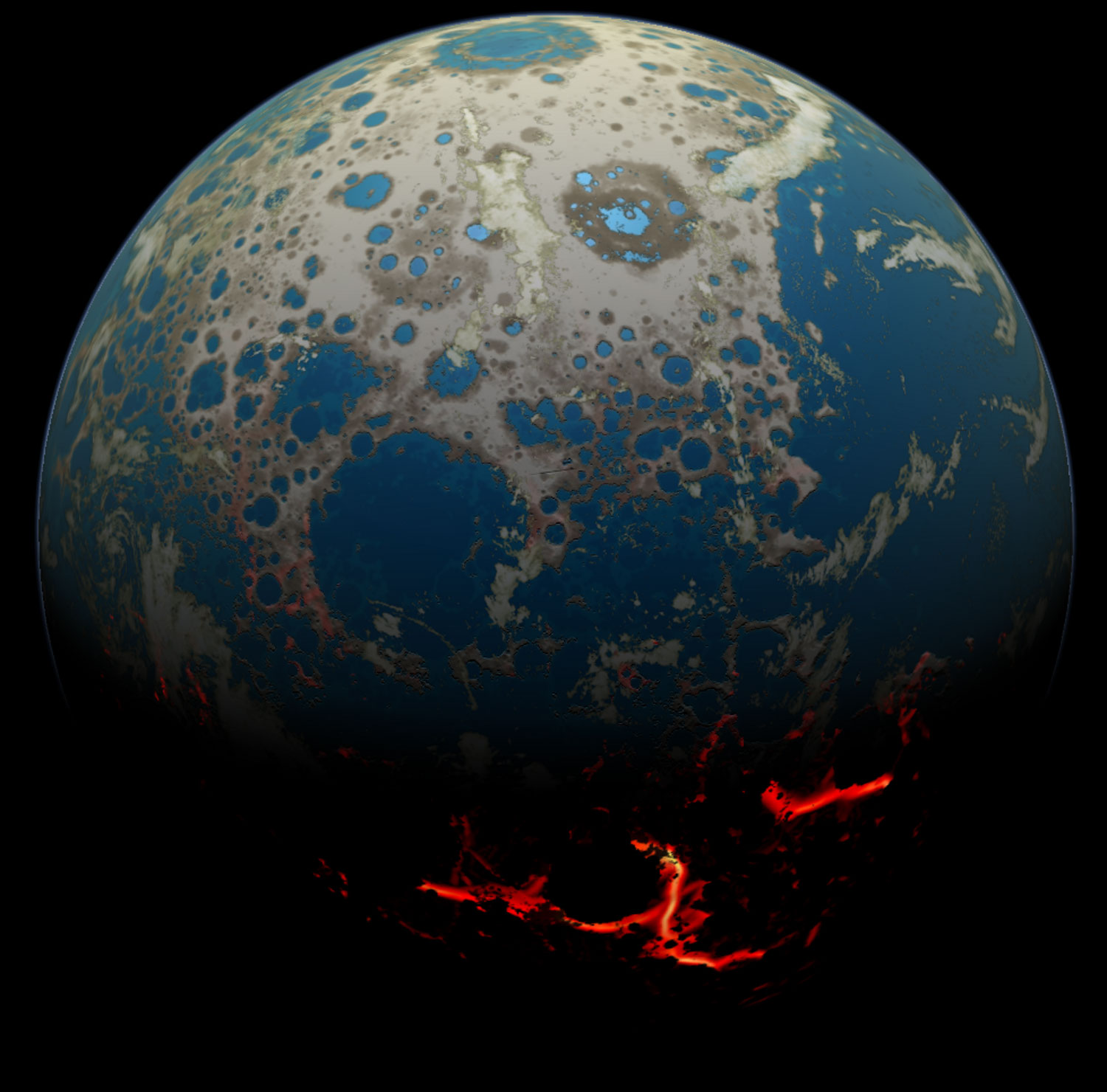
Picture - Four Billion BCE: Battered Earth

See Explanation.  Clicking on the picture will download
 the highest resolution version available.
Four Billion BCE: Battered Earth
Illustration Credit: Simone Marchi (SwRI), SSERVI, NASA

Explanation: No place on Earth was safe. Four billion years ago, during the Hadean eon, our Solar System was a dangerous shooting gallery of large and dangerous rocks and ice chunks.Recent examination of lunar and Earth bombardment data indicate that the entire surface of the Earth underwent piecemeal upheavals, hiding our globe's ancient geologic history, and creating a battered world with no remaining familiar land masses. The rain of devastation made it difficult for any life to survive, although bacteria that could endure high temperatures had the best chance. Oceans thought to have formed during this epoch would boil away after particularly heavy impacts, only to reform again. The above artist's illustration depicts how Earth might have looked during this epoch, with circular impact features dotting the daylight side, and hot lava flows visible in the night. One billion years later, in a calmer Solar System, Earth's first supercontinent formed.

2014-08-04

Texte/Images guerre, quelle saloperie!


L'abrutissement total de la condition humaine: la guerre
 
Ils marchent, ils marchent vers la mort glorieuse. Laissant derrière eux femmes et enfants. Ils vont combattre l'"énnemi", leur semblable... Ils vont tuer plutôt que d'être tués, obéissant aux ordres de politiques lâches qui boiront moulte champagne sur les corps dilacérés... Allons enfants de la Patrie...
JoanMira

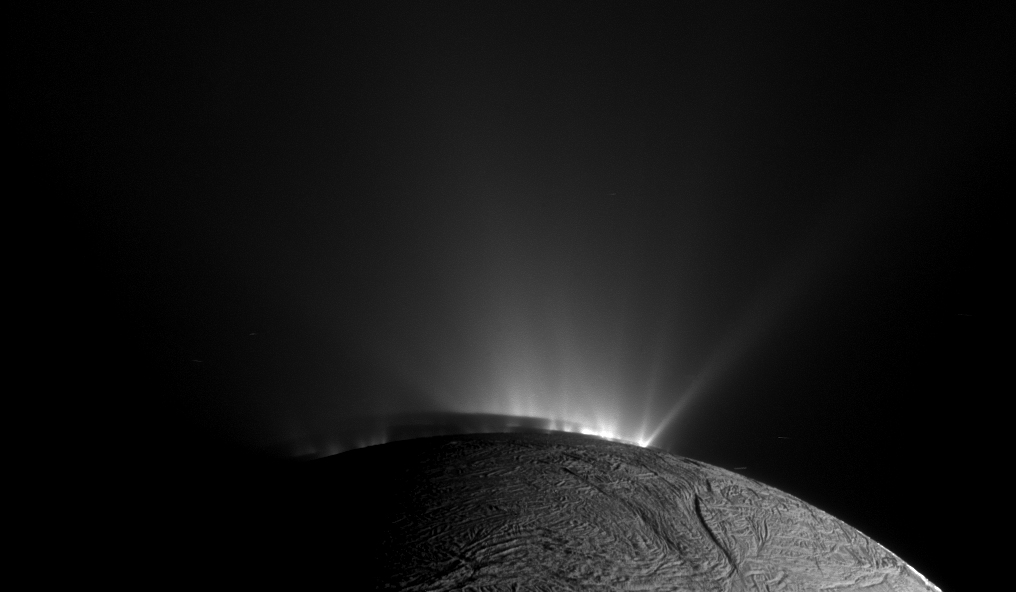
Picture - Shadows and Plumes Across Enceladus

See Explanation.  Clicking on the picture will download
 the highest resolution version available.
Shadows and Plumes Across Enceladus
Image Credit: Cassini Imaging Team,SSI,JPL,ESA,NASA

Explanation: Why does Enceladus have ice plumes? The discovery of jets spewing water vapor and ice was detected by the Saturn-orbiting Cassini spacecraft in 2005. The origin of the water feeding the jets, however, remained a topic of research. A leading hypothesis held that the source might originate from a deep underground sea, but another hypothesis indicated that it might just be ice melted off walls of deep rifts by the moon's tidal flexing and heating. Pictured above, the textured surface of Enceladus is visible in the foreground, while rows of plumes rise from ice fractures in the distance. These jets are made more visible by the Sun angle and the encroaching shadow of night. Recent study of over a hundred images like this -- of geysers crossing Enceladus' South Pole, together with regional heat maps, indicate that these plumes likely originate from a hidden sea, incresaing the chance that this frosty globe might be harboring life.