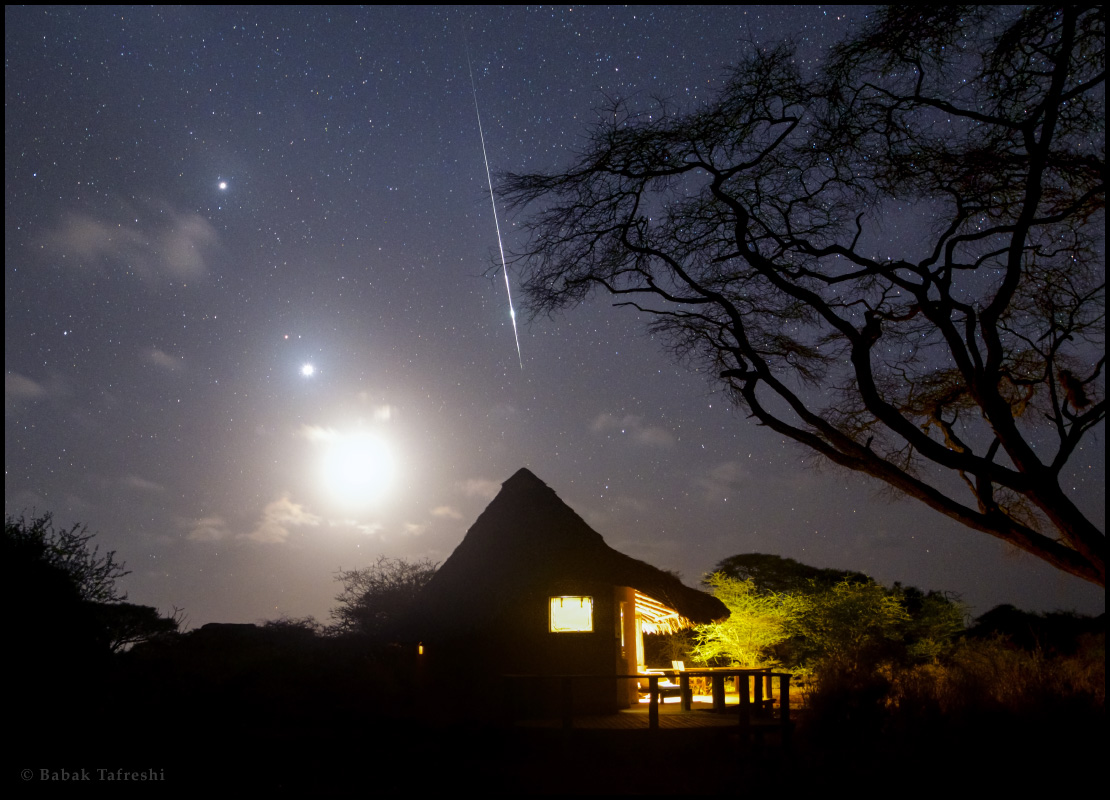
Explanation: On November 8, a waning crescent Moon joined the continuing parade of planets in Earth's morning skies. Captured here from Amboseli National Park, Kenya, even the overexposed moonlight can't washout brilliant Venus though, lined up near the ecliptic plane with faint Mars and bright Jupiter above. As if Moon and planets aren't enough, a comparably bright Taurid meteor also streaks through the scene. In fact November's Taurid meteor showers have had a high proportion of bright fireballs. Apparently streaming from radiants in Taurus, the meteors are caused by our fair planet's annual passage through debris from Comet 2P/Encke. The comet's dust grains are catching up with Earth's atmosphere at a relatively low speed of about 27 kilometers per second.
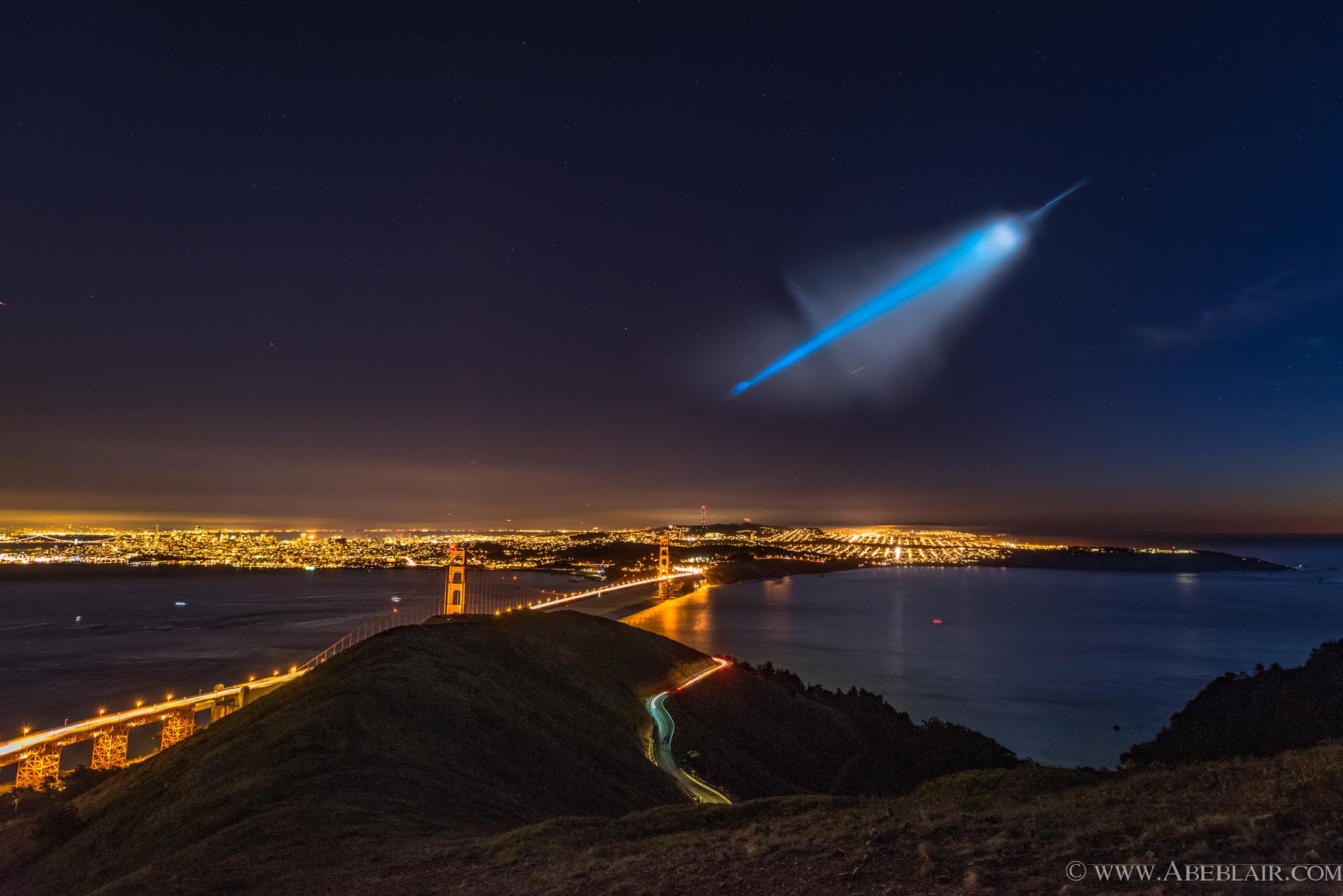
Explanation: What is that unusual light in the sky? A common question, this particular light was not only bright but moving and expanding. It appeared just as the astrophotographer and his friend were photographing the Golden Gate Bridge in San Francisco, California against a more predictable night sky. They were not alone in seeing this unusual display -- at least hundreds of people in California reported a similar sight. The consensus of experienced sky observers was that the plume resulted from a rocket launch -- an explanation that was soon confirmed as an unpublicized test of a submarine-launched, unarmed, Trident II D5 nuclear missile. Such tests are not uncommon but do not usually occur just after sunset near a major metropolitan area -- when they are particularly noticeable to many people. Were plume images not posted to the Internet and quickly identified, such a sky spectacle might have been understood by some to be associated with more grandiose -- but incorrect -- explanations.
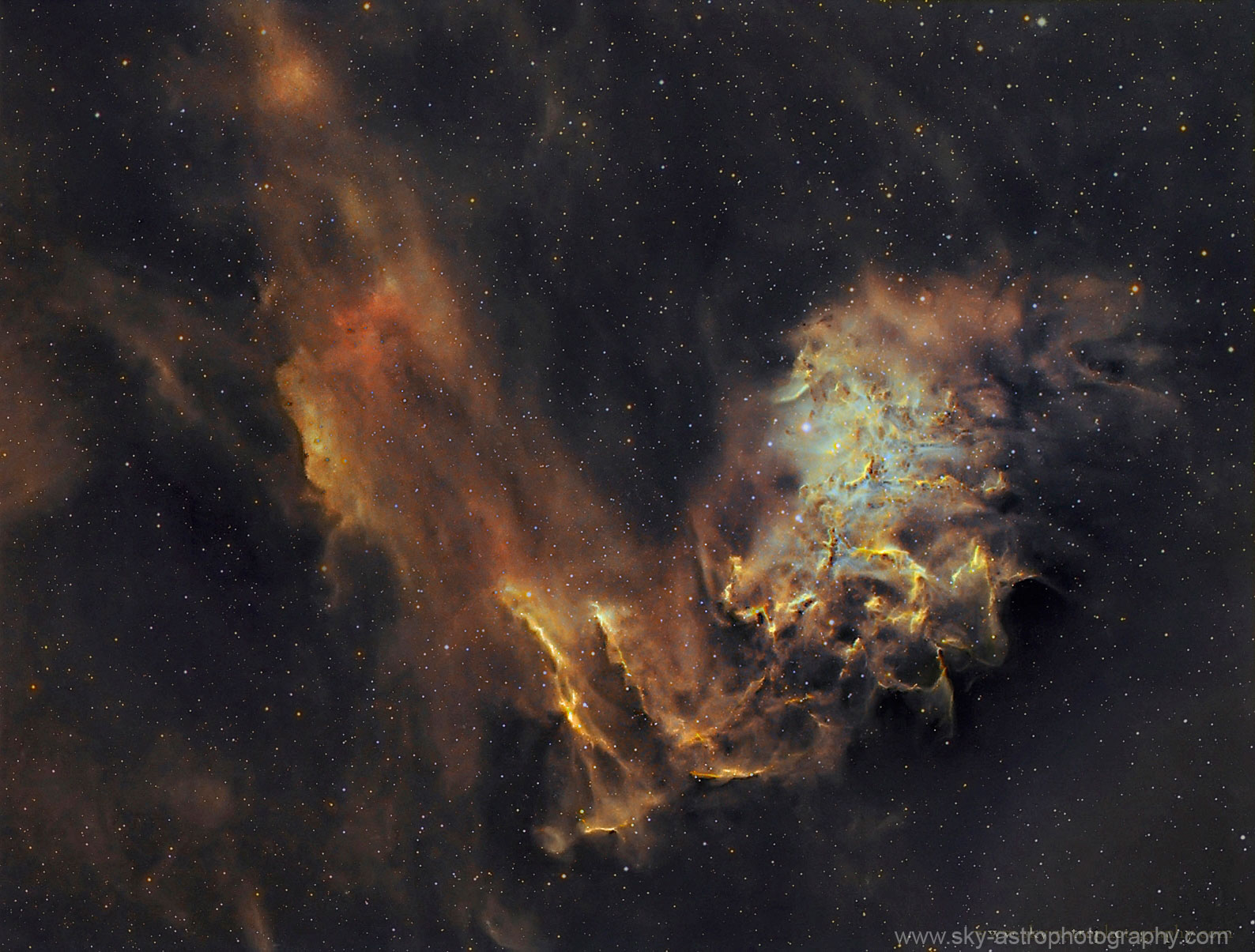
Explanation: Is star AE Aurigae on fire? No. Even though AE Aurigae is named the flaming star, the surrounding nebula IC 405 is named the Flaming Star Nebula, and the region appears to have the color of fire, there is no fire. Fire, typically defined as the rapid molecular acquisition of oxygen, happens only when sufficient oxygen is present and is not important in such high-energy, low-oxygen environments such as stars. The material that appears as smoke is mostly interstellar hydrogen, but does contain smoke-like dark filaments of carbon-rich dust grains. The bright star AE Aurigae, visible toward the right near the nebula's center, is so hot it is blue, emitting light so energetic it knockselectrons away from surrounding gas. When a proton recaptures an electron, light is emitted, as seen in the surrounding emission nebula. Pictured above, the Flaming Star nebula lies about 1,500 light years distant, spans about 5 light years, and is visible with a small telescope toward the constellation of the Charioteer (Auriga).