2016-04-12

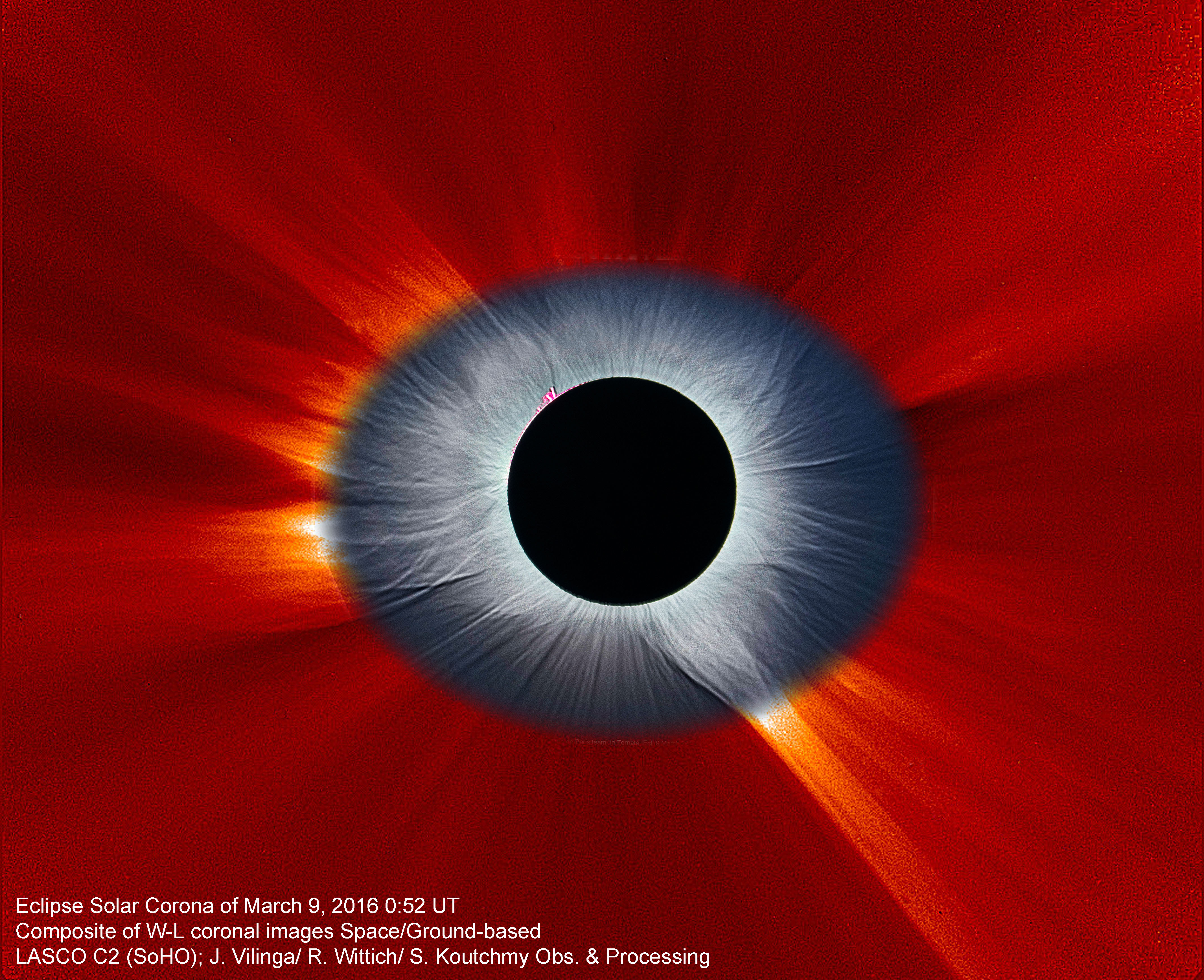
Astronomy picture of the day - 2016 April 12 - Combined Solar Eclipse Corona from Earth and Space

See Explanation.  Clicking on the picture will download
 the highest resolution version available.
Combined Solar Eclipse Corona from Earth and Space 
Image Credits: J. Vilinga (Angola, IAP), LASCONRLSOHOESANASA;
Processing: R. WittichComposition & Copyright: S. Koutchmy (IAPCNRS)
Explanation: Sometimes, a total eclipse is a good time to eye the Sun. Taking advantage of an unusual juxtaposition of Earth, Moon and Sun, the featured image depicts the total solar eclipse that occurred last month as it appeared -- nearly simultaneously -- from both Earth and space. The innermost image shows the total eclipse from the ground, with the central pupil created by the bright Sun covered by a comparatively dark Moon. Surrounding the blocked solar disk is the tenuous corona of Sun imaged in white light, easily visible from the ground only during an eclipse. Normally, this corona is hard to track far from the Sun, but the featured montage matches it to false-colored observations of the Sun from NASA and ESA's space-based, Sun-orbiting, Solar and Heliospheric Observatory (SOHO). Observations like this allow the study of the constantly changing magnetic activity both near and far from the Sun, the same activity that ultimately drives Earth's auroras.

2016-04-11

Astronomy picture of the day - 2016 April 11 - Lapland Northern Lights

See Explanation.  Clicking on the picture will download
 the highest resolution version available.
Lapland Northern Lights 
Image Credit & Copyright: Juan Carlos Casado (TWANEarth and Stars
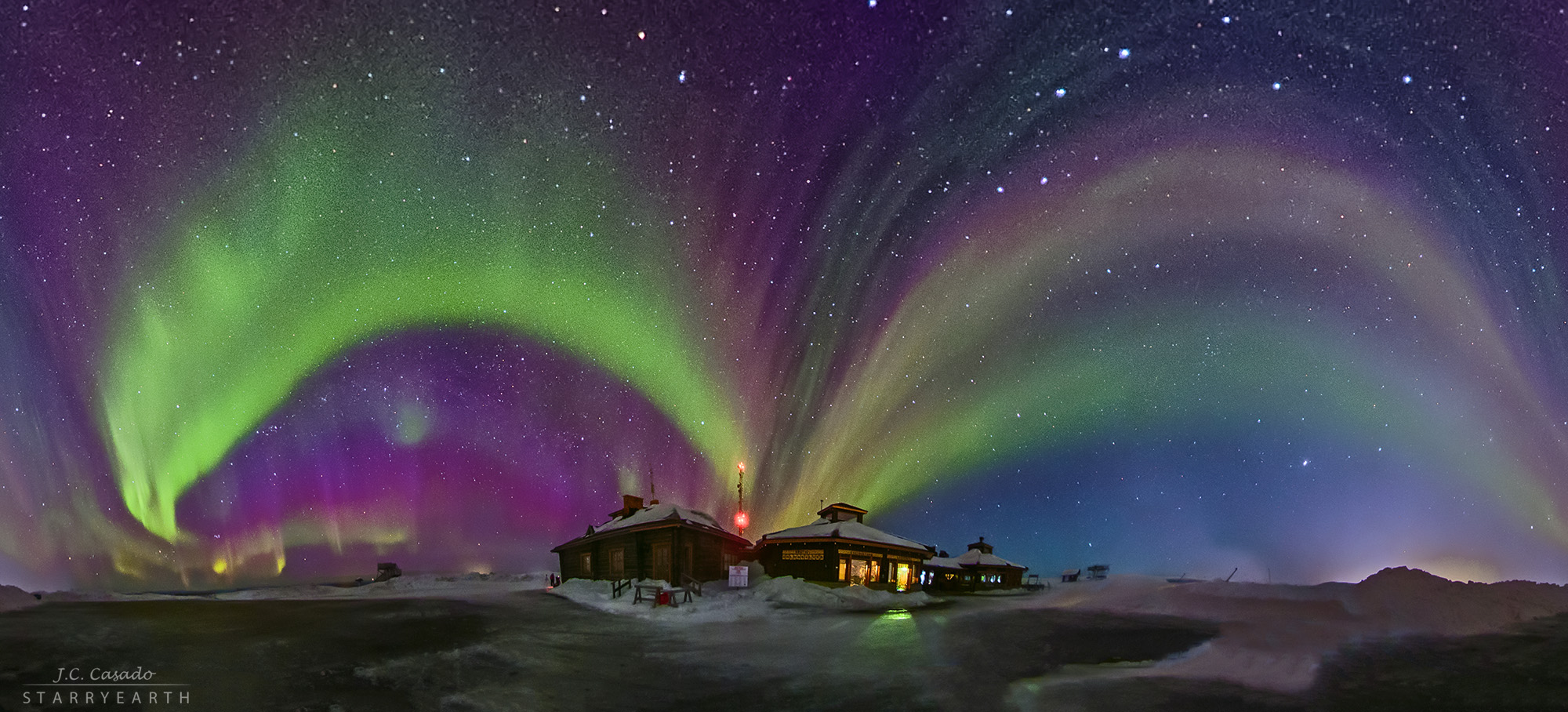
Explanation: Early spring in the northern hemisphere is good season for aurora hunters. Near an equinox Earth's magnetic field is oriented to favor interactions with the solar wind that trigger the alluring glow of the northern lights. On March 28/29 the skies over Kaunispää Hill, Lapland, Finland did not disappoint. That night's expansive auroral curtains are captured in this striking panoramic view that covers a full 360 degrees. Local skywatchers were mesmerized by bright displays lasted throughout the dark hours, shimmering with colors easily visible to the naked eye.

2016-04-10

Astronomy picture of the day - 2016 April 10 - Cassini Approaches Saturn

See Explanation.  Clicking on the picture will download
 the highest resolution version available.
Cassini Approaches Saturn 
Image Credit: Cassini Imaging TeamSWRIJPLESANASA
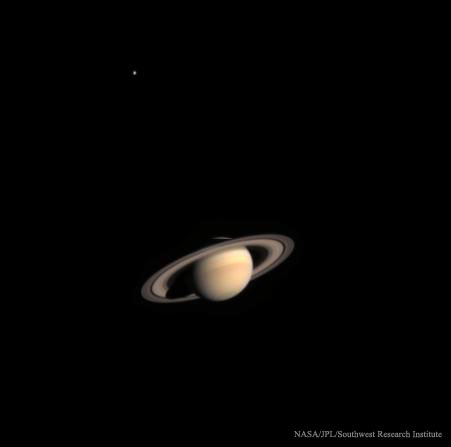
Explanation: Cassini, a robot spacecraft launched in 1997 by NASA, became close enough in 2002 to resolve many rings and moons of its destination planet: Saturn. At that time, Cassini snapped several images during an engineering test. Several of those images were combined into the contrast-enhanced color composite featured here. Saturn's rings and cloud-tops are visible toward the image bottom, while Titan, its largest moon, is visible as the speck toward the top. When arriving at Saturn in July 2004, the Cassini orbiter began to circle and study the Saturnian system. A highlight was when Cassini launched the Huygens probe that made an unprecedented landing on Titan in 2005, sending back detailed pictures. Now nearing the end of its mission, Cassini is scheduled to embark on a Grand Finale phase in late 2016 where it will repeatedly dive between the giant planet and its innermost rings.

2016-04-09

Astronomy picture of the day - 2016 April 9 - A Green Flash of Spring

See Explanation.  Clicking on the picture will download
 the highest resolution version available.
A Green Flash of Spring 
Image Credit & Copyright: Murray Schukar 
Explanation: Taken on March 20 from the top of Haleakala on the isle of Maui, planet Earth, the first sunrise of northern spring is pictured in this vacation snapshot. The telephoto view from the volcanic caldera above a sea of clouds also captures an elusive green flash near the Sun's upper limb. Atmospheric layers with sharp temperature changes cause the colorful flash as the Sun rises behind a distant cloud bank. Refraction along sight lines through the layers creates multiple distorted images of the Sun, and for a moment, can visibly deflect shorter wavelength green light.

2016-04-07

Palerma João Soares, "ministro" da Cultura promete “bofetadas” a dois colunistas do PÚBLICO


Afficher l'image d'origine

O ministro da Cultura, João Soares, ameaçou na manhã desta quinta-feira dar “bofetadas” aos colunistas Augusto M. Seabra e Vasco Pulido Valente na sequência de um artigo de opinião de Seabra que critica os seus primeiros quatro meses de governação. Para Augusto M. Seabra, a ameaça de João Soares "é inqualificável" por parte de um membro de um "governo democrático". Já Pulido Valente diz: "Fico à espera, para me dar as bofetadas". Entretanto, o ministro disse ao Expresso: "Peço desculpa se os assustei".


Na manhã desta quinta-feira, e através da sua conta na rede social Facebook, o ministro recordava: “Em 1999 prometi-lhe publicamente um par de bofetadas. Foi uma promessa que ainda não pude cumprir, não me cruzei com a personagem, Augusto M. Seabra, ao longo de todos estes anos. Mas continuo a esperar ter essa sorte. Lá chegará o dia”. Mais à frente no seu post, João Soares diz: “Estou a ver que tenho de o procurar, a ele e já agora ao Vasco Pulido Valente, para as salutares bofetadas. Só lhes podem fazer bem. A mim também”.

O caso já mereceu críticas e reacções políticas de vários quadrantes e o PÚBLICO está a tentar contactar o ministro João Soares, mas até ao momento não obteve resposta. Na tarde desta quinta-feira, Soares enviou por SMS ao semanário Expresso o seu comentário: "Sou um homem pacífico, nunca bati em ninguém. Não reagi a opiniões, reagi a insultos. Peço desculpa se os assustei."...


Leia o artigo na integra em:

Publico - Portugal

Astronomy picture of the day - 2016 April 7 - Wolf-Lundmark-Melotte

See Explanation.  Clicking on the picture will download
 the highest resolution version available.
Wolf-Lundmark-Melotte 
Image Credit: ESOVST/Omegacam Local Group Survey 
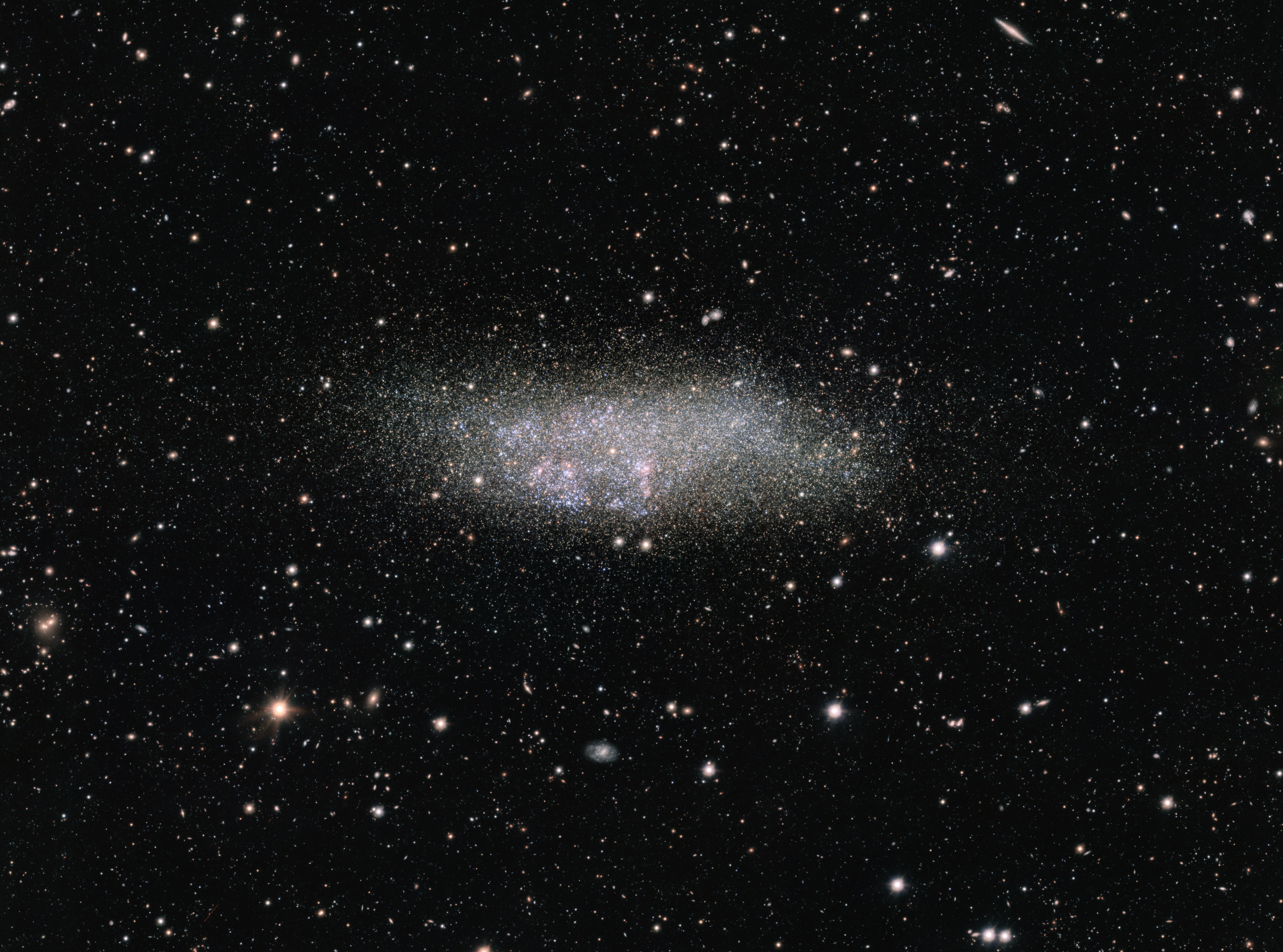
Explanation: Named for the three astronomers instrumental in its discovery and identification, Wolf - Lundmark - Melotte (WLM) is a lonely dwarf galaxy. Seen toward the mostly southern constellation Cetus, about 3 million light-years from the Milky Way, it is one of the most remote members of our local galaxy group. In fact, it may never have interacted with any other local group galaxy. Still, telltale pinkish star forming regions and hot, young, bluish stars speckle the isolated island universe. Older, cool yellowish stars fade into the small galaxy's halo, extending about 8,000 light-years across. This sharp portrait of WLM was captured by the 268-megapixel OmegaCAM widefield imager and survey telescope at ESO's Paranal Observatory.

2016-04-06

Ivete Sangalo - "Se eu não te amasse tanto assim/Eu sei que vou te amar" - Video - Musica - Ao vivo

"Se eu não te amasse tanto assim/Eu sei que vou te amar"

A aguia continua a voar bem alto! - Bayern 1 - Benfica 0


Afficher l'image d'origine

Todas as derrotas têm um sabor amargo, mas a derrota que o Benfica sofreu em Munique, diante do Bayern (1-0), na primeira mão dos quartos-de-final da Liga dos Campeões, terá um sabor especialmente amargo tendo em conta as situações de perigo criadas (e desperdiçadas) pela equipa de Rui Vitória. A desvantagem mínima é um mal menor para os “encarnados”, que têm na próxima quarta-feira, na Luz, a oportunidade de dar a volta à eliminatória. Pelo equilíbrio que se viu na partida de Munique, esse pode não ser um cenário assim tão descabido.

O Bayern colocou-se em vantagem no marcador extremamente cedo, mas quem partisse daí para adivinhar um resultado dilatado, enganou-se: o Benfica, que entrou em campo exactamente com o mesmo “onze” que na sexta-feira goleou (5-1) o Sp. Braga, conseguiu equilibrar os acontecimentos ao fim de algum tempo e ainda pregou alguns valentes sustos à defesa bávara. Jonas, que viu cartão amarelo e vai falhar o jogo da segunda mão, por castigo, foi o protagonista das mais flagrantes oportunidades de golo criadas pelos “encarnados”. Mas não era a noite do avançado brasileiro, que em nenhuma das ocasiões conseguiu mostrar a eficácia a que já habituou os adeptos.

Com uma intensidade sufocante desde o apito inicial, o Bayern rapidamente recolheu frutos dessa postura, tendo-se adiantado no marcador quando tinha decorrido pouco mais de um minuto. Arturo Vidal colocou a equipa de Pep Guardiola em vantagem quase sem ter de saltar para corresponder ao cruzamento de Bernat na esquerda: o chileno foi mais rápido, antecipou-se a Eliseu e cabeceou para o fundo da baliza de Ederson.

Tão cedo e já em desvantagem, o Benfica passou por momentos de desorientação e pode agradecer ao seu jovem guarda-redes pelo facto de o Bayern não ter ampliado o resultado nos minutos seguintes, quando os “encarnados” estiveram encostados às cordas. Ederson travou um remate de Douglas Costa (10’), depois mostrou coragem numa saída aos pés de Lewandowski (16’), que ameaçava após passe de Lahm, e voltou a brilhar aos 20’, afastando o remate potente de Müller.

O primeiro sinal de relativo perigo por parte do Benfica surgiu quase a meio da primeira parte, com Mitroglou a cabecear muito ao lado, na sequência de um cruzamento de André Almeida. Os “encarnados” queixaram-se de um penálti por assinalar num lance, aos 29’, em que Gaitán colocava a bola na área perante a oposição de Lahm – o defesa, no chão, viu a bola tocar-lhe no braço esquerdo, mas o árbitro entendeu que não houve um movimento deliberado.

Tendo-se libertado da pressão inicial do Bayern, o Benfica conseguiu terminar o primeiro tempo em bom plano e ficou perto do empate mesmo antes do intervalo: Mitroglou deu a bola a Gaitán, que em excelente posição fez um disparo potente, mas Arturo Vidal estava no caminho da bola e evitou males maiores para a baliza de Neuer.

Era um sinal do que estava para vir na segunda parte. Lindelöf começou por destacar-se com um grande corte, quando Lewandowski se preparava para finalizar, e depois a acção transferiu-se para perto da baliza de Neuer. Jonas teve a primeira bola de golo aos 57’, quando, depois de se livrar de Alaba, ficou cara-a-cara com o guarda-redes alemão. Mas faltou frieza ao avançado, cujo remate saiu à figura. O assédio do Benfica não abrandou e Jonas voltou a ter o empate nos pés: o cruzamento foi de André Almeida, mas o remate acertou em cheio no corpo de Javi Martínez. No ressalto, nem Mitroglou nem Jonas conseguiram emendar da melhor forma.

Faltou eficácia ao Benfica para evitar aquela que foi apenas a segunda derrota nas últimas 23 partidas em todas as competições. Apesar do conhecimento dos “encarnados” evidenciado por Pep Guardiola na antevisão da partida, a equipa de Rui Vitória foi capaz de surpreender os bávaros. E, mesmo sabendo que o Benfica nunca ganhou ao Bayern, pode alimentar esperanças de discutir a eliminatória, na Luz.

Publico - Portugal
Astronomy picture of the day - 2016 April 6 - Auroras and the Magnetosphere of Jupiter

See Explanation.  Clicking on the picture will download
 the highest resolution version available.
Auroras and the Magnetosphere of Jupiter 
Illustration CreditJAXAInset Image Credit: NASAESAChandraHubble
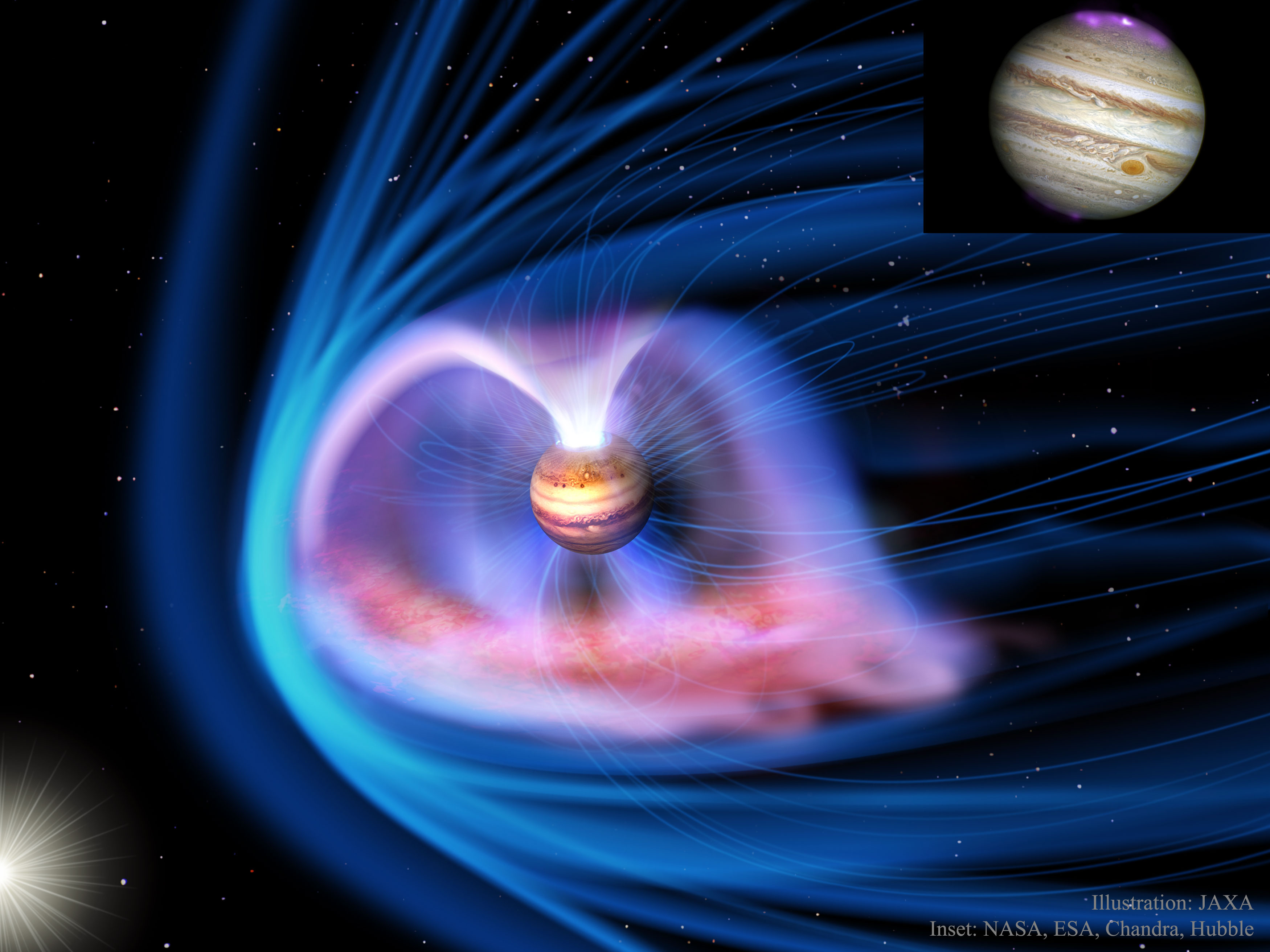
Explanation: Jupiter has auroras. Like near the Earth, the magnetic field of our Solar System's largest planet compresses when impacted by a gust of charged particles from the Sun. This magnetic compression funnels charged particles towards Jupiter's poles and down into the atmosphere. There, electrons are temporarily excited or knocked away from atmospheric gases, after which, when de-exciting or recombining with atmospheric ions, auroral light is emitted. The featured illustration portrays the magnificent magnetosphere around Jupiter in action. In the inset image released last month, the Earth-orbiting Chandra X-ray Observatory shows unexpectedly powerful X-ray light emitted by Jovian auroras, depicted in false-colored purple. That Chandra inset is superposed over an optical image taken at a different time by the Hubble Space Telescope. This aurora on Jupiter was seen in October 2011, several days after the Sun emitted a powerful Coronal Mass Ejection (CME).

Painting - Alita Mira - Solar spectrum in the rain


Solar spectrum in the rain