2016-08-29

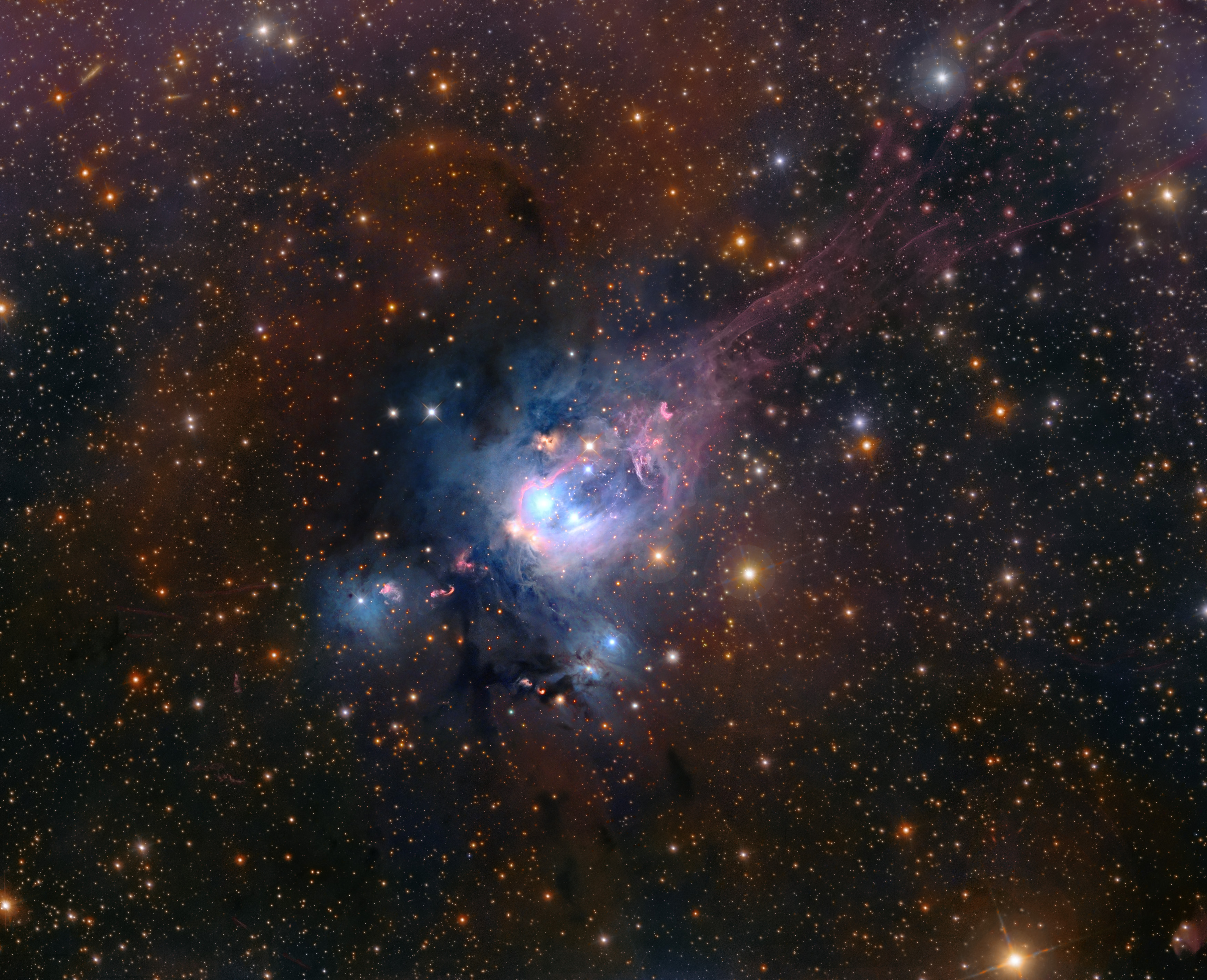
Astronomy picture of the day - 2016 August 29 - Young Suns of NGC 7129

See Explanation.  Clicking on the picture will download
 the highest resolution version available.
Young Suns of NGC 7129 
Image Credit & CopyrightRobert Gendler,
Roberto ColombariEric RecurtAdam Block - Additional Data: Subaru (NAOJ)
Explanation: Young suns still lie within dusty NGC 7129, some 3,000 light-years away toward the royal constellation Cepheus. While these stars are at a relatively tender age, only a few million years old, it is likely that our own Sun formed in a similar stellar nursery some five billion years ago. Most noticeable in the sharp image are the lovely bluish dust clouds that reflect the youthful starlight. But the compact, deep red crescent shapes are also markers of energetic, young stellar objects. Known as Herbig-Haro objects, their shape and color is characteristic of glowing hydrogen gas shocked by jets streaming away from newborn stars. Paler, extended filaments of reddish emissionmingling with the bluish clouds are caused by dust grains effectively converting the invisible ultraviolet starlight to visible red light through photoluminesence. Ultimately the natal gas and dust in the region will be dispersed, the stars drifting apart as the loose cluster orbits the center of the Galaxy. The processing of this remarkable composite image has revealed the faint red strands of emission at the upper right. They are recently recognized as a likely supernova remnantand are currently being analyzed by Bo Reipurth (Univ. Hawaii) who obtained the image data at the Subaru telescope. At the estimated distance of NGC 7129, this telescopic view spans over 40 light-years.

2016-08-28

Astronomy picture of the day - 2016 August 28 - Abell 370: Galaxy Cluster Gravitational Lens

See Explanation.  Clicking on the picture will download
 the highest resolution version available.
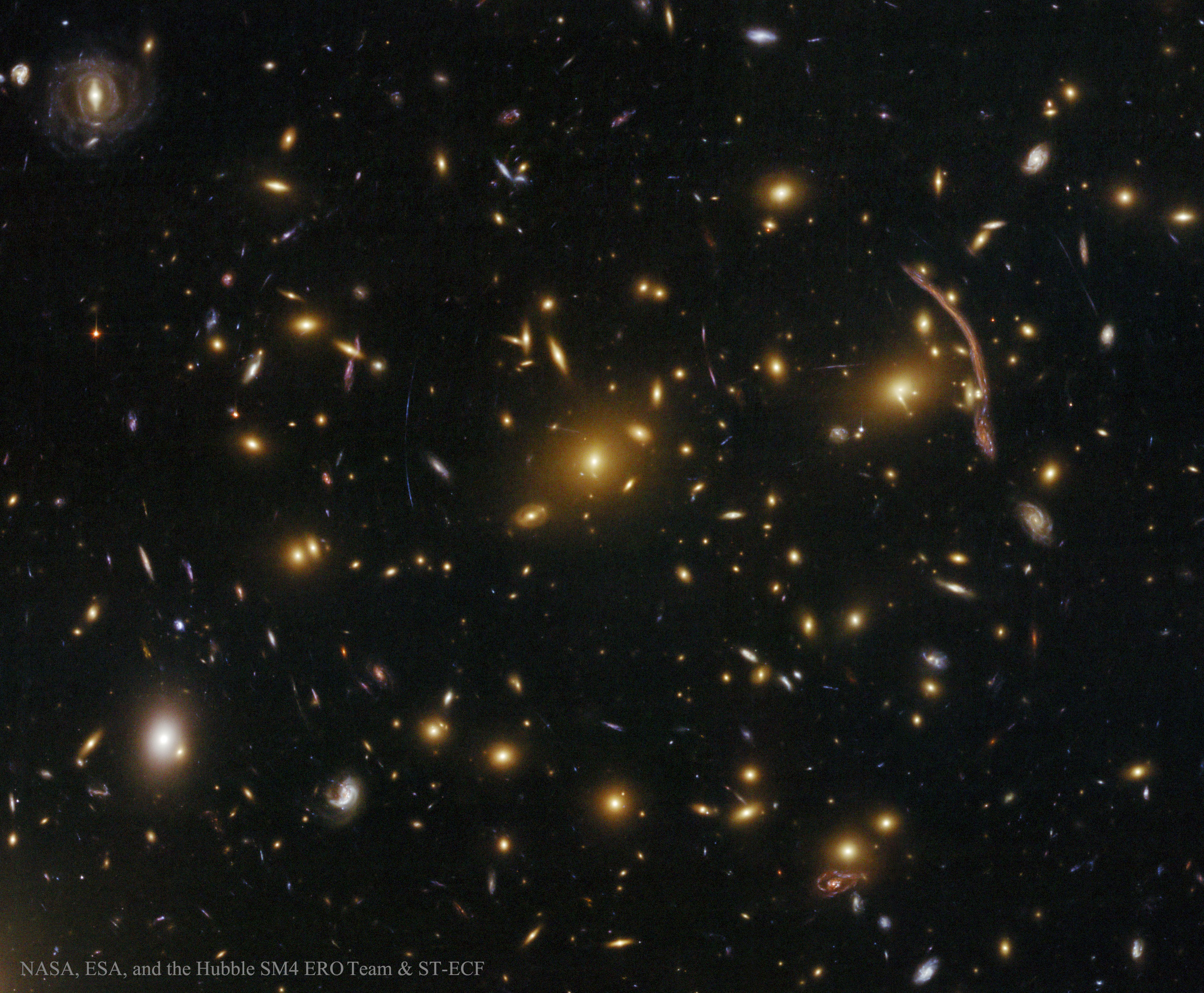
Abell 370: Galaxy Cluster Gravitational Lens 
Image Credit: NASAESA, and the Hubble SM4 ERO Team & ST-ECF
Explanation: What is that strange arc? While imaging the cluster of galaxies Abell 370, astronomers had noted an unusual arc to the right of many cluster galaxies. Although curious, one initial response was to avoid commenting on the arc because nothing like it had ever been noted before. In the mid-1980s, however, better images allowed astronomers to identify the arc as a prototype of a new kind of astrophysical phenomenon -- the gravitational lens effect of entire cluster of galaxies on background galaxies. Today, we know that this arc actually consists of two distorted images of a fairly normal galaxy that happened to lie far behind the huge cluster. Abell 370's gravity caused the background galaxies' light -- and others -- to spread out and come to the observer along multiple paths, not unlike a distant light appears through the stem of a wine glass. In mid-July of 2009, astronomers used the then just-upgraded Hubble Space Telescope to image Abell 370 and its gravitational lens images in unprecedented detail. Almost all of the yellow images featured here are galaxies in the Abell 370 cluster. An astute eye can pick up many strange arcs anddistorted arclets, however, that are actually images of more distant galaxies. Studying Abell 370 and its images gives astronomers a unique window into the distribution of normal and dark matter in galaxy clusters and the universe.

2016-08-27

Astronomy picture of the day - 2016 August 27 - Lunar Orbiter Earthset

See Explanation.  Clicking on the picture will download
 the highest resolution version available.
Lunar Orbiter Earthset 
Image Credit: NASA / Lunar Orbiter Image Recovery Project
Explanation: August 10th was the 50th anniversary of the launch of Lunar Orbiter 1. It was the first of five Lunar Orbiters intended to photograph the Moon's surface to aid in the selection of future landing sites. That spacecraft's camera captured the data used in this restored, high-resolution version of its historic first image of Earth from the Moon on August 23, 1966 while on its 16th lunar orbit. Hanging almost stationary in the sky when viewed from the lunar surface, Earth appears to be setting beyond the rugged lunar horizon from the perspective of the orbiting spacecraft. Two years later, the Apollo 8 crew would record a more famous scene in color: Earthrise from lunar orbit.

Martinho da Vila - "Faixa amarela" - Video - Musica

Afficher l'image d'origine
"Faixa amarela"

2016-08-26

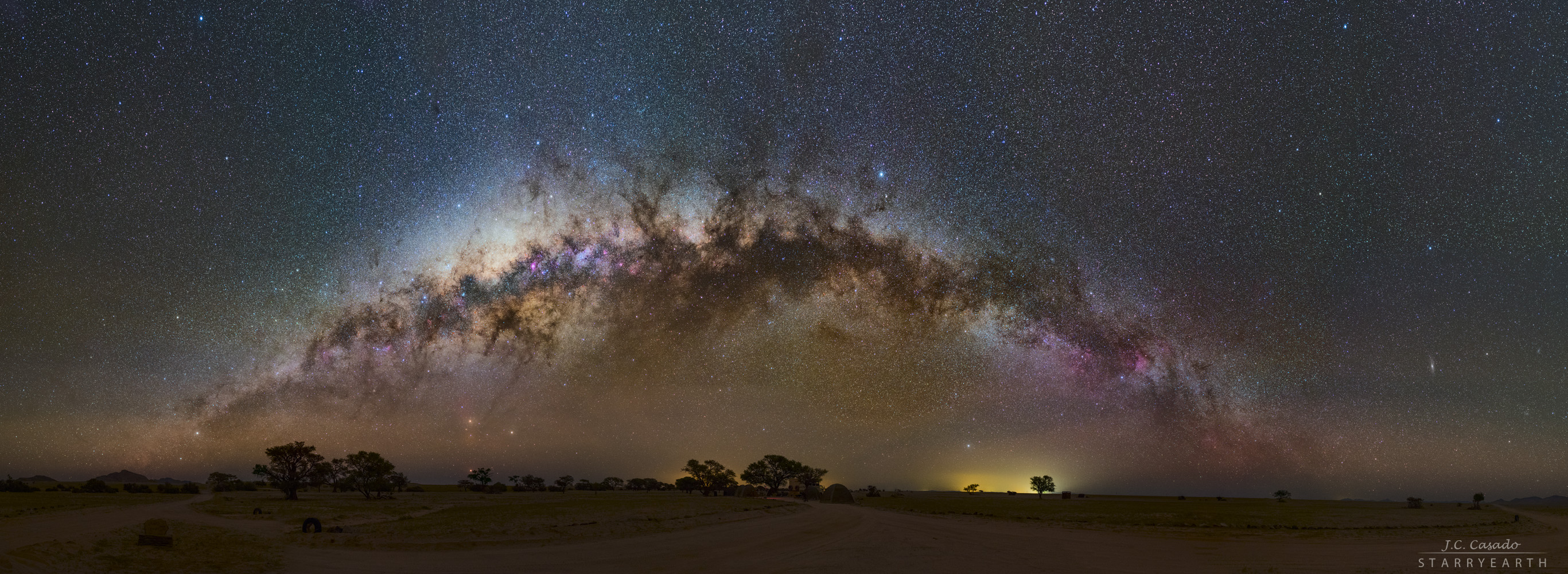
Astronomy pictures of the day - 2016 August 26 - The Milky Way Sets

See Explanation.  Clicking on the picture will download
 the highest resolution version available.
The Milky Way Sets 
Image Credit & CopyrightJuan Carlos Casado (TWANEarth and Stars)
Explanation: Under dark skies the setting of the Milky Way can be a dramatic sight. Stretching nearly parallel to the horizon, this rich, edge-on vista of our galaxy above the dusty Namibian desert stretches from bright, southernCentaurus (left) to Cepheus in the north (right). From early August, the digitally stitched, panoramic night skyscape captures the Milky Way's congeries of stars and rivers of cosmic dust, along with colors of nebulae not readily seen with the eye. Mars, Saturn, and Antares, visible even in more luminous night skies, form the the bright celestial triangle just touching the trees below the galaxy's central bulge. Of course, our own galaxy is not the only galaxy in the scene.Two other major members of our local group, the Andromeda Galaxy and the Triangulum Galaxy, lie near the right edge of the frame, beyond the arc of the setting Milky Way.

2016-08-25

Imagenes del mundo - Rayos en Galicia, España

Rayos en Galicia en una de las jornadas con mayor actividad eléctrica del año.
SXENICK EFE

Anedota "alantjana" - Plantar


Afficher l'image d'origine

Uma técnica do IFADAP bate a uma porta num montezinho perdido no interior do Alentejo e pergunta ao agricultor... 

- Esta terra dá trigo? 

- Nassenhora - responde o alentejano. 

- Dá batata? 

- Tamem não!

- Dá feijão?

- Nunca deu um!

- Arroz?

- De manera nenhuma!

- Milho?

- Tá a gozar comigo?!

- Quer dizer que por aqui não adianta plantar nada? 

- Ah! Se plantar já é diferente...

Madredeus - "A sombra" - Video - Musica - Ao vivo

Afficher l'image d'origine
"A sombra"

Astronomy picture of the day - 2016 August 25 - Closest Star has Potentially Habitable Planet

2016 August 25
See Explanation.  Clicking on the picture will download
 the highest resolution version available.
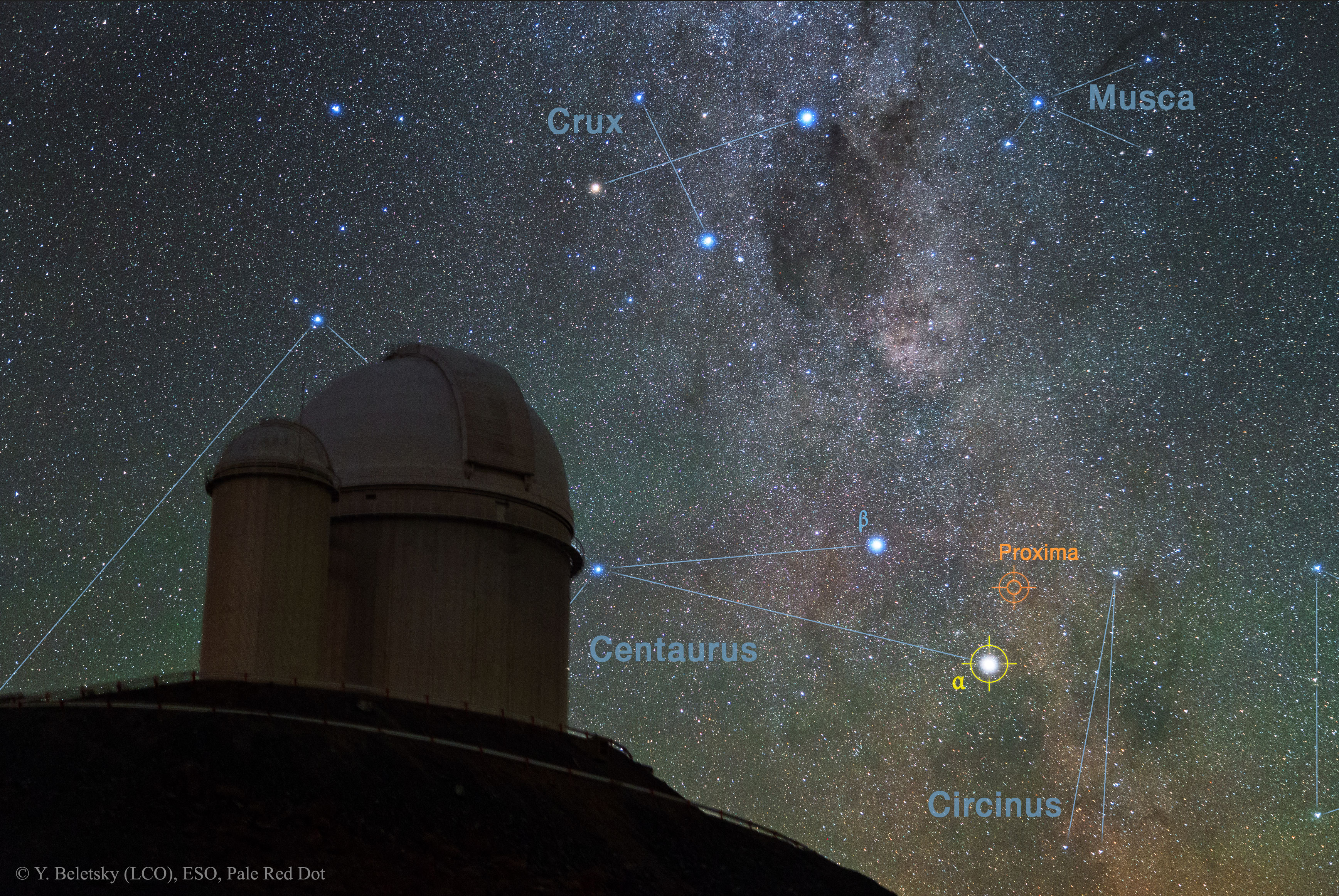
Closest Star has Potentially Habitable Planet 
Image Credit & LicenseY. Beletsky (LCO), ESOPale Red Dot Team
Explanation: The star closest to the Sun has a planet similar to the Earth. As announced yesterday, recent observations confirmed that this planet not only exists but inhabits a zone where its surface temperature could allow liquidwater, a key ingredient for life on Earth. It is not yet known if this planet, Proxima b, has any life. Even if not, its potential ability to sustain liquid water might make it a good first hop for humanity's future trips out into the Milky Way Galaxy. Although the planet's parent star, Proxima Centauri, is cooler and redder than our Sun, one of the other two stars in the Alpha Centauri star system is very similar to our Sun. The featured image shows the sky location of Proxima Centauri in southern skies behind the telescope that made many of the discovery observations: ESO's 3.6-meter telescope in La Silla, Chile. The discovered planet orbits close in -- so close one year there takes only 11 days on Earth. The planet was discovered by the ESO's Pale Red Dot collaboration. Although seemingly unlikely, if Proxima b does have intelligent life, at 4.25 light years distance it is close enough to Earth for two-way communication.