2017-08-10

Astronomy picture of the day - 2017 August 10 - Night of the Perseids

See Explanation.  Clicking on the picture will download
 the highest resolution version available.
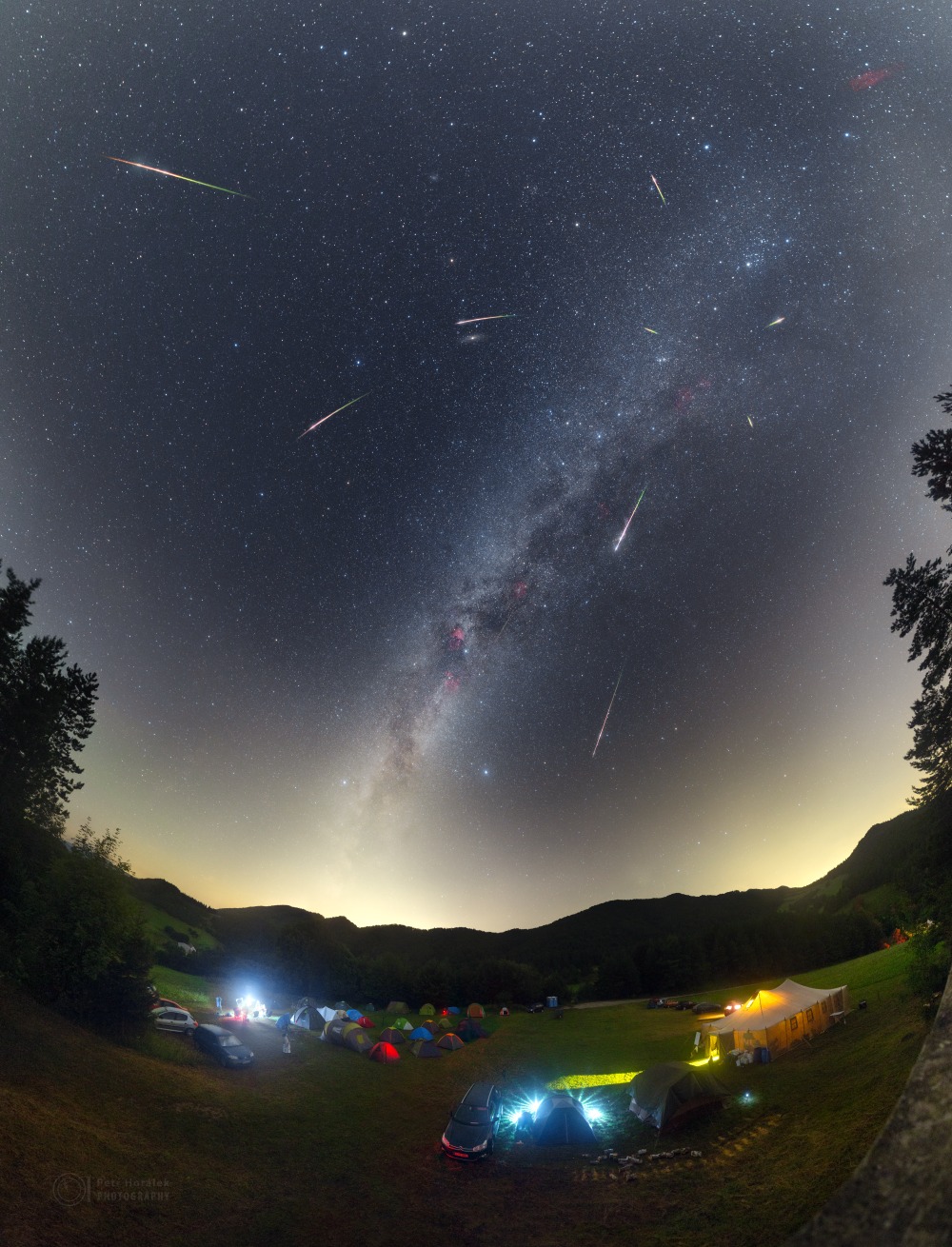
Night of the Perseids 
Image Credit & CopyrightPetr Horálek
Explanation: This weekend, meteors will rain down near the peak of the annual Perseid Meteor Shower. Normally bright and colorful, the Perseid shower meteors are produced by dust swept up by planet Earth from the orbit of Comet Swift-Tuttle. They streak from a radiant in Perseus, above the horizon in clear predawn skies. Despite interfering light from August's waning gibbous moon, this year's Perseids will still be enjoyable, especially if you can find yourself in an open space, away from city lights, and in good company. Frames used in this composite view capture bright Perseid meteors from the 2016 meteor shower set against a starry background along the Milky Way, with even the faint Andromeda Galaxy just above center. In the foreground, astronomers of all ages have gathered on a hill above the Slovakian village of Vrchtepla.

2017-08-09

Astronomy picture of the day - 2017 August 9 - August's Lunar Eclipse

See Explanation.  Clicking on the picture will download
 the highest resolution version available.
August's Lunar Eclipse 
Peter Ward (Barden Ridge Observatory)
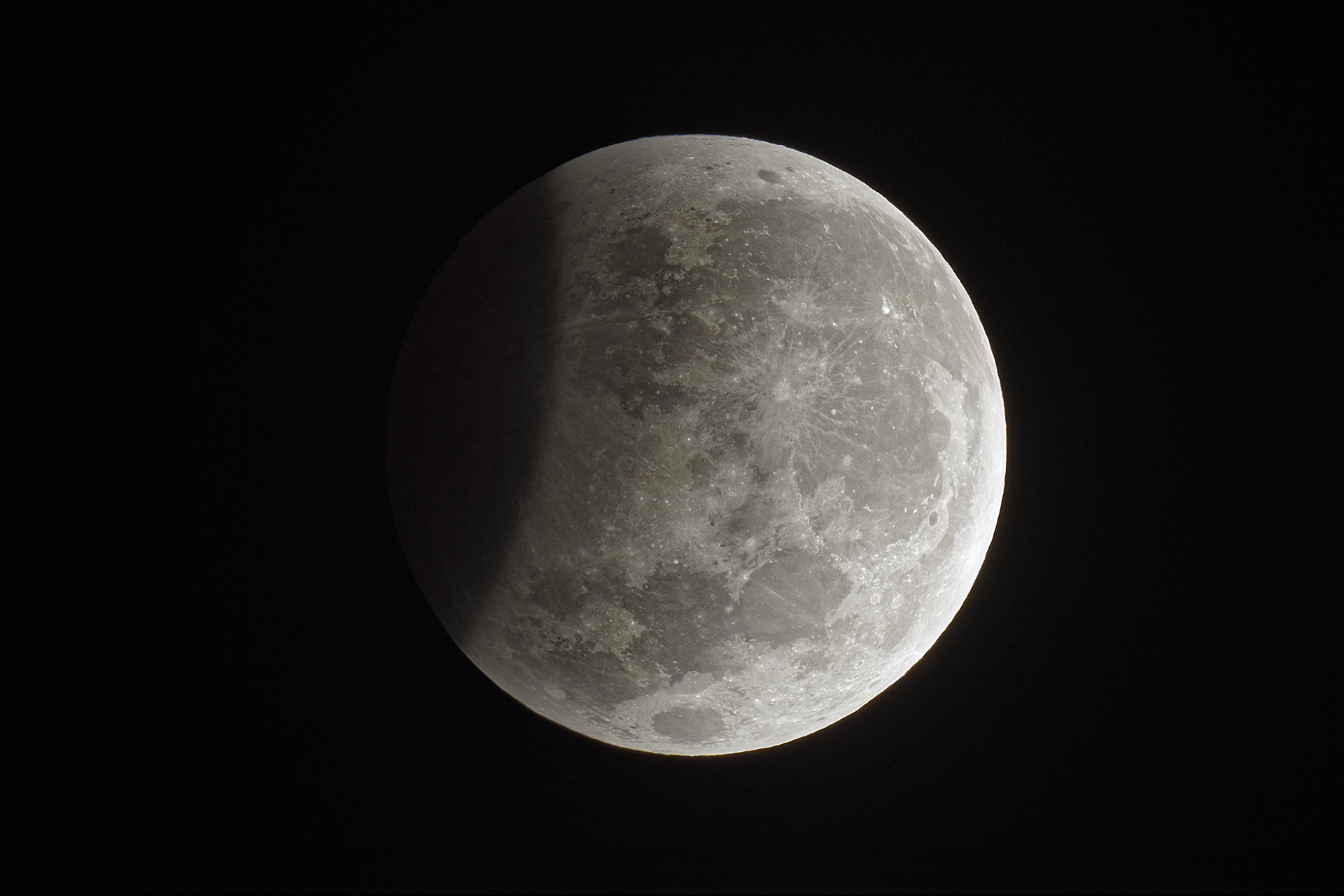
Explanation: August's Full Moon is framed in this sharp, high dynamic range composition. Captured before sunrise on August 8 from Sydney, Australia, south is up and the Earth's dark, umbral shadow is at the left, near the maximum phase of a partial lunar eclipse. Kicking off the eclipse season, this time the Full Moon's grazing slide through Earth's shadow was visible from the eastern hemisphere. Up next is the much anticipated total solar eclipse of August 21. Then, the New Moon's shadow track will include North America, the narrow path of totality running coast to coast through the United States.

2017-08-07

Astronomy picture of the day - 2017 August 7 - Spiral Galaxy NGC 1512: The Inner Ring

See Explanation.  Clicking on the picture will download
 the highest resolution version available.
Spiral Galaxy NGC 1512: The Inner Ring 
Image Credit: NASAESAHubble Space Telescope
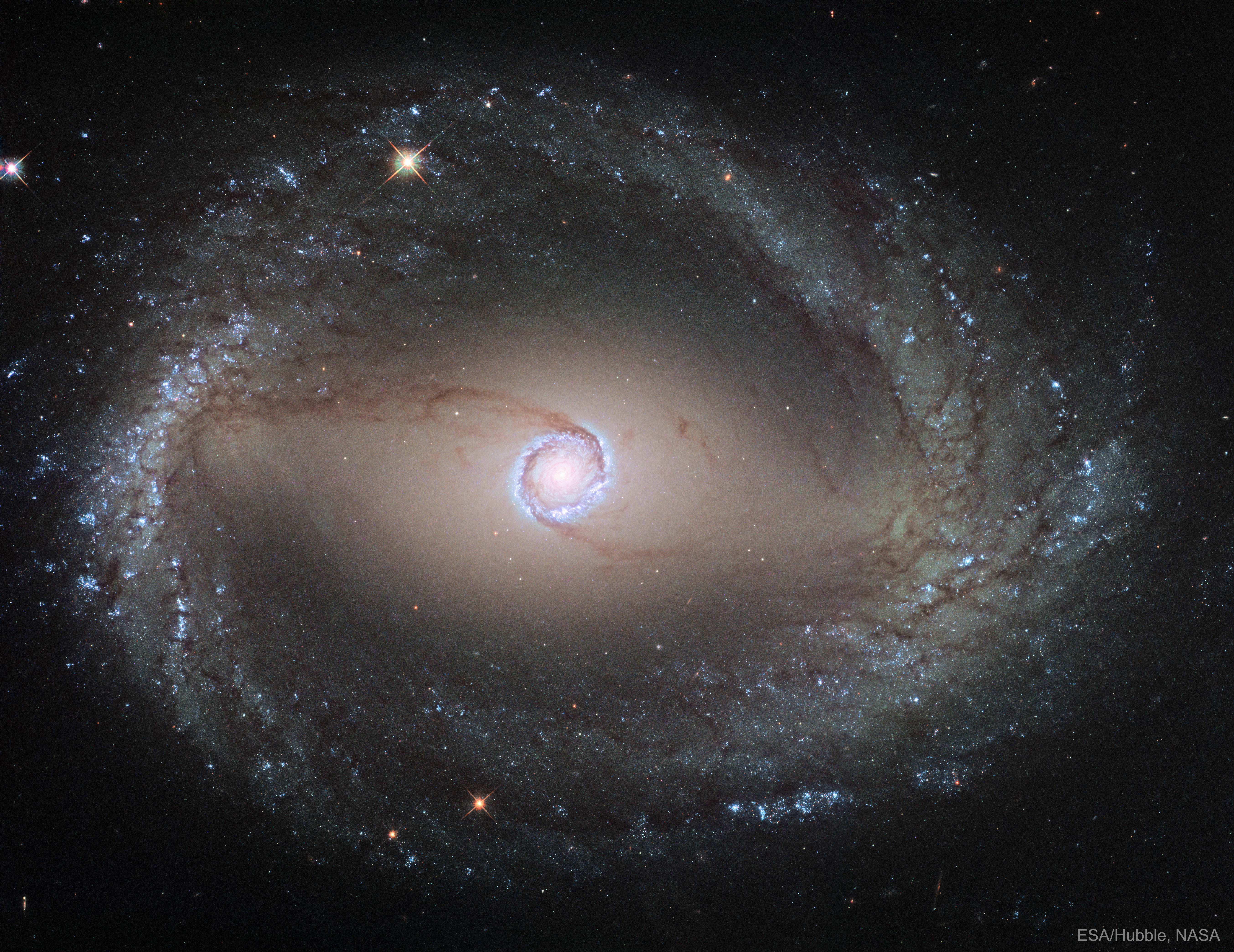
Explanation: Most galaxies don't have any rings -- why does this galaxy have two? To begin, the bright band near NGC 1512's center is a nuclear ring, a ring that surrounds the galaxy center and glows brightly with recently formed stars. Most stars and accompanying gas and dust, however, orbit the galactic center in a ring much further out -- here seen near the image edge. This ring is called, counter-intuitively, the inner ring. If you look closely, you will see this the inner ring connects ends of a diffuse central bar that runs horizontally across the galaxy. These ring structures are thought to be caused by NGC 1512's own asymmetries in a drawn-out process called secular evolution. Thegravity of these galaxy asymmetries, including the bar of stars, cause gas and dust to fall from the inner ring to the nuclear ring, enhancing this ring's rate of star formation. Some spiral galaxies also have a third ring -- an outer ring thatcircles the galaxy even further out.

2017-08-05

Astronomy picture of the day - 2017 August 5 - North North Temperate Zone Little Red Spot

See Explanation.  Clicking on the picture will download
 the highest resolution version available.
North North Temperate Zone Little Red Spot 
Image Credit: NASAJPL-CaltechSwRIMSSSProcessing: Gerald EichstadtDamian Peach

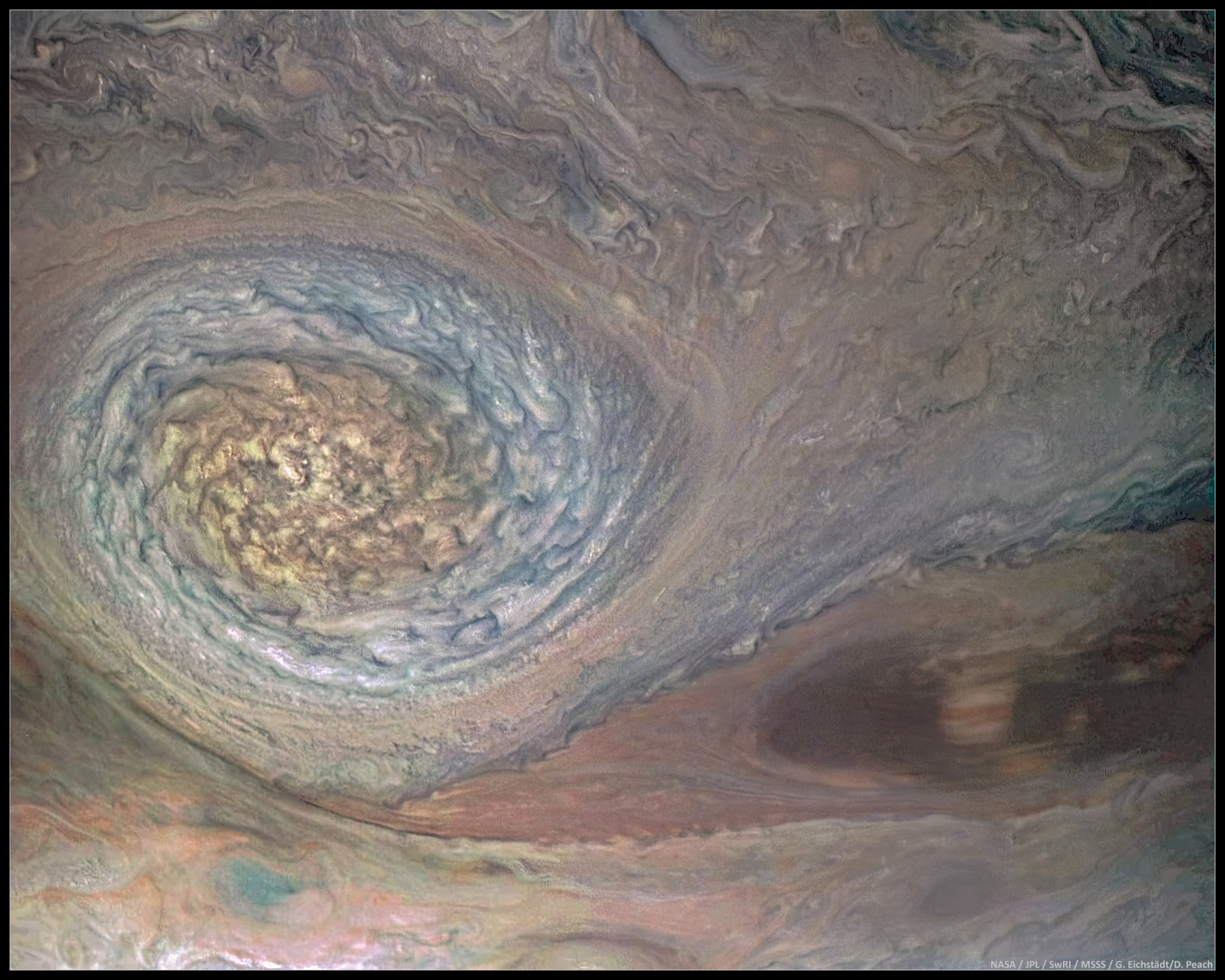
Explanation: On July 11, the Juno spacecraft once again swung near the turbulent Jovian cloud tops. On its seventh orbital closest approach this perijove passage brought Juno within 3,500 kilometers of the Solar System's largest planetary atmosphere. Near perijove the rotating JunoCam was able to record this stunning, clear view of one of Jupiter's signature vortices. About 8,000 kilometers in diameter, the anticyclonic storm system was spotted in Jupiter'sNorth North Temperate Zone in the 1990s. That makes it about half the size of an older and better known Jovian anticyclone, the Great Red Spot, but only a little smaller than planet Earth. At times taking on reddish hues, the enormous storm system is fondly known as a North North Temperate Zone Little Red Spot.

2017-08-03

JoanMira - "Arvore inspira o fotografo" - Fotos

"Arvore inspira o fotografo"

03-08-2017
JoanMira

Bernard Lavilliers - "Noir et Blanc" - Video - Musique

Résultat de recherche d'images pour "image Bernard Lavilliers"
"Noir et Blanc"

Astronomy picture of the day - 2017 August 3 - Pelican Nebula Close-up

See Explanation.  Clicking on the picture will download
 the highest resolution version available.
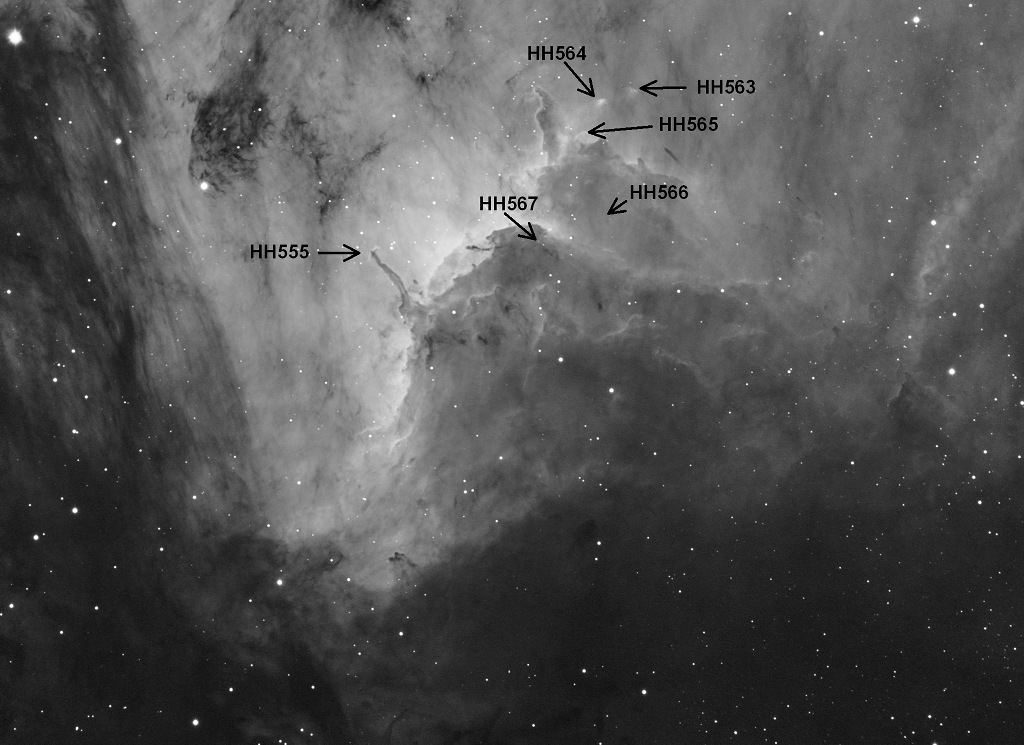
Pelican Nebula Close-up 
Image Credit & Copyright: Sara Wager
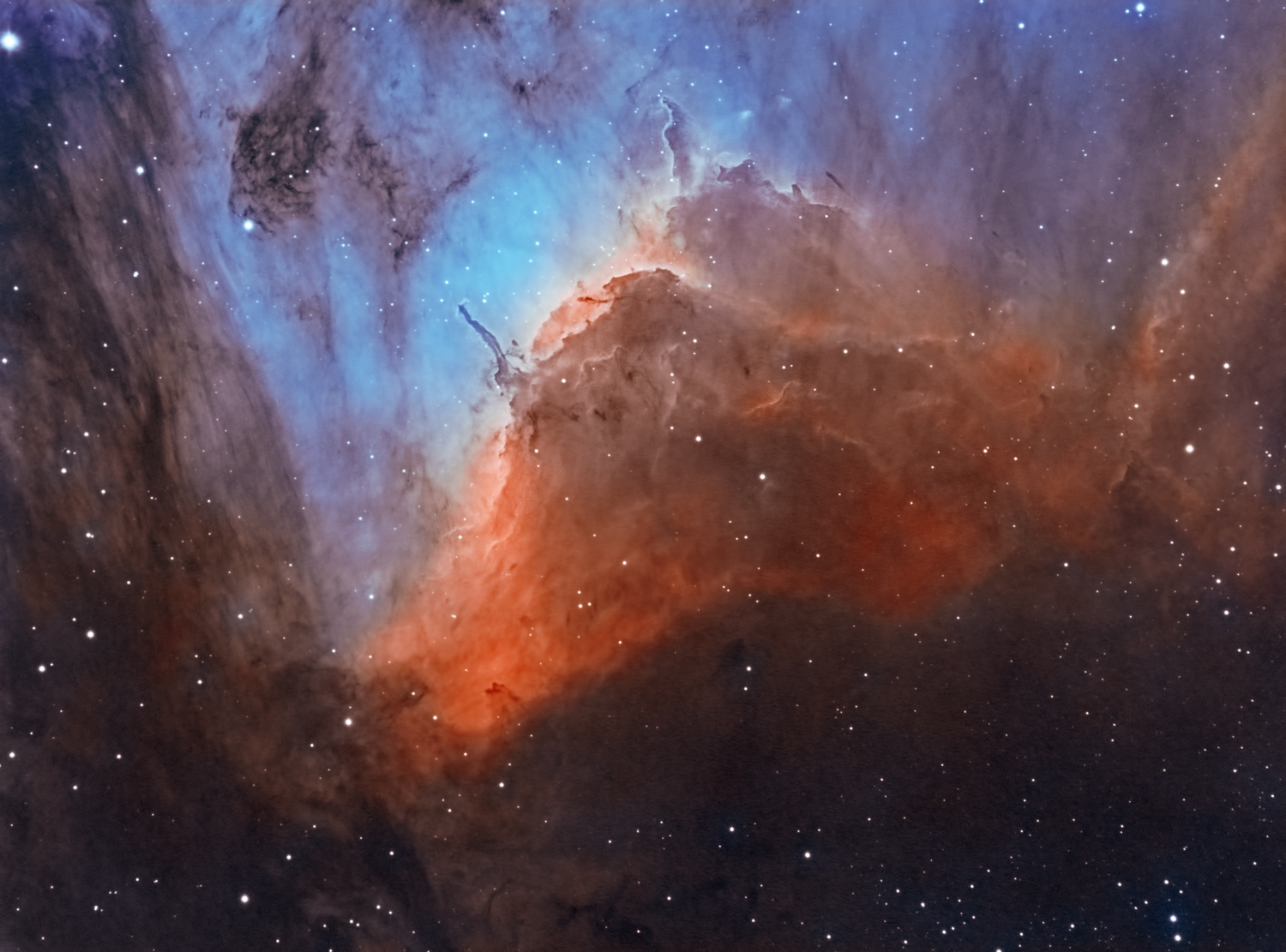
Explanation: The prominent ridge of emission featured in this vivid skyscape is designated IC 5067. Part of a larger emission region with a distinctive shape, popularly called The Pelican Nebula, the ridge spans about 10 light-years and follows the curve of the cosmic pelican's head and neck. Fantastic, dark shapes inhabiting the view are clouds of cool gas and dust sculpted by energetic radiation from young, hot, massive stars. But stars are also forming within the dark shapes. Twin jets emerging from the tip of the long, dark tendril left of center are the telltale signs of an embedded protostar cataloged as Herbig-Haro 555 (HH 555). In fact, other Herbig-Haro objects indicating the presence of protostars are found within the frame. The Pelican Nebula itself, also known as IC 5070, is about 2,000 light-years away. To find it, look northeast of bright star Deneb in the high flying constellation Cygnus.

2017-08-02

Sting - "If I ever lost my faith on you" - Video - Music

Résultat de recherche d'images pour "sting pictures"
"If I ever lost my faith on you"


Astronomy picture of the day - 2017 August 2 - The Dust Monster in IC 1396

See Explanation.  Clicking on the picture will download
 the highest resolution version available.
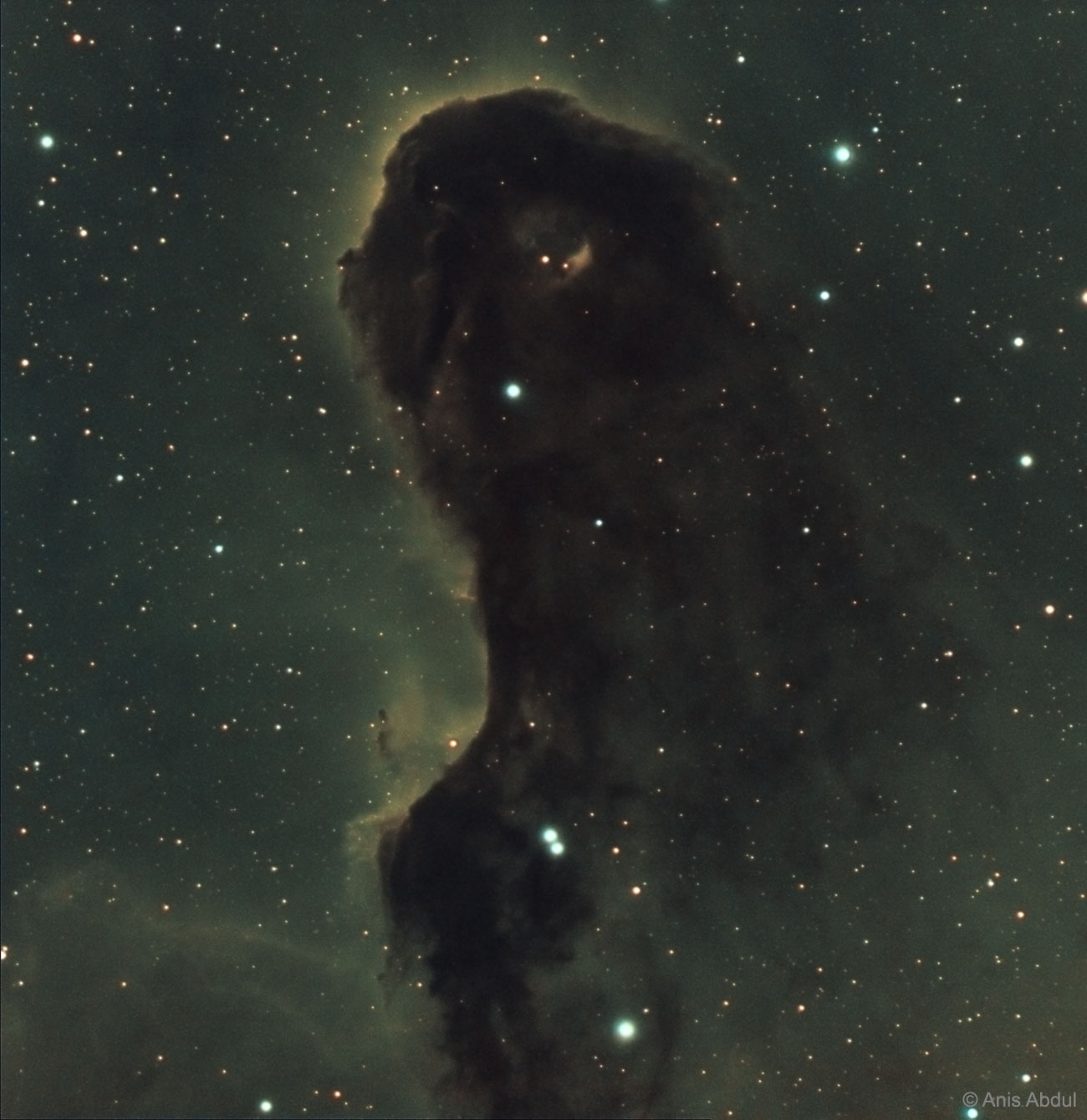
The Dust Monster in IC 1396 
Image Credit & Copyright: Anis Abdul
Explanation: Is there a monster in IC 1396? Known to some as the Elephant's Trunk Nebula, parts of gas and dust clouds of this star formation region may appear to take on foreboding forms, some nearly human. The only realmonster here, however, is a bright young star too far from Earth to hurt us. Energetic light from this star is eating away the dust of the dark cometary globule near the top of the featured imageJets and winds of particles emitted from this star are also pushing away ambient gas and dust. Nearly 3,000 light-years distant, the relatively faint IC 1396 complex covers a much larger region on the sky than shown here, with an apparent width of more than 10 full moons.

2017-08-01

Astronomy picture of the day - 2017 August 1 - Perseid Meteors over Turkey

See Explanation.  Clicking on the picture will download
 the highest resolution version available.
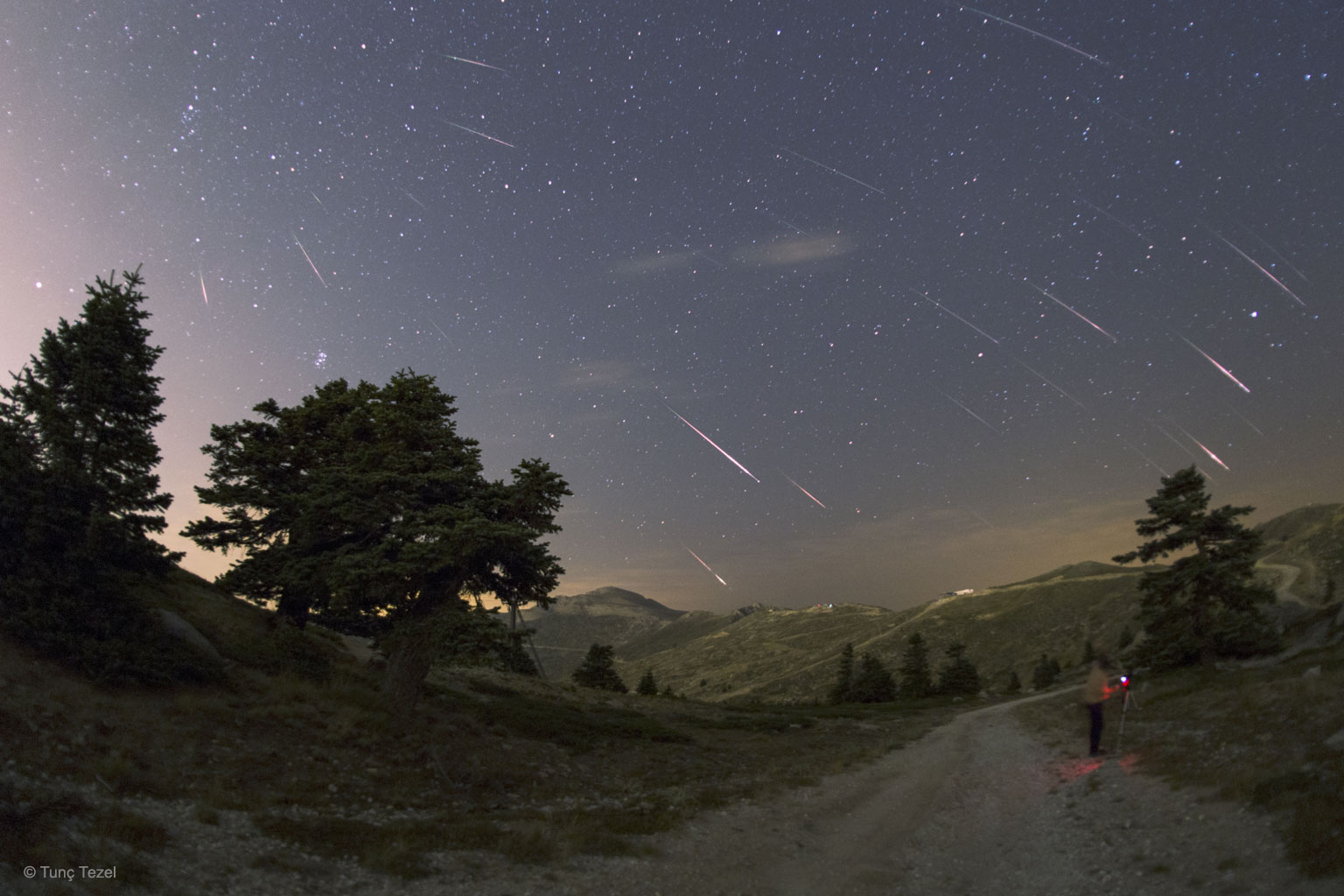
Perseid Meteors over Turkey 
Image Credit & CopyrightTunç Tezel (TWAN)
Explanation: The Perseid Meteor Shower, usually the best meteor shower of the year, will peak late next week. A person watching a clear sky from a dark location might see a bright meteor every minute. These meteors are actually specks of rock that have broken off Comet Swift-Tuttle and continued to orbit the Sun until they vaporize in Earth's atmosphere. The featured composite image shows a outburst of Perseids as they appeared over Turkey during last year's meteor shower. Enough meteors were captured to trace the shower's radiant back to the constellation of Perseus on the far left. The tail-end of the Perseids will still be going during the total solar eclipse on August 21, creating a rare opportunity for some lucky astrophotographers to image a Perseid meteor during the day.