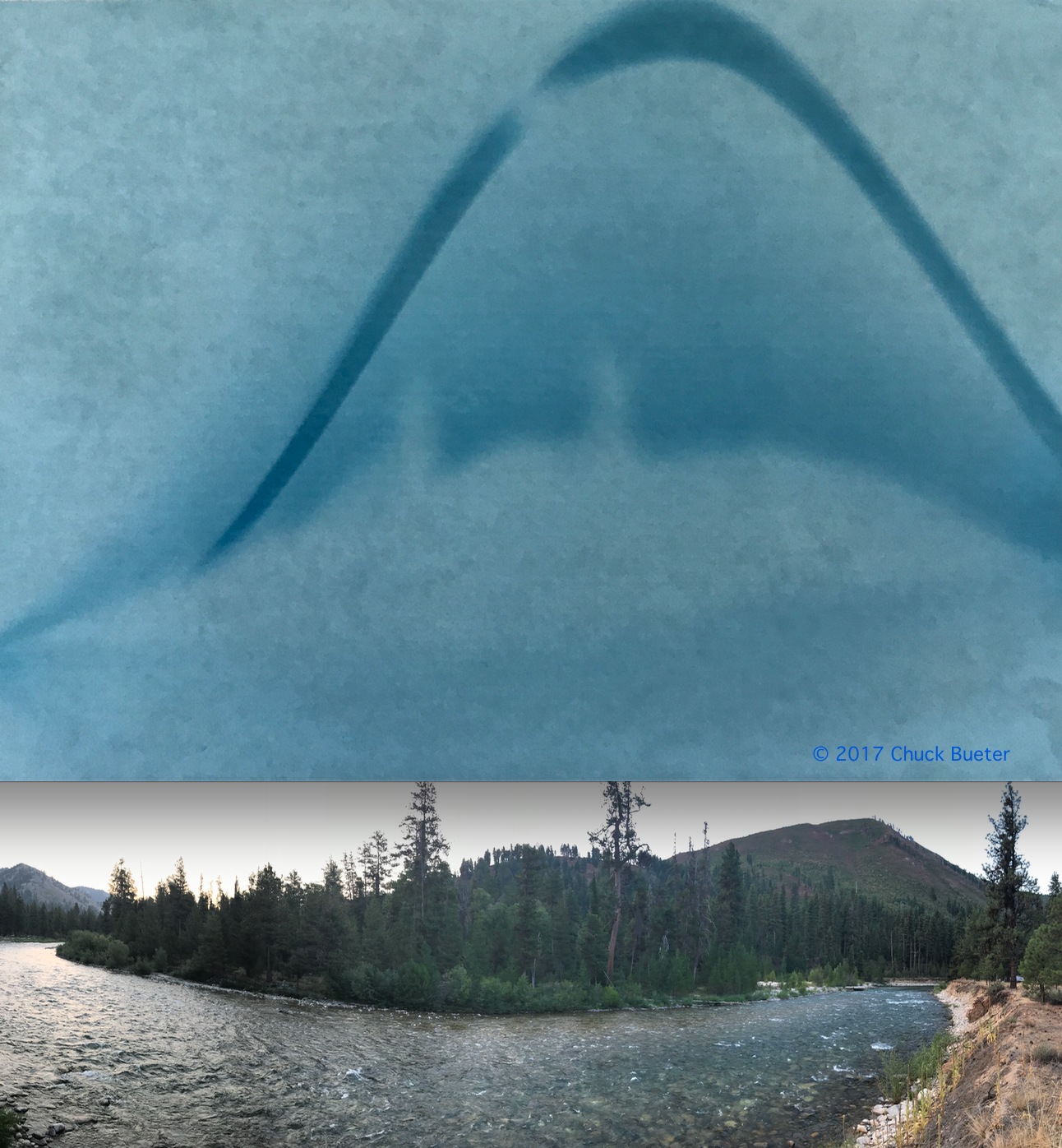
Explanation: Today is the September equinox. Heading south, the Sun's path through the sky will cross the celestial equator at 20:02 UT. Of course the equinox date results in (mostly) equal night and day all over planet Earth. But on August 21 the Sun's path through the sky found a little extra-night for some. Made with a drink can pinhole camera and light-sensitive paper, this creative solargraph follows the Sun's path on that date. An all-day exposure, it traces the Sun's arc still rising high in northern skies, aligned with a panoramic snapshot of the local landscape at the bottom. The gap in the arc represents the duration of the partial and total phases of the solar eclipse in clear skies over Lowman, Idaho, USA. There, the extra-night (totality) lasted for about 2 minutes. The broad gap in the Sun's arc also covers the loss of sunlight during the more extended partial eclipse phases.
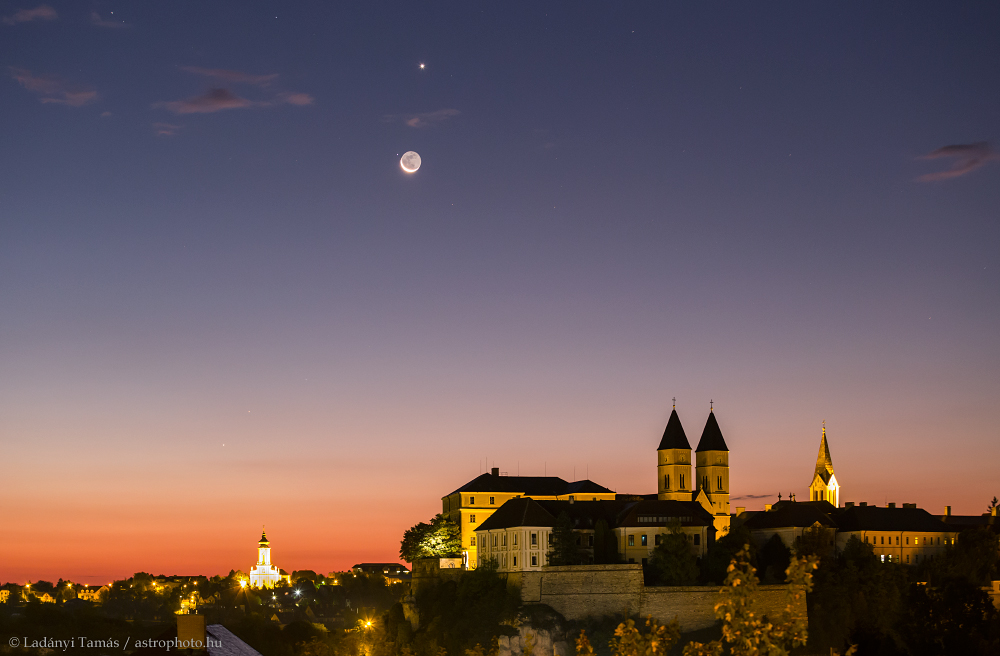
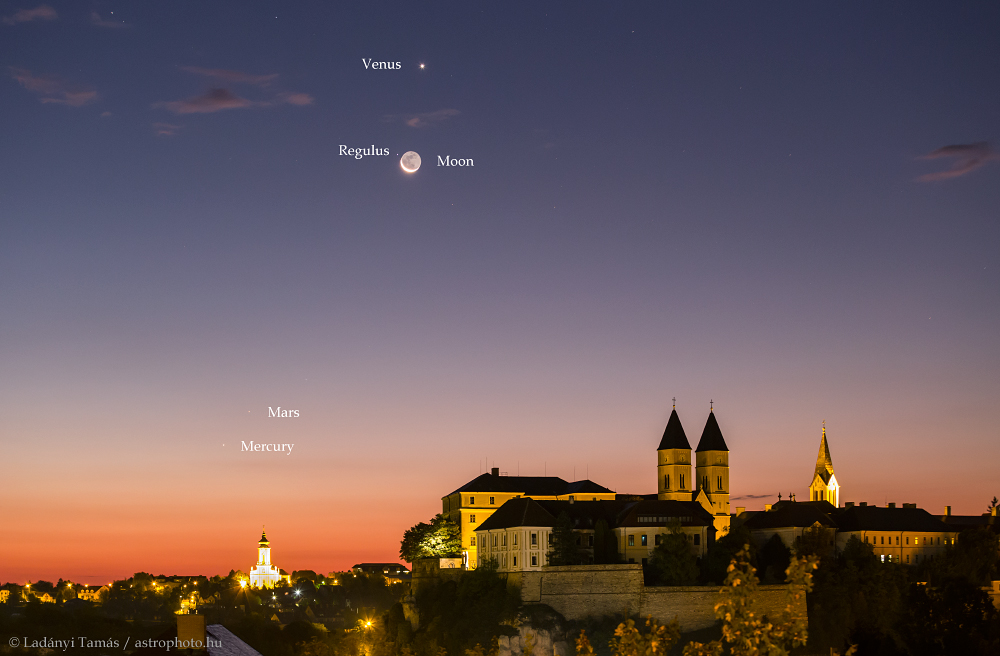
Explanation: The Moon, three planets, and a bright star gathered near the ecliptic plane in the September 18 morning sky over Veszprem Castle, Hungary. In this twilight skyscape, Mercury and Mars still shine close to the eastern horizon, soon to disappear in the glare of the Sun. Regulus, alpha star of the constellation Leo, is the bright point next to a waning crescent Moon, with brilliant Venus near the top of the frame. The beautiful morning conjunction of Moon, planets, and bright star could generally be followed by early morning risers all around planet Earth. But remarkably, the Moon also occulted, or passed directly in front of, Regulus and each of the three planets within 24 hours, all on September 18 UT. Visible from different locations, timing and watching the lunar occultations was much more difficult though, and mostly required viewing in daytime skies.
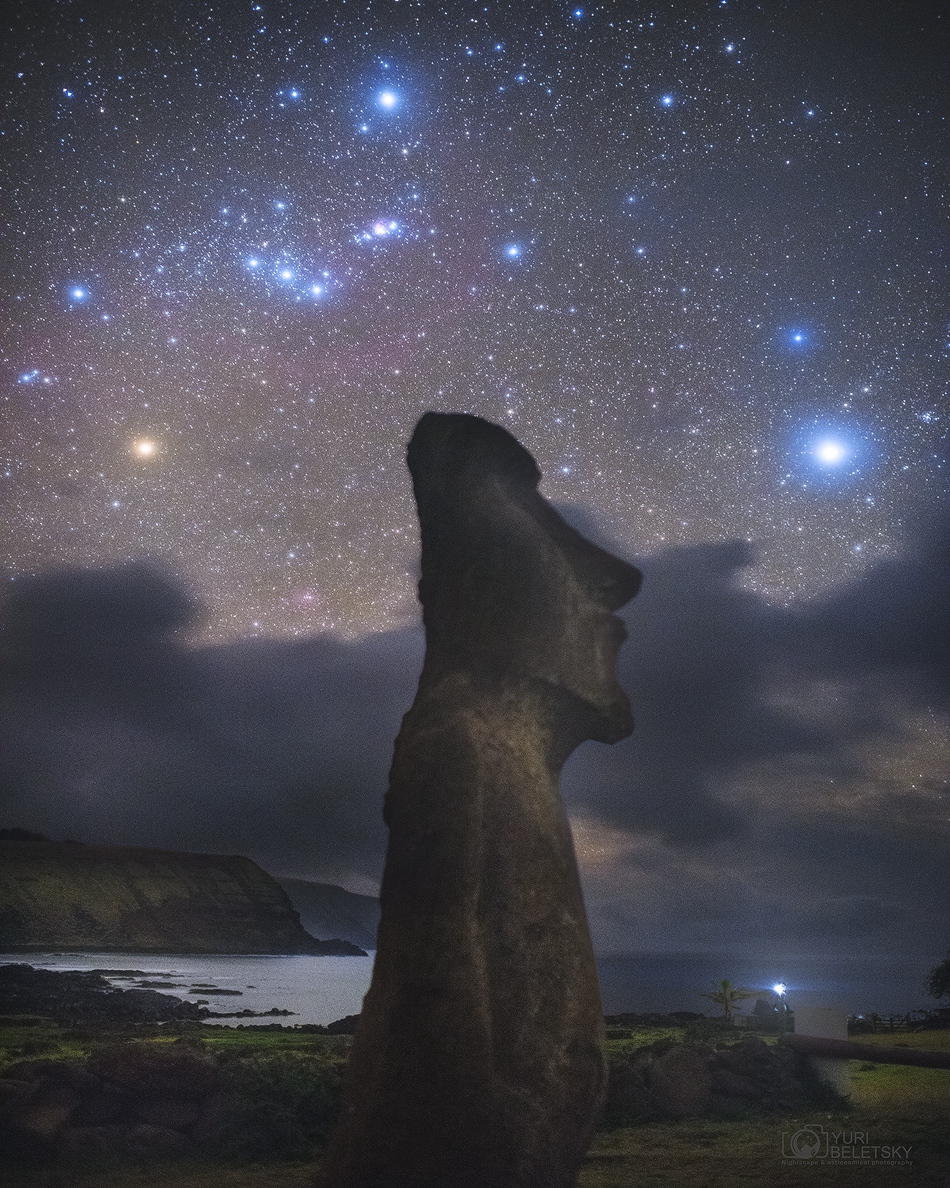
Explanation: Why were the statues on Easter Island built? No one is sure. What is sure is that over 800 large stone statues exist there. The Easter Island statues, stand, on the average, over twice as tall as a person and have over 200 times as much mass. Few specifics are known about the history or meaning of the unusual rock sculptures, but many believe that they were created about 700 years ago in the images of local leaders of a lost civilization. Featured here, one of the ancient Moai sculptures was imaged in 2016 before the constellation of Orion, including the famous line of three belt stars and brilliant stars Betelgeuse (far left in red) and Rigel (upper center). The stonegiant appears, however, to be inspecting the brightest star in the night sky (far right): Sirius.