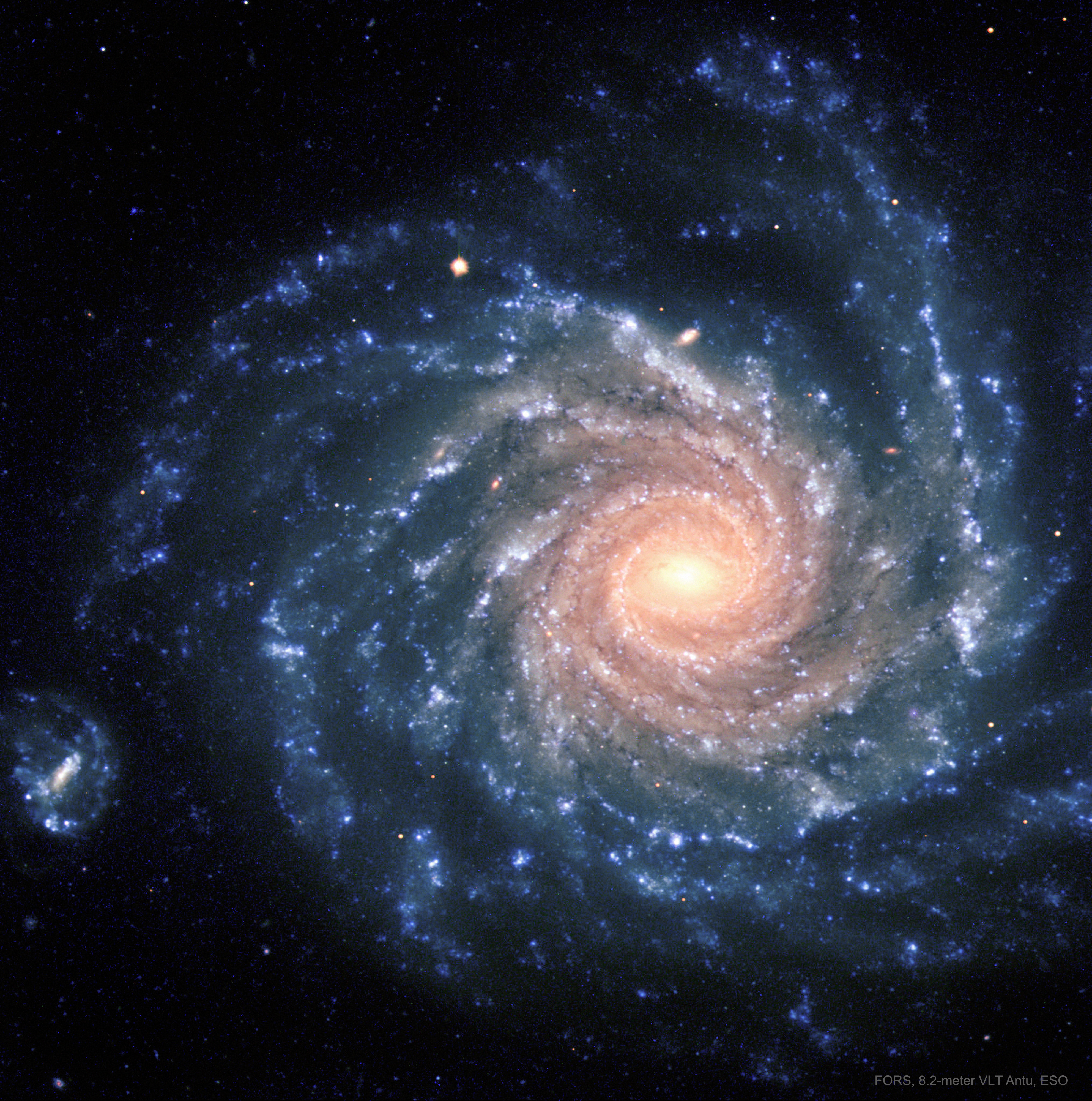
Explanation: Galaxies are fascinating not only for what is visible, but for what is invisible. Grand spiral galaxy NGC 1232, captured in detail by one of the Very Large Telescopes, is a good example. The visible is dominated by millions of bright stars and dark dust, caught up in a gravitational swirl of spiral arms revolving about the center. Open clusters containing bright blue stars can be seen sprinkled along these spiral arms, while dark lanes of dense interstellar dustcan be seen sprinkled between them. Less visible, but detectable, are billions of dim normal stars and vast tracts of interstellar gas, together wielding such high mass that they dominate the dynamics of the inner galaxy. Leading theories indicate that even greater amounts of matter are invisible, in a form we don't yet know. This pervasive dark matter is postulated, in part, to explain the motions of the visible matter in the outer regions of galaxies.
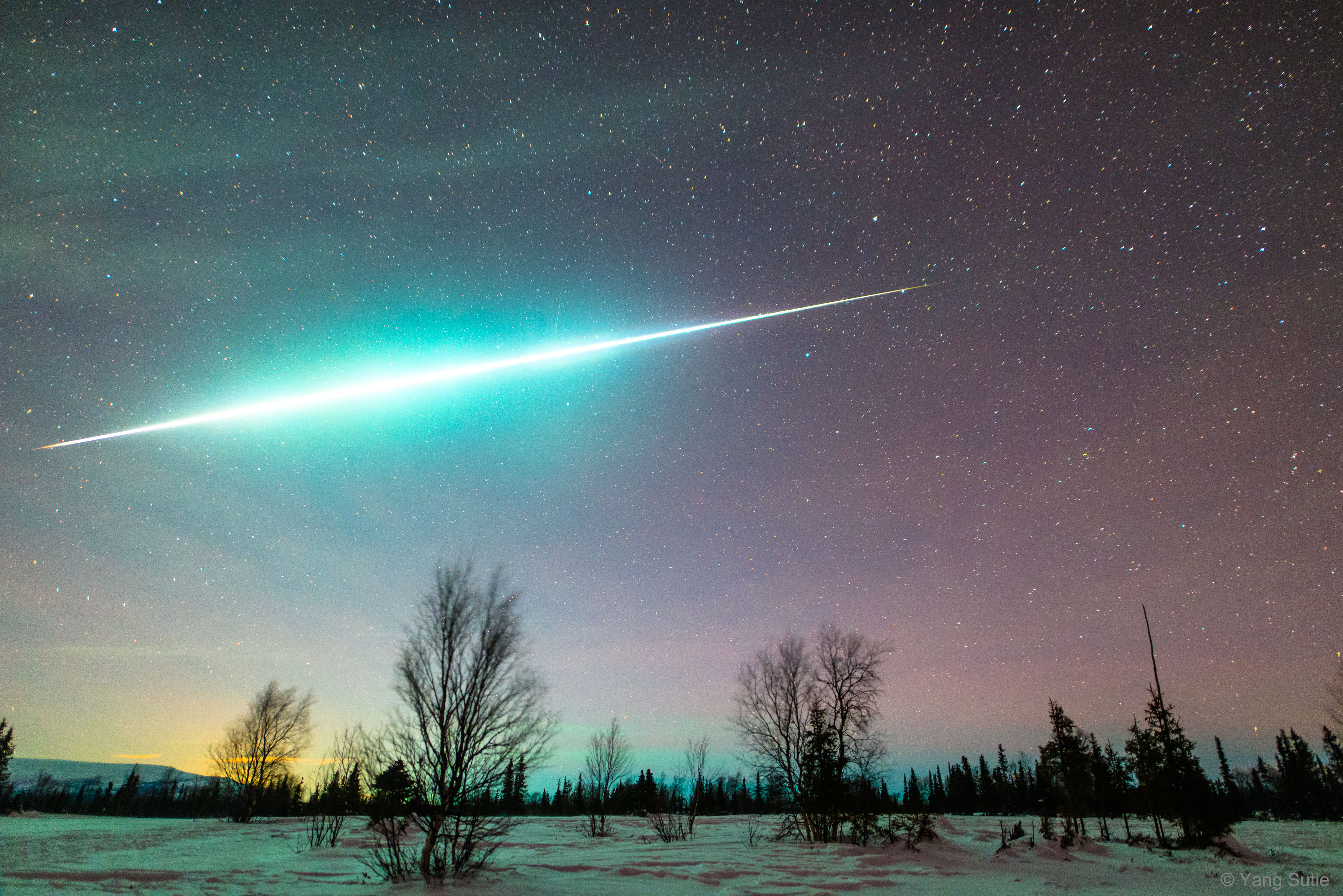
Fireball in the Arctic Image Credit & Copyright: Yang Sutie
Explanation: Something very bright suddenly lit up the arctic -- what was it? The original idea was to take a series of aurora images that could be made into a time-lapse video. But when night suddenly turned into day, the astrophotographer quickly realized that he was seeing something even more spectacular. Moving through the sky -- in front of the Big Dipper no less -- was a Geminid meteor so bright it could be called a fireball. The meteor brightened and flashed for several seconds as it went. By a stroke of good fortune, the aurora camera was able to capture the whole track. Taken the night after the Geminids Meteor Shower peaked, the astrophotographer's location was nearLovozero Lake in Murmansk, Russia, just north of the Arctic Circle.