2015-12-12

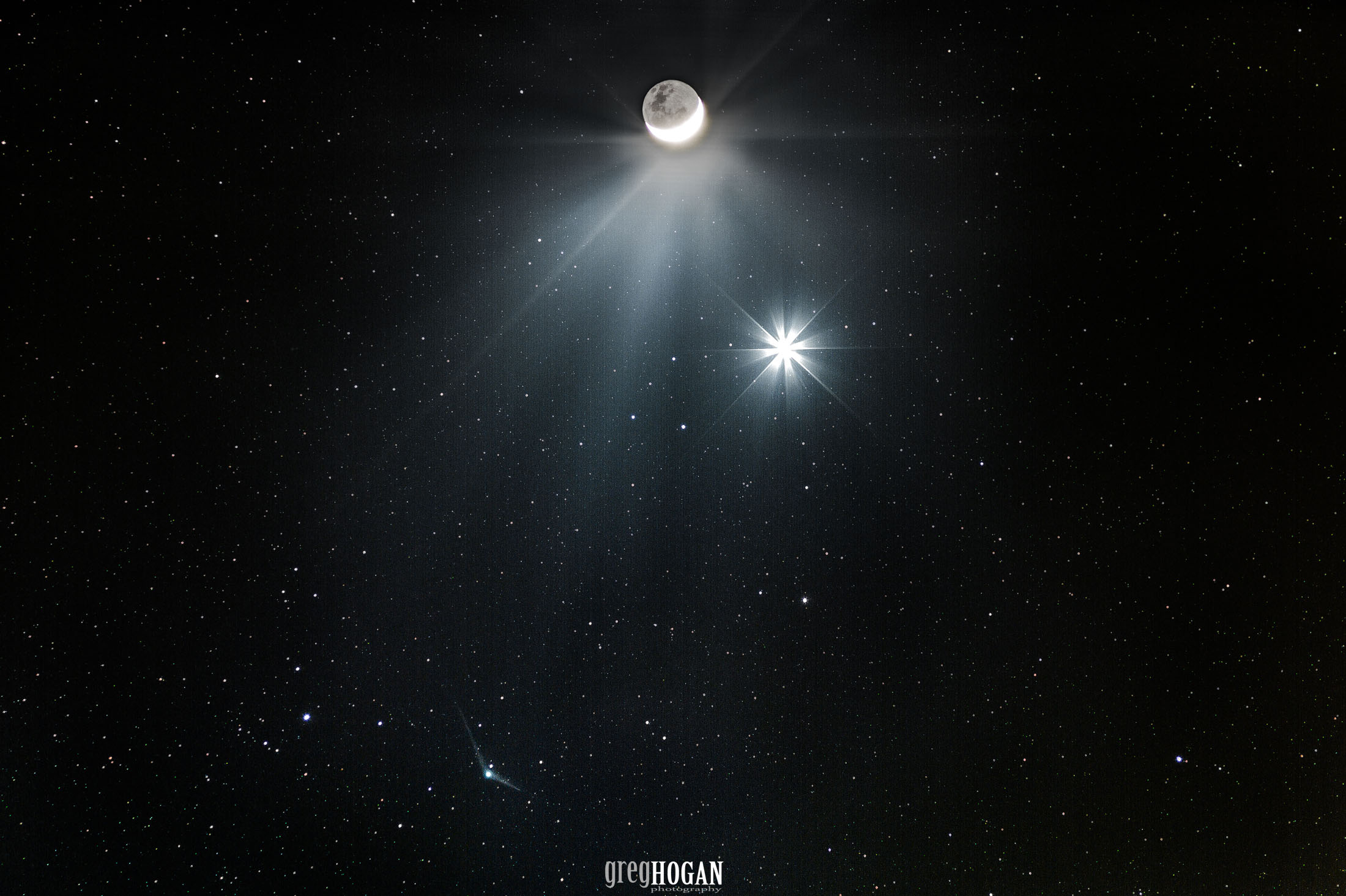
Astronomy picture of the day - 2015 December 12 - Comet Meets Moon and Morning Star

See Explanation.  Clicking on the picture will download
 the highest resolution version available.
Comet Meets Moon and Morning Star 
Image Credit & Copyright: Greg Hogan
Explanation: A crescent Moon and brilliant Venus met in predawn skies on December 7, a beautiful conjunction of planet Earth's two brightest celestial beacons after the Sun. Harder to see but also on the scene was Comet Catalina (C/2013 US10). The fainter comet clearly sporting two tails, lunar night side, bright sunlit lunar crescent, and brilliant morning star, are all recorded here by combining short and long exposures of the same field of view. Pointing down and right, Catalina's dust tail tends to trail behind the comet's orbit. Its ion tail, angled toward the top left of the frame, is blowing away from the Sun. Discovered in 2013, the new visitor from the Oort cloud was closest to the Sun on November 15 and is now outbound, headed for its closest approach to Earth in mid-January.

2015-12-11

Astronomy picture of the day - 11-12-2015 - The Brightest Spot on Ceres

2015 December 11
See Explanation.  Clicking on the picture will download
 the highest resolution version available.
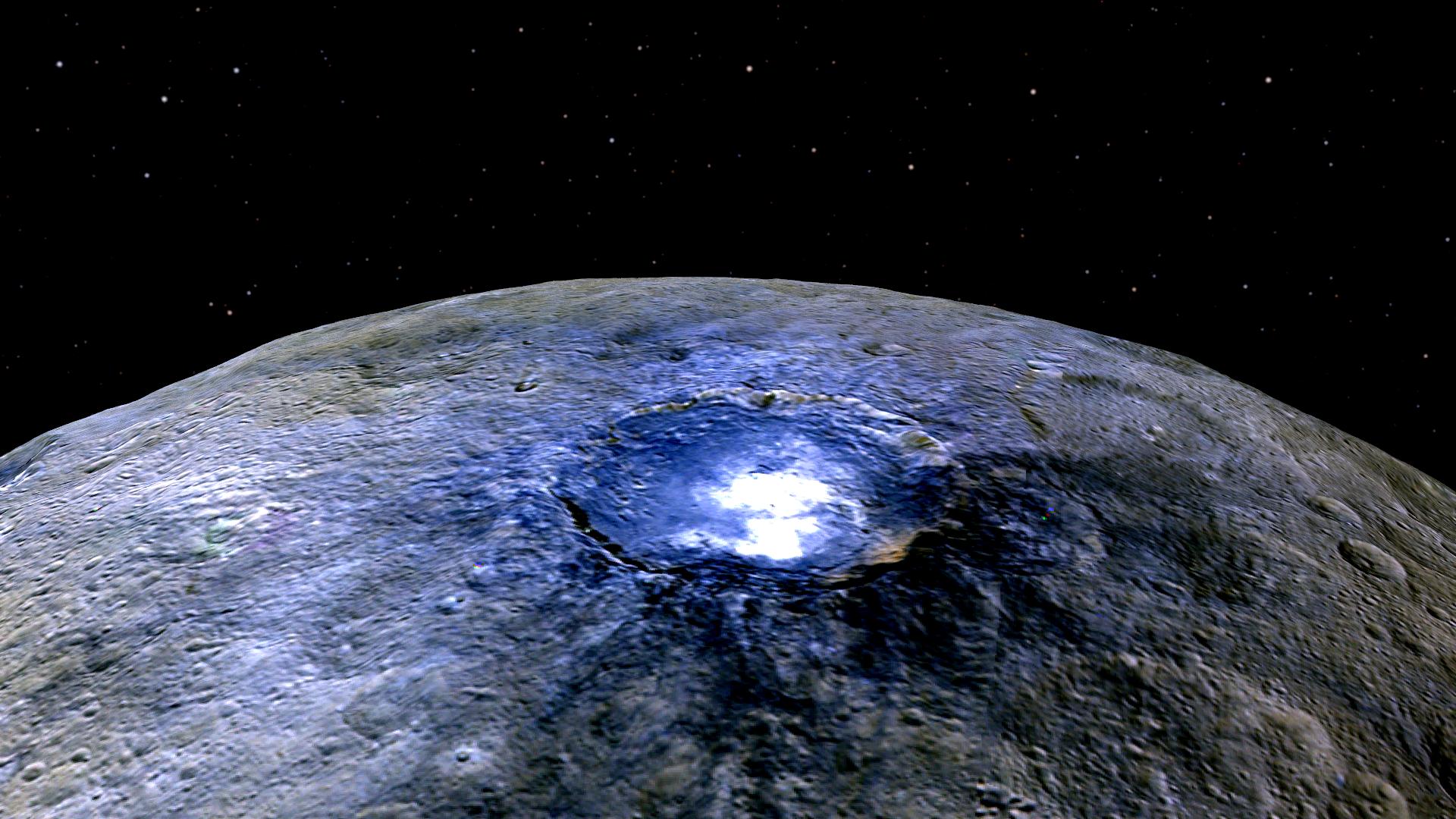
The Brightest Spot on Ceres 
Image Credit: NASAJPL-CaltechUCLA, MPS/DLR/IDA
Explanation: Dwarf planet Ceres is the largest object in the Solar System's main asteroid belt with a diameter of about 950 kilometers. Exploring Ceres from orbit since March, the Dawn spacecraft's camera has revealed about 130 or so mysterious bright spots, mostly associated with impact craters scattered around the small world's otherwise dark surface. The brightest one is near the center of the 90 kilometer wide Occator Crater, seen in this dramatic false color view combining near-infrared and visible light image data. A study now finds the bright spot's reflected light properties are probably most consistent with a type of magnesium sulfate called hexahydrite. Of course, magnesium sulfate is also known to Earth dwellers as epsom salt. Haze reported inside Occator also suggests the salty material could be left over as a mix of salt and water-ice sublimates on the surface. Since impacts would have exposed the material, Ceres' numerous and widely scattered bright spots may indicate the presence of a subsurface shell of ice-salt mix. In mid-December, Dawn will begin taking observations from its closest Ceres mapping orbit.

2015-12-10

Fotos - "Caindo no rio" - Bayonne - France - 10-12-2015

"Caindo no rio"

Bayonne, 10-12-2015
JoanMira

Fotos - "Duas netas e uma filha - Meyya, Amaya, Mary" - Bayonne, 10-12-2015

"Duas netas e uma filha - Meyya, Amaya, Mary"

Bayonne, 10-12-2015
JoanMira

Fotos - Bayonne - France - Ao fim do dia

Bayonne ao fim do dia

10-12-2015
JoanMira

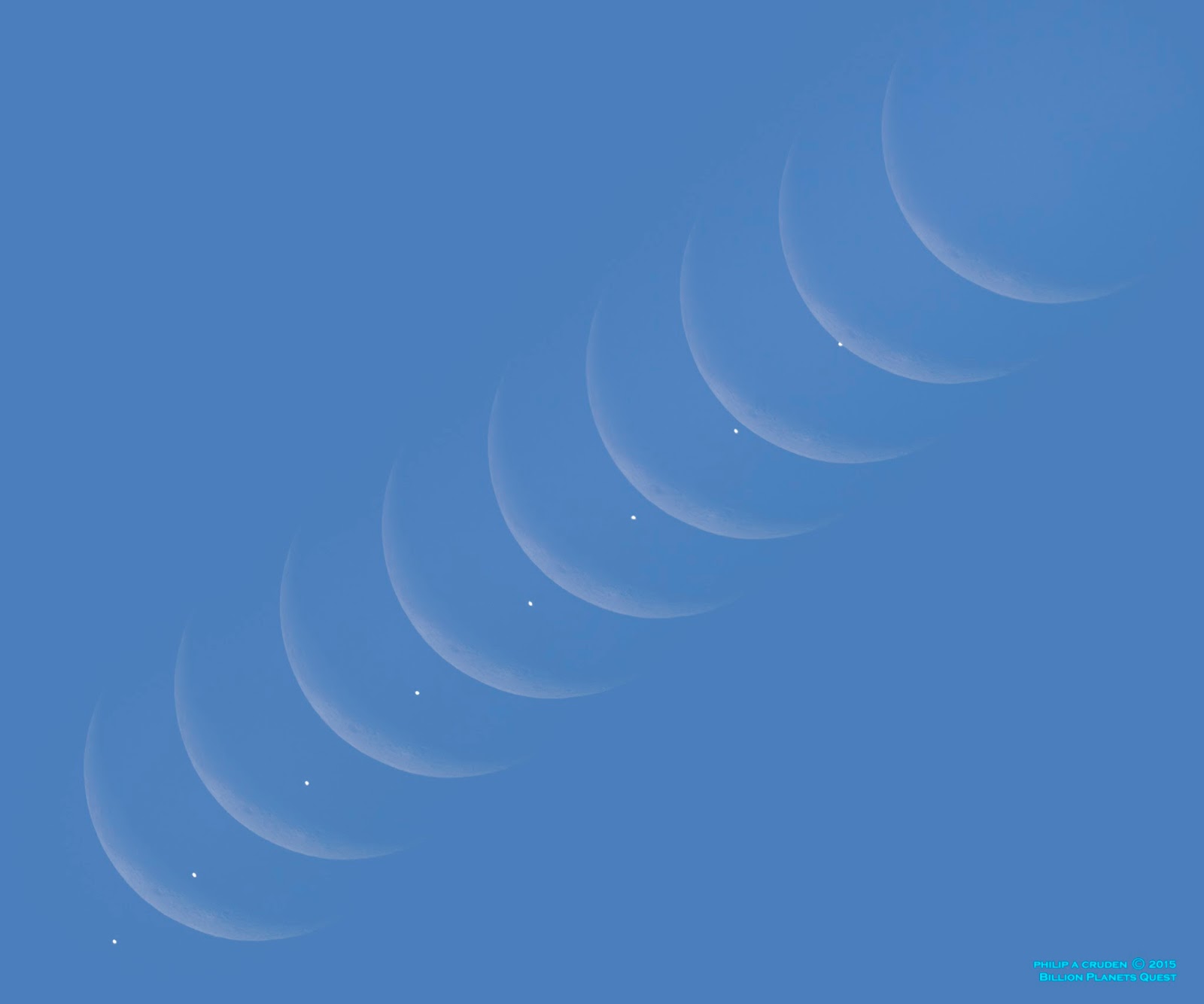
Astronomy picture of the day - 2015 December 10 - Daytime Moon Meets Morning Star

See Explanation.  Clicking on the picture will download
 the highest resolution version available.
Daytime Moon Meets Morning Star 
Image Credit & Copyright: Phillip A Cruden
Explanation: Venus now appears as Earth's brilliant morning star, standing in a line-up of planets above the southeastern horizon before dawn. For most, the silvery celestial beacon rose predawn in a close pairing with an old crescent Moon on Monday, December 7. But also widely seen from locations in North and Central America, the lunar crescent actually occulted or passed in front of Venus during Monday's daylight hours. This time series follows the daytime approach of Moon and morning star in clear blue skies from Phoenix, Arizona. The progression of nine sharp telescopic snapshots, made between 9:30am and 9:35am local time, runs from lower left to upper right, when Venus winked out behind the bright lunar limb.

2015-12-09

Jairo - "Es la nostalgia" - Video - Musica - En vivo

Afficher l'image d'origine
"Es la nostalgia"

Las 10 razas de perros más raras del mundo - 7) Leopardo Catahoula


Son excelentes cazadores, capaces de trepar a los árboles para atrapar a sus presas. Su nombre proviene de la parroquia Catahoula de Louisiana, de donde se habría originado esta raza.

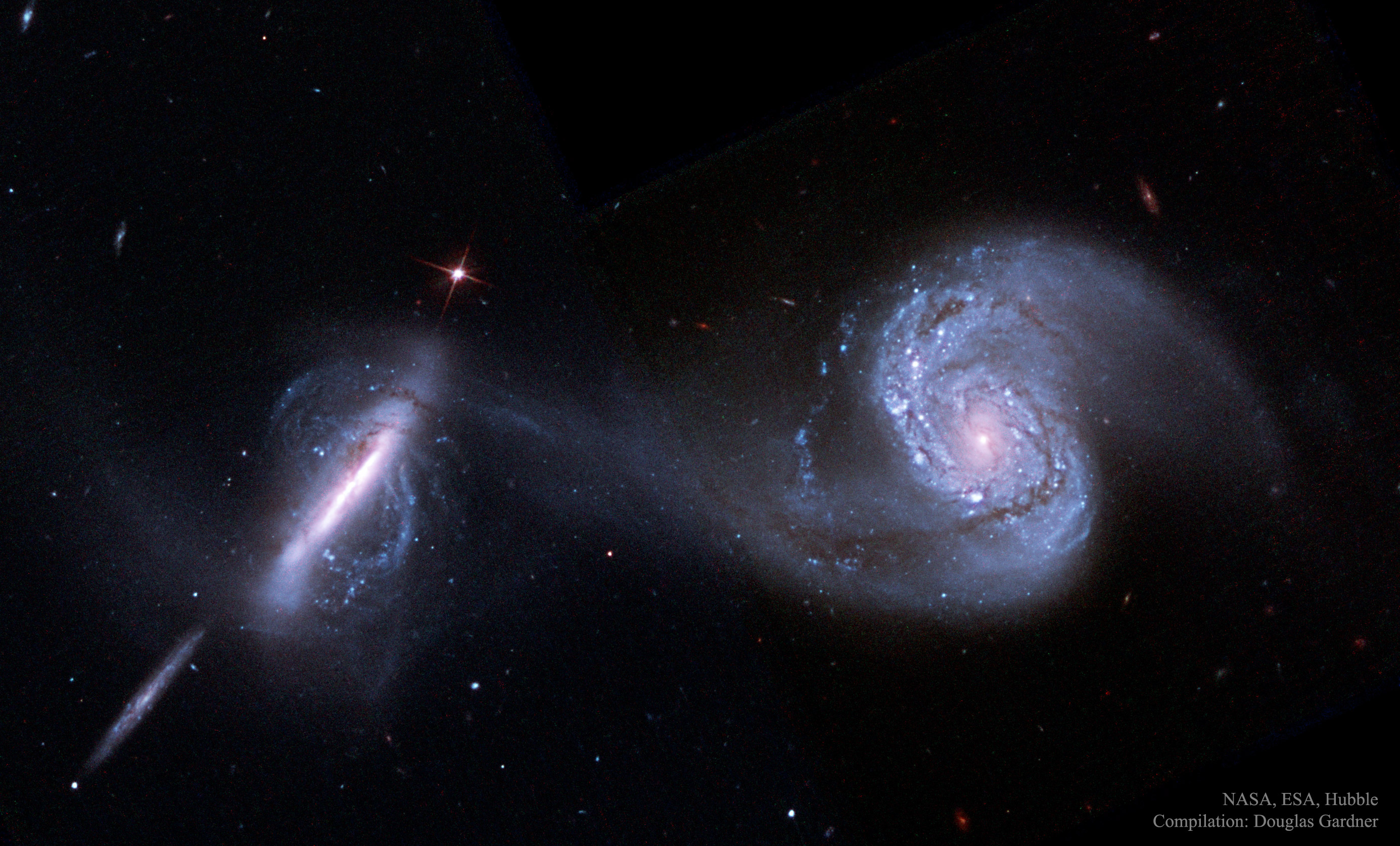
Astronomy picture of the day - 2015 December 9 - Arp 87: Merging Galaxies from Hubble

2015 December 9
See Explanation.  Clicking on the picture will download
 the highest resolution version available.
Arp 87: Merging Galaxies from Hubble 
Image Credit: NASAESAHubble Space TelescopeProcessing: Douglas Gardner
Explanation: This dance is to the death. Along the way, as these two large galaxies duel, a cosmic bridge of stars, gas, and dust currently stretches over 75,000 light-years and joins them. The bridge itself is strong evidence that these two immense star systems have passed close to each other and experienced violent tides induced by mutual gravity. As further evidence, the face-on spiral galaxy on the right, also known as NGC 3808A, exhibits many young blue star clusters produced in a burst of star formation. The twisted edge-on spiral on the left (NGC 3808B) seems to be wrapped in the material bridging the galaxies and surrounded by a curious polar ring. Together, the system is known asArp 87 and morphologically classified, technically, as peculiar. While such interactions are drawn out over billions of years, repeated close passages should ultimately result in the death of one galaxy in the sense that only one galaxy will eventually result. Although this scenario does look peculiar, galactic mergers are thought to be common, with Arp 87 representing a stage in this inevitable process. The Arp 87 pair are about 300 million light-years distant toward the constellation Leo. The prominent edge-on spiral at the far left appears to be a more distant background galaxy and not involved in the on-going merger.

2015-12-08

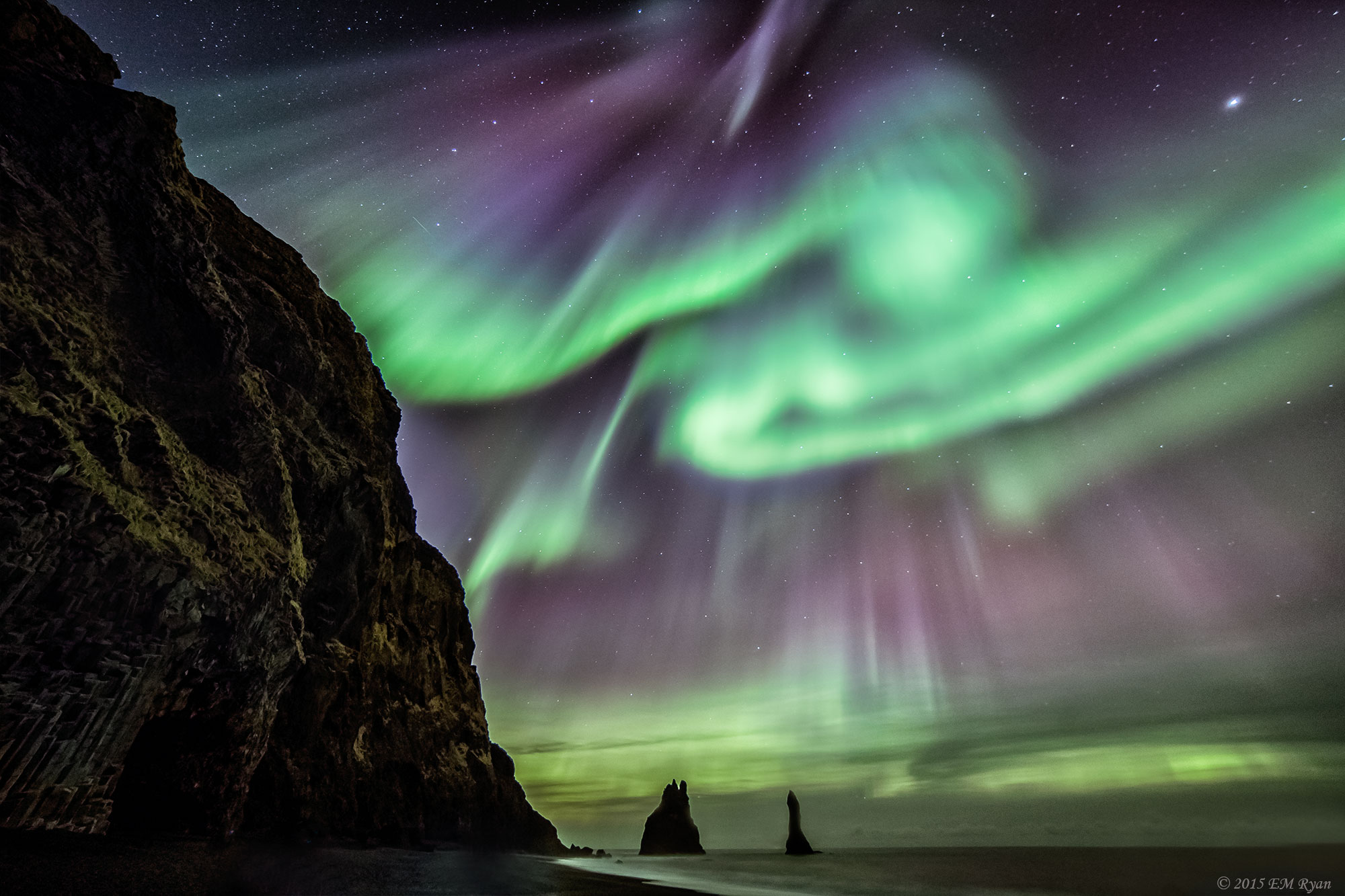
Astronomy picture of the day - 2015 December 8 - Icelandic Legends and Aurora

See Explanation.
Moving the cursor over the image will bring up an annotated version.
Clicking on the image will bring up the highest resolution version
available.
Icelandic Legends and Aurora 
Image Credit & Copyright: Elizabeth M. RyanRollover Annotation: Judy Schmidt
Explanation: Legends collide in this dramatic vista of land, sea, and sky. The land is Iceland, specifically Vík í Mýrdal, a southern village known for its beautiful black sand beaches. The sea, the Atlantic Ocean, surroundsReynisdrangar, a sea stack of eroded basaltic rock pillars that Icelandic folklore tells are the petrified remains of trolls once attempting to drag a three-masted ship onto land. Watching from overhead and shining bright on the upper right is the god of the sky, according to Greek mythology: the planet Jupiter. Also visible in the sky are several other Greek legends encapsulated as constellations, including a lion (Leo), a big bear (Ursa Major), and a water snake (Hydra). One might guess that all of this commotion caused the spectacular aurora pictured -- but really it was just explosions from the Sun.