2016-11-14

Expressões populares portuguesas - "Meter uma lança em Africa"


Afficher l'image d'origine

Significado: Conseguir realizar um empreendimento que se afigurava difícil; levar a cabo uma empresa difícil. 

Origem: Expressão vulgarizada pelos exploradores europeus, principalmente portugueses, devido às enormes dificuldades encontradas ao penetrar o continente africano. A resistência dos nativos causava aos estranhos e indesejáveis visitantes baixas humanas. Muitas vezes retrocediam face às dificuldades e ao perigo de serem dizimados pelo inimigo que eles mal conheciam e, pior de tudo, conheciam mal o seu terreno. Por isso, todos aqueles que se dispusessem a fazer parte das chamadas "expedições em África", eram considerados destemidos e valorosos militares, dispostos a mostrar a sua coragem, a guerrear enfrentando o incerto, o inimigo desconhecido. Portanto, estavam dispostos a " meter uma lança em África". 

Astronomy picture of the day - 2016 November 14 - Supermoon and Space Station

See Explanation.  Clicking on the picture will download
 the highest resolution version available.
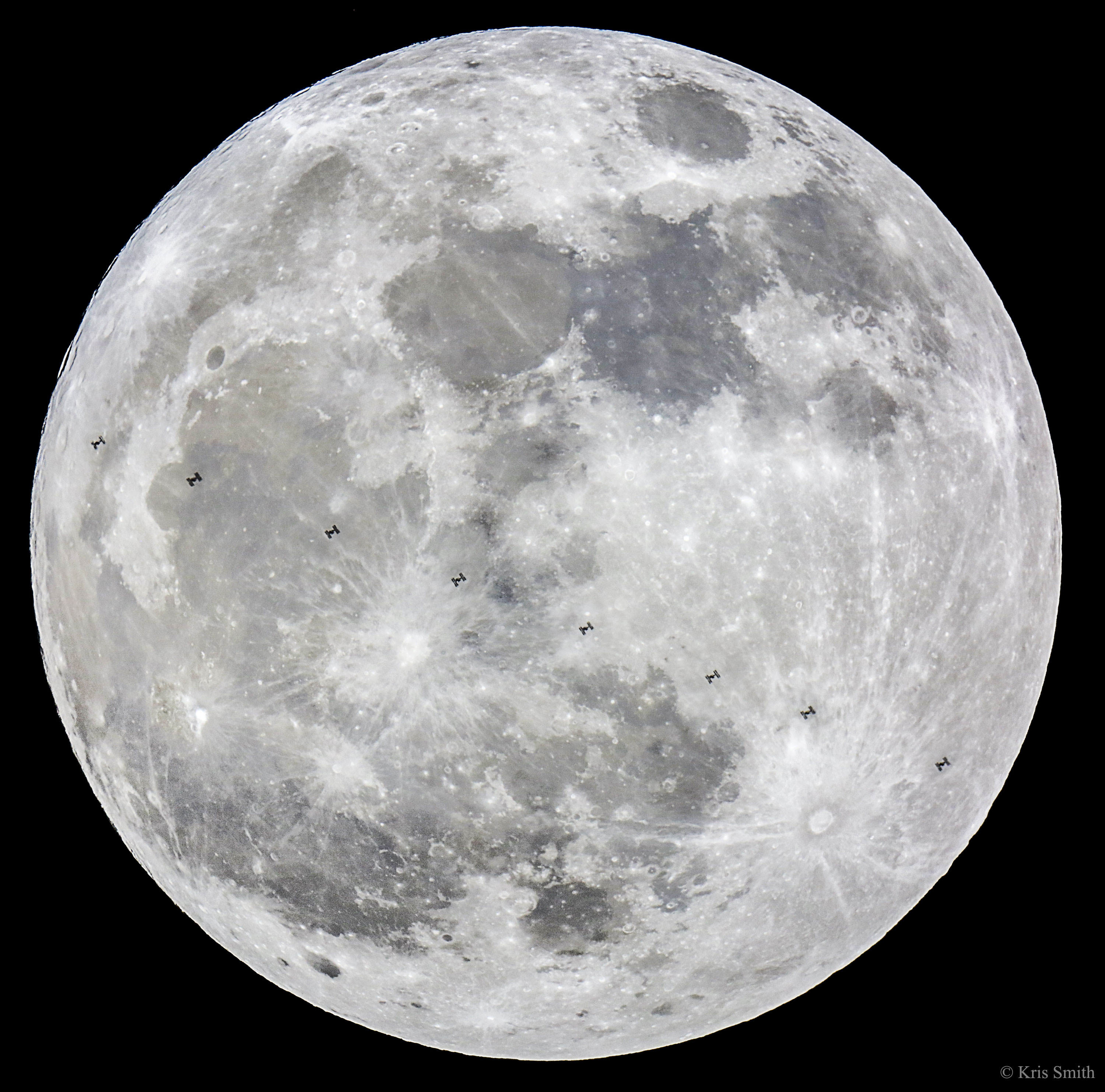
Supermoon and Space Station 
Image Credit & Copyright: Kris Smith
Explanation: What are those specks in front of the Moon? They are silhouettes of the International Space Station (ISS). Using careful planning and split-second timing, a meticulous lunar photographer captured ten images of the ISSpassing in front of last month's full moon. But this wasn't just any full moon -- this was the first of the three consecutive 2016 supermoons. A supermoon is a full moon that appears a few percent larger and brighter than most other full moons. The featured image sequence was captured near Dallas, Texas. Occurring today is the second supermoon of this series, a full moon that is the biggest and brightest not only of the year, but of any year since 1948. To see today's super-supermoon yourself, just go outside at night and look up. The third supermoon of this year's series will occur in mid-December.

2016-11-13

Lou Reed - "This magic moment" - Slides - Music

Afficher l'image d'origine
"This magic moment"

Expressões populares portuguesas - "Queimar as pestanas"


Afficher l'image d'origine

Significado: Estudar muito. 

Origem: Usa-se ainda esta expressão, apesar de o facto real que a originou já não ser de uso. Foi, inicialmente, uma frase ligada aos estudantes, querendo significar aqueles que estudavam muito. Antes do aparecimento da electricidade, recorria-se a uma lamparina ou uma vela para iluminação. A luz era fraca e, por isso, era necessário colocá-las muito perto do texto quando se pretendia ler o que podia dar azo a " queimar as pestanas".

Astronomy picture of the day - 2016 November 13 - Super Moon vs. Micro Moon

See Explanation.  Clicking on the picture will download
 the highest resolution version available.
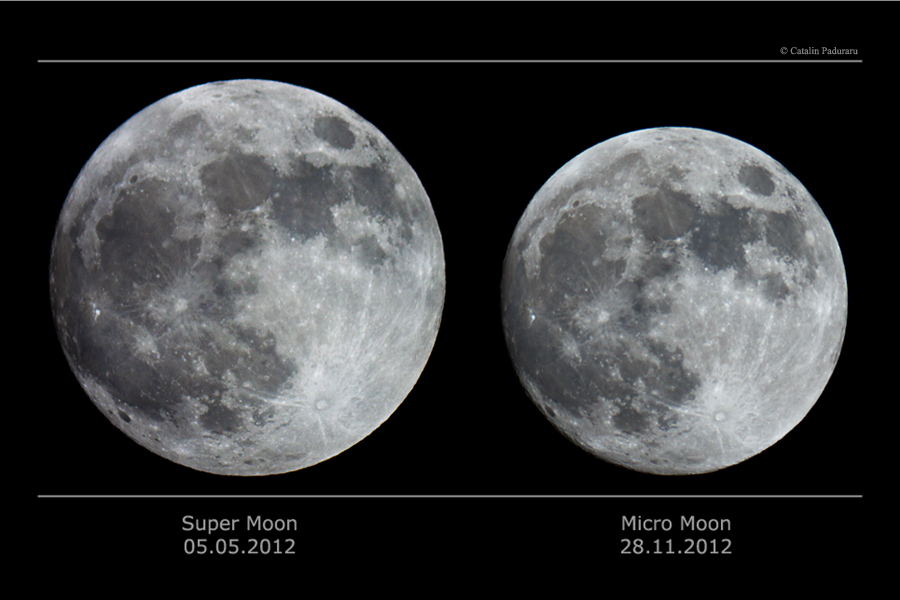
Super Moon vs. Micro Moon 
Image Credit & Copyright: Catalin Paduraru
Explanation: What is so super about tomorrow's supermoon? Tomorrow, a full moon will occur that appears slightly larger and brighter than usual. The reason is that the Moon's fully illuminated phase occurs within a short time from perigee - when the Moon is its closest to the Earth in its elliptical orbit. Although the precise conditions that define a supermoon vary, tomorrow's supermoon will undoubtedly qualify because it will be the closest, largest, and brightest full moon in over 65 years. One reason supermoons are popular is because they are so easy to see -- just go outside and sunset and watch an impressive full moon rise! Since perigee actually occurs tomorrow morning, tonight's full moon, visible starting at sunset, should also be impressive. Pictured here, a supermoon from 2012 is compared to a micromoon -- when a full Moon occurs near the furthest part of the Moon's orbit -- so that it appears smaller and dimmer than usual. Given many definitions, at least one supermoon occurs each year, with another one coming next month (moon-th). However, a full moon will not come this close to Earth again until 2034.

Artigo - Sismo de magnitude 7,8 perto de Christchurch, na Nova Zelândia - Alerta Tsunami


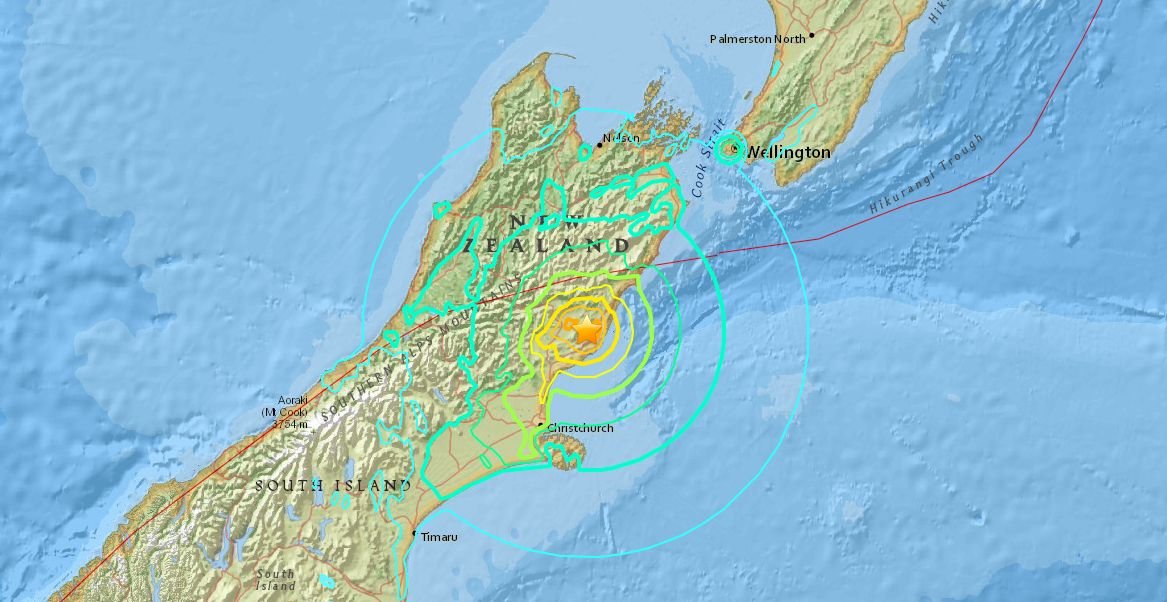
Um sismo de magnitude 7,8 na escala de Richter abalou este domingo a ilha sul da Nova Zelândia. Apesar do número inicial apontar para uma magnitude de 7,4, o Instituto Geológico dos Estados Unidos atualizou a informação disponível para 7,8.
De acordo com o organismo norte-americano, epicentro foi localizado a 53 quilómetros de Amberley e a 95 quilómetros de Christchurch, onde também foi sentido. Tamsin Edendor disse à France-Press que o tremor de terra durou “muito” tempo. “Estávamos a dormir e acordámos com a casa a abanar. Continuou a abanar e a abanar e pensei que fosse cair”, contou a mãe de duas crianças.
Captura de ecrã 2016-11-13, às 11.38.50
Fonte: Instituto Geológico dos Estados Unidos da América
Apesar de o Centro de Tsunamis do Pacífico não ter emitido nenhum alerta, a proteção civil neo-zelandesa lançou um aviso de perigo para toda a costa este da ilha, que inclui as cidades de Christchurch e Wellington e as ilhas Chatham. O organismo aconselhou todas as pessoas que se encontrem perto do mar a mudarem-se para um ponto alto o mais depressa possível.
Observador - Portugal

2016-11-12

Astronomy picture of the day - 2016 November 12 - Great Rift Near the Center of the Milky Way

See Explanation.  Clicking on the picture will download
 the highest resolution version available.
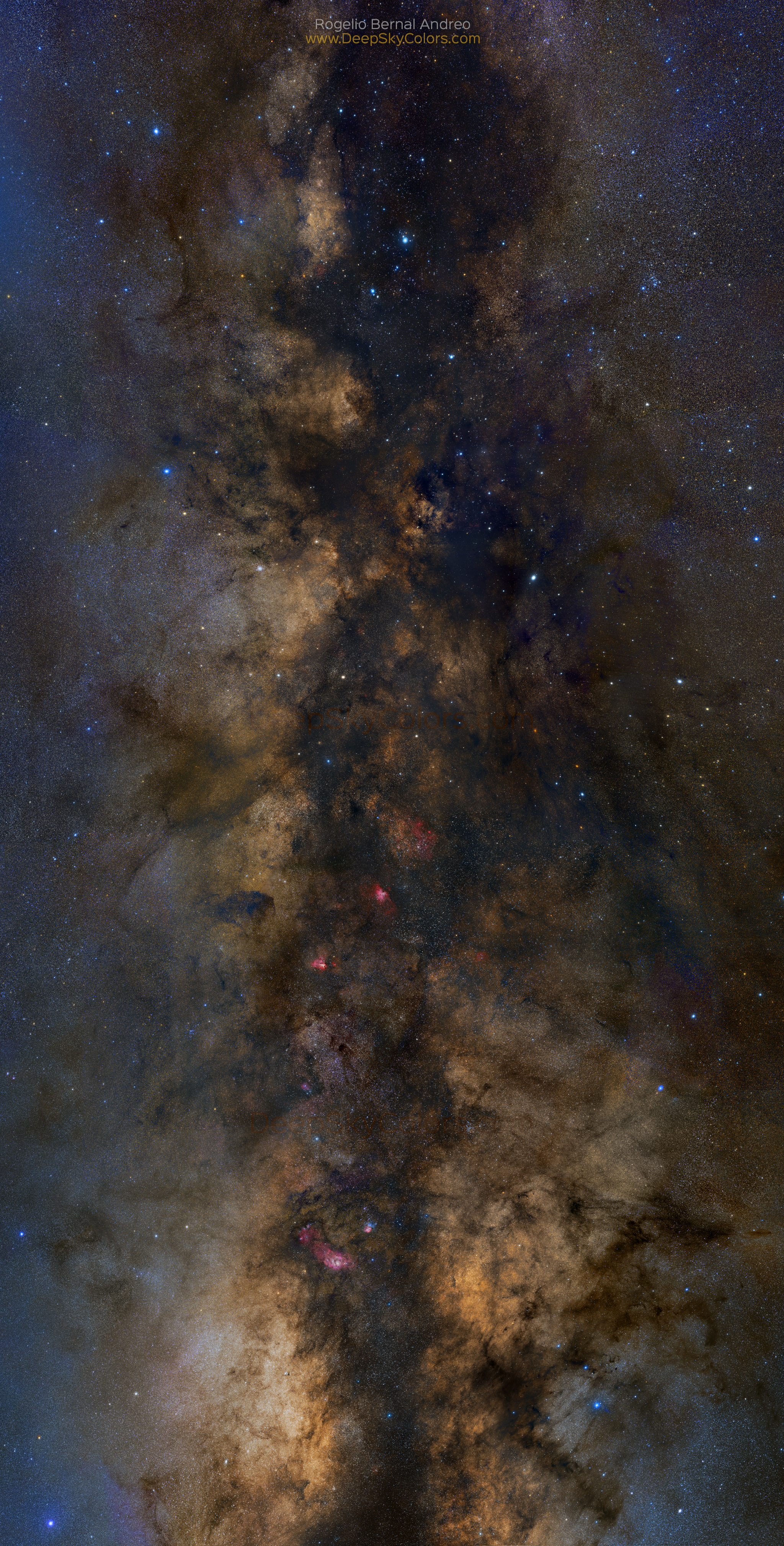
Great Rift Near the Center of the Milky Way 
Image Credit & Copyright: Rogelio Bernal Andreo (Deep Sky Colors)
Explanation: Over 100 telescopic image panels in this stunning vertical mosaic span about 50 degrees across the night sky. They follow part of the Great Rift, the dark river of dust and molecular gas that stretches along the plane of our Milky Way Galaxy. Start at top center and you can follow the galactic equator down through brighter stars in constellations Aquila, Serpens Cauda, and Scutum. At the bottom is Sagittarius near the center of the Milky Way. Along the way you'll encounter many obscuring dark nebulae hundreds of light-years distant flanked by bands of Milky Way starlight, and the telltale reddish glow of starforming regions. Notable Messier objects include The Eagle (M16) and Omega (M17) nebulae, the Sagittarius Star Cloud (M24), the beautiful Trifid (M20) and the deep Lagoon (M8).

2016-11-11

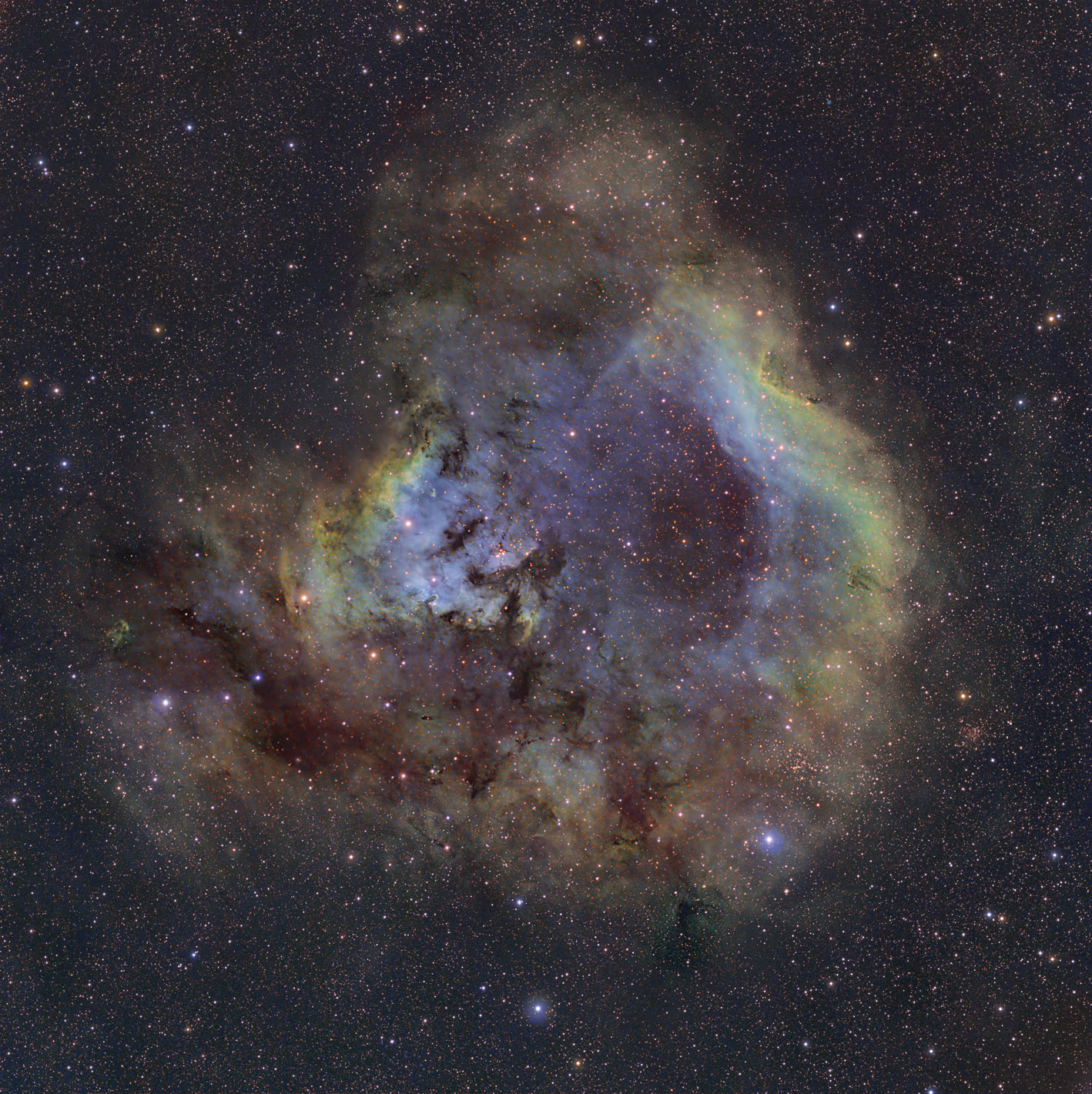
Astronomy picture of the day - 2016 November 11 - NGC 7822 in Cepheus

See Explanation.  Clicking on the picture will download
 the highest resolution version available.
NGC 7822 in Cepheus 
Image Credit & Copyright: Steve Cannistra (StarryWonders)
Explanation: Hot, young stars and cosmic pillars of gas and dust seem to crowd into NGC 7822. At the edge of a giant molecular cloud toward the northern constellation Cepheus, the glowing star forming region lies about 3,000 light-years away. Within the nebula, bright edges and dark shapes stand out in this colorful skyscape. The image includes data from narrowband filters, mapping emission from atomic oxygen, hydrogen, and sulfur into blue, green, and red hues. The emission line and color combination has become well-known as the Hubble palette. The atomic emission is powered by energetic radiation from the central hot stars. Their powerful winds and radiation sculpt and erode the denser pillar shapes and clear out a characteristic cavity light-years across the center of the natal cloud. Stars could still be forming inside the pillars by gravitational collapse but as the pillars are eroded away, any forming stars will ultimately be cutoff from their reservoir of star stuff. This field of view spans over 40 light-years at the estimated distance of NGC 7822.

2016-11-10

Peter Gabriel - "The book of love" - Video - Music - Live

Afficher l'image d'origine
"The book of love"

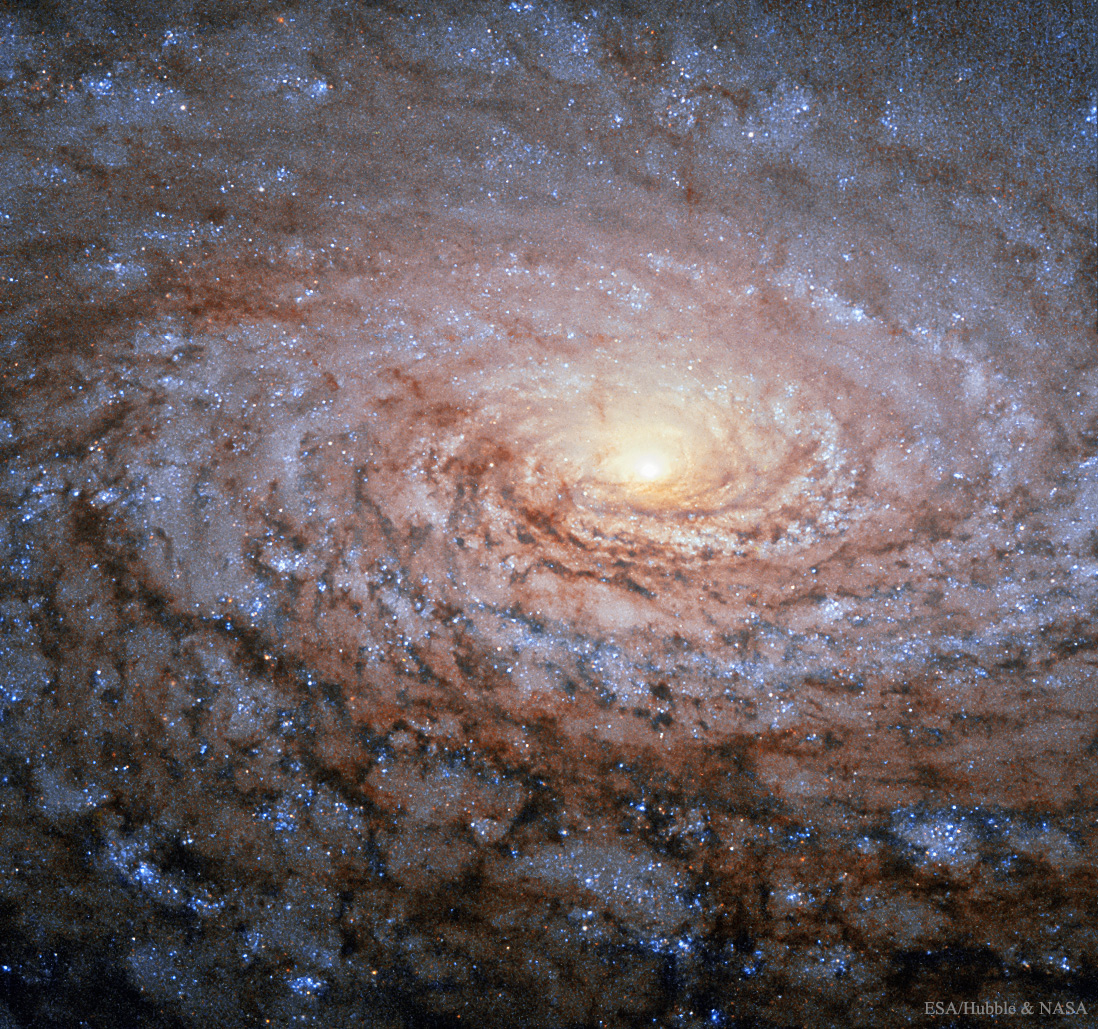
Astronomy picture of the day - 2016 November 10 - M63: The Sunflower Galaxy from Hubble

See Explanation.  Clicking on the picture will download
 the highest resolution version available.
M63: The Sunflower Galaxy from Hubble 
Image Credit: ESANASAHubble
Explanation: One of the bright spiral galaxies visible in the north sky is M63, the Sunflower Galaxy. M63, also catalogued as NGC 5055, can be found with a small telescope toward the constellation of Hunting Dogs (Canes Venatici). The featured picture from the Hubble Space Telescope exhibits the center of M63, complete with long winding spiral arms glowing blue from a few bright young stars, emission nebulae glowing red from hot ionized hydrogen gas, and dark dust in numerous filaments. M63 interacts gravitationally with M51 (the Whirlpool Galaxy) and several smaller galaxies. Light takes about 35 million years to reach us from M63, and about 60,000 years to cross the spiral galaxy. Stars in the outer regions of the Sunflower Galaxy rotate about the center at a speed so high that, given the matter seen and assuming normal gravity, they should fly off into space. The fact that the stars remain indicates the presence of sort of invisible, gravitationally-binding, dark matter.